If you’ve watched the news at any point since Oct. 7, 2023, you’ve heard the name Hamas so many times it’s practically its own cable channel. You’ve also probably heard completely different descriptions of what Hamas is, what it wants, and what it’s done, depending on who’s talking and what flag is on the podium behind them.
We won’t solve the Israeli-Palestinian conflict (and if that’s what you’re looking for, we wish you luck), but we can at least help anyone understand what Hamas is, how it got here, and why it sits at the center of one of the world’s most volatile flashpoints.
Related: 10 incredible facts about the Israel Defence Forces
Hamas is a Palestinian Sunni Islamist movement that is both a political organization and an armed group, governs the Gaza Strip, and is designated as a terrorist organization by the United States and many other governments. This is a description that is both accurate and really, really not enough information.
The name “Hamas” is an Arabic acronym for “Islamic Resistance Movement,” and, conveniently, also a word that means “zeal” or “fervor.” From the start, Hamas combined three things: religious ideology, social welfare activity, and armed resistance against Israel.
The organization was founded in 1987 during the First Intifada (“shaking off”), a mass, grassroots Palestinian revolt in the occupied territories that mixed protests, civil disobedience, and violent clashes with Israeli forces. Hamas’ roots lie in the local branch of the Muslim Brotherhood, which had been active in Gaza for decades through mosques, charities, and social services.
Hamas did not appear out of nowhere. It emerged in a landscape already full of Palestinian groups, especially the older, largely secular factions grouped under the Palestine Liberation Organization (PLO). The PLO’s largest faction, Fatah, had long dominated Palestinian politics (and still runs the West Bank) and carried the banner of nationalism more than religion.
Hamas offered an alternative: explicitly Islamist, more socially conservative, and more openly opposed to compromise with Israel.
Ideology and Goals
Hamas combines Palestinian nationalism with Sunni Islamist ideology. In basic terms, it views all of historic Palestine (which includes today’s Israeli borders) as Muslim land that should not be ceded, and it frames the conflict with Israel as both national and religious.
The movement’s founding charter in 1988 was filled with religious language, references to global conspiracies, and explicit rejection of any permanent peace with Israel. Later statements and a 2017 political document softened some rhetoric (for example, distinguishing Jewish people as separate from Zionism as a political project), but the core idea of resisting Israel’s existence as a Jewish state remained.
Hamas sees “resistance” as a religious duty, and that resistance includes armed struggle. At the same time, it functions as a political party and governing body, running schools, clinics, and charities, and participating in elections (when that suits its interests).
The blend of mosque, militia, and municipal government is part of what makes Hamas confusing from the outside and powerful on the inside.
The Israel-Palestine conflict: a brief, simple history
Political Movement vs. Armed Wing
Like a lot of armed movements, Hamas insists there’s a difference between its political leadership and its military wing, the Izz ad-Din al-Qassam Brigades. Think of it as the same brand with different departments: one issues press releases, the other fires rockets.
The Qassam Brigades formed in the early 1990s and became known for suicide bombings against Israeli civilians during the 1990s and Second Intifada, along with rocket fire and other attacks on Israeli military and civilian targets.
Since we mentioned two inftifadas already, let’s take a moment to explain these time periods and their effects on Israeli-Palestinian relations today.
Many Palestinian and Israeli citizens are too young to remember the Nakhba (“catastrophe”), the violent expulsion of 3/4 of all Palestinians from their homes committed by Zionist militias and the new Israeli army after Israel’s victory in the 1948 independence war. Likewise, young Palestinians might not remember Israel fighting for its life against every single one of its neighbors in 1967 and 1973.
What they likely do remember is the First Intifada, from 1987 to the early 1990s, and the Second Intifada, from 2000 to around 2005, which was bloodier and saw frequent suicide bombings, shootings, and heavy Israeli military operations in the West Bank and Gaza. These two periods turned the word “intifada” into shorthand for large-scale Palestinian resistance to Israeli rule, involving both nonviolent and violent tactics, with significant casualties on both sides.
The memories of this gruesome period, along with Israeli operations in the Palestinian Territories and elsewhere ever since, still dominate relations between the two peoples.
Knowing that, it’s understandable why most Western governments don’t accept a clear separation between Hamas’ “political” and “military” arms. The United States, Canada, the European Union, and others designate Hamas as a terrorist organization in its entirety, citing decades of intentional attacks on civilians.
Within the movement, the relationship between the two is akin to two arms attached to the same body, yet acting almost independently. Qassam commanders have their own chains of command and sometimes significant autonomy, but their operations are tied to Hamas’ overall strategy, not some rogue side hustle.
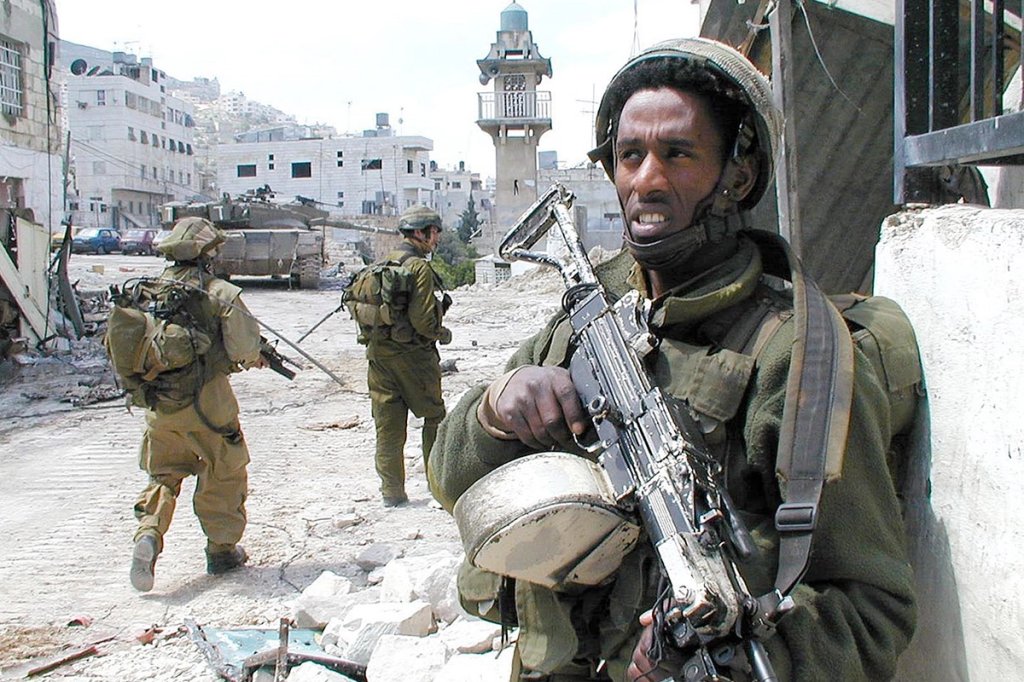
How Hamas Ended Up Running Gaza
In 2005, Israeli Prime Minister Ariel Sharon withdrew settlers and troops from Gaza. This gave Hamas a much-needed boost at the ballot box in the January 2006 elections. The result was a surprise majority for Hamas, also capitalizing on anger over corruption and frustration with stalled peace talks under Fatah.
This sounds like it should have been a victory for democracy and Palestinian self-determination. What actually followed was not exactly a model of peaceful power-sharing. The win triggered a power struggle between Hamas and Fatah that escalated into street fighting in 2007.
By the end, Hamas controlled Gaza, and Fatah dominated the West Bank under the Palestinian Authority. The Palestinian political system has been fractured ever since. If you’ve ever heard the name Mahmoud Abbas, he runs the West Bank, which at this point feels a world away from Gaza.
It’s not just the West that has trouble with an “Armed Wing” in charge. After Hamas seized Gaza, Israel tightened an existing blockade on the territory, restricting the movement of people and goods. Egypt imposed its own constraints on the southern border. Israeli officials argued the measures were needed to limit Hamas’ ability to smuggle weapons and build rockets. Critics described the result as collective punishment of Gaza’s civilian population.
Taking control of government did not turn swords into ploughshares. From that point on, life in Gaza became tied to Hamas’ decisions and to repeated cycles of conflict between Hamas and Israel: major escalations in 2008–09, 2012, 2014, 2021, and then the unprecedented war that followed the Oct. 7, 2023 attacks.
What Happened On October 7th
Basically, it was Israel’s 9/11. Which says a lot for people who lived through two intifadas. On Oct. 7, 2023, Hamas-led fighters breached the border between Gaza and southern Israel in multiple places, overrunning military positions and attacking civilian communities and a music festival. The assault killed roughly 1,200 people in Israel, mostly civilians, and about 250 people were taken hostage into Gaza.
The attack shattered Israeli assumptions about the security barrier around Gaza and triggered the most intensive Israeli military campaign in the Gaza Strip’s history, aimed at destroying Hamas’ military capabilities and top leadership.
For Hamas, October 7th was presented as a historic blow against Israel and a way to force the Palestinian issue back to the center of regional and global attention. For Israel, it was a national trauma, and for civilians on both sides of the border, it marked the beginning of a devastating new phase of the overall conflict.

The War That Followed
Israel’s response has included airstrikes, artillery, and ground operations throughout Gaza, coupled with severe restrictions on fuel, food, and other supplies during much of the campaign.
As of early 2026, Israeli officials and Gaza’s Health Ministry (which is overseen by Hamas, remember?) both acknowledge that tens of thousands of Palestinians have been killed, with Israeli media reporting the military quietly accepting figures of around 70,000 dead, most of them women and children, while noting that these numbers come from Hamas-run institutions.
International organizations, including U.N. agencies, have long treated the Gaza Health Ministry’s casualty data as broadly reliable, even when they question Hamas’ political messaging and motives.
Inside Israel, the war has killed hundreds of soldiers and left large areas of the south traumatized and depopulated. Families of hostages held by Hamas have pressured the government to prioritize prisoner exchanges and cease-fire deals, while some Israeli leaders insist that only the complete dismantling of Hamas will prevent another October 7th.
On the Hamas side, the group has lost senior commanders, large portions of its tunnel network, and much of its visible governing infrastructure in Gaza. Yet its remaining forces have used tunnels, dense urban terrain, and hostage leverage to keep fighting and bargaining power alive.
Analysts debate whether Hamas is on the verge of collapse or simply morphing into a more dispersed insurgent movement.
How to Classify Hamas

Understanding Hamas: Who they are and what they want
Hamas’ status in international law and diplomacy depends on where you’re standing.
The United States, the European Union, Canada, Japan, and others list Hamas as a Foreign Terrorist Organization (or an equivalent), making it illegal to provide material support and triggering financial sanctions.
Some countries draw a line between Hamas’ military wing and its political structures, especially when they need to talk to someone who can actually enforce a ceasefire agreement. States such as Qatar and Turkey have hosted or engaged with Hamas political leaders while saying they oppose attacks on civilians.
Others, including Iran, see Hamas as part of a broader axis of resistance against Israel and the United States, providing funding, weapons, and training.
For Palestinians, views are sharply divided. Some see Hamas as a corrupt, authoritarian force that has brought ruin to Gaza and sabotaged hopes for statehood. Others, particularly under occupation or blockade, have viewed it as a symbol of defiance and a provider of services, even if they don’t love its religious conservatism or its tactics.
Public opinion has shifted repeatedly, often in response to wars, crackdowns, and the failures of rival Palestinian leaders.
How Hamas Operates IRL
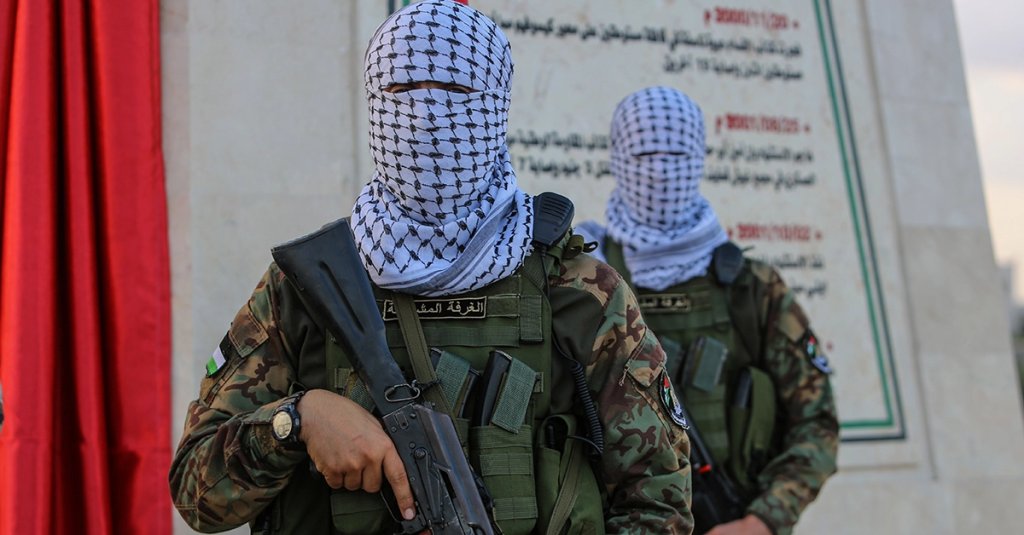
Hamas is not just a set of fighters in keffiyehs. It’s a full-spectrum organization with a political bureau. Leadership figures based historically in Gaza, the West Bank, and abroad (often in places like Qatar), who make strategic decisions, negotiate with other Palestinian factions, and deal with foreign governments.
Its military wing, the Qassam Brigades, oversees units responsible for rockets, tunnels, anti-tank weapons, snipers, and raids. Like any other guerrilla force, it organizes fighters into brigades and battalions across different parts of Gaza and has invested heavily in underground networks to offset Israel’s overwhelming conventional firepower.
It’s also a social and religious network. Mosques, charities, education programs, and welfare organizations provide services in Gaza and parts of the West Bank, which also help with recruitment and political legitimacy.
Funding has come from local taxation inside Gaza, donations from supporters across the region, and state backing, particularly from Iran. Over time, Hamas has also built a semi-formal economy through smuggling tunnels, businesses, and control of key sectors in Gaza’s constrained economy.
If you’re getting the sense of why this is all so confusing to so many (especially outsiders), then you’ve been paying attention.
Some Common Misconceptions
Hamas is not “just Gaza.” It is the dominant governing force in Gaza and has deep roots there, but not every Palestinian in Gaza supports Hamas, and not every Palestinian fighter belongs to it. Other armed groups, like Palestinian Islamic Jihad, operate in the Strip, sometimes cooperating with Hamas, sometimes not.
Hamas cannot be removed by force and even if it were, then everything will calm not simply “calm down.” This might happen in a war-game briefing, but not in real life. Armed groups are usually symptoms as much as causes. Even if Hamas’ military infrastructure were completely dismantled, the underlying drivers, like the Israeli occupation, blockade, lack of political freedom, regional rivalries, and ideological polarizations, would still exist. Other groups could fill the vacuum, or Hamas could rebrand and re-emerge in more decentralized forms. We’re not advising anyone to submit to the present evil lest a greater one befall them, but that could happen.
Most importantly, Hamas does not speak for all Palestinians. Hamas is one faction in a fragmented political landscape. The PLO, dominated by Fatah, is still recognized internationally as representing the Palestinian people, even if its legitimacy is contested at home. Large numbers of Palestinians, especially younger ones, are disillusioned with all of the parties.
Beyond Gaza
Hamas is not just a local problem for Israelis and Palestinians. It sits at the intersection of several bigger storylines. Iran’s support for Hamas puts it in direct confrontation with Israel and the U.S. It also complicates relations with Arab states that want economic ties with Israel but fear domestic backlash over Palestinian suffering.
Even as some Arab governments normalize relations with Israel, large parts of their populations see Hamas through the lens of resistance and injustice. That gap between governments and the public is a constant source of tension.
For Washington, Hamas is a terrorist group, a threat to a key ally, and a central obstacle to any two-state solution. At the same time, American leaders face growing outrage over support for Israeli operations that produce massive civilian casualties in Gaza.
Any discussion of “the day after” the war has to answer who will actually govern Gaza. Many Israeli leaders will say “anyone but Hamas.” Palestinians want neither an occupation army nor a hand-picked leadership with no legitimacy. International plans range from beefed-up Palestinian Authority rule to Arab peacekeeping forces to some yet-to-be-conceived arrangement.
All of them have to contend with the fact that Hamas, or what’s left of it, is still physically present and rooted in parts of Gazan society.
There’s really nothing mysterious about Hamas, although there might be some confusion. It’s not a monolith, or “boogey man.’ It’s a real movement that grew out of real grievances, real ideology, and real political failures, but it made strategic choices, such as deliberate attacks on civilians, that put it on terrorist lists around the world and plunged Israelis and Palestinians into repeated rounds of bloodshed.
You don’t have to like Hamas (many Palestinians don’t), and you don’t have to support Israel’s strategy to deal with it (plenty of Israelis don’t). But in the Middle East, groups like Hamas rarely vanish in a single campaign. They fade, fracture, evolve, or get replaced by something new. The real long-term story is whether the politics around them and the situations that birthed them change enough that young people grow up thinking about something other than sirens, tunnels, and revenge.