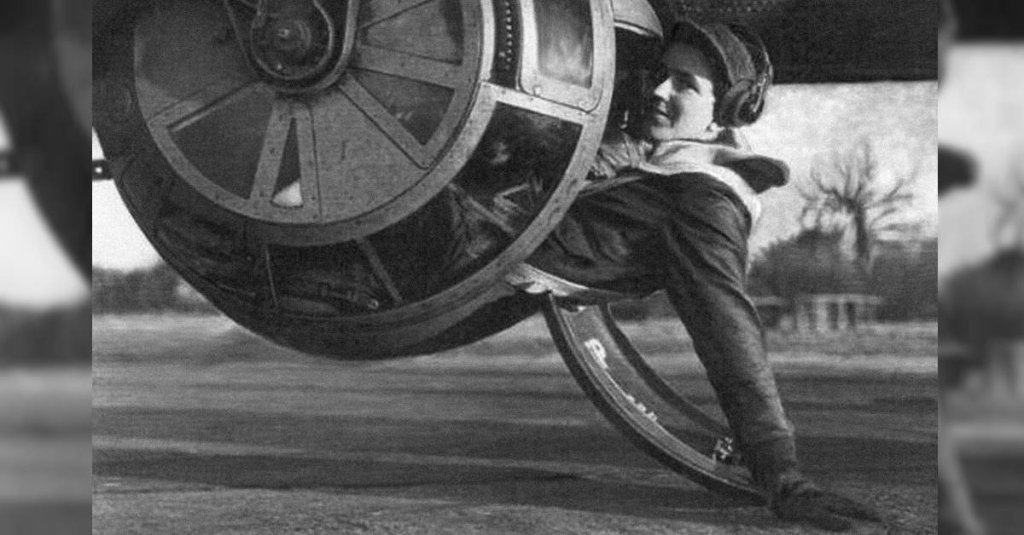
On January 3, 1943, a miracle occurred over the skies of France. While on a daylight bombing mission over occupied Saint Nazaire, a B-17F named “Snap! Crackle! Pop!” with the 360th squadron of the 303rd bomb group, tossed its ball turret gunner out of the plane without a parachute. Amazingly, his story doesn’t end there.
Saint Nazaire was home to a strategic U-boat base and dry dock, which were partially destroyed during Operation Chariot almost a year earlier. The bomber “Snap! Crackle! Pop!” which got its name from Capt. Jacob Fredericks, who flew the bomber from the States to its duty station. Before the war, Fredericks worked for the Kellogg corporation, the creators of Rice Crispies.
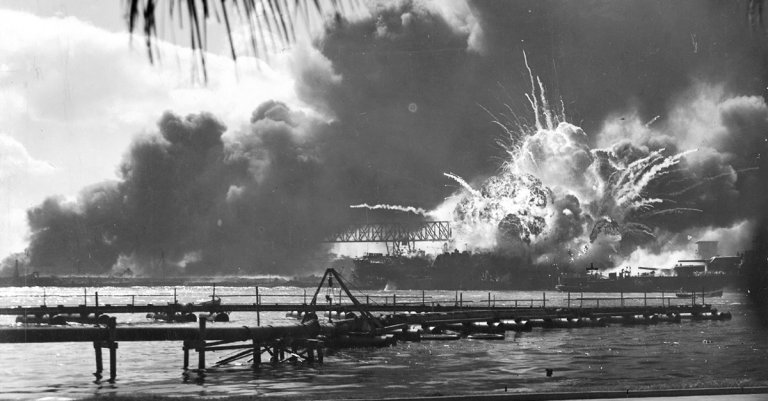
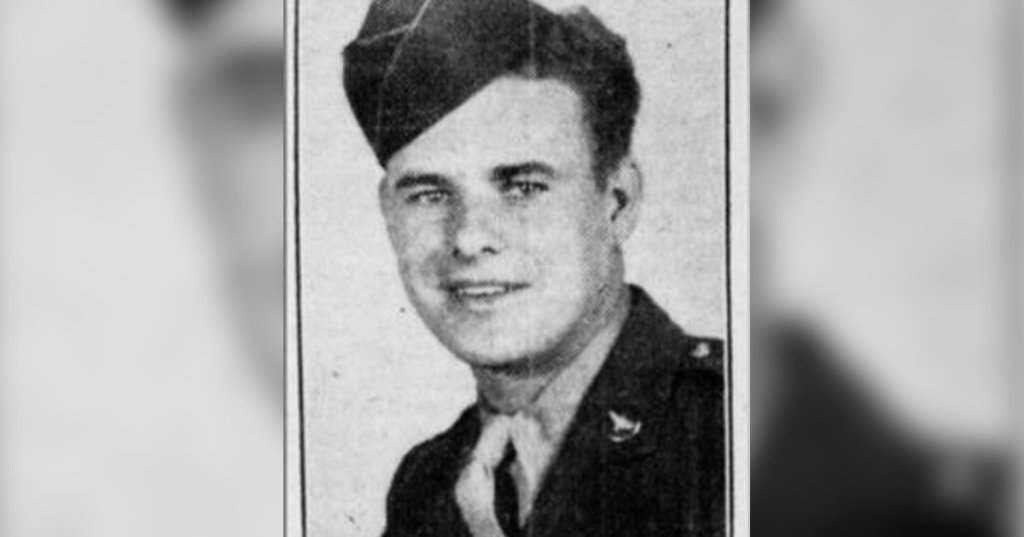
Aboard the B-17 that day was Staff Sgt. Alan Magee. He had joined the Army after the attack on Pearl Harbor and applied to be a pilot. He was passed over for pilot duty, but since he was 5’6” and weighed 155, he was a perfect fit as a ball turret gunner, and this would be his 7th mission. It was a daylight bombing run to destroy enemy torpedo stores located in a place known to the bomber crews as “Flak City.”
As the group approached the target, German flak batteries peppered the sky with steel, damaging Magee’s ball turret and rendering it inoperative. Magee left the turret and was heading to the radio room when a flak strike tore off part of the right wing, putting the bomber into a spin. He began to lose consciousness due to the lack of oxygen, and the force of the spinning bomber threw him out of the aircraft.
Magee fell from an altitude of 22,000 feet – more than four miles – and crashed through the roof of the Saint Nazaire Train Station.
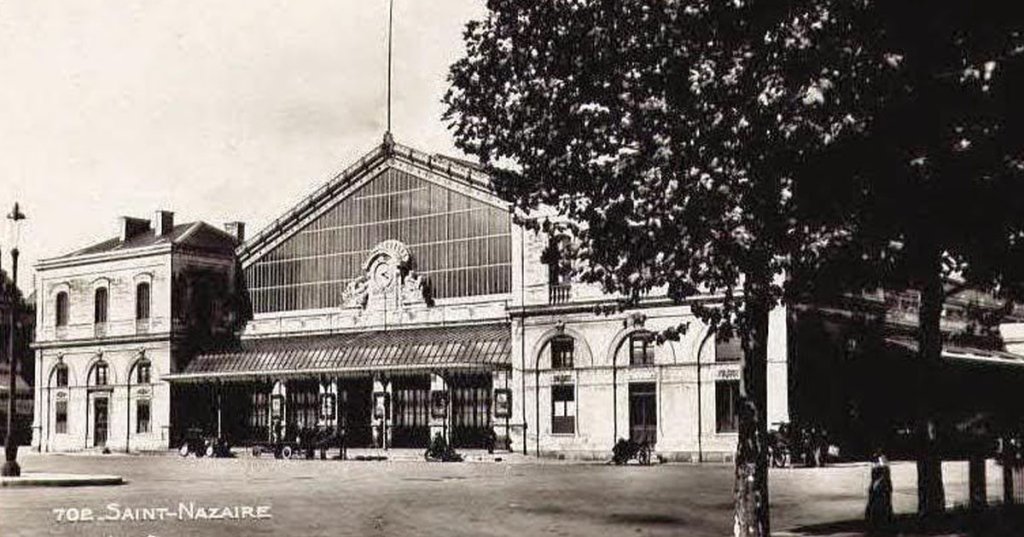
The glass roof absorbed much of the impact, and Magee was found alive, but badly injured. In total, he suffered 28 shrapnel wounds, a broken nose and eye damage, a punctured lung and kidney damage, a fractured right leg, and his right arm was nearly severed. He regained consciousness at a first aid station before transport to the hospital.
“I owe the German military doctor who treated me a debt of gratitude,” Magee later said. “He told me, ‘We are enemies, but I am first a doctor, and I will do my best to save your arm.'”
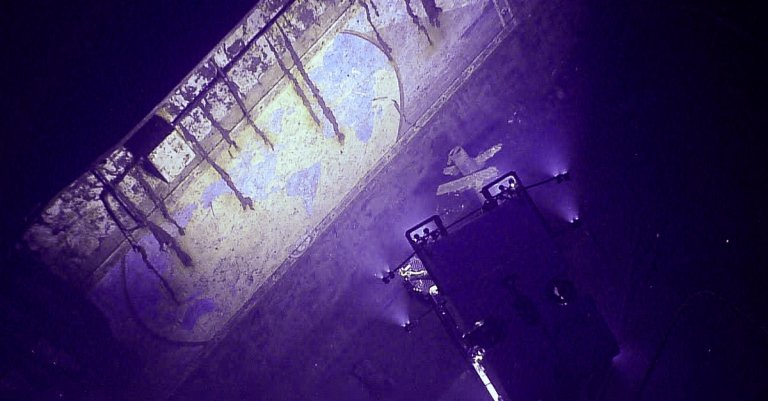
Magee never learned the doctor’s name, but he did save Magee’s arm and took care of his other injuries. Magee and two other survivors were sent to Stalag Luft 17B, where they spent the rest of the war as POWs. The wreckage of Snap! Crackle! Pop! ended up in the nearby La Baule Escoublac Forest, and when the Germans located the bomber, they took a war trophy. The front right section of the fuselage, featuring the nose art, was cut off and displayed in the oceanfront villa used by the occupying German command staff.
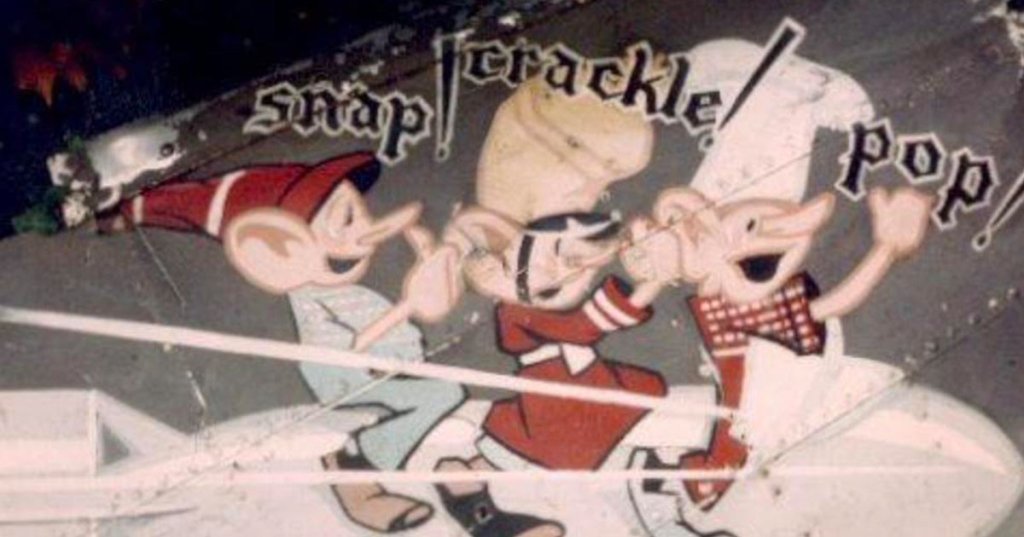
At war’s end, the Germans threw their trophy over the cliff from their villa before surrender, which was later found on the rocks below, near the sea. Magee was liberated in 1945 and received the Air Medal and Purple Heart. He went on to earn his pilot’s license and worked in the aviation industry. Many of the locals of Saint Nazaire, however, were sent to concentration camps when they were caught aiding American aircrews.
On Sept. 23, 1995, the people of the city dedicated a memorial to his seven crewmates killed in the crash. The townspeople were grateful to Magee, and they were all named Citizens of Honor by the city’s mayor. After a mass, the entourage headed to the forest crash site where the memorial was uncovered and dedicated.
The following day, Magee visited the U.S. military cemetery of St. James in Normandie to pay respects at the graves of his crewmates. During his visit, he visited the hotel where the German doctor treated him, as well as the submarine pens and the harbor. Finally, Magee traveled to the train station to see the glass roof that cushioned his fall over 50 years earlier and gave him a second chance at life.
Alan Magee died in 2003 at the age of 84.