The Federal Flight Deck Officer (FFDO) Program was established to create a new line of defense in the cockpit of civilian airliners after the terror attacks of Sept. 11, 2001. Through the program, commercial airline pilots could voluntarily receive firearms training and be issued a firearm to defend their cockpit against a hijacking.
Issued sidearms are a mainstay for U.S. military pilots, who carried the Beretta M9 and recently transitioned to the Sig Sauer M17/M18, but after 9/11, the new weapons and training were for civilian pilots, carrying civilian passengers at 30,000 feet. It appeared to be a whole new concept, but in reality, airlines had a lot of experience carrying firearms aboard.
Related: The intense rules for the Marines who protected US mail from gangsters
Falling under the jurisdiction of the Department of Homeland Security, FFDOs were originally issued Heckler & Koch USP Compact pistols chambered in .40 S&W; this changed to Glock 19s in 9×19 mm when DHS awarded its service weapon contract to Glock. Along with the use of Federal Air Marshals aboard civilian aircraft, FFDOs changed the experience of commercial flying by bringing guns into the cabin.
Or did they?
While Air Marshals have been protecting commercial flights since 1962, airlines have also long used firearms to keep their planes, crew, cargo, and passengers safe. Airline firearms are just about as old as the airlines themselves.
In 1918, the first airmail routes were established and flown by planes owned and operated by the U.S. government. Four years later, an Air Mail Service dispatch dictated that “pilots on transcontinental flights will be furnished with side-arms for the purpose of protecting the mail.” This followed the practice of protecting mail in trucks and trains. After all, cash, bonds, and other items of great value were transported by mail.
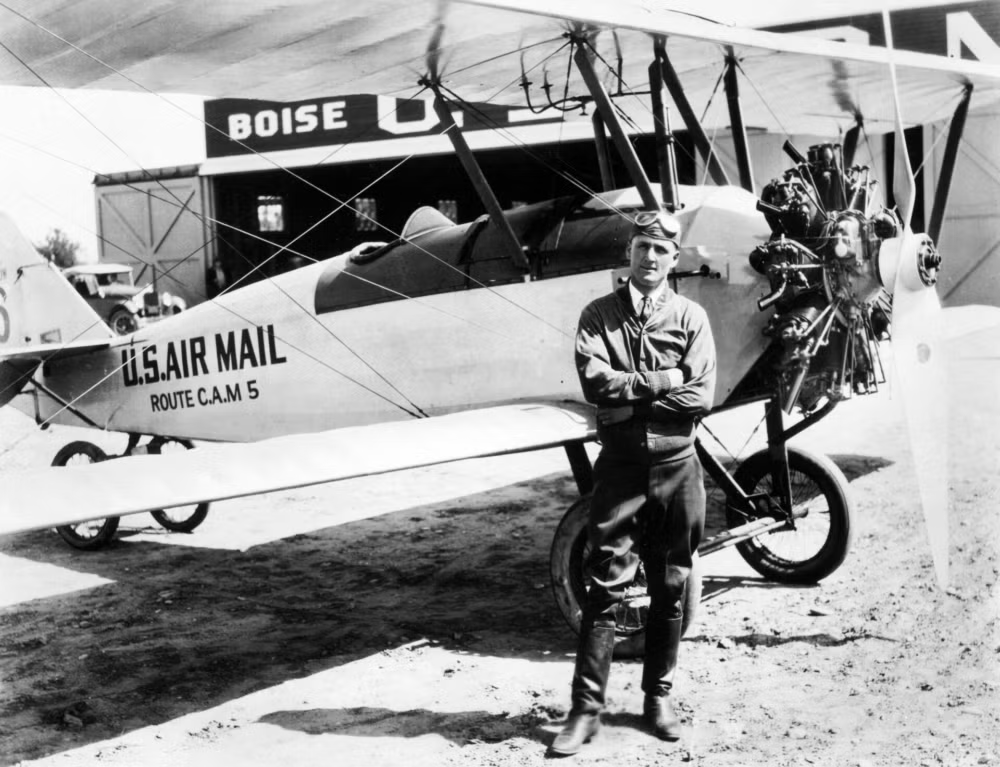
Air mail quickly expanded with the Air Mail Act of 1925, which introduced Contract Air Mail carried by commercial operators. Formed in 1931 by merging multiple mail-carrying airlines, United Airlines armed its pilots with sealed packages containing a handgun and ammunition under their seats.
Confusingly, the United Airlines manual describes the handgun as a “revolver with a full clip, no bullets in the barrel.” If United was issuing revolvers, their pilots better hope there aren’t bullets in the barrel. Luckily, United was actually issuing Colt Model 1908 Pocket Hammerless pistols chambered in .380 ACP.
These pistols were purchased from local hardware stores where United had a presence, like Chicago and Salt Lake City, and marked “PROPERTY OF UNITED AIR LINES” or “PROPERTY OF U.A.L.” After World War II, the Postal Service rescinded its requirement for air mail carrier pilots to be armed, and United sold its Colt 1908s.
The rise in airline hijackings that gave rise to the Air Marshals also resurrected the concept of airlines arming pilots. To address the hijacking issue, Eastern Airlines hired Korean War veteran and Marine aviator John Edward Shields as their Manager of Operational Security. Preferring to take the airline’s security internal rather than outsource to the Air Marshals, Shields reached out to Colt to design a revolver for use by Eastern’s pilots.
First, Shields required that the ammunition not be able to penetrate the skin of an aircraft for fear of explosive decompression (too bad Mythbusters wasn’t around then).
Second, the revolver had to be a two-part design so that the pilot and co-pilot would each carry a piece to be assembled in the cockpit; this rendered the firearm useless unless both pieces were acquired. Colt assigned the project to its subsidiary, Colt Technik.
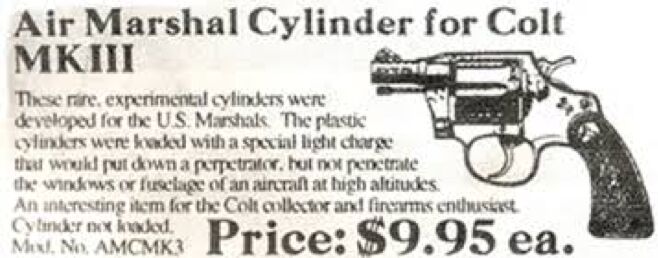
Technik fulfilled Shields’ requirements by modifying Colt Lawman and Colt Trooper revolvers in creative ways. To maintain lethality while (unnecessarily) protecting the aircraft’s skin, the airline revolver used a brittle bullet made of Plaster of Paris. The bullet was so brittle that it utilized a plastic sabot to engage the barrel’s rifling. Addressing the two-piece requirement, Technik made the detachable cylinder plastic and non-reloadable; rubber seals covered the bullets to protect them and their low-power propellant charges. Colt’s airline revolver could only be reloaded with a new cylinder.
In the end, Eastern’s Board of Directors caved to FAA pressure and allowed Air Marshals on its flights. To make some money back on the airline revolvers, Colt sold them on the commercial market. Ironically, they were marketed as Air Marshal or Sky Marshal revolvers.
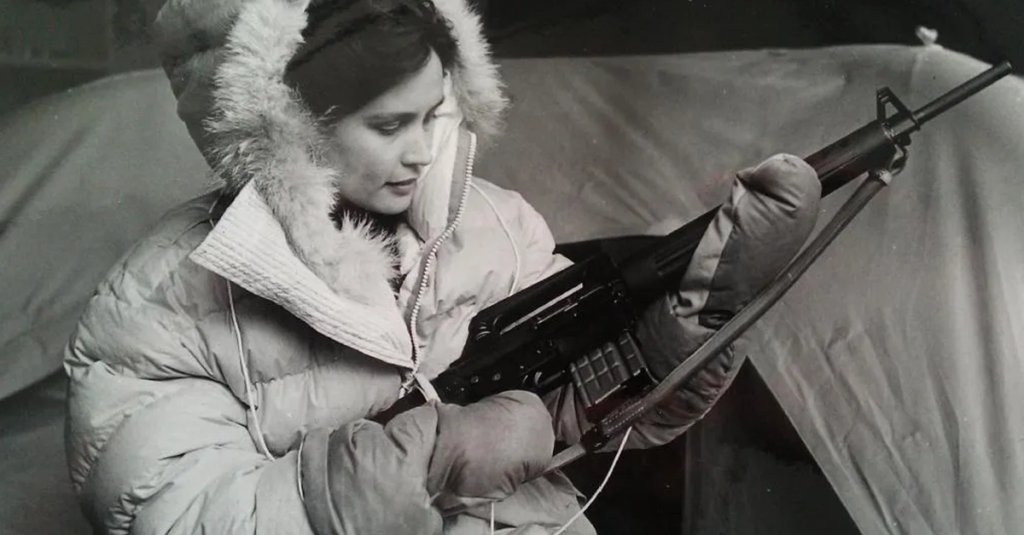
Interestingly, pistols are not the only firearms purchased by airlines and issued to crew members. Eugene Stoner’s AR-10 may not have been a hit with military customers like he and ArmaLite hoped, but Dutch airline KLM bought four of the 7.62x51mm rifles. The release of Stoner’s battle rifle in the late 1950s coincided with KLM’s launch of their transpolar route between Europe and Asia via Alaska in 1958. In the event of an Arctic crash, planes flying this route were equipped with survival kits that included an AR-10.
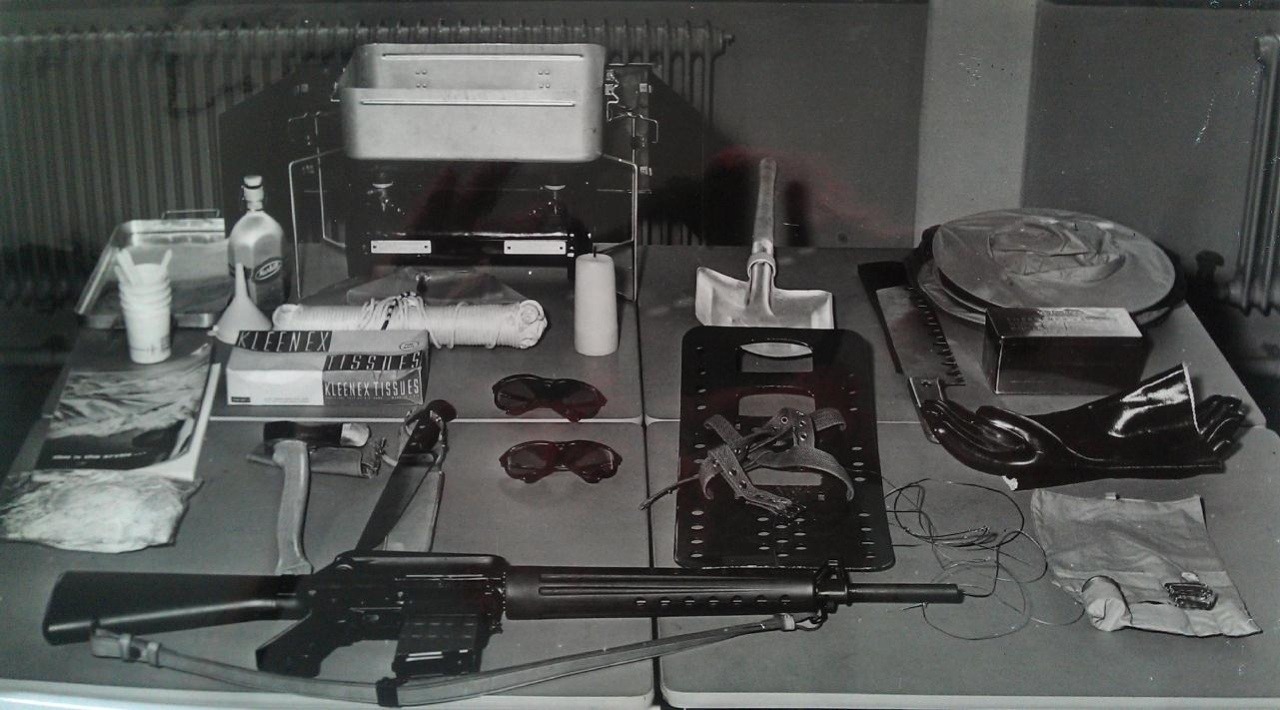
Purchased from the Dutch state-owned weapons company, Artillerie Inrichtingen, KLM’s AR-10s were sporter models with 16-inch barrels and lacked flash hiders. Though they were intended for defensive use against polar bears, crews were not given any live-fire training with the rifles. Rather, they were reportedly instructed to aim between a bear’s shoulder blades if attacked. Of course, the Arctic survival kits included more critical supplies, such as shovels, tents, sleeping bags, a stove, and a raft.
By the early 1970s, survival protocols changed for larger jetliners, and it was expected that survivors of an Arctic plane crash would be rescued within 24 hours. As a result, KLM sold its AR-10s. Although it might make an unruly passenger think twice before taking a swing at a flight attendant for running out of the beef meal if the FA was armed with a Stoner original.