In “We Bought a Zoo,” author Benjamin Mee wrote, “Sometimes, all you need is twenty seconds of insane courage. Just literally twenty seconds of just embarrassing bravery. And I promise you, something great will come of it.”
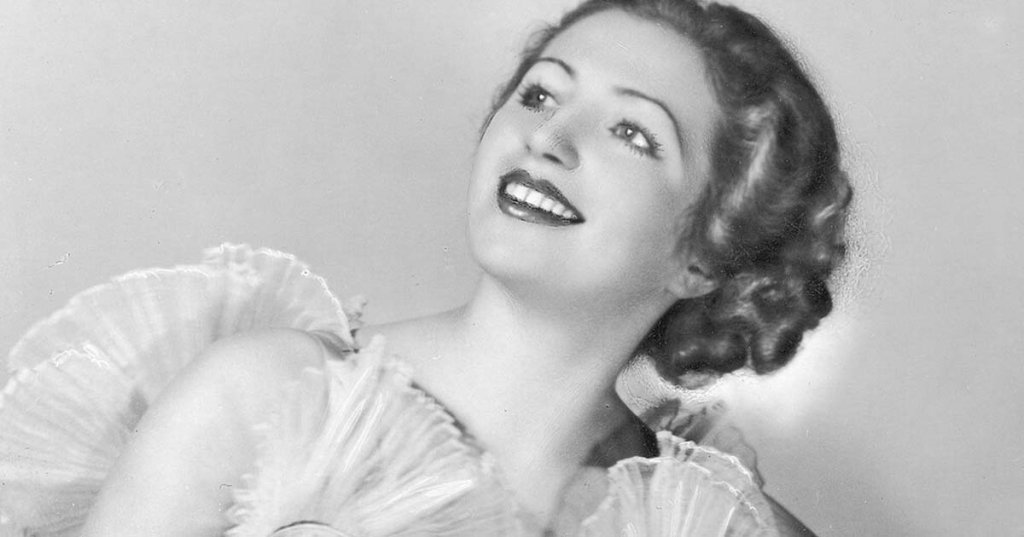
The story of Franceska Mann, the 26-year-old ballerina who started a riot when fighting for her life at the hands of Nazi guards, is a perfect testament to this quote.
On the night of Oct. 23, 1943, in the midst of the Second World War, Mann showed her insane courage by deciding to stick it to her Nazi guards instead of silently enduring their tyranny. She ended up killing one and severely injuring two others—not to mention the riot she started.
Though the riot did not last long, and most of the rioters ended up being killed, even generations later, her story is still passed down as a symbol of epic bravery and resistance.
A Celebrated Dancer
Born in 1917 to wealthy Jewish parents in Warsaw, Poland, Franceska Manheimer-Rosenberg was a talented young woman with a promising future. Her ballet education began at the schools of prominent dancers who taught her both classical and modern ballet. Among the various schools she attended, the most notable was Irena Prusicka’s School of Gymnastics and Artistic Dance, which was one of the top three dance schools in Warsaw at that time. It was there that she learned ballet, free dance, and tap dance.
Mann’s talent and determination soon became clear to everyone around her. In 1939, she took part in an international dance competition held in Brussels and bagged 4th place, defeating 120 other dancers for this coveted spot. She had proven herself as a force to be reckoned with—though everyone would soon come to know just how much this applied to the world outside of dance.
She soon started performing in public, and people came to know her by her stage name of Lola Horowitz. She gave recitals at the Great Theatre in Warsaw, performed at opera and cabaret stages, and put on shows in cafes, private parties, and revues. She was considered a Polish treasure—one of the most talented dancers of her generation.
But it all changed when the Germans invaded Poland.
Liquidation of the Warsaw Ghetto
During the German occupation of Poland, Mann, like all the other Polish Jews, became a prisoner of the Warsaw Ghetto. The living conditions were atrocious, which isn’t all that surprising considering the fact that the ghettos were nothing more than waiting rooms for the concentration camps and extermination centers.
The Jews in the ghetto had to live in very close quarters, packed together like sardines in a tin can. It’s said that as many as 10 people often had to share a single room. There was barely enough food for everyone. Many met their deaths at the hands of starvation or disease.
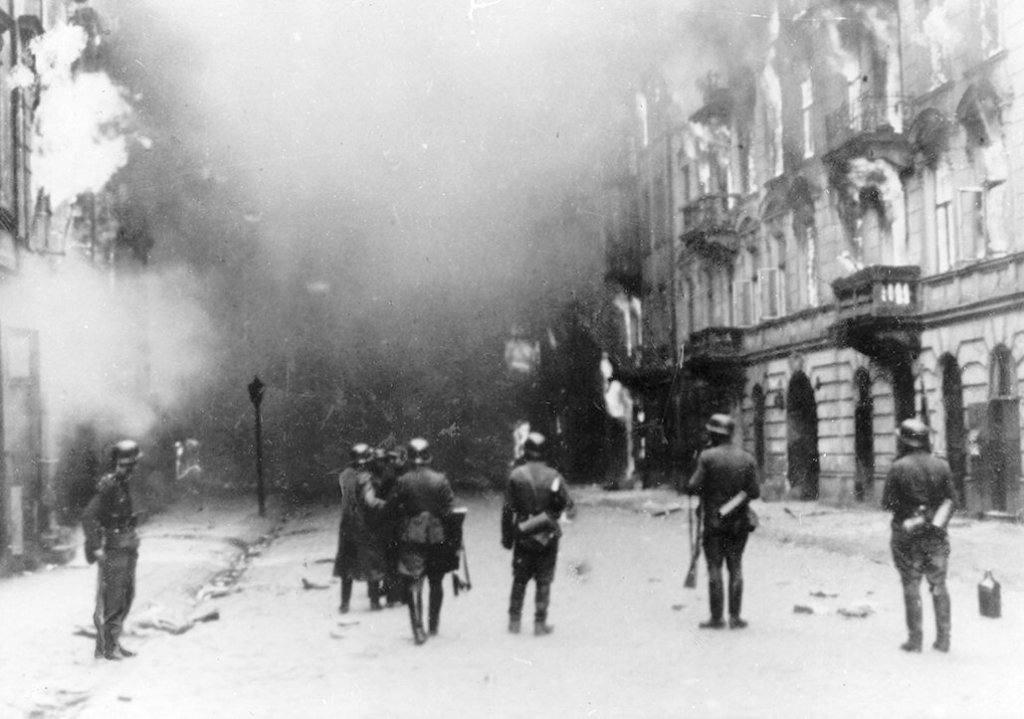
During this time, the dancer continued performing at places such as the Melody Palace nightclub, Femina Theatre, and Cafe Bagatela. In April and May of 1943, the Jews of the Warsaw Ghetto began fighting back in what is now known as the Warsaw Ghetto Uprising. Unfortunately, they were no match for Nazi Germany’s SS and police units, and a majority of them ended up losing their lives. The Warsaw Ghetto was liquidated.
However, a few Jews survived the liquidation by hiding on the “Aryan” side of the ghetto. Franceska Mann was one of the survivors.
The “Affair of Hotel Polski”
After the liquidation of the Warsaw Ghetto, the few Jews who had managed to survive began hoping that, maybe, they could make it out alive. Around this time, news spread that passports and visas to enter Latin America were available for purchase at a hotel on Rua Dluga, 29, known as Hotel Polski, at very high costs.
Surprisingly enough, the Gestapo promised that, with the documents, the Jews could leave Poland unharmed, for they were going to be exchanged with German prisoners of war in Switzerland. The Germans said that, till the exchange was made, the Jews could find safe refuge in the hotel. For those who had somehow escaped death and deportation during the Warsaw Ghetto uprising, this seemed like the only way to escape their fate.
Little did they know that something far sinister was afoot.
More than 2,500 Jews, including Franceska Mann, came forward to purchase the passports at Hotel Polski. They stayed at the hotel till the Gestapo began transferring them in groups to transfer camps. They were told that this would be their last transit point before they were taken to Switzerland for the final exchange.
On Oct. 23, 1943, around 1,700 Jews, including Franceska, were shipped off in a passenger train. Their promised destination? A transit camp in Dresden called Bergau. But when they left the train, the Jews realized that they had been tricked; they had been brought to the Auschwitz-Birkenau death camp, instead. There were to be no more travels for them.
Franceska’s Last Dance
When Mann and the other women at the women’s camp were instructed to undress to get themselves disinfected as part of the Swiss official’s orders, a few, including the Jewish dancer, began having doubts about the legitimacy of these claims. Those who had undressed had already been sent through to the gas chambers.
Sensing the skepticism of the remaining women, the Nazi guards started being aggressive towards them, forcing them to strip. In those few moments, Franceska, who had sniffed out the ruse, formulated a plan of attack.
From this point on, historical accounts vary. Some say she put on a show while undressing to distract the guards, while others say she struck a languid pose while sensually removing one of her high-heeled shoes. But the thing that everyone agrees on is this: when she had their attention, Mann hurled her shoe at one of the guards’ foreheads. When his pistol dropped to the floor, she picked it up, quick as a whip, and fired two shots, aiming at SS Maj. Joseph Schillinger’s stomach. After the events ended, Schillinger was taken to the hospital, where he died the following day.
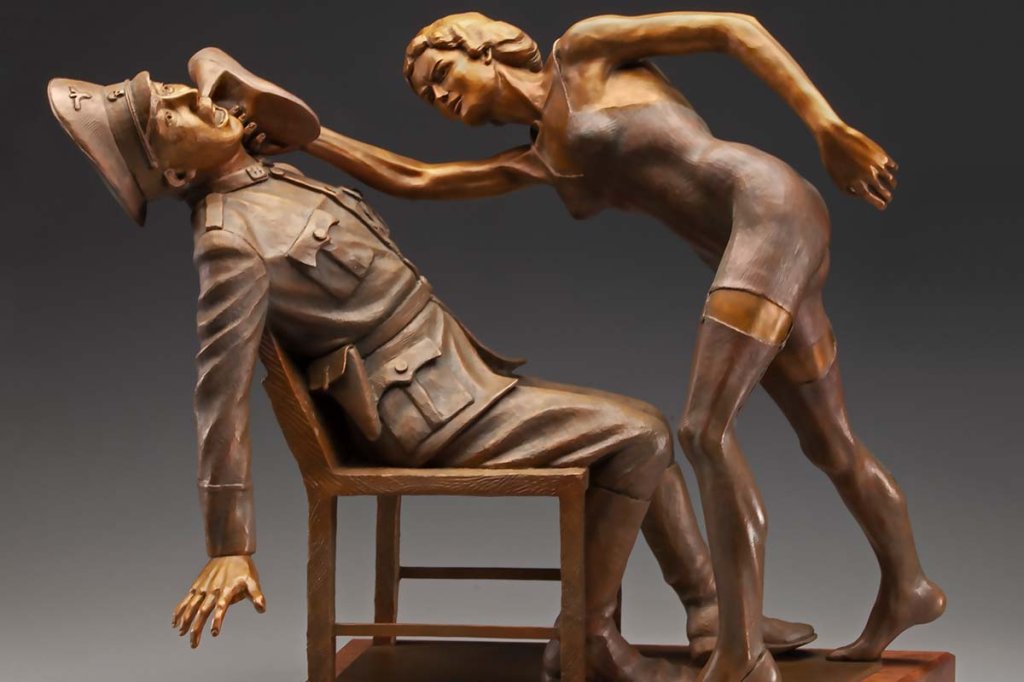
Mann fired a third shot at another SS guard, Wilhelm Emmerich, injuring his leg. The sound of the final bullet fired by the dancer incited all the other women to act. Emmerich went in search of reinforcements. The women locked the door of the room from the inside and began attacking the other guards. Some say that one of the guards was scalped, while the other had his nose torn off. The riot that had started due to one woman’s act of bravery was in full swing.
Unfortunately, the fight did not last very long. Just a few minutes later, Commander Rudolf Hoss arrived at the scene, flanked by his men, each of whom was armed with a machine gun. Cutting off all routes of escape, the Nazi guards opened fire. Most of the women were caught in the crosshairs of the bullets and were killed instantly. The others, who had believed the Gestapo’s lies and had gone to the “disinfection” room, died in the gas chambers.
A few accounts say that Franceska Mann committed suicide as a final act of rebellion instead of dying at the hands of the SS guards. Rudolf Hoss’s official account, on the other hand, claims that she was captured and gassed to death after suffering injuries during the riot. But it’s not clear which of these claims holds more weight. What is clear, though, is that she did die, for none of the Jewish women escaped the locker room that day.
Franceska, the Legend
There have, no doubt, been countless people who fought against the Nazis. Why, then, is Franceska’s story so epic? Simple: because it gave the prisoners hope and ignited a small spark of rebellion within them at a time when they needed it the most. It showed the prisoners that, if not today, then at least one day, they may be freed from Nazi rule.
“Franceska Mann’s acts became a symbol,” Auschwitz survivor Wieslaw Kieler wrote in his memoir. “They began to be told and retold and embellished in various ways until they became a legend. Without a doubt, that heroic act, on the part of a fragile woman on the way to her death, gave support and moral courage to all the prisoners. Suddenly, we realized that if we dared to raise our fist against them, that fist could kill, for they, also, were mortal.”