A lot of Americans don’t realize that, for a time, there was no U.S. Navy. From 1790 through 1801, the only defenders of America’s waterways (and the nation’s only source of cash) was the U.S. Revenue Marine, the earliest forerunner of the Coast Guard.
Facing seaborne threats from Britain and France, Congress and President George Washington decided that being defended solely by the Coast Guard was entirely unacceptable and passed “An Act to provide a naval armament,” which reestablished the U.S. Navy with six frigates.
Related: Here are the untold perils of renaming a vessel
There were many reasons why the United States decided to go without a Navy in its earliest years. For starters, it couldn’t afford one. It was effectively broke under the Articles of Confederation because it had no taxation power and had a large war debt to pay. Americans, especially Republicans, were also mistrustful of standing military forces. They also assumed that being an ocean away would keep foreign aggression in check and that the Coast Guard could handle any aggression that did occur.
It didn’t take long to shatter those illusions. Congress paid for each ship to be built simultaneously, and by 1800, all were in service. Today, only one of those original six frigates remains afloat. The others each met a unique and interesting fate. This is what happened to each of the original frigates of the U.S. Navy.
1. USS Constitution still floats.
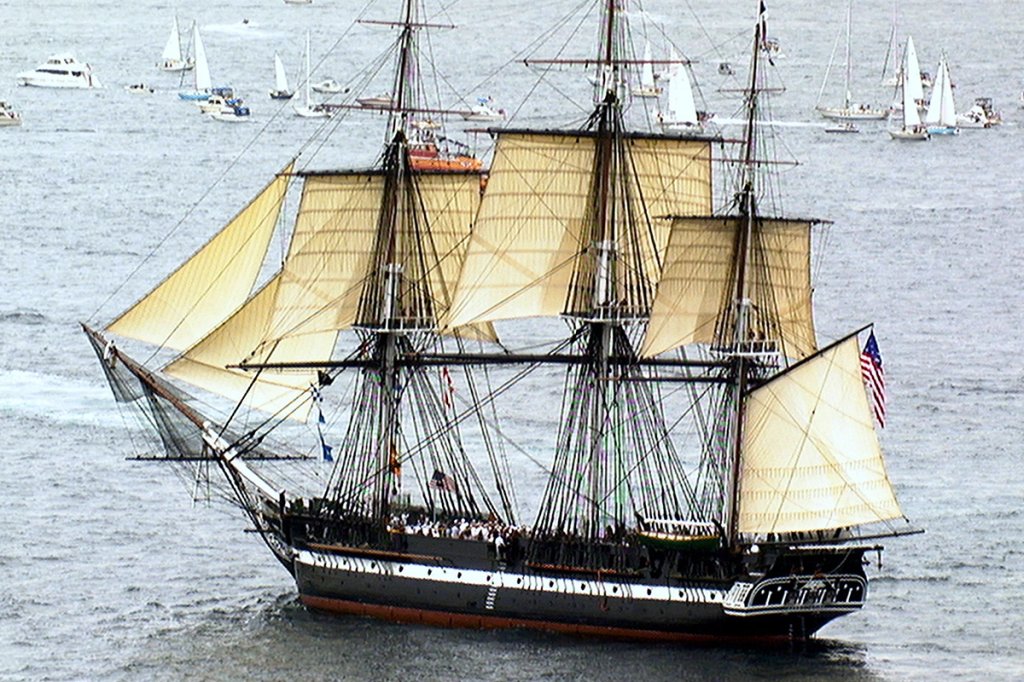
The Constitution is the only ship on this list whose story hasn’t yet ended. The vessel is the oldest commissioned warship in the world, and is still able to sail under its own power, as it did in 1997 and 2012, to celebrate its 200th birthday and the 200th anniversary of the War of 1812, respectively. After its launch in 1797, it captured the French merchant Niger and fought in the First Barbary War. But Constitution’s finest hour came during the War of 1812, when it captured five British warships, most famously, the HMS Guerriere.
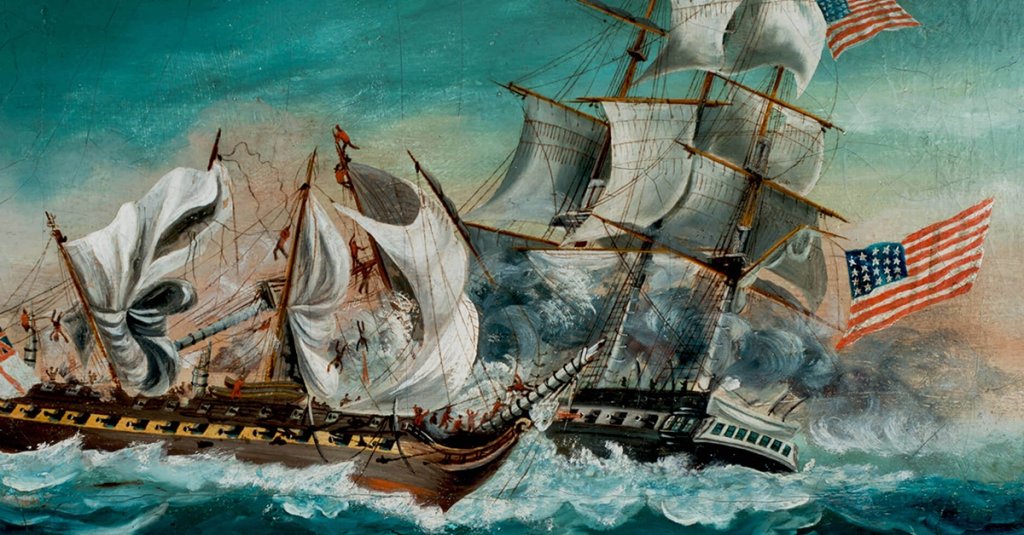
The defeat of Guerriere shocked the world at the time because the Royal Navy was widely considered unbeatable at sea. The Americans had so thoroughly beaten her, with minimal casualties and a live oak hull that effectively repelled Guerriere’s cannon shot, that Constitution not only gained the nickname “Old Ironsides, but became a symbol of American grit and craftsmanship.
COnstitution served as a flagship for American squadrons until it was converted into a training ship during the Civil War. Retired in 1881, Constitution became a museum ship. Its history and symbolic significance led to a 1925 nationwide effort to restore the vessel to its 1812 glory. For the rest of the 20th century and through to today, the Constitution has been meticulously maintained as the American “Ship of State.”
2. USS Constellation became the USS Constellation.
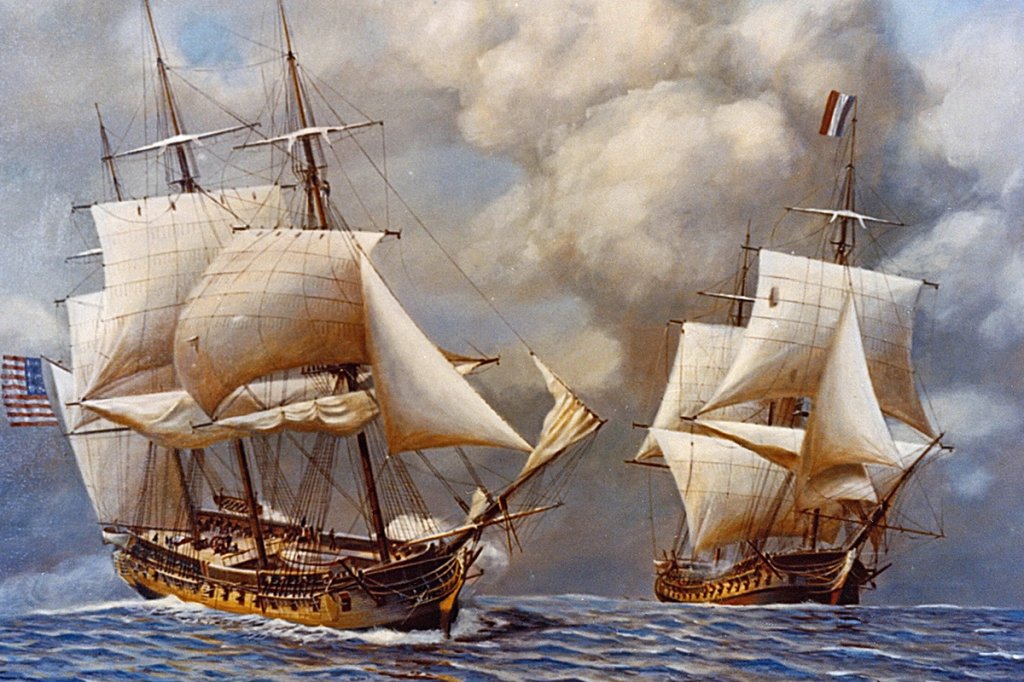
After the Constellation was launched in 1797, relations between the United States and France were far from their post-Revolution high. France had a revolution of its own, deposing and executing King Louis XVI. Despite sharing Republican ideals, the U.S. stopped paying off its Revolutionary War debt, claiming that money was owed to the previous regime. France responded by seizing American ships and attacking vessels in American waters, a conflict now called the “Quasi-War.”
In 1799, the USS Constellation scored America’s first major victory at sea when it captured the French frigate L’insurgente. It later nearly captured La Vengeance, which only managed to escape into the dark of night. During the First Barbary War, Constellation sank Tripolitan gunboats while blockading Tripoli Harbor, and evacuated U.S. Marines after the 1805 Battle of Derne. During the Second Barbary War, it was part of U.S. Navy legend Stephen Decatur’s squadron that effectively ended the pirate threat. Afterward, the vessel became the flagship for the Navy’s most prestigious commodores as it protected American shipping and supported the Army against the Seminole tribe.
Constellation was finally broken up in 1853 in Portsmouth, Virginia, where the wood from the ship was used to make… the next USS Constellation. It was a rather blasé ending to an otherwise illustrious career.
3. USS President became HMS President.
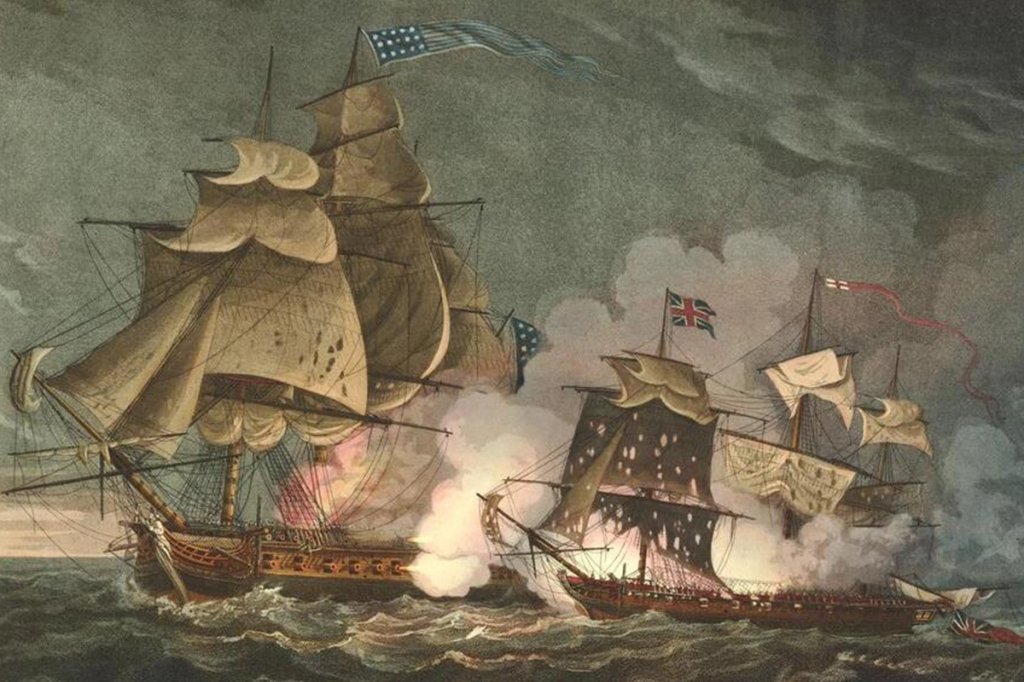
The President was the last of the original six frigates to launch when it hit the water in April 1800. Like its sister ships, President went on patrol during the Quasi-War with France and was sent to the Mediterranean during the Barbary Wars. The vessel captured some ships while on blockade duty, but didn’t really make history or headlines until 1811. President was in pursuit of the HMS Guerriere, which was impressing American sailors off the coast of New England, when the much smaller HMS Little Belt fired on them. The President wrecked Little Belt, which limped away to Halifax. Later, both captains would claim the other fired the first shot.
USS President would make history again as part of a squadron that included the USS United States, firing the first shot of the War of 1812 on the HMS Belvidera as a British fleet headed toward Europe from Jamaica. Cruising with USS Congress for the next year, the President captured nine enemy ships before being bottled up in Boston Harbor. A second cruise that year would capture 11 more, but the ship would spend most of 1814 stuck in New York. When it finally tried to escape the British blockade, it ran into a sandbar. Damaged while trying to free itself, the ship was forced to put to sea instead of returning to New York for repairs. It was captured later that night.
The ship sailed with the Royal Navy as the HMS President until 1818, when it was broken up for timbers. A second HMS President was built in its wake, as a reminder to the United States (and anyone else) that the British could take your ships.
4. USS Congress was scrapped.
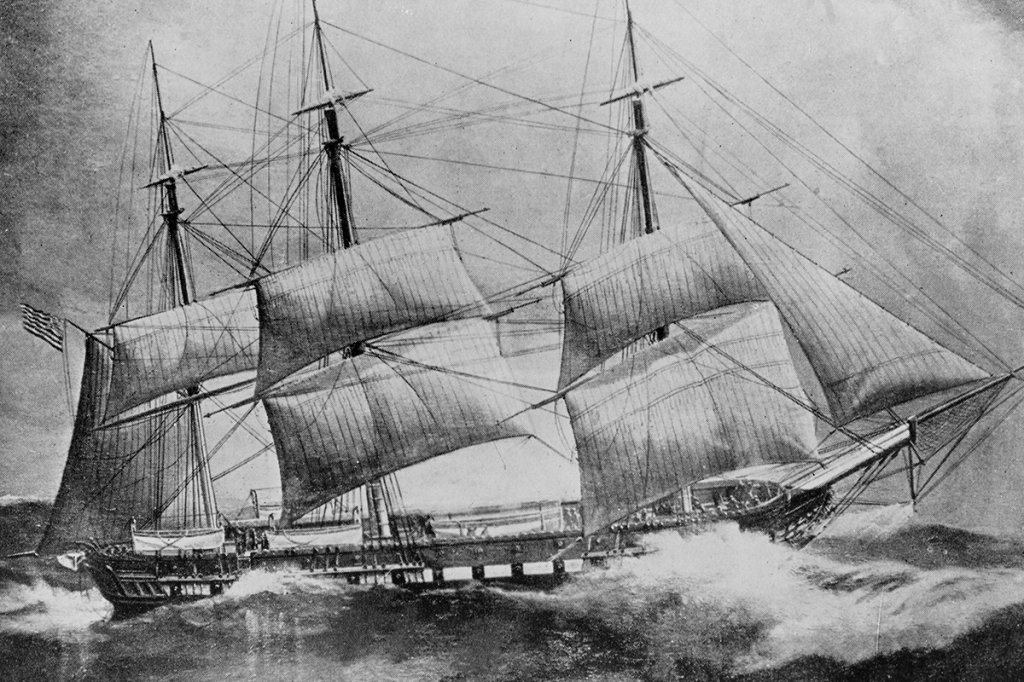
USS Congress first went to sea during the Quasi-War, weathering some vicious storms that nearly destroyed it. It was mothballed shortly after the conflict ended but was reactivated for the First Barbary War, to blockade Tripoli, Tangier, and Tunisia, with the President, Constellation, and Essex. Congress became a training ship just before the War of 1812. After a few cruises against British ships alongside the President, Congress found itself back in mothballs for the rest of the war. Aside from becoming the first U.S. Navy ship to visit China, Congress’ career wasn’t as spectacular as its sister ships’.
By the 1830s, decades of hard service and the rapid evolution of naval technology had caught up with it. Surveyors judged Congress too worn and decayed to justify the cost of a major rebuild, especially as the Navy was beginning to think in terms of newer designs. It was laid up “in ordinary” (mothballed, yet again) and finally broken up in 1834, her timbers discarded rather than preserved.
5. USS Chesapeake became a flour mill.
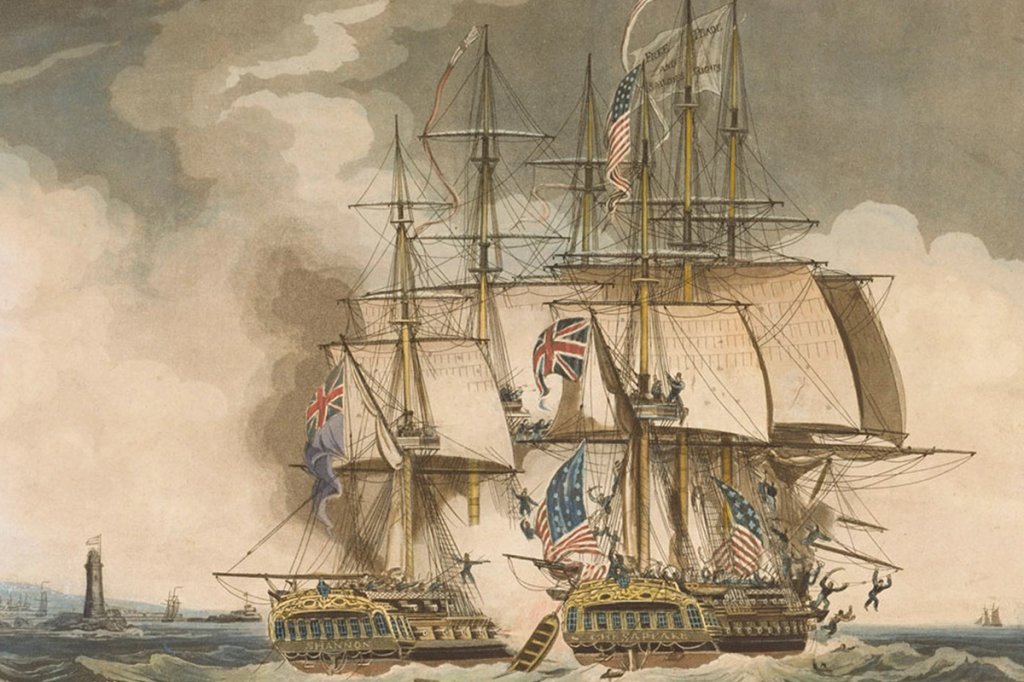
Like the other ships on this list, Chesapeake participated in the Quasi-War with France and headed to the Mediterranean to fight the Barbary Pirates. Unlike the other ships on this list, the Chesapeake seems to have been born under a bad sign. The vessel was damaged on its way to the Mediterranean and would end up spending more time in port for mast repairs than blockading Tripoli as ordered. A few years later, the HMS Leopard fired on and boarded Chesapeake to capture sailors it claimed were British deserters. The incident forced the entire Navy to be recalled from the Mediterranean, and British ships were expelled from American ports.
|
When the War of 1812 finally broke out, the Chesapeake was adept at raiding British shipping, capturing a lot of prize money before being forced to refit. But when the ship left Boston in May 1813, it was under a new commander and a mostly new crew. So it was no match for the HMS Shannon just outside of Boston Harbor. Within 15 minutes, the Chesapeake was captured, and its captain was dead. It became the HMS Chesapeake, but the British had just as much trouble with the ship as the Americans. It was finally sold for timber in 1819 and turned into a mill in Wickham, Hampshire.
6. USS United States became the CSS Confederate States.

The United States cut its teeth in the Quasi-War with France, protecting American merchant shipping in the Caribbean and taking French prizes. Refitted in 1810 and placed under Decatur’s command, it won her most famous victory on Oct. 25, 1812, battering HMS Macedonian into surrender. It was one of the early single-ship wins over the Royal Navy that electrified American opinion during the War of 1812. After the war, United States served in a more workhorse role, patrolling the Mediterranean, later flying the broad pennant as flagship of the Pacific Squadron, then joining the Africa Squadron to help suppress the transatlantic slave trade.
By the eve of the Civil War, the old frigate was worn out and decommissioned, lying in ordinary at Norfolk Navy Yard as one of only two surviving original frigates. When Virginia and the Confederacy seized the yard in April 1861, they salvaged the hulk, refitted it just enough to use as a receiving ship, and commissioned it as CSS United States (often called CSS Confederate States). As Union troops closed in on Norfolk in 1862, the rebels ordered it sunk in the Elizabeth River as an obstruction. After the yard was retaken, the U.S. Navy raised the hull but never tried to restore it to service. Instead, it sat in the yard until the war’s end, when it was finally broken up in 1865 and its timbers sold.
Don’t Miss the Best of We Are The Mighty
• The U.S. Navy unloaded on the Iranians in the most explosive surface battle since World War II
• How cribbage became the card game that rules the Navy’s Submarine Force
• Aviation nerds are mourning Iran’s F-14 Tomcats