Operation Underworld is usually remembered as a secret pact between the Navy and the Mafia to secure America’s wartime docks, but its influence reached far beyond New York Harbor. At the center of this unlikely alliance stood Charles “Lucky” Luciano, an imprisoned crime boss whose power stretched from Sicilian villages to Manhattan boardrooms.
As the Allies prepared for the invasion of Sicily in 1943, planners soon realized they lacked what they desperately needed: Italian-speaking specialists, reliable local contacts, and practical on-the-ground knowledge that could turn a map into an operation. Even behind bars, Luciano’s network offered a back channel to exactly the kind of access traditional intelligence could struggle to create quickly.
Related: Nazi sabotage teams were captured infiltrating the US during World War II
This unexpected partnership came at a moment when the Allies faced enormous pressure. German submarines lurked along the East Coast. Fears of sabotage on the docks spiked after the catastrophic fire aboard the SS Normandie, and while witnesses pointed to an accident, suspicion of enemy action was widespread in wartime New York.
What began as a desperate wartime gamble on the waterfront ultimately intersected with invasion plans, and later fed into the Allies’ growing obsession with one brutal lesson: identifying friend from foe fast enough to prevent self-inflicted catastrophe.
Sicilian Roots
Luciano began life as Salvatore Lucania in the rugged Sicilian town of Lercara Friddi. The young man grew up immersed in a world where government was ineffective, bandits roamed the countryside, and Mafia families acted as the true authority. His formative years in Sicily conditioned him to understand the unwritten codes of loyalty and secrecy that governed village life, knowledge that would later become indispensable to the rise of the American Mafia.
When his family immigrated to New York in 1906, young Salvatore arrived in a city bursting with opportunity and conflict. In his teen years, he was a formidable presence in Lower Manhattan. His alliances crossed ethnic boundaries, most notably through his partnership with Jewish gangsters like Meyer Lansky and Benjamin “Bugsy” Siegel.
Together, they reshaped organized crime into a corporate-style syndicate spanning the nation. By spearheading the creation of the Commission, Luciano established himself not only as a kingpin but also as an administrator capable of uniting fractious criminal factions under a single strategic umbrella.
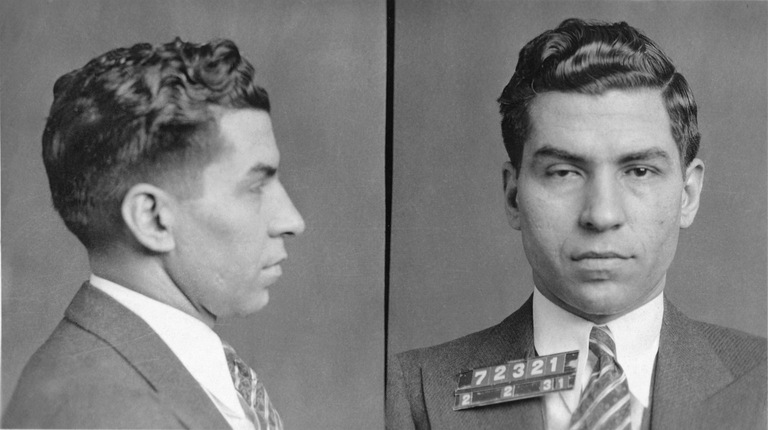
These abilities made him far more than a mere criminal. They made him a power broker, and during World War II, he was a potential asset the U.S. military could not ignore.
Mussolini vs. the Mob
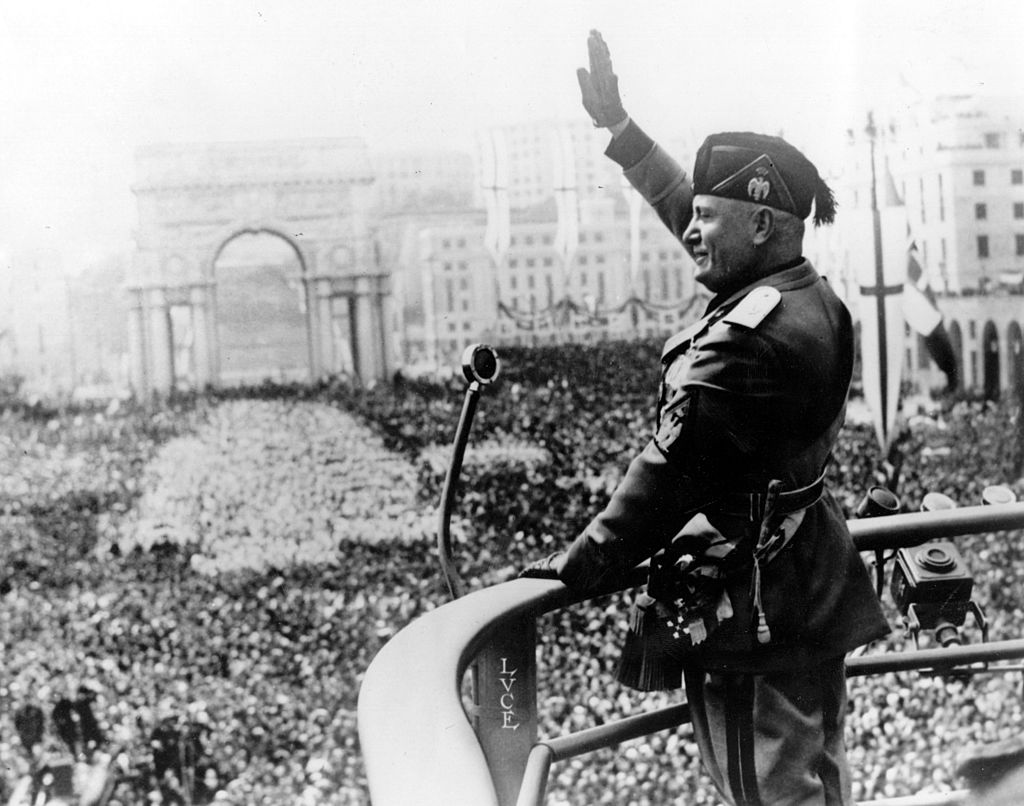
The Mafia’s conflict with Italian dictator Benito Mussolini began long before the Allied invasion of Sicily. When Mussolini seized control of Italy in the 1920s, he declared the Mafia an existential threat to his Fascist state. Determined to eradicate them, he unleashed Cesare Mori, a ruthless lawman known as “Il Prefetto di Ferro,”—the Iron Prefect—to conduct an anti-Mafia campaign across the island.
Mori’s tactics were brutal. He arrested thousands of suspected Mafia members and associates, shipped many to penal islands, and oversaw the execution of others. His purge was so sweeping that, by some accounts, entire towns were depopulated in the process. The crackdown did not eliminate the Mafia so much as drive it underground, scatter its people, and harden old resentments that would still echo years later when Sicily became a battlefield again.
This campaign permanently shaped the mindset of many underworld figures. For them, Mussolini’s war on Sicily wasn’t abstract politics: it was personal, and it created its own reasons to see the Fascist system fall when the opportunity arrived.
Luciano Becomes an Asset
Despite being imprisoned in 1936 on prostitution-related charges, Luciano’s command over the underworld never entirely disappeared. His lieutenants continued to influence New York’s docks, unions, and longshoremen. When the Normandie caught fire and capsized in 1942, nerves across New York were already stretched thin, and many feared sabotage.
The Office of Naval Intelligence faced a complex reality: the port’s security problem wasn’t only about patrol boats and badges. It was also about who actually controlled the labor, the waterfront muscle, and the informal “rules” that ran the docks.
With approval from New York District Attorney Frank Hogan, naval intelligence first approached Joseph “Socks” Lanza, who controlled the fishing industry, and organized fish workers to report suspicious activity. But Lanza made the next step clear: if you wanted real compliance across the waterfront, you needed the “big boss.” That meant Luciano.
After getting permission from the state’s corrections leadership, Luciano was moved to Great Meadow, a prison more accessible for meetings with Naval Intelligence. Lansky made the original approach to seek Luciano’s cooperation, and when “Charlie Lucky” agreed, the message that went out was simple: cooperate with the Navy, report anything suspicious, and stop problems before they started.
According to a Navy intelligence history account, the results were dramatic. No sabotage, no work stoppages, no slowdowns, and the port remained secure for the duration of the war.
What began as a protective measure for New York Harbor didn’t magically turn mobsters into patriots. It did, however, build a bridge, a messy, quiet, and effective bridge, between naval intelligence and networks that could reach places official channels could not.
Operation Husky
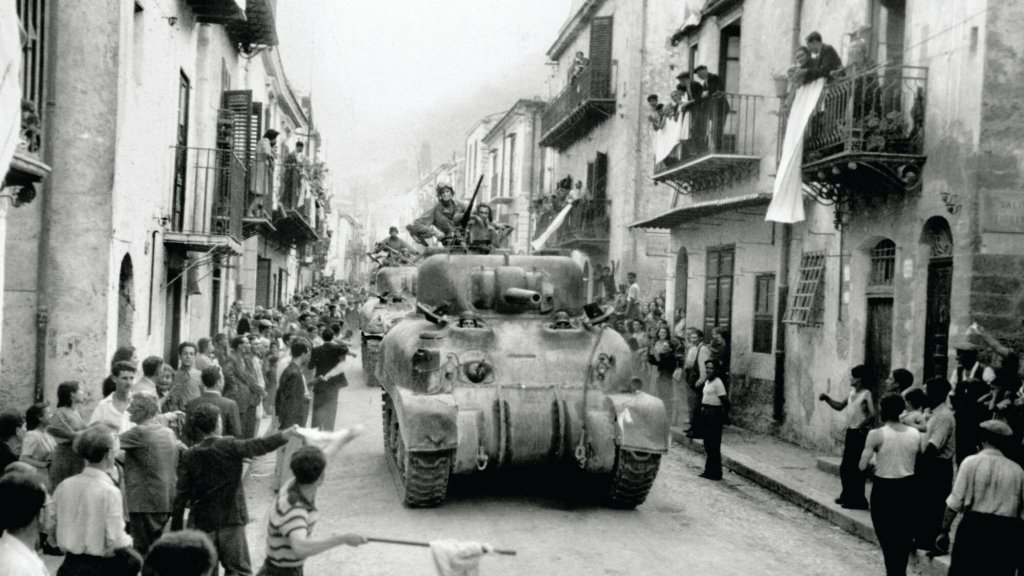
As the Allies planned their first major assault on Axis Europe, Sicily became the strategic entry point. But they needed more than courage and landing craft. In May 1943, Vice Adm. H.K. Hewitt wrote that he lacked Italian-speaking officers to help plan the coming invasion and wanted personnel with language skills and, ideally, knowledge of Sicily.
Naval intelligence in New York had already been collecting information on Sicily, interviewing hundreds of Sicilian natives, and plotting the results on a large wall map. Through underworld contacts, they also developed points of contact on the island.
A small Italian-speaking team was assembled and sent to support Hewitt’s staff. When the invasion began, that team landed with the first wave and pushed inland to link up with sympathetic locals. The intelligence they gathered wasn’t just “vibes” about loyalties; it included concrete operational material, such as minefield maps, and, in at least one reported episode, access to documents on Axis defensive positions and naval code material.
That doesn’t mean the Mafia “won Sicily” for the Allies. It means that, in the chaos of war, the Allies sometimes accepted intelligence wherever it could be found, even if it came wrapped in a suit, a fedora, and a criminal record.
When the Allies finally invaded the island in July 1943, it became the largest amphibious operation of World War II in terms of the landing zone size and the number of divisions put ashore on the first day—an enormous combined effort of sea, air, and land power.
A Murky Legacy
In the years following the war, Luciano’s cooperation remained a contentious topic. Admirers argued that the intelligence connection mattered. Critics argued his influence was exaggerated, or that the government handed organized crime a long-term advantage in exchange for short-term security.
What is clear is how his bid for freedom unfolded. In May 1945, Luciano’s lawyer, Moses Polakoff, submitted a petition to New York Gov. Thomas E. Dewey requesting executive clemency, citing Luciano’s wartime assistance among other arguments. In January 1946, Dewey granted a special commutation, and Luciano was immediately deported to Italy.
Exiled but not forgotten, Luciano spent the rest of his life in Italy. Historians still debate how much his network truly changed events, but the record of government contact—and the controversy it created—has never really gone away.
Lucky Luciano’s wartime story defies easy categorization. He was a criminal whose network proved useful. He was a Sicilian who had his own reasons to see Fascism lose its grip. He was a man who, through intermediaries, influence, and leverage, helped build an unconventional bridge between the U.S. government and hidden systems that conventional channels often can’t penetrate quickly.
In the long view, Operation Underworld is less a fairy tale about mobsters saving democracy than a case study in wartime pragmatism: what governments will do, who they will deal with, and what moral debt gets rung up when survival is the priority. Luciano’s part in it reveals that World War II was fought not only on beaches and battlefields, but also in conference rooms, on working docks, and in the invisible networks that connect remote villages to world-changing decisions.