Ask any historian when Rome officially “fell” and you are likely to get a litany of different dates. For many, the deposition of the boy emperor Romulus Augustulus by Odoacer the German in September 476 marks a definite end to the Western Roman Empire.
Others will point out (rightfully, in the opinion of this author) that the empire endured for another millennium, though its seat of power was unquestionably far to the east, in Constantinople (the Eastern Romans are also now commonly referred to as the Byzantines). Other, more fringe historians may even try to link the fall of the Ottoman Empire after World War I as a final bookend to the long and storied history of the Romans (Constantinople fell in May 1453, after conquest and siege by Ottoman Sultan Mehmed II).
But what if I told you that less than a century after Odoacer wrested power from the Romans, they took it back? Thankfully, the Byzantine historian Procopius accompanied General Belisarius during his extensive exploits leading the war efforts against the Persians, Vandals, and ultimately the Goths, and kept meticulous records in his “History of the Wars.”
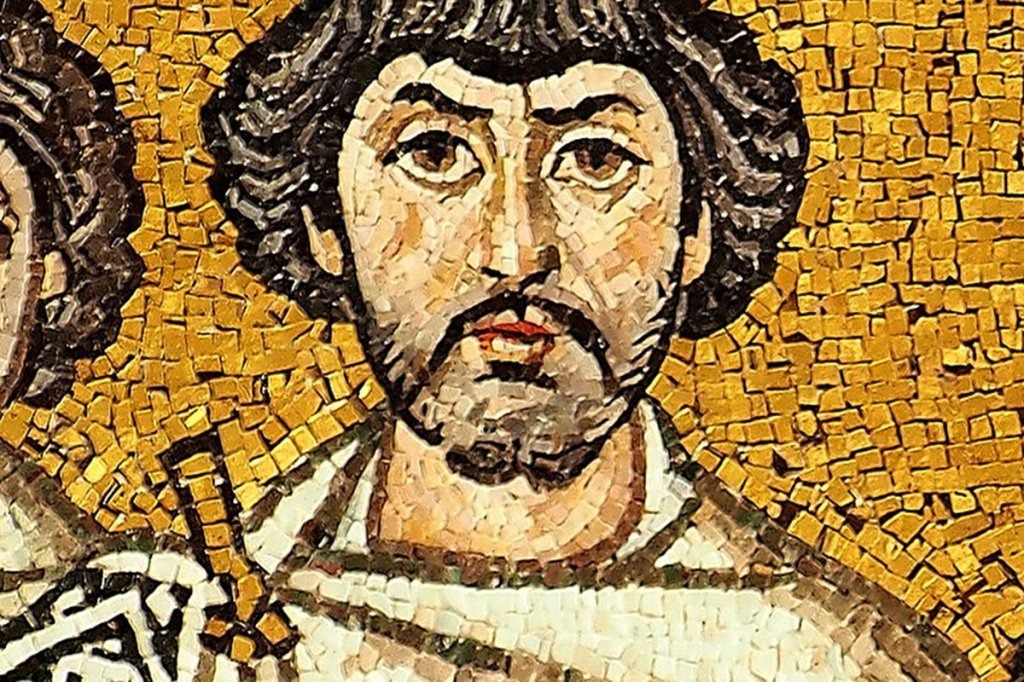
Emperor Justinian I took control in 527 AD and quickly sought to both defend the homeland from continuous harassment by the Persian Sassanid Empire and, looking beyond the horizon, expand the Byzantine Empire back to its past glory.
Battle after battle ensued with the Persians before an “eternal peace” was finally agreed upon between Justinian and the Sassanid Shah, Khosrow (spoiler alert for anyone wanting to learn Byzantine history beyond this point: the peace would not, it turns out, be eternal). With the dust settling on the Persian War, Justinian also had his hands full on the domestic front, where ultimately only his trusted general, who had proved his worth against the Persians, could be trusted.
Enter, Belisarius.
The Nika Riots
If you think that sports hooliganism is bad now, you should recognize that 6th-century chariot racing puts it to shame. Chariot racing during this era spawned extreme zealotry amongst its fans. In Constantinople, the two biggest factions of the fandom were the Blues and the Greens (the Veneti and the Prasini, respectively). These factions had far more political clout than sports teams do now, and the streets erupted into chaos when some members of both factions were arrested after a post-race riot resulted in deaths. When the men were denied pardons, all hell broke loose.
Ultimately, the Blues and Greens formed a united front, took over large swaths of the capital city, and declared a nobleman named Hypatius as the emperor in order to unseat Justinian – all while cries of “Nika!” (meaning “Victory!”) echoed through Constantinople. Presented with a dire domestic situation, Justinian momentarily considered fleeing for his life. But he ultimately decided to send in his best general to solve the problem.
While Belisarius initially attempted to talk to the conspirators, who were then holed up in the Hippodrome arena, they remained unmoved by any attempt at diplomacy. With no other recourse left to him to restore order to the city, he dispatched his army to break up the insurrection. The resulting bloodbath accordingly led to the deaths of 30,000 rioters, and the riot was quelled.

With the Nika riots now in the rearview mirror and Belisarius having proved his worth, the path was set to reconquer the former Roman territories.
The Vandalic War
Before the emperor could set his sights on reclaiming Italy, he would need to recapture Northern Africa. Once firmly Roman territory, Libya was being administered by the Vandals between 533 and 534. Belisarius led his troops into Libya and decisively removed the Vandals from power, culminating with the victory at the Battle of Ad Decimum.
While this was no easy task, it was a monumental step in giving Emperor Justinian the first major step in reclaiming his empire. Belisarius returned triumphant to Constantinople as a rock star.
The Gothic War
Fresh off his reclamation of North Africa for the Romans, Belisarius was tasked with finally taking Italy back for the empire. It was deemed that the internal divisions plaguing the Ostrogoths, who were now ruling Italy, would lead to a relatively easy campaign.
Belisarius quickly seized Sicily and then used it as a base of operations to launch the invasion into Italy. He would capture Naples in November 535 and shortly thereafter, Rome itself, in December. But holding the city of Rome would be no easy task. Between 537 and 538, the city faced a heavy onslaught of Gothic sieges. Heavy fighting continued between the Byzantines and the Goths well into 539 when Belisarius’ troops finally closed in on Ravenna (Ravenna having been the capital of western Rome since the early 5th century, well over 100 years before these events).
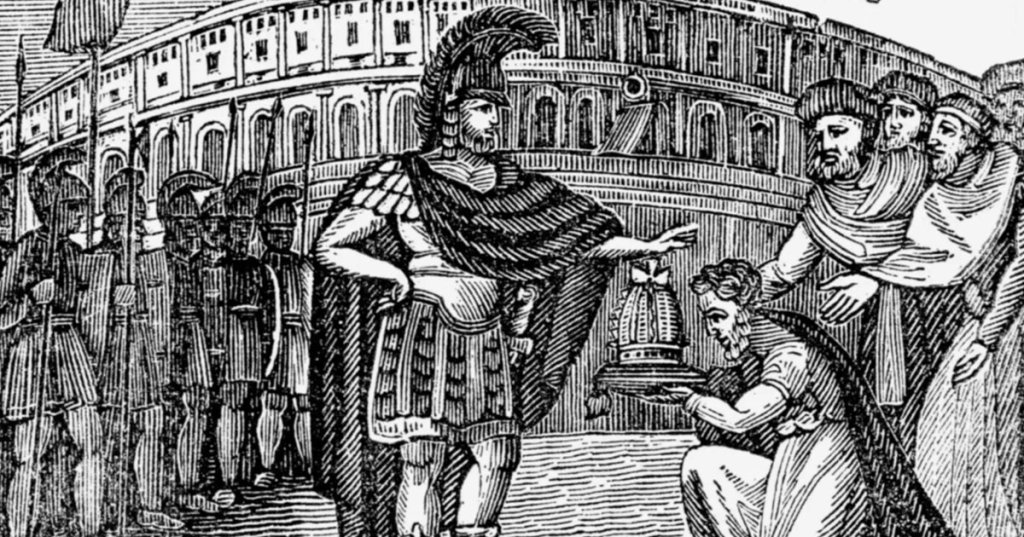
The desperate Goths pleaded with Belisarius and even tried to turn him against his emperor by offering him the seat as new “Western Roman Emperor” himself, but Belisarius was unmoved, and shortly thereafter, he proclaimed that Italy now belonged to Justinian.
Holding Italy would prove to be as difficult as taking it, however. Corruption, mutinies, and other issues plagued Justinian’s control of the peninsula. Gothic raids also took back parts of northern Italy over time. By 544, Belisarius’ services were needed once more, and he returned to Italy, fighting for years to retain control.
Amid the constant military campaigns, there was also the “Plague of Justinian,” one of history’s worst pandemics, that completely upended the emperor’s grand visions for the empire. In spite of this, Belisarius was the rock upon which his emperor turned time and time again to bring glory back to the Romans.
By 551, Belisarius retired, though he was called back into service in 559 to defend Constantinople from the threat of invaders. In spite of several accusations of disloyalty not detailed here throughout his years of service, he was pardoned by Emperor Justinian and, by the time of his death, was still held in high esteem by the imperial court.
Impact
Why is Belisarius such an important and underrated historical figure? For starters, his accomplishments refute the common misconception that the fall of Western Rome marked a definitive end to Roman control of Rome itself. Further, he faced unbelievable challenges from both home and abroad, and yet still delivered impressive victories on three fronts (Persia, Africa, and Italy).
Military strategists can also look to his example as one who understood what the established political objective was, and he delivered for his emperor. All in spite of the fact that, in this historical era, it would have been a tempting possibility due to his prowess and popularity to usurp power for himself. Instead, he never did this; he focused on military excellence and helped expand the Byzantine Empire by almost 50%, reconquering lost Roman territory.
Belisarius belongs in the pantheon of excellent military leaders.