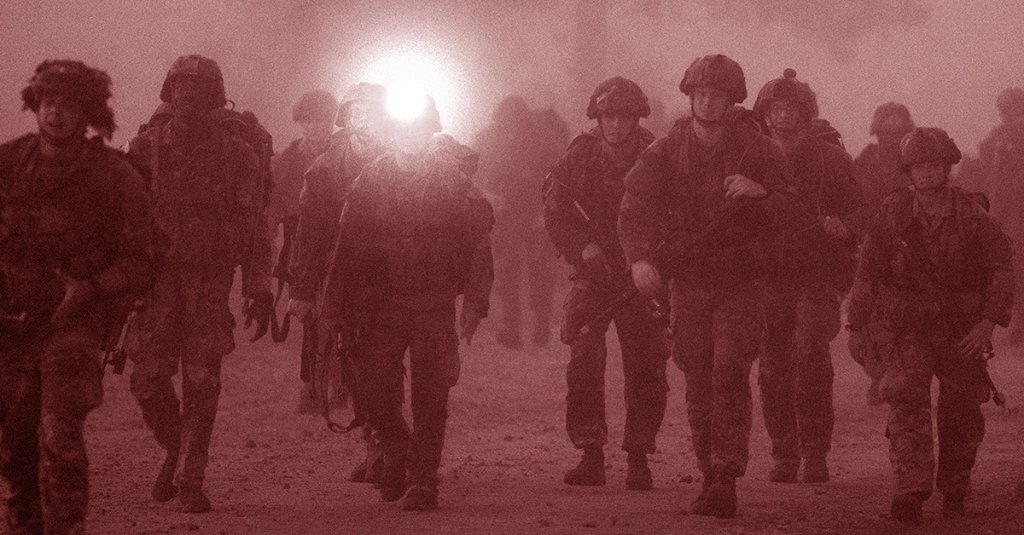
Somewhere in North Carolina, the headquarters element of the 82nd Airborne Division is sitting still. Not training. Not deploying. Just…waiting. The Army canceled its training rotation at Fort Polk, Louisiana, without much explanation, and the silence that followed has been louder than any press release.
Also Read: America’s ongoing quest to stop firing $4 million missiles at $30,000 drones
Meanwhile, seven American service members are dead. A hundred and forty more have been wounded. Operation Epic Fury, the largest U.S. military campaign in the Middle East since the 2003 invasion of Iraq, is entering its second week with no clear end date and a growing list of senators, not to mention their constituents, who can’t get a straight answer about what comes next.
This Friday, some of you will put on a red shirt, and most of you won’t think twice about why.
A Chain Email is the Spark
R.E.D. Friday, Remember Everyone Deployed, is one of those traditions that feels as if it has been around forever, but it actually dates back to roughly 2005, and its origin story is almost embarrassingly banal.
It started, as so many things in the mid-2000s did, with a forwarded email. The kind your aunt sent you between cat memes and prayer chain requests. This particular email asked recipients to wear something red every Friday as a visible show of support for deployed troops. It spread the way those emails always did: one inbox at a time, mostly ignored, occasionally taken to heart.
Whether that email was the actual ember that lit the tinder is debatable, but by March 2006, the idea had crossed borders. In Canada, military spouses Lisa Miller and Karen Boier organized a public event urging Canadians to wear red in support of their troops deployed to Afghanistan. Red happened to match the Canadian flag, which didn’t hurt.
The movement built momentum very quickly. By September 2006, Canadian Prime Minister Stephen Harper was leading a rally of thousands in solidarity with soldiers serving in the Global War on Terrorism. The tradition had gone from chain email to a state ceremony in about 18 months, which is faster than most Pentagon procurement programs take to advance a single memo.
A Tradition That Breathes
RED Friday has always had a pulse that rises and falls with the national zeitgeist. During the peak of the wars in Iraq and Afghanistan, you could walk into any AAFES store on a Friday and see red from the windows to the walls.
Military families seldom need reminders; they live and breathe the deployment cycle. The red shirt wasn’t symbolic to them; it was a kind of uniform in its own right.
As combat operations wound down, so did the sight. By the mid-2010s, the tradition had faded into something closer to a niche observance, kept alive mostly by military spouses, their families, veterans’ organizations, and the kind people who will put yellow ribbon magnets on their cars. Our country had moved on, even if its troops hadn’t entirely come home.
Then Feb. 28, 2026 happened.
The Week that Changed Everything
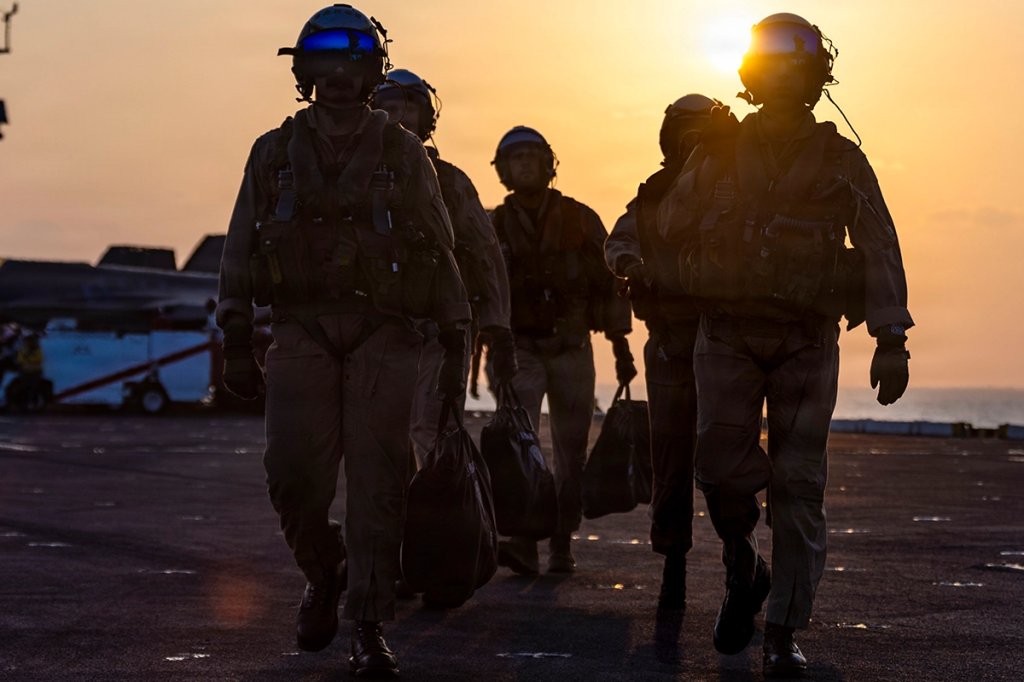
The United States and Israel launched joint military strikes against Iran on the last day of February 2026, igniting the most significant American military engagement in over two decades. In the first 72 hours, U.S. forces struck approximately 1,700 targets across Iran, destroying more than 200 ballistic missile launchers, roughly half the country’s arsenal.
Iran hit back. Hard. Ballistic missiles and drones smacked into U.S. installations across Kuwait, Saudi Arabia, Bahrain, and Qatar.
Six Army reservists from the 103rd Sustainment Command, based out of Des Moines, Iowa, were killed when a drone struck their makeshift operations center at Port Shuaiba in Kuwait on March 1: a seventh soldier, Sgt. Benjamin Pennington, from Glendale, Kentucky, died a week later from injuries sustained in an attack on Prince Sultan Air Base in Saudi Arabia. He was 26.
Spc. Declan Coady was 20. He was a student at Drake University and an IT specialist who joined the Army Reserve in 2023. His sister said she wished he could have known one more time that they all loved him.
Sgt. 1st Class Nicole Amor’s husband told reporters she had been set to come home soon. “She was almost home,” he said. “You don’t go to Kuwait thinking something’s going to happen.”
These are the very people RED Friday was created for.
The Conversation Nobody Wants to Have
As of this writing, the question of U.S. ground troops deploying to Iran is not hypothetical. It is an active, unresolved debate happening in classified briefings on Capitol Hill, and the people leaving those briefings are not reassured.
Sen. Richard Blumenthal emerged from a classified session recently, warning that the U.S. appears to be on a path toward deploying American troops on the ground in Iran. White House Press Secretary Karoline Leavitt said sending ground troops is “not part of the current plan” but proudly declined to remove the option from the table.
The Army’s cancellation of the 82nd Airborne’s training exercise, a unit famously capable of deploying 5,000 soldiers anywhere in the world within 18 hours, has done nothing to quiet the speculation.
As Sen. Rand Paul put it so meekly: “Because there was no national discussion about going to war, we do not know whether ground troops will be used. We have no idea how long the war will last.”
Defense Secretary Pete Hegseth has said the conflict could last eight weeks. CENTCOM is reportedly planning for at least 100 days. The Chairman of the Joint Chiefs, Gen. Dan Caine, told reporters to expect additional casualties. “This is not a single, overnight operation,” he said.
What RED Actually Means
Here’s the thing about RED Friday that the original chain email got right, even if the format was embarrassing: the act itself is almost irrelevant. Nobody’s life gets saved because you wore a red polo, tucked into your slacks, to work. No deployment gets shortened, not one policy changes.
But that was never the point. The point was to make a choice, once a week, not to avert your eyes. To acknowledge that somewhere, right now, somebody’s friend, or kid, or spouse, or parent is standing post in a place most Americans couldn’t care to find on a map, doing a job most Americans would rather armchair-quarterback on Facebook.
Twenty years ago, that meant Afghanistan and Iraq. Today, it could mean Iran, Kuwait, Bahrain, Qatar, Saudi Arabia, Nigeria, Cuba, or wherever else the 82nd ends up if the phone rings.
There are things you can do beyond wearing a color, of course. Write a letter to a deployed service member, every veteran who’s received one will tell you the same thing: it mattered more than you know. Volunteer with organizations that assemble care packages. Check in on military families in your community, especially the ones who’ve gone quiet. That silence usually means something.
However, if all you do this Friday is put on a red shirt and take an extra second to think about why, that’s not nothing.
Remember Everyone Deployed.
Don’t Miss the Best of We Are The Mighty
• The grunt’s 250-year quest for a weapon that actually works
• How extremely cold weather can destroy the military’s best-laid plans
• The Mk-19 grenade launcher and how it helped shape the War on Terror