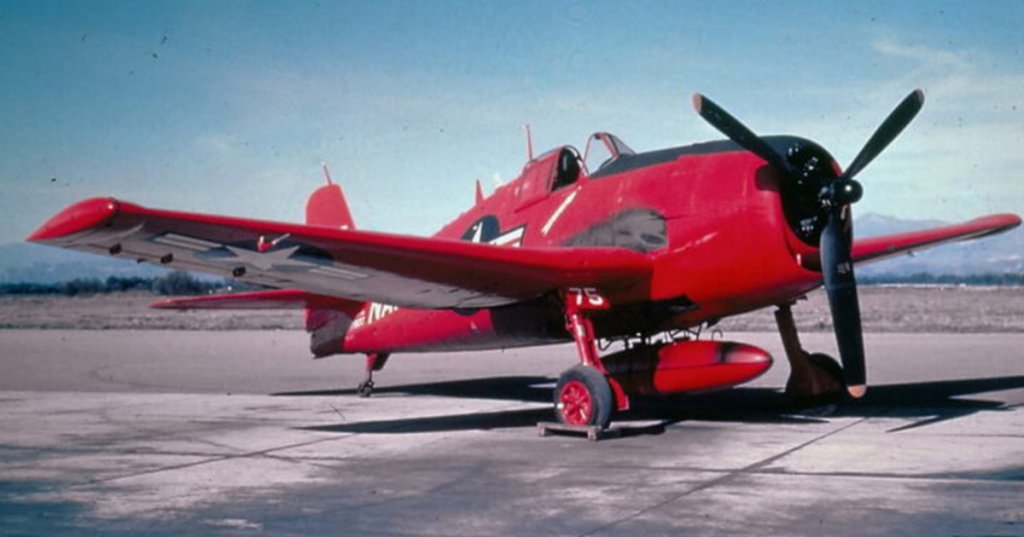
In the mid-1950s, the U.S. Navy was testing a new, radar-guided air-to-air missile, the AIM-7 Sparrow, intended for use with the next generation of jet fighters. To test the new missiles properly, the Navy converted surplus propeller-driven fighter aircraft for use as radio-operated drones.
One of these missile tests took place at Point Mugu Naval Air Station, California, in August 1956. The Navy launched a bright red F6F-5K Hellcat target drone on its final mission. The Hellcat was en route to the testing area over the Pacific when it suddenly stopped responding to its radio commands. Via radar, the Navy test team helplessly watched the drone slowly make a left turn and head towards Los Angeles.
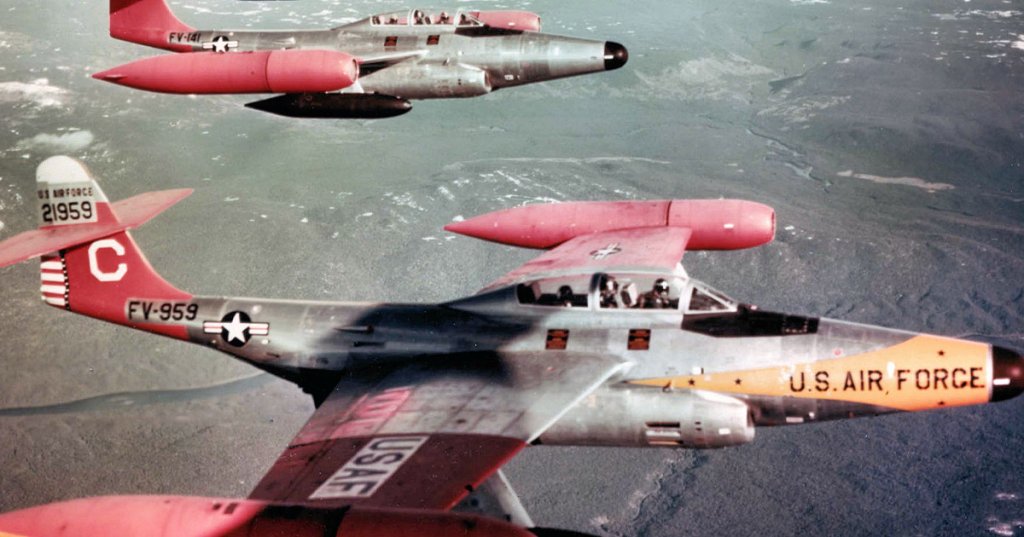
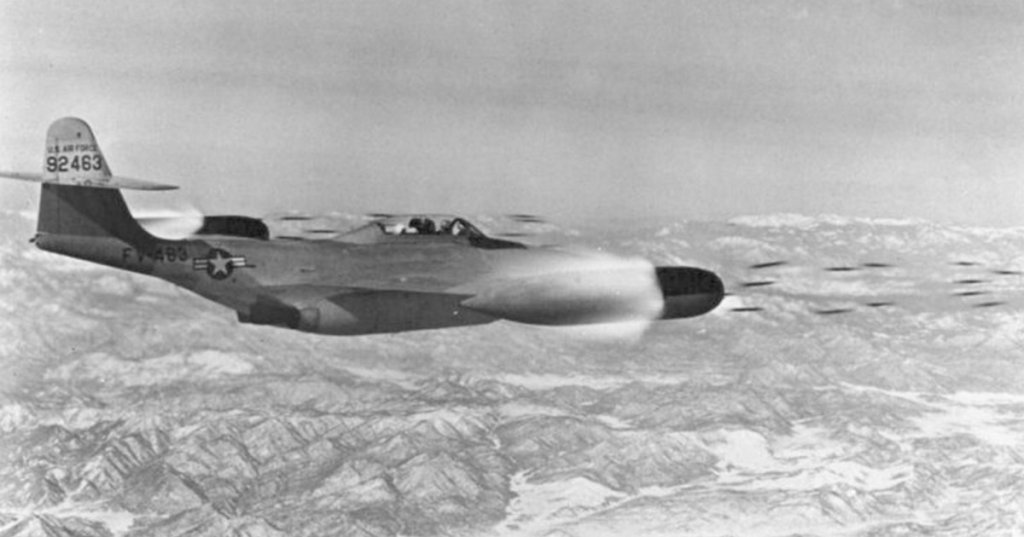
Fearing a crash in a populated area, they wanted to launch interceptors to shoot down the target. Since the Navy had no aircraft available, they called on nearby Oxnard Air Force Base for assistance. The base dispatched two F-89D Scorpions with an Interceptor Squadron. The Scorpions headed towards the area in full afterburner, caught up with the drone near Los Angeles, and followed it until it was over an unpopulated area.
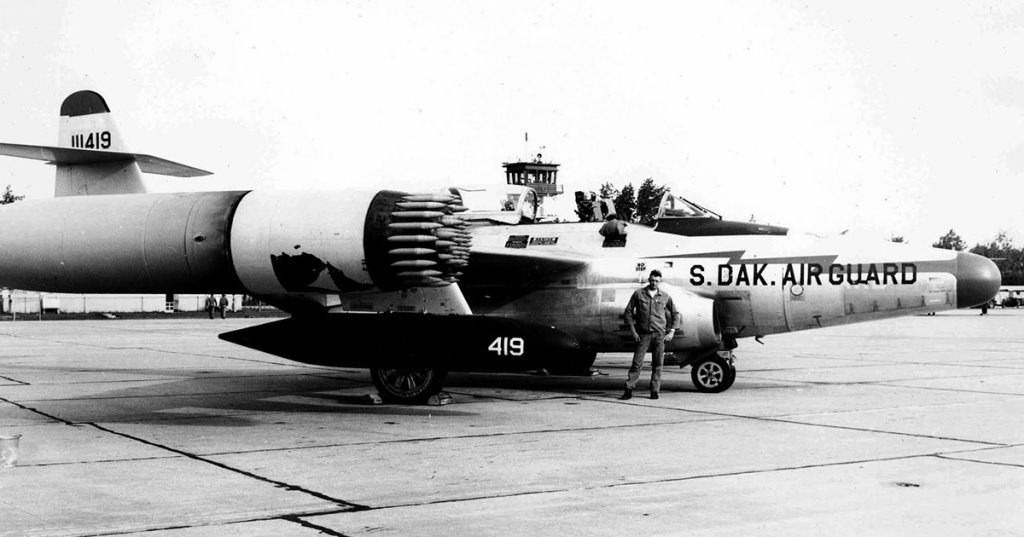
Designed to defend the U.S. against aircraft from the Soviet Union, the Scorpion was the latest frontline interceptor in the U.S. Air Force’s fleet, flown by 30 active-duty and seven Air National Guard squadrons. It was equipped with a new fire control system and radar, and loaded with 104 2.75-inch folding fin aircraft rockets (FFAR), which could be fired all at once or in a three-burst ripple mode. What it did not have were mounted guns.
Since the drone was now in a continuous, slow turn, the Scorpions had to wait for the right moment to fire. As the drone slowly turned towards Antelope Valley, the pilots decided to make their move. Both pilots attempted to fire in automatic mode, and when they pressed the trigger, nothing happened.
A design flaw prevented their rockets from firing in automatic mode, so the pilots were forced to switch to manual control. If that wasn’t bad enough, the D model Scorpions were initially equipped with gun sights, but when the new fire control system was added, the sights were removed. Now the pilots had to fire in manual mode without sights, using Kentucky windage.
The first Scorpion lined up and fired off a burst of 42 rockets, but they all missed. The second did the same, with the same result: 42 misses. The jets made a second attempt, but both missed yet again. As the Hellcat flew toward Palmdale, both Scorpions fired their last salvo, but again, they missed. They fired a total of 208 rockets, and the Hellcat flew on unscathed.
The Scorpions, low on fuel, headed back to Oxnard, and the Hellcat continued, finally descending towards a desert area east of the Palmdale airport. It clipped a few power lines and cartwheeled into the sand. Now that the incident was over, everybody can relax, right? Not quite yet.
During their rocket attacks, the Scorpions caused significant damage. The first salvo of rockets caused brush fires near the city of Castaic, destroying about 150 acres. The second salvo caused fires near the town of Newhall, set fires to pumps belonging to the Indian Oil Company, caused a brushfire that came within 300 feet of an explosives plant, and burned over 350 acres of land. Fires were also started in Santa Clarita, and because the Air Force pilots fired the last salvo as they approached Palmdale, many of those rockets landed in the town, ended up in people’s homes, and destroyed their vehicles.
Palmdale resident Edna Carlson said the attack sounded like hail as rocket shrapnel came through her front window, through a wall, and ended up inside her kitchen cupboard. Two men in Placerita Canyon were fortunate, but their truck wasn’t. They had just settled in for a nap under a tree after lunch when a rocket struck their utility vehicle, destroying it.
What became known as “The Battle of Palmdale” was a massive embarrassment for the Air Force, although it resulted in no fatalities (and also zero hits on their intended target). However, more than 1,000 acres were burned in the resulting brushfires, which required 500 firefighters two days to bring the fires under control.