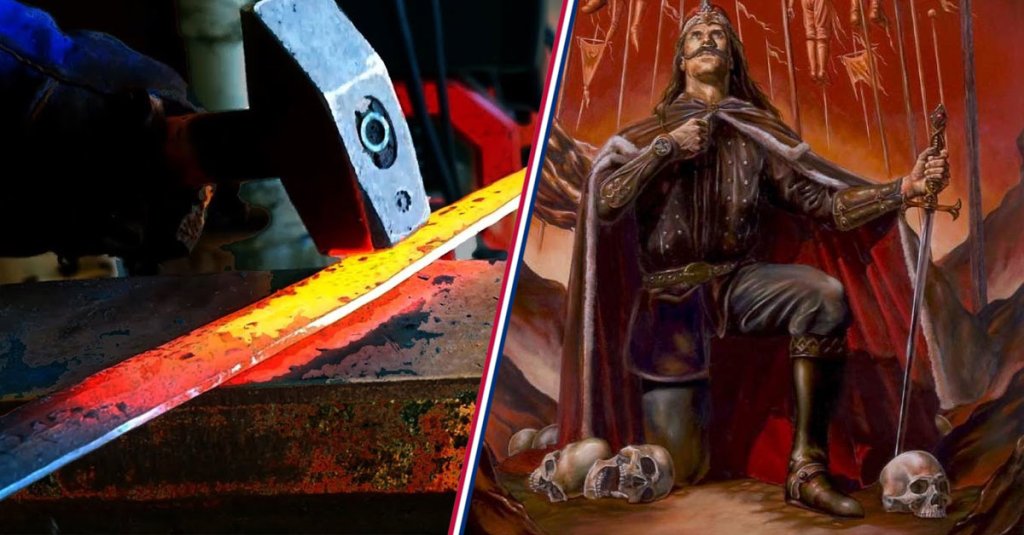
There’s a meme that occasionally makes the rounds on social media that claims you’d have to kill 359 people in order to save up enough human blood to get the iron required to make a longsword. Forging a weapon of war from the blood of your enemies? Sign us up.
But that number seemed a little suspect, so we decided to dig deeper.
It’s true, there is iron in red blood cells — mostly in hemoglobin — but trying to extract that iron from someone’s blood is no simple process. And, with a little math, we’ve determined that if you’re somehow able to get the iron out, the number of people you’d need to drain would be way higher than the meme suggests. Let’s explore this bloody question.
First of all, there are roughly 5 million red blood cells in a microliter of blood. Accounting for the tiny fractions of iron in red blood cells and the amount of blood in the body, the amount of iron within an average human body totals four grams, enough for about eight paperclips. We’re thinking that whoever invented the meme took this number, divided it, and came to the conclusion that you’d need 359 unfortunate souls to complete the diabolical process. But we’re not finished, not by a long shot.
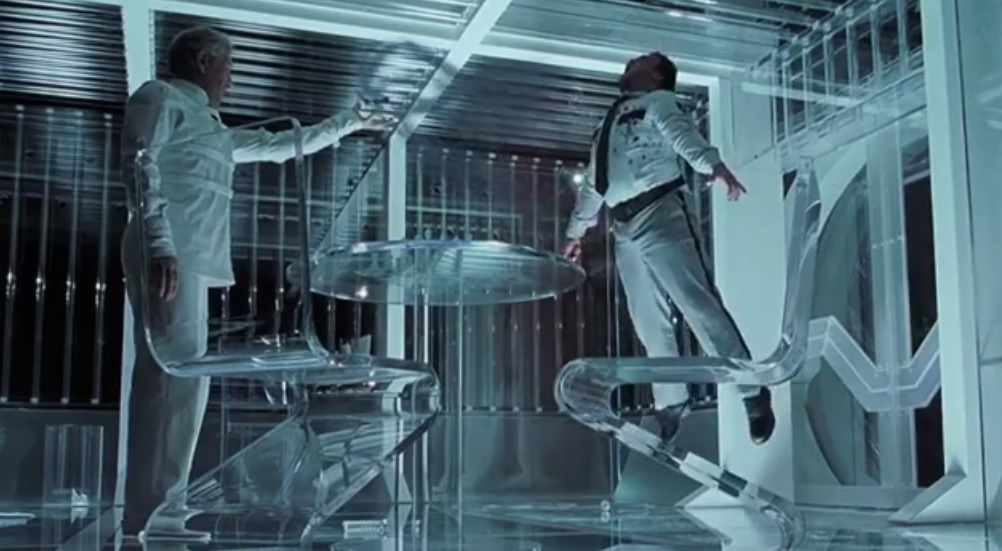
A single molecule of hemoglobin is comprised of 2952 carbon atoms, 4664 hydrogen atoms, 832 oxygen atoms, 812 nitrogen atoms, eight sulfur atoms, and a whopping four iron atoms. You’d have to strip away the rest of the elements in the molecule to get to said iron. Now, we need to discuss extraction — and since you’re probably already thinking of that scene from “X2,” let’s talk magnets.
The iron in the metalloprotein hemoglobin isn’t in a metallic state, which is excellent for anyone who has ever encountered a magnet. This is why you don’t immediately collapse from a clogged artery when a magnet comes close to your veins. Instead, oxygenated hemoglobin is diamagnetic — meaning it repels magnets — at an extremely low level. The blood that travels between the heart and the lungs is deoxygenated, however, making it paramagnetic, so that’s the first place any chaotic-evil blacksmith should begin.
If you could manage to create a machine to pump and deoxygenate large quantities of blood, like a modified artificial heart, it would then be ready for a super-magnet to pull the raw iron out of the blood. Take the blood that’s been pulled out by a super magnet and set it on fire to burn away any remaining oxygen and hydrogen, and voila, you have something to work with — in theory, anyway.
Nobody’s tested this, probably because they don’t want to be labeled a mad scientist.
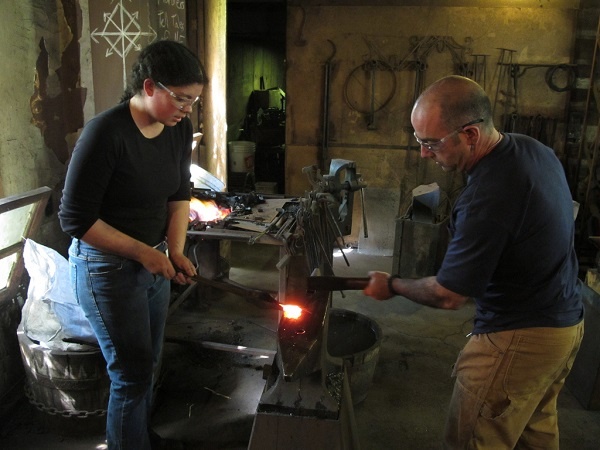
What you’d be left with is something similar to iron sand. You officially have a workable material for the first step in the smelting process. But there’s a huge difference between raw materials and iron that’s able to be forged.
In the real world, for every kilogram of workable iron ingots created, you end up with an average of 3.181 kilograms of impurities and slag byproduct — and that’s when working with the highest quality iron sand, stuff from Gampo, South Korea. We’ll give our theoretical blood-iron the benefit of the doubt and assume it’s about the same in terms of quality.
So, you’ll need a total of 4.181 kg of blood-iron sand to get 1 kg of workable iron. Now, let’s get back to the math.
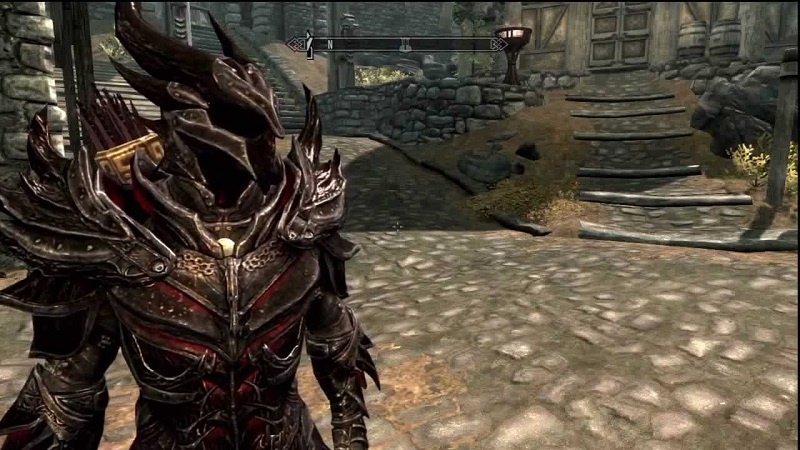
An average longsword has a finished weight of around 1.5 kg, but it typically generates an additional 0.75 kg of waste. That means we’ll need 2.25 kg of workable iron to make the sword. That’s 2,250 grams of workable iron, factoring for the ratio of impurities, means we’ll need 9,407.25 grams of raw material — of blood-iron sand — to start. At four grams per person, you’d need at least 2,352 completely drained “donors” to make an iron longsword out of blood.
But if you’re going that far, why stop at iron? Why not work it into steel, which makes objectively better weapons? At this point, you’d already be considered a monster, so let’s keep going!
Continuing to fold and forge, removing impurities, and adding carbon (which, presumably, could be found in the garbage shoot after all the work you’ve done so far) can harden that bad boy into something more durable. Granted, you’d need more blood-iron sand at a magnitude of 1 kg of blood-steel ingots to 27.7 kg of waste. That puts you at 64,749.9 grams of blood-iron sand, or a genocidal 16,188 doomed souls to create a single steel blade.
To put that in perspective, you’re looking at killing roughly half as many people as the bubonic plague did in 1625 London.
Brutal.