
6 insane things the President can do during a crisis - We Are The Mighty
MIGHTY HISTORY

6 insane things the President can do during a crisis

We know our government as one of checks and balances, always ensuring that one branch has oversight over another. But in case of some kind of national emergency, the President of the United States has the ability to essentially turn the democratically-elected government into a sort of constitutional dictatorship, with him (or her) at its center.


This doesn’t mean the chief executive has to enact all the powers at once or that, in an emergency, that they have to enact them at all. These are just the possibilities. In case you read this and think to yourself, “Holy cow, no one is ever going to really do that!” Guess again. Most of these have been done before.

Precedents for the President

There are four aspects to an emergency: the sudden onset and how long it will last, how dangerous or destructive it is, who it may be dangerous to, and who is best suited to respond. The President has to declare a state of emergency and indicate which powers he’s activating.

6 insane things the President can do during a crisis

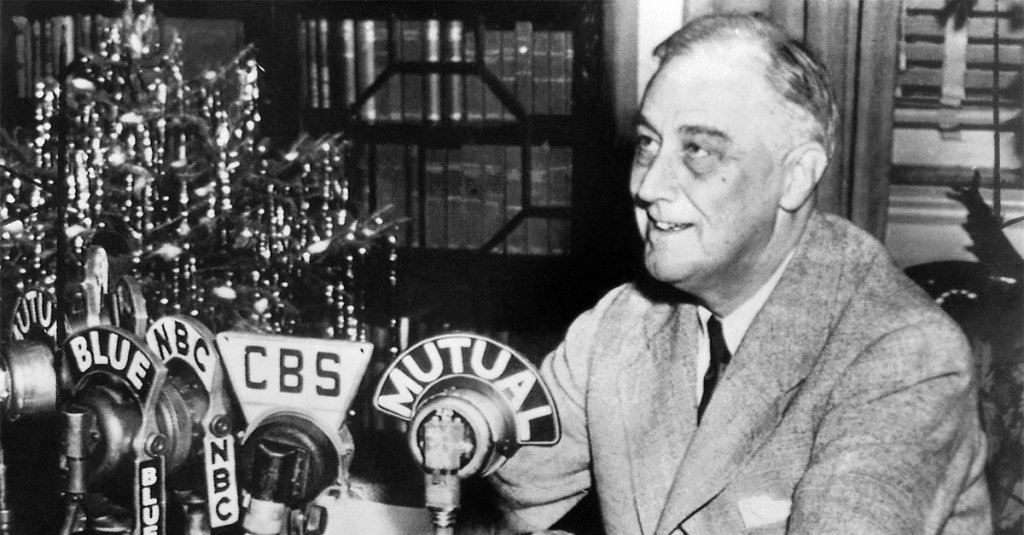
“We should ask the President,” said no businessperson ever.

1. Regulate all commerce and business transactions.

Under the Trading with the Enemy Act of 1917, the President is allowed to regulate all the finances of the United States, including all international transactions.

6 insane things the President can do during a crisis

Pictured: Not yours.

2. Seize all privately-held gold stores.

Under the same 1917 act of Congress, the President has the authority to take all privately-owned gold coin, gold bullion, and gold certificates. The last time this was used was in 1933 to mitigate the effects of the Great Depression. Citizens were allowed to keep only 0 worth of gold.

Citizens were paid its value per ounce and for the cost of transportation as they were required to surrender the gold to a Federal Reserve Bank within three days of the order.

6 insane things the President can do during a crisis

Better make room for a new logo.

3. Take control of all media in the U.S.

Under the Communications Act of 1934, the President can establish the Office of Telecommunications Management, which oversees all media and telecommunications, regardless of advances in technology. President Kennedy did this through Executive Order 10995 in 1962.

6 insane things the President can do during a crisis

Make way for the Trump Train!

4. Basically capture all resources and manpower.

Kennedy also signed executive orders allowing for the seizure of electric power fuels and minerals, roads, highways, ports, sea lanes, waterways, railroads, and the private vehicles on those throughways. Under further orders, he allowed for the Executive Office of the President to conscript citizens as laborers, seize health and education facilities, and airports and aircraft. These are continued in Executive Orders 10997, 10999, 11000, 11001, 11002, 11003, 11004, and 11005.
6 insane things the President can do during a crisis

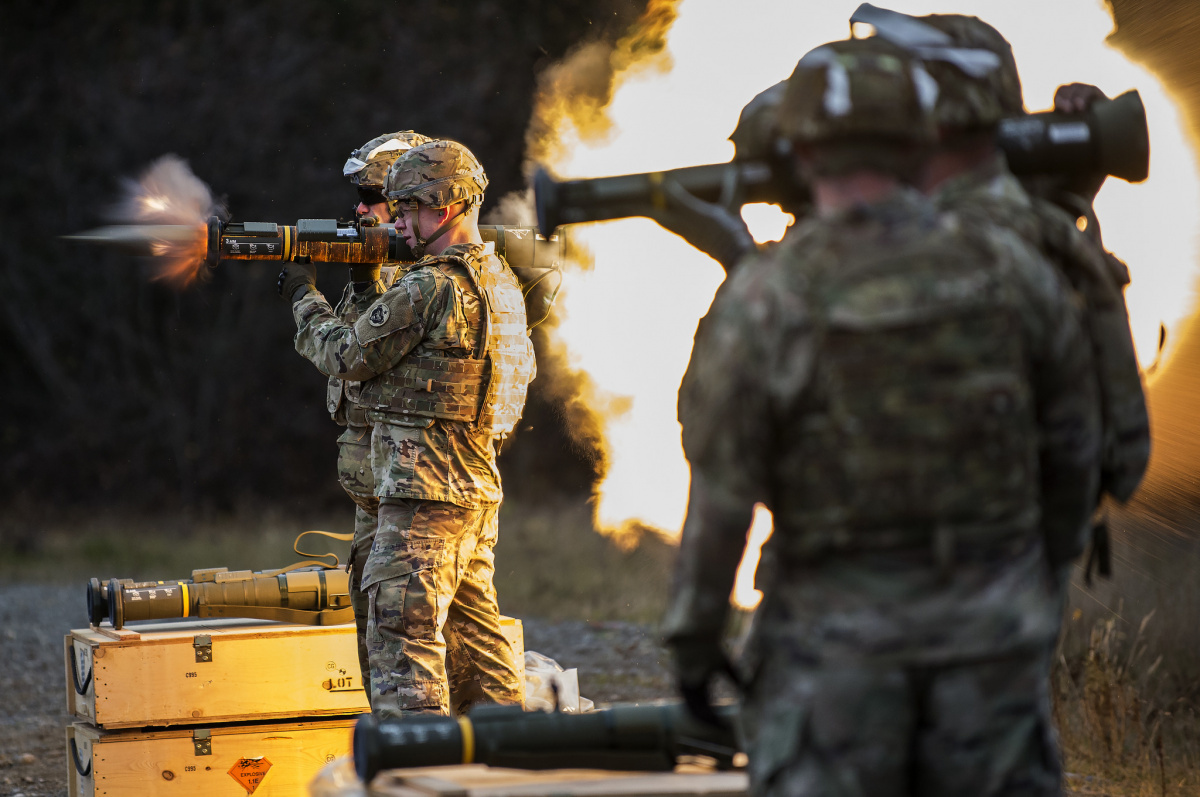
Just wait til they get bored on their deployment to Wyoming.

5. Deploy the military inside the United States.

While American governors can offer their National Guard resources to the President without being ordered, as they do in the case of U.S. troops monitoring the border with Mexico, the use of Active Duty troops inside the U.S. is forbidden under the Posse Comitatus Act of 1878…

…unless there’s an emergency. The Insurrection Act allows for the President to use troops to put down insurrections or rebellions within the United States. After Hurricane Katrina, however, the Insurrection Act was amended to allow the POTUS to use federal troops to enforce the law — a violation of the Posse Comitatus Act. Every U.S. Governor was against this change.
6 insane things the President can do during a crisis

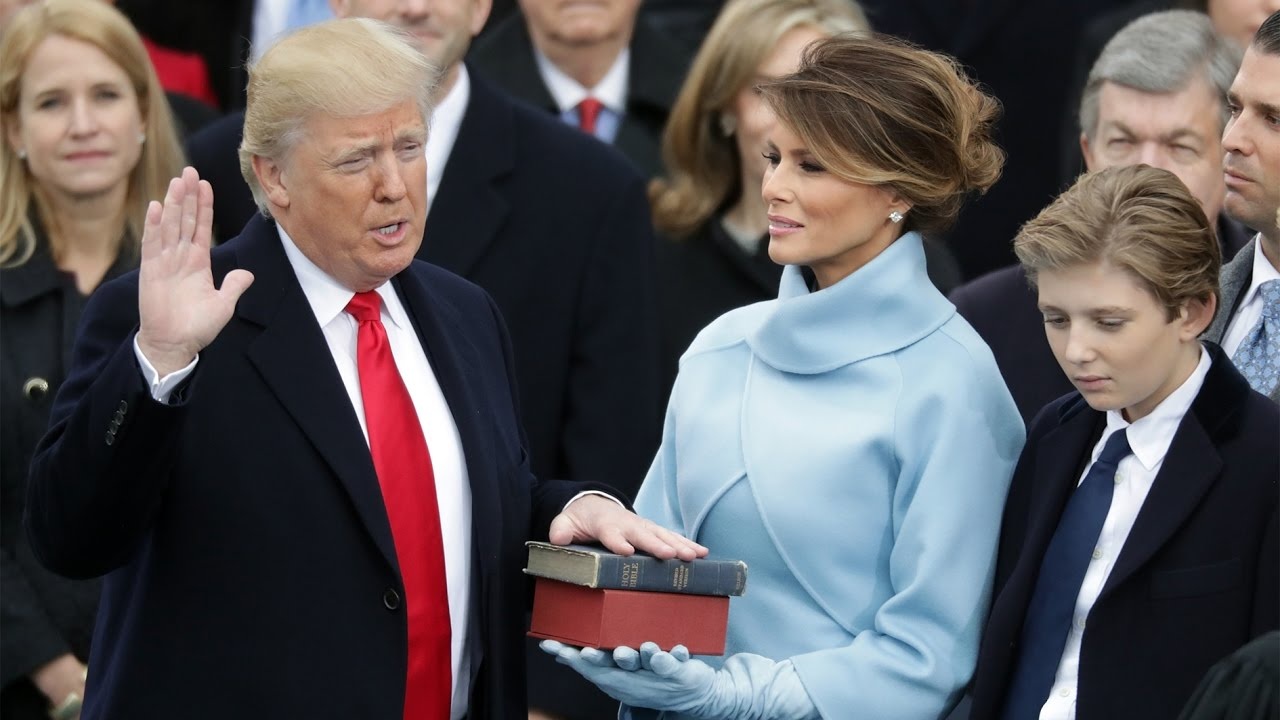
Like an inauguration but with waaaaaaaaay fewer people.

6. Suspend the government of the United States.

A presidential directive signed by George W. Bush on May 9, 2007, gives the President of the United States the authority to take over all government functions and all private sector activities in the event of a “catastrophic emergency.” The idea is to ensure American democracy survives after such an event occurs and that we will come out the other end with an “enduring constitutional government.” This piece of legislation is called “Directive 51.”

Articles

President Trump might want to look at these 5 examples before he bombs the sh– out of ISIS

With the surprising (to some) victory of Donald Trump in the 2016 presidential election, one issue that will come into sharp focus is how he will handle the Islamic State of Iraq and Syria terrorist group.


Also read: Here’s who Trump may pick to lead the Pentagon’s nearly 3 million military and civilian personnel

During the campaign, he promised to “bomb the sh– out of” ISIS. Realistically, with the militants hiding among civilians in densely populated cities in the Middle East, a “bomb the sh– out of” them campaign would be a tough sell. So maybe it’s a good idea to see what similar air wars are in the historical playbook to get an idea of the cost.

1. Dresden

This is the crowning masterpiece of the career of Sir Arthur Harris. In mid-February 1945, four massive raids with 722 Royal Air Force bombers and 527 more from the United States Army Air Force (which also contributed over 750 P-51 Mustang fighters) delivered almost 4,000 tons of bombs on target.

6 insane things the President can do during a crisis
Dresden was firebombed for several nights, killing an estimated 130,000 Germans. (Photo from Wikimedia Commons)

For the loss of eight planes, over 200 factories were damaged. Not a bad ratio, except of course the fact that over 100,000 civilians were estimated to have been killed in the days-long fire bombing.

Kinda why the Air Force developed precision bombing.

2. Tokyo

The B-29 bombing offensive against Japan had not been entirely effective using daylight attacks from high altitude. That was when Gen. Curtis LeMay decided to change the game. Instead of high-altitude bombing during the day, he sent 334 B-29s against Tokyo on the night of March 9, 1945. He wanted to fly along with the raid, but since he had first-hand knowledge of top-secret military code-breaking efforts, the risk of his capture was too high and he was grounded.

Of the planes sent, 27 were lost due to enemy action.

But once again, 2,000 tons of bombs were dropped, annihilating 16-square miles of the city costing an estimated 130,000 lives. Emperor Hirohito toured the city in the aftermath of the raid, he began to work to get Japan out of the war.

3. Hanoi

With the Paris Peace talks stalled over ending the Vietnam conflict, President Richard Nixon acted decisively. For nearly two weeks in late December 1972, 207 B-52 Stratofortresses, along with hundreds of other planes, launched a massive aerial assault on Hanoi. Dubbed the “Christmas Bombing,” over that 11-day period, over 15,000 tons of bombs were dropped by the BUFFs, with the tactical aircraft dropping more. In all, 16 B-52s and 12 other planes were lost.

6 insane things the President can do during a crisis
B-52 Stratofortress bombers dropped more than 15,000 tons of ordnance on Hanoi during the Christmas bombing campaign. (Photo from Wikimedia Commons)

The North Vietnamese ultimately resumed negotiations, and the Paris Peace Accords were signed on Jan. 27, 1973. Some reports indicate nearly 1,000 Vietnamese were killed during the raids.

4. Iraq

During Operation Desert Storm, the B-52Gs sent to targets over Iraq and Kuwait delivered up to 40 percent of the wartime bombing tonnage. Most of their operations involved carpet-bombing the Republican Guard and other Iraqi ground forces. Joe Baugher noted that in 1,620 sorties, one B-52G was lost due to an electrical failure on Feb. 3, 1991, and three others suffered combat damage.

5. War on Terror

The current bomber force may have drawn down, but in the 1990s, the B-52, B-1B Lancer, and B-2 Spirit were all equipped to handle precision-guided munitions. Today, they have been delivering lots of bombs on various terror groups, including al-Qaeda, ISIS, and the Taliban.

MIGHTY HISTORY

That time a President actually fought in Iowa

When most people think of Iowa, they think about cornfields, hog farms, Field of Dreams, and politics. Generally overlooked is the Battle of Credit Island, an island in the Mississippi River, which would host one of the westernmost skirmishes of the war of 1812.


6 insane things the President can do during a crisis

The Louisiana Purchase

(iowaculture.gov)

After the United States made the Louisiana Purchase in 1804, the country faced the challenge of establishing control of the Mississippi River. At the time, St. Louis was the northernmost city on the river, and all the territory north of there, the upper Mississippi, was generally controlled by natives. The United States attempted to gain more control in 1808 by establishing Fort Madison (in present-day Fort Madison, IA).

This fort would be abandoned in 1813, however, as it was regularly attacked by Sauk tribes. This led to the U.S. establishing Fort Shelby (located in present-day Prairie du Chien, Wisc). Fort Shelby, however, was captured in 1814 by the British, just months after its establishment, during the Siege of Prairie du Chien.

6 insane things the President can do during a crisis

Zachary Taylor 12th President of the United States.

(iowaculture.gov)

American troops would attempt to retake Fort Shelby, mounting an attack with armored keelboats. However, one would become grounded near East Moline Ill., where it was burned by Sauk Indians, forcing another retreat. One more effort would be made to reclaim the fort using armored keelboats, and this time, Major Zachary Taylor would lead the excursion.

Taylor led eight armored vessels up the Mississippi, but due to inclement weather stopped for the night in the vicinity of Pelican Island (a small island just to the north of Credit Island, near modern-day Davenport, Iowa.) Overnight, Sauk warriors waded to Pelican Island, and at daybreak attacked Taylor’s sentries, killing one. The Americans mounted their defense, repelling the natives, only to come under attack from accurate cannon fire, from a nearby British canon. The British and the native warriors would fire on Taylor’s flotilla for the next 45 minutes, with good effect, until Taylor ordered a retreat downriver.

30 to 40 British troops and approximately 800 Native Americans would repel Taylor’s 334 soldiers, and end their ambitions to recapture Fort Shelby. The Americans would not gain control of the upper Mississippi region until after the war in 1815.

The war would come to an end the following winter of 1815 with the signing of the Treaty of Ghent, which would normalize relations between Britain and the United States and restore borders to their pre-war status. As for Taylor, he continued to climb the military ranks, serving next in the Black Hawk War, the Second Seminole War, and later in the Mexican-American war. He would be elected 12th President of the United States in 1848, but died of illness in 1850.

Intel

This stealth helicopter was awesome right up to the point the program was canceled

Heat, smoke, and that loud “wop-wop” sound make helicopters easy targets on the battlefield. For these reasons, helicopters make the unlikeliest candidates for stealth technology. But during the 1990s and early 2000s, Boeing-Sikorsky challenged that notion with the RAH-66 Comanche helicopter.

The Light Helicopter Experimental program is the brainchild of the U.S. Army. It charged Boeing-Sikorsky with developing armed reconnaissance and attack helicopters. The result incorporated stealth technologies that minimized radar and human detection. It used advanced sensors for reconnaissance intended to designate targets for the AH-64 Apache. The helicopter was also armed to the teeth with tucked away missiles and rockets to destroy armed vehicles. Two prototypes were built and tested but the project was ultimately canceled in 2004.

www.youtube.com

MIGHTY CULTURE

7 reasons why 24-hour duty isn’t as bad as troops make it out to be

A sense of dread washes over the company as the most recent version of the duty roster gets posted in the common area. The troops shuffle toward the single piece of paper while crossing their fingers, hoping that their name hasn’t been called. But alas, a poor, unfortunate soul gets stuck with duty next Tuesday and, upon learning that, their day is cast to ruin.

Sound familiar? Troops tend to over-dramatize the “horrors” of getting stuck on staff duty every single time the duty roster goes up. But why? Seriously? You’re being put at a desk for 24-hours and told to maintain the area. Once that timer is done, the next shift comes in to replace you and you’re done for the day.

I guess it can feel like you have all eyes on you if you’re at Battalion or higher, but barracks CQ is the most skate job ever. Your only real job is to not fall asleep — and yet, for some odd reason, everyone has sympathy for you.


Here’s why it’s not as bad as everyone makes it sound:

6 insane things the President can do during a crisis

​You might have to deal with one or two people coming in, but that’s about it.

(U.S. Army)

1. You don’t really do anything

The officer handles the occasional phone calls, the NCO walks about the area once or twice, and the lower enlisted mops the hallways. That’s about the extent of a normal staff duty shift.

Yes, there’s the off-chance that a situation arises. If it does? You, as the staff duty, are just going to log it and let the chain of command handle the ramifications.

6 insane things the President can do during a crisis

And you’re not going to be doing any major cleaning. That police call is done by everyone else.

(U.S. Army Photo by Pfc. Lee Hyokang)

2. You clean once and it stays clean until it’s the next guy’s problem

Officers and NCOs don’t complain about staff duty as much. They’ve either realized how sweet of a gig it actually is or they’re holding it together for professionalism’s sake. The ones who moan the loudest are the lower enlisted — but as we mentioned earlier, they just have to clean up a bit and… that’s it.

The good thing about cleaning is that it’s almost always expected to be done at night when there’s little chance that anyone will come in and disrupt the cleanliness. So, you just sweep and mop the floors and probably take the trash out. How terrible.

The best thing about cleaning is that it only has to be done once, and then it usually stays clean until it becomes the next guy’s problem. It’s not like your entire 24-hour shift is spent cleaning.

6 insane things the President can do during a crisis

They may have to pretend if someone signs out on leave, but don’t take it personally.

(U.S. Air Force photo by Master Sgt. Kevin Wallace)

3. Your duty officer or NCO will become human again

At about 0200, when no one else is around, the normally-salty leaders drop their tough-guy act for a little while and relax with the lower enlisted.

When they’ve got nothing better to do, they’ll open up about when they were a young, dumb private or share stories about when they were deployed. Enjoy it. The moment the commander checks in early, the stoic facade is back in full swing.

6 insane things the President can do during a crisis

Even the big wigs have to sleep. But when they’re awake… You might want to look busy.

(U.S. Marine Corps photo by Cpl. Andrew Jones)

4. You can study… or play video games, or read, or watch tv, or…

Everyone is asleep after midnight. You might run into someone trying to sign out on leave, but there’s not a single soul to check up on you. So, do whatever you want — as long as you stay in the area.

I’ve seen people bring entire gaming setups to barracks CQ and without anyone batting an eye. You can’t leave, but if you give a heads up to the NCO or officer with you, you can probably get away with a trip to the gas station or something.

6 insane things the President can do during a crisis

Meanwhile, they’ve probably learned to sleep with their eyes open.

(U.S. Army photo by Sgt. John L. Carkeet IV, U.S. Army Japan)

5. You might be able to swing a nap between 0100 and 0530. 

The most daunting thing about staff duty is that you’re expected to remain awake the entire time. It’s problem up to around midnight but the, like a normal person, the drowsiness settles in big-time at about 0200.

Remember the part above about how probably nobody will check in on you between 0100 and the time the commander shows up? Let the officer or NCO you’re with know that you’re about to rack out for a quick nap and, if they’re cool with you, they’ll probably come up with some excuse as to why you’re not currently present if necessary.

6 insane things the President can do during a crisis

“Give this to those poor, hardworking troops on Staff Duty. They’re working their asses off trying not to sleep…”

(U.S. Navy photo by Lieutenant junior grade Rob Kunzig)

6. You aren’t even really screwed on Holidays

The worst time to get stuck on staff duty is over a holiday, especially when it would have otherwise been a day off for you. But there’s a silver lining here: Everyone takes extreme pity on you. If your chain of command likes you, they might even swing an extra comp day your way to make it up to you.

Remember the story about when Secretary of Defense Mattis was still in the Corps and he relieved from young Marine for Christmas staff duty? That happens more often than you’d think. I, personally, have been screwed out of leave packets and ended up on four consecutive Independence Day duties. Each time, the Colonel came in with something to relieve “the pain” of staff duty.

It’s a nice change of pace.

6 insane things the President can do during a crisis

“It’s time to get back to what’s important in life… Doing nothing…”

(U.S. Army photo)

7. You get that sweet, sweet comp day

When the next guy shows up, you’re free for an entire 24 hours. It’s expected that you’ll be catching up on sleep, but nobody wants to screw up their circadian rhythm, so you’ll probably just take it easy.

If you’re truly a part of the E-4 Mafia or Lance Cpl. Underground, you’ll try to sweet-talk someone into giving you their Thursday duty, which means you have a free three-day weekend. Not so bad for a couple hours of cleaning, right?

MIGHTY TACTICAL

Army shelling out $35,000 bonuses to retain Apache pilots

The head of the Army aviation said that the service is about six years away from reversing its shortage of pilots for the AH-64 Apache and other rotary-wing aircraft.

“We are short pilots … we are under our authorization for aviators, most predominantly seen in the AH-64 community,” Maj. Gen. William Gayler, commanding general of the Army’s Aviation Center of Excellence and Fort Rucker, Alabama, told an audience at the Association of the United States Army’s Sept. 5, 2018 Aviation Hot Topic event.


“We under-accessed, based on financial limitations, to bring in the number of aviators that we were required to meet an operational requirement from Forces Command.”

Between 2008 and 2016, the Army fell short in accessions of aviators, creating a shortage of 731 slots, Gayler told Military.com.

Since then, the service has reduced the shortage to about 400 through increased accessions of new aviators and paying retention bonuses of up to ,000 each to seasoned pilots, Gayler said, adding that he didn’t have an exact number of the number of Apache pilots the Army is short.

“You can’t fill the void with just accessions because, then six to eight years later, you will have a relatively inexperienced force,” Gayler said.

6 insane things the President can do during a crisis

An AH-64D Apache Longbow helicopter from 1st Battalion, 101st Aviation Regiment, based at Forward Operating Base Speicher, Iraq.

(US Army photo by Tech. Sgt. Andy Dunaway)

In the next 18 months, 33 percent of the active-component warrant officer aviation population will be retirement-eligible at a time when the airline industry has a huge pilot shortage as well, he said.

“They are highly recruiting all services … and we have lost some Army rotary-wing aviators to them,” Gayler said.

As an incentive, the Army has given out about 341 retention bonuses to pilots since late 2015 that were worth up to ,000 each, Gayler said. He added that the biggest bonuses went to Apache pilots, but would not say how many received them.

“We did it in two different year groups; we did mid-grade and we did seniors with 19 to 22 years in service,” Gayler said. “And some people questioned, ‘hey why would we give a 20-year Army aviator a three-year bonus,’ and my answer is, ‘because if they all retire, we have no experience in our fleet.’

“We retained quite a few mid- and senior-grade [aviators] that will enable us to get out of this experience gap, but we still have to bring in more aviators.”

The plan now is to access 1,300 aviators a year, “which over the next five to six years will completely fill us up,” Gayler said. “It took us a decade to get into this position; we can’t get out of it in a year or by next Thursday, so we’ve got some work ahead of us.”

This article originally appeared on Military.com. Follow @militarydotcom on Twitter.

Articles

Medal of Honor recipient who held off 9 German attacks has died

The Congressional Medal of Honor Society announced that Medal of Honor recipient Wilburn K. Ross died on May 9, 2017. According to a press release, Ross, who was working in a shipyard before he was drafted, was 94 years old and is survived by six children.


According to his Medal of Honor citation, Ross’s company — assigned to the 2nd Battalion, 30th Infantry Regiment, 3rd Infantry Division — had taken heavy casualties in combat with elite German troops near St. Jacques, France, on Oct. 30, 1944 – losing over 60 percent of the troops. Ross then set his machine gun 10 yards ahead of the other Americans and used it to hold off German forces for eight attacks – receiving less and less help as the other troops ran out of ammunition.

6 insane things the President can do during a crisis
Troops from the 3rd Infantry Division in Nuremburg. (US Army photo)

Ross, too, was running low. After the eighth attack, Ross was also out of ammunition. As American troops prepared for a last stand, salvation came in the form of a resupply of ammunition. Ross was able to use that ammunition to defeat the ninth and final German attack.

A profile of Ross on a VA loan site adds some more background. Ross was a dead shot, practicing a trick shot that involved using a .22 rifle to light a match. He later described how he had selected his position beforehand. He also related that he had no idea that a dead soldier he’d been shooting over wasn’t dead at all – it was an Army lieutenant who was alive, and who reported Ross’s actions.

6 insane things the President can do during a crisis
The Medal of Honor

Ross would be presented the Medal of Honor on April 14, 1945. During his service in World War II and in the Korean War, he’d be wounded four times. He served in the Army until 1964, when he retired  as a Master Sergeant. Afterwards, he settled down in DuPont, Washington, where he raised his kids. A park in that town was named in his honor, and includes a monument that displays his Medal of Honor citation on a plaque.

Humor

This is why the terminology matters between firearms

In just about every discussion, precise terminology matters. Take the term ‘troops,’ for example. Both Soldiers and sailors fall under the ‘troop’ category, but they’re drastically different. Even within sailors, a ‘submariner’ is very different from a ‘Seabee.’ When two types of troops have responsibilities that overlap, such as an Army combat engineer and a Navy Seabee, the preciseness of terminology is even more important to avoid confusion. Weapons also call for the same type of specific language, as there are many tools to fill similar — but not identical — roles.


Author’s note: There are many classifications and categories of firearms. This is only meant to be a brief intro sprinkled with a dash of comedy. In the following article, there will be things missed and things discussed that don’t have a universally accepted term — like a slug-barrelled, magazine-fed, semi-automatic shotgun which is totally not a rifle. 

Anything can become a weapon in the right hands. Hell, as many of us know, a sandal is a terrifying weapon in the hands of an angry mother. This is also a perfect explanation for what constitutes an assault weapon. If your mother is wearing the sandal, it’s just footwear. If your mother saw your sh*tty report card, she’s now reaching for her “assault sandal.” ‘Assault’ is just the descriptor for a weapon being used against someone.

6 insane things the President can do during a crisis
Any slipper can become an assault chancla in the wrong hands.

Now, a weapon is only considered a firearm if it uses a burning propellant to cast a bullet, missile, or shell. This is the universally accepted term for everything ranging from a Howitzer to a pistol. Then there’s the term ‘gun.’ Most people use this as the catch-all, but it’s not. A gun is a weapon with shells or rounds manually-loaded into the chamber through a breach (or muzzle for older firearms). Typically, this term is used for crew-operated cannons, like field guns and artillery.

6 insane things the President can do during a crisis
Does it take more than one person to fire it? It’s a gun. (Photo by Sgt. Aaron Ellerman)

Some long guns (like muskets or light machine guns), most shotguns (especially breach-loaded ones), and some handguns (like revolvers) can be called guns and no one will bat an eye. These fall under either small arms (single-operator firearms) or light weapons (designed and typically team-operated). “Light weapons” includes your heavy machine guns and portable rocket launchers.

6 insane things the President can do during a crisis

Easily the largest source of confusion, however, is the small arms category. A rifle gets its name from the helical pattern cut into bore wall (the rifling) of the barrel. Back when rifling was introduced on a musket, it was known as a “rifled gun.” The rifling makes the round more accurate at further distances. It’s the same reasoning behind throwing a football in a spiral.

6 insane things the President can do during a crisis
Is it a rifle? Is it a gun? The answer is: yes. (Photo by Sgt. Scott Akanewich)

Rifled barrels are used in a wide assortment of firearms, from small arms to crew-serviced weapons. Handguns can have them, and so can the aforementioned slug-barrelled shotguns. But without any other distinguishers, the term ‘rifle’ covers a huge categorical umbrella. It covers anything that’s a single-user, magazine-fed firearm with a long, rifled barrel. Carbine is a fairly loose term, but it generally applies to rifles with shorter barrels.

To sum up the terminology used in today’s firing ranges as Barney-style as possible: Call the firearm what it is. In general, a rifle is a firearm that only needs one operator. A gun is intended for two operators but can be used by one.

6 insane things the President can do during a crisis
Now you understand this joke a little bit more. (Warner Brothers’ Full Metal Jacket)

Fun fact: The term “assault rifle” comes from the German Sturmgewehr. It was named that because Hitler wanted his new weapon to sound more intimidating, even though it was nearly identical to other selective-fire rifles of the time. So yes, It is very much Nazi propaganda to call a rifle an “assault rifle” to make it more terrifying.

MUSIC

The unexpected history of the hilarious ‘Spirit of 76’ meme

The historic piece of art that’s featured in the hilarious meme showcasing three marching Revolutionary War musicians has a long, long history. While it might not date as far back as the Revolutionary War, it shouldn’t come as a surprise to anyone to learn it was inspired by and modeled after drunken American war veterans.


6 insane things the President can do during a crisis

Ohioan Archibald Willard was a Civil War veteran who enlisted with the 86th Ohio Volunteer Infantry. During the Civil War, the 86th saw action at the Battle of the Cumberland Gap and headed off Confederate General John Hunt Morgan as he made the furthest incursion northward during the war, but it only lost 37 men total — all due to disease. Willard began to draw pictures of the things he saw as he moved with the unit. He and a business partner began to finish and sell the drawings throughout the war.

6 insane things the President can do during a crisis

Archibald Willard, Civil War veteran and creator of “The Spirit of ’76.”

Before moving back to Cleveland, Willard studied art in New York City. He stayed for a number of years, but it was back in his native Ohio that Willard was inspired to paint a humorous picture he called, “Yankee Doodle.” It was the first incarnation of what would become his most famous and celebrated work, with three Revolutionary War musicians marching in tune to their martial music. But this first pass was less of a serious work and more of a funny comic-book painting.

The original featured three natives of Wellington, Ohio — all slightly intoxicated veterans of the War of 1812 — goofing around and creating mock battles with instruments in the town square. He also used Wellingtonians as models to paint the patriots seen in the famous painting. These models included his father, the Reverend Samuel Willard, fellow Civil War veteran Hugh Mosher as the fife player, and a local named Henry Devereaux, a military academy cadet and the son of a local railroad president, as the drummer boy.


www.facebook.com

Willard drew the original as a comic scene, but a friend who saw his sketch suggested that Willard take it a little more seriously, perhaps draw it up with a patriotic theme. The idea intrigued Willard because it was outside the realm of anything he’d ever done before. He preferred to paint landscapes and comical scenes of everyday life. Thinking back to old stories his grandfather would tell him about fighting in the American Revolution, Willard created an eight-by-ten foot masterpiece, re-titled “The Spirit of ’76.”

“The Spirit of ’76” first went on display in 1876 as part of a celebration of the American Centennial Exhibition in Philadelphia. Willard went on to paint several different versions of the painting but there were none so iconic or reproduced in American culture than the original. In the years following the Civil War, years characterized by mixed feelings, resentment, and Reconstruction, “The Spirit of ’76” was a work of art that evoked a shared sense of national unity.

6 insane things the President can do during a crisis

And lived on in many different iterations.

After the Centennial Exhibition in Philadelphia, the original painting was sold to General John H. Devereux, father of the drummer boy in the painting, who took it to his home in Marblehead, Mass. where it remains on display to this day. The drum used by the younger Devereux and Hugh Mosher’s fife can be seen in the Spirit of ’76 Museum in Wellington, Ohio.

MIGHTY HISTORY

How this Coast Guardsman earned a Silver Star at Guadalcanal

Douglas Carlton Denman was born in Tallapoosa, Georgia, in February 1922. At the age of 18, he decided to join the Coast Guard and travelled to Atlanta’s recruiting office where a Coast Guard chief boatswain filled out his paperwork. Early on, he must have shown promise as a boat driver. He was sent to New Orleans to train at Higgins Industries, builder of landing craft, and in less than a year of enlisting, he was advanced from seaman first class to coxswain.

In November 1941, less than a year after enlisting, Denman was assigned to the Number 4 landing craft aboard the fast attack transport USS Edmund Colhoun (APD-2) known as an APD or “Green Dragon” by the Marine Corps’ 1st Raider Battalion. The Colhoun was a World War I-era four-stack destroyer converted to carry a company of marines. The Navy designation of APD stood for transport (“AP”) destroyer (D”). These re-purposed warships retained their anti-submarine warfare capability, carried anti-aircraft and fore and aft deck guns, and could steam at an impressive 40 mph. Their primary mission was rapid insertion of frontline marine units in amphibious (often shallow-water) operations, so they were equipped with landing craft.


Each APD carried four landing craft designated LCPs (Landing Craft Personnel). Also known as “Higgins Boats,” the LCP was the U.S. military’s first operational landing craft. It had a snub nose bow supporting two side-by-side gun tubs with each position holding a .30 caliber machine gun. The helm and engine controls were located behind the tandem gun emplacements. Diesel-powered, the LCP measured 36 feet in length, could hold 36 men, and had a top speed of only nine miles per hour. This early landing craft carried no front ramp, so after it beached, troops debarked over the sides or jumped off the bow. The LCP required a crew of three, including a coxswain, an engineer and a third crew member that both doubled as gunners. The LCP exposed its crew to enemy fire, so its crew members braved serious upper body, head and neck wounds when landing troops.

6 insane things the President can do during a crisis
Douglas Carlton Denman, at age 18, in his original recruit photograph, including suit and tie.
(U.S. Coast Guard photo)

The Colhoun was one of four APDs that comprised Transport Division 12 (TransDiv 12). TransDiv 12 ships inserted the Marine Raiders on the beaches of Tulagi, on Aug. 7, 1942. The amphibious assault of Tulagi was the first U.S. offensive of World War II. It was also the first battle contested by entrenched enemy troops, giving the Americans a taste of the horrors to come in island battles like Tarawa, Saipan and Palau. Colhoun’s sisterships Francis Gregory (APD-3) and George Little (APD-4) took up station 3,000 yards offshore and served as guard ships marking a channel into the landing area. TransDiv 12’s slow-moving Higgins Boats plowed up the slot to land the Marine Raiders in the face of enemy fire. Within two days, the marines had taken the island eliminating nearly all its garrison of 800 Japanese troops.

6 insane things the President can do during a crisis
The APD USS Colhoun refueling in the Pacific. Notice this fast attack transport’s camouflage paint scheme and Higgins Boats hanging from davits on the port side.
(U.S. Navy photo)

After landing the Marine Raiders at Tulagi, Colhoun continued patrol, transport and anti-submarine duties in the Guadalcanal area. On August 15, the TransDiv 12 APDs delivered provisions and war material to the Marine 1st Division on Guadalcanal Island. It was the first re-supply of the marines since their August 7 landing. On August 30, Colhoun made another supply run to Guadalcanal. After completing a delivery to shore, the Colhoun steamed away for patrol duty. As soon as the APD reached Iron Bottom Sound, the sound of aircraft roared from the low cloud cover overhead and Denman and his shipmates manned battle stations.

A formation of 16 Japanese bombers descended from the clouds and Colhoun’s gunners threw up as much anti-aircraft fire as they could. The first bombers scored two direct hits on the APD, destroying Denman’s Higgins Boat, blowing Denman against a bulkhead and starting diesel fires from the boat’s fuel tank. Denman suffered severe facial wounds, but he returned to what remained of his duty station. In spite of stubborn anti-aircraft fire, the next bombers scored more hits. Colhoun’s stern began filling with water and the order was passed to abandon ship. Denman remained aboard and, with the aid of a shipmate, he carried wounded comrades to the ship’s bow and floated them clear of the sinking ship. He and his shipmate also gathered dozens of life jackets and threw them to victims struggling to stay afloat on the oily water.

Colhoun’s bow knifed into the sky as it began a final plunge into the fathomless water of Iron Bottom Sound. Denman managed to jump off the vessel before the ship slid stern-first below the surface. The time between the bombing and the sinking had taken only minutes, but during that time, Denman saved numerous lives while risking his own. In spite of his severe wounds, Denman survived along with 100 of Colhoun’s original crew of 150 officers and men. Coast Guard-manned landing craft from USS Little and the Coast Guard boat pool on Guadalcanal raced to the scene to rescue the survivors.

6 insane things the President can do during a crisis
Chart of Iron Bottom Sound showing Tulagi (off Florida Island) and location of final resting place of Colhoun off Lunga Point, Guadalcanal.

After the battle, Denman could not recall the traumatic events surrounding the bombing. He was shipped to a military hospital in New Zealand and diagnosed with “war neurosis.” However, after a month, medical authorities reported, “This man has gone through a trying experience successfully and may be returned to duty . . . .” For the remainder of the war, Denman served stateside assignments and aboard ships, including an attack transport, LST and a U.S. Army fuel ship. In early September, APDs Little and Gregory were sunk in night action against a superior force of Japanese destroyers and the fourth TransDiv 12 APD, USS William McKean (APD-5) was lost in combat in 1943.

For his wounds and heroism in the face of great danger, Denman received the Silver Star and Purple Heart medals. During his career, he completed training for port security, intelligence specialist, and criminal investigation specialist. He also qualified in handling all classes of small boats and buoy tenders and was recommended for master chief petty officer. However, he retired as a boatswain senior chief petty officer to pursue a Bachelor of Science degree at the University of Georgia with a major in animal science. He was one of many combat heroes who have served in the long blue line and he will be honored as the namesake of a new fast response cutter.

6 insane things the President can do during a crisis
Photograph of a Fast Response Cutter underway.
(U.S. Coast Guard photo)

This article originally appeared on the United States Coast Guard. Follow @USCG on Twitter.

MIGHTY TRENDING

These are the federal tax changes for military troops and spouses

Most service members and their families will see a reduction in their tax bills in 2019, but there are a number of changes in U.S. federal tax laws that they need to be aware of, said Army Lt. Col. Dave Dulaney, the executive director of the Pentagon’s Armed Forces Tax Council.

“The last tax year has been quite exciting with all the changes that were made,” Dulaney said. He noted that the Internal Revenue Service will start accepting tax returns Jan. 28, 2019, for tax year 2018.


A number of pieces of legislation affect military taxpayers, he said: The Tax Cuts and Jobs Act, the Veterans Benefits and Transition Act and the Combat-Injured Veterans Tax Fairness Act are just a few.

Tax cuts for troops

The Tax Cuts and Jobs Act will mean that most service members will see a reduction in federal taxes for 2018, he said. There is an overall reduction of 3 percent for most military families under this act, Dulaney said, in addition, the standard deduction doubled, as did the Child Tax Credit. “Because of these three things, most of our military families are going to see a substantial reduction in overall tax liability,” he said.

6 insane things the President can do during a crisis

There are also some special provisions that apply to military personnel. Service members who served in the Sinai Peninsula since June 9, 2015, are now eligible for the combat zone tax exclusion, the colonel said.

“This was retroactively applied and what that means is that since taxpayers have up to three years to file an amended tax return to make a claim for refund, those service members who served in the Sinai back in 2015 would be eligible to file an amended tax return, and they need to do it quickly,” he said.

Service members with questions should go to their local tax assistance centers, Dulaney said, noting that this change should affect about 2,000 service members.

Members of the armed forces are still able to deduct their unreimbursed moving expenses incurred during permanent change of station moves, he said.

There are changes to deductions for travel to drill for reservists. “Reservists cannot take deductions for drill duty expenses that are under 100 miles,” he said. Those driving more than 100 miles can still take deductions.

Military spouses

For military spouses there is a significant change as part of the Veterans Benefits and Transition Act of 2018. “This allows military spouses to elect to use their service member’s state of legal residence for state and local taxes,” he said. “

6 insane things the President can do during a crisis

In the past a spouse may have had to file a different state tax return because they had split legal residences. For example, if a service member with a legal residence of New York moved to Virginia and married a person with a legal residence from that state.

“Now, our military spouses can now elect to use the legal residence of the military member for purposes of filing their state and local taxes,” Dulaney said. “Now military couples will no longer have to file different state tax returns … additionally it will reduce the overall tax burden for military families.”

Injured troops

Finally, the Combat-Injured Veterans Tax Fairness Act has been implemented for veterans who received disability severance pay and had tax withholding applied to the pay. “Now under the tax code, disability severance pay is not taxable under certain situations,” he said. More than 133,000 veterans who have received this pay are eligible for relief under the act.

The vets have until July 2019 to file for a refund.

There are a number of aids for military personnel and their families as they prepare their taxes. Each base has a Volunteer Income Tax Assistance Program office that will help. To find your local office, visit Military OneSource.

The IRS offers information about free tax preparation.

Military OneSource also has information about military tax services in its tax resource center.

This article originally appeared on the United States Department of Defense. Follow @DeptofDefense on Twitter.

MIGHTY TRENDING

White House warns of retaliation against chemical attacks in Syria

The White House warned the Syrian regime and their allies Russia and Iran on Sept. 4, 2018, that the US would retaliate if the Regime used chemical weapons on the last rebel stronghold in Syria’s Idlib province.

“Let us be clear, it remains our firm stance that if President Bashar al-Assad chooses to again use chemical weapons, the United States and its Allies will respond swiftly and appropriately,” Press Secretary Sarah Sanders said in a statement.


“President Donald J. Trump has warned that such an attack would be a reckless escalation of an already tragic conflict and would risk the lives of hundreds of thousands of people,” Sanders added.

Since at least 2013, the Assad regime has been repeatedly accused of using chemical weapons in multiple Syrian provinces, with the most recent one coming in Eastern Ghouta in April 2018.

Russia and the Syrian regime have denied using chemical weapons, often arguing that the West or militants staged the attacks.

The US, the UK and France responded to the alleged chemical attack in Eastern Ghouta with multiple airstrikes, but the strikes had minimal effect.

In the end, the Syrian regime drove the rebel group Jaysh al-Islam from Eastern Ghouta, raising questions about how far the US is willing to go to stop the alleged chemical attacks.

On Sept. 4, 2018, Russia began conducting airstrikes once again on Idlib, according to the Washington Post, raising fears that a full-on assault would soon begin.

Assad and Russia have had their sights set on Idlib for months, but an all-out attack has yet to be launched.

“The Turks are blocking the offensive,” Jennifer Cafarella, a senior intelligence planner at the Institute for the Study of War, previously told Business Insider. “The Turks and Russians continue to frame their discussion from the lens of cooperation, but that’s not actually what’s happening.”

Cafarella said that Turkey may allow a partial offensive in Idlib, but that Ankara can’t afford “to have another massive Syrian refugee flow towards the Turkish border.”

This article originally appeared on Business Insider. Follow @BusinessInsider on Twitter.

MIGHTY GAMING

This official USMC video evokes all that is awesome about ‘Super Smash Bros’

Every branch has their own social media team that serves as a front-facing brand to their troops, the military, and the civilian population at large. By in large, these efforts aid in recruitment and build branch pride — but keep in mind that these teams are just a handful of social media guys acting as the face of the entire branch.

Normally, the branches have fun with the users who play along. The Army and Navy’s social media accounts constantly throw shade at one another while the Go Coast Guard Facebook team pulls a few cues from Wendy’s Twitter tactics whenever someone tries to berate them.

And then there’s the Marine Corps social team who has way too much fun with their job…


The U.S. Marines Twitter is a goldmine of Marines-related humor. They proudly boosted the Recruit Mullet meme, which was centered around a recruit calling home while looking ‘Murica AF by sporting a mullet while wearing a Budweiser tank top. They’re also responsible for one of the greatest April Fool’s Day pranks — all they had to say was that “Drill Instructors” were going to be renamed “Drill Sergeants” and chaos ensued.

Their most recent addition to this collection of classics comes on the very same day that Nintendo Direct announced a host of new characters set to join the roster of Super Smash Bros Ultimate, which is slated for a December 7th release. They made a parody video that showcases Marines doing dope Marine sh*t in quick, little snippets to the tune of a Smash Bros song.

It parodies the exact style of the character-reveal trailers that the series is known for. Like this one:

Of course, because this was posted to Twitter, there were plenty of rustled jimmies in the replies. To you angry few: Relax. It’s just a joke.

No, it’s not a waste of government money when this could easily be made in an hour. No, it’s not making light of the seriousness of combat or military service. And no, it’s not directed at recruiting young kids who like Nintendo games.

But it is freaking hilarious and made even funnier by getting the Official Marine Corps stamp of approval.

Let’s do this. 1v1 me. No items, infantry only, Final Destination.

The upcoming game is slated to have 71 playable fighters duking it out across over 100 different maps. Nearly every character from every single Nintendo title is set to appear in some fashion and many characters from outside IP will appear, including Snake from Metal Gear, Ryu from Street Fighter, Cloud from Final Fantasy, and now, Simon Belmont from Castlevania.

Who’s to say that Nintendo won’t add actual Marines to the game? It wouldn’t be the first time they’ve added characters that make little sense given the game’s tone. Or, and this entirely wishful thinking from a fan, they could add Doomguy — why not? He’s a Marine that made an appearance on the Super Nintendo. That’s fair game, in my book.

Do Not Sell My Personal Information