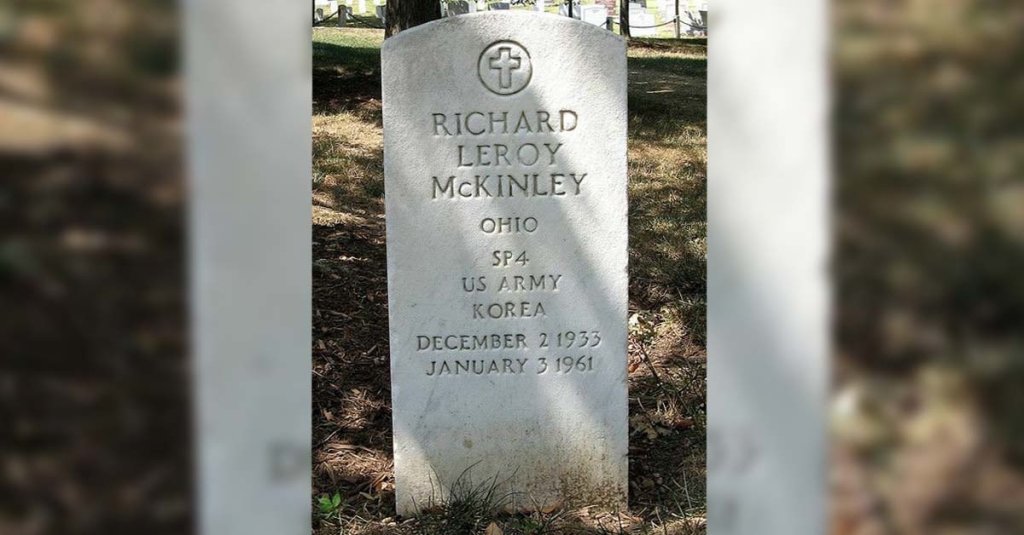
In January 1961, the U.S. Army suffered its only nuclear accident and the only fatal nuclear accident in the United States. The accident was caused by the manual removal of a control rod in a nuclear reactor in Idaho. The resulting explosion killed two Army specialists and a Navy Electrician’s Mate. One of the Army specialists, Richard McKinley, was so irradiated that his body had to be interred in a lead-lined casket, covered in cement, and placed in a metal vault before burial.
The special grave is now at Arlington National Cemetery, where it is under constant watch and may not be moved without permission from the U.S. Atomic Energy Commission.

The official cause of the explosion was ruled an accident, although some suspect it might have been a suicide due to the nature of the accident (and some even called it a murder-suicide). In the nighttime hours of January 3, 1961, three enlisted men working the reactor at an experimental Idaho-based Reactor Testing Station were killed when one of the nuclear core’s control rods was removed manually.
That is to say, one of the men removed the uranium-235 control rod some 50 centimeters—with his bare hands. Just 40 centimeters was enough to send the reactor to critical.
And it did send the reactor critical, immediately unleashing 20,000 megawatts in .01 seconds, causing the nuclear fuel to melt. The melted uranium began interacting with the water in the reactor, producing a violent explosion of steam that caused part of the core to rise three meters into the air.
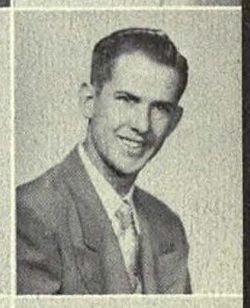
Army Specialist John Byrnes and Navy Electrician’s Mate Richard Legg were also killed in the incident, the first and only deadly nuclear incident on U.S. soil. They were buried in their hometowns. Specialist Richard McKinley would have to be buried elsewhere – somewhere his irradiated body could not harm anyone else.
When the specialist removed the control rod by hand, he had already absorbed enough radiation to kill him a few times over but the resulting steam explosion sent the rod flying through his body, contaminating it with long-life radioactive isotopes.
He was placed in a lead casket, covered in concrete, and sealed in a metal container. His body now rests in Arlington National Cemetery. Along with the delivery of the body came the orders from the Assistant Adjutant General of Arlington Cemetery:
“Victim of nuclear accident. Body is contaminated with long-life radio-active isotopes. Under no circumstances will the body be moved from this location without prior approval of the Atomic Energy Commission in consultation with this headquarters.”
Don’t Miss the Best of We Are The Mighty
• Big Tech wants the Navy’s old nuclear reactors to power the AI revolution
• ‘A House of Dynamite’ makes hard nuke questions accessible to everyone
• These Air Force ‘rods from God’ could hit with the force of a nuclear weapon