
If your back-to-school fund isn’t fully funded by now, consider this your financial wake-up call. We’re halfway through July. That means you’ve likely only got two paychecks left before your kids are back in class—and for military families, that’s assuming your LES didn’t already take a hit from PCS moves, summer camps, or surprise orders.
But here’s the twist: even if you’re behind, you’re not out. Let’s break down what you can do right now to catch up—and how to prep smarter for next year.
1. Know Your Season (and Budget for It)
High school means higher expenses. Senior year? Even more so. If you’ve got teens, you’re not just buying folders and glue sticks. You’re dealing with:
- Athletic fees, uniforms, and team meals
- Club dues and competition travel
- Senior portraits, yearbooks, and class rings
- ACT/SAT fees and college apps
- Homecoming outfits and prom down the line
Start by listing what your student actually needs by mid-August. Some teachers require items that aren’t on a general high school shopping list so be prepared for additional costs. Don’t guess—ask coaches, check school portals, and email teachers if needed. Prioritize must-haves over nice-to-haves and build a short-term budget from there.
2. Do a 2-Paycheck Budget Blitz
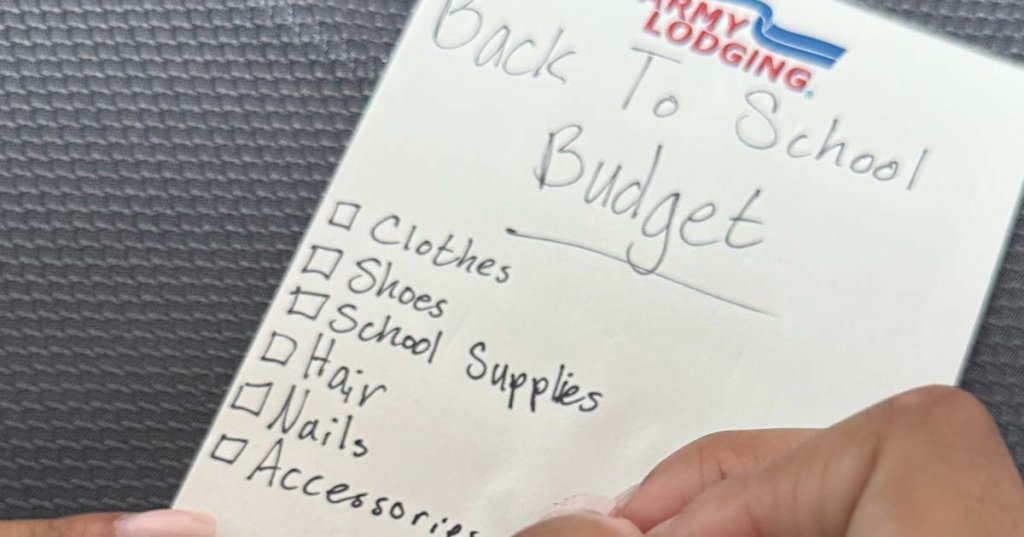
With only two military paychecks left before the first bell rings, here’s how to break it down:
- Paycheck 1: Cover immediate needs (supplies, clothes, enrollment fees)
- Paycheck 2: Handle extras (sports, pictures, parking passes)
Cut unnecessary spending for the next 30 days. That means fewer takeout nights, maybe skipping one trip to Target’s dollar section, and delaying non-essential Amazon buys. You’re not depriving—you’re redirecting.
3. Embrace the “Sinking Fund” System
Didn’t budget ahead this year? It’s cool—we all have seasons where life snowballs.
But let’s not repeat this panic next July. Start a Back-to-School Sinking Fund (or bucket fund) now for next year. Here’s how:
- Estimate total costs: Add up this year’s back-to-school spending and tack on 10% for inflation.
- Divide by 10 months: Save monthly from September to June.
- Use auto-transfer: Even $50/month builds $500 by next July.
Pro tip: Keep this in a separate savings account labeled “Back to School 2026” Out of sight = less temptation to spend.
4. Budgeting for Athletes (Because Cleats Ain’t Cheap)
Sports can feel like part-time jobs—for you and your wallet. If your kid’s an athlete:
- Ask about sponsorships or fee waivers—some schools have military family support.
- Buy used gear: Check local base swap groups or Facebook Marketplace.
- Budget monthly: Set aside a “sports fund” to avoid last-minute scrambles for new shoes or tournament gas money.
5. Senior Year = Senior Spending
Senior year is an emotional rollercoaster… and a financial one.
- Start prioritizing now: Class ring or grad trip? Prom dress or college app fees?
- Create a shared calendar of expenses with your teen—it teaches real-life financial planning.
- Set a “Senior Year Cap” on spending and involve your teen in decision-making. That way, there are fewer surprises and more ownership.
Final Thoughts: Behind Isn’t Broken
Falling behind happens—but staying there is a choice. The key to getting unstuck is action, not shame. Whether you’re a seasoned senior parent or a new military family navigating multiple school systems, planning ahead can be your superpower.
So breathe, rework your budget, and remember: next July can be a whole lot less stressful if you start stacking your bucket fund now.