
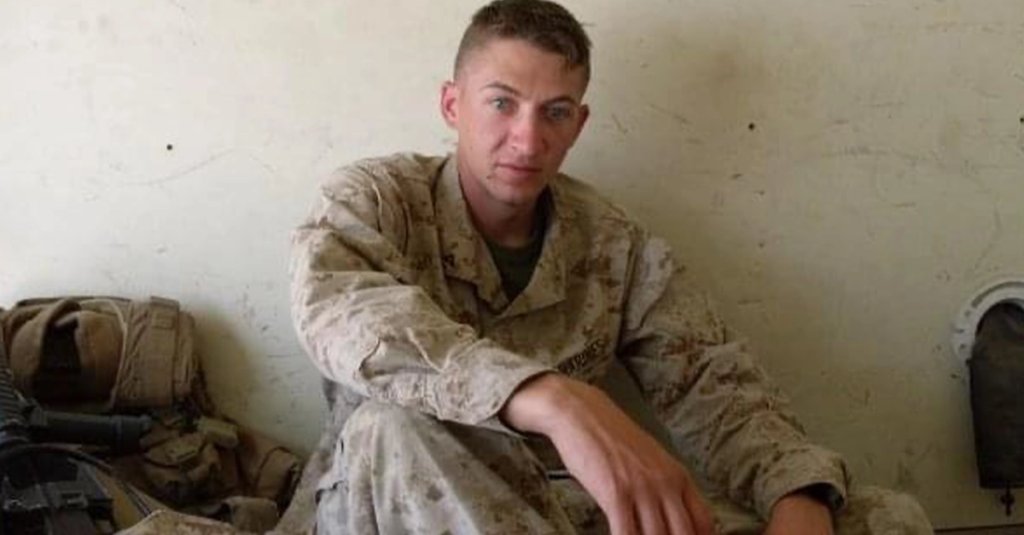
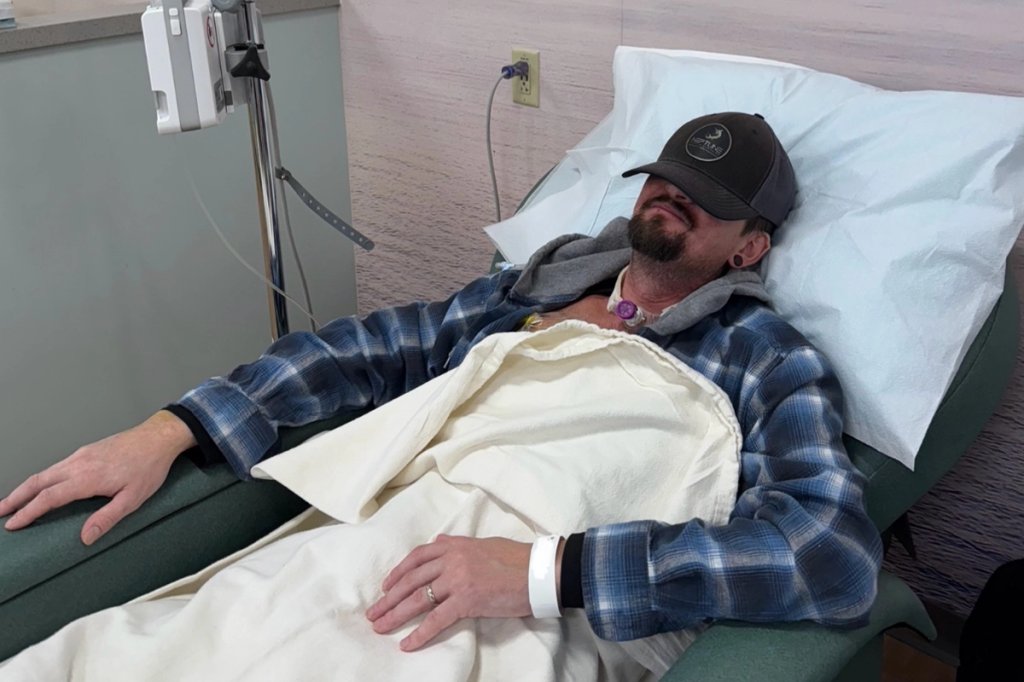
Pete Barnum can’t talk much these days. Surgery for squamous cell carcinoma—the kind linked to toxic exposure, the kind the PACT Act was written for—has left his speech severely impaired. But even when the VA calls to discuss his claim, they ask to speak with him.
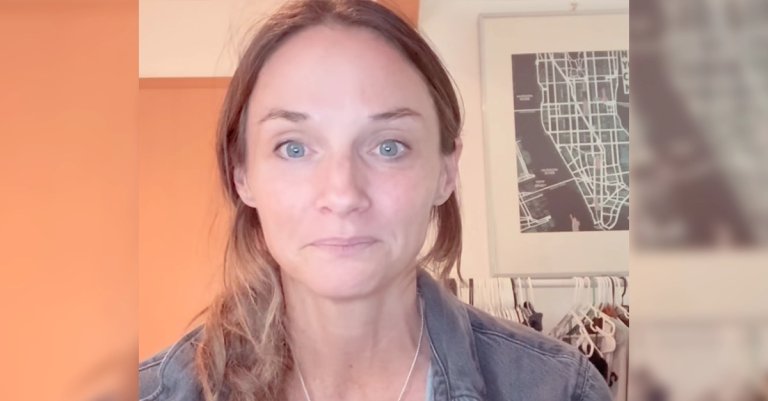
His wife Keri answers anyway. She has been answering for months: scheduling appointments, tracking medications, escalating denials, spending ten or more hours some weeks on hold.
When a provider told her she didn’t need to understand Pete’s medications because it “wasn’t her job,” she explained that it was, in fact, her job—because she was the one taking him home.

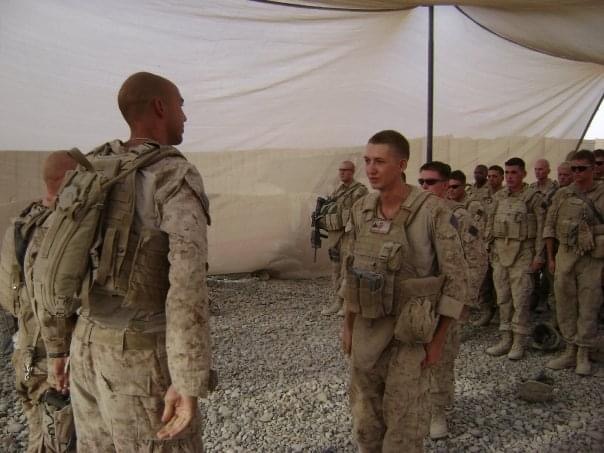
In the military, there’s a term for owing more time after service ends. It’s called an ADSO—an Active-Duty Service Obligation. You received something, so your clock extends. Pete may have started accruing the moment he was exposed to whatever the PACT Act was written to address. Keri’s started the day he was diagnosed.
Neither of them signed up for this one.
The Path to Diagnosis
Getting to a diagnosis took months. Pete first felt pain under his tongue in spring 2025, but couldn’t be seen by a provider until June. After an ENT appointment in July, Pete had to wait until October for a biopsy appointment.
The diagnosis came more than three months after the first specialist visit, in part because Pete didn’t fit the typical patient profile. Squamous cell carcinoma of the oral cavity is usually diagnosed in patients in their 60s. Because of his age, the family was told to watch and wait, even when Keri could physically see the tumor under his tongue.
Civilian providers never asked about his military service or burn pit exposure. That question, had anyone thought to ask it, might have moved things considerably faster.
Treatment, once he’d been diagnosed, moved quickly. Surgery. Radiation. Chemotherapy. Immunotherapy. The medical side had to move fast. The support systems, unfortunately, did not.
“Treatment moved fast because it had to,” Keri said. “The systems meant to support us moved slowly because that’s how they’re built. Unfortunately, cancer doesn’t wait for paperwork.”
That mismatch—the speed of illness versus the speed of bureaucracy—is where every military spouse’s nightmare really begins.
The Part Nobody Sees: The Spouse Becomes the System
Following Pete’s diagnosis, Keri found herself managing a medical crisis without the tools required to manage it. Because his speech was severely impaired after surgery, Pete was often physically unable to navigate verification calls or complex paperwork. But the VA still required communication to go through him and not through the person who was actually coordinating appointments, medications, insurance questions, and daily survival logistics.
“Adding a spouse into that process with no access to accounts or tools and expecting them to manage a crisis while flying blind is unrealistic at best and dangerous at worst,” she said.
Flying blind is not metaphorical when you are responsible for medication schedules, side effects, transportation, follow-up care, and two children watching their parent fight cancer in real time.
This is the quiet reality of military spouses during crisis: they become care coordinators without credentials, administrators without authority, and decision-makers without access. And unlike formal caregivers, there is no onboarding.
“For the VA?” Keri said, when asked what training or guidance spouses receive. “No. Nothing.”
How the Benefits Actually Work
In theory, the VA disability system eventually works. Claims are reviewed. Benefits are awarded. Payments are backdated. But in practice, families are asked to survive the gap between diagnosis and decision.
The VA calls this backpay. Military spouses might reasonably call it another obligation—an administrative ADSO layered onto an already catastrophic moment. Backpay assumes families can front the cost of a crisis. Many can’t.
“The VA will backpay to the original date,” Keri said, “but that doesn’t help those who are struggling to pay a mortgage or put food in their kids’ mouths today. It didn’t help provide a home care nurse when one was ordered.”
Cancer care generates immediate needs. Specialized nutrition, transportation, lost income, childcare, and medical supplies. None of these accepts future reimbursement as currency.
At one point, insurance denied feeding-tube formula, despite it being Pete’s only source of nutrition, which left the family to pay more than $700 a month even after discounts. Fortunately, Keri was able to use Pete’s employer’s insurance and go directly to the drug manufacturer to obtain immunotherapy when insurance denied coverage. But it shouldn’t have been that difficult.
“If we had waited for the VA to approve our claim,” she said, “Pete would likely be terminal instead of finishing chemo.”
That is not an administrative delay. That is the system postponing support long enough that families absorb the impact themselves, which is precisely how the VA unintentionally creates a new kind of service obligation: endure now, reconcile later.
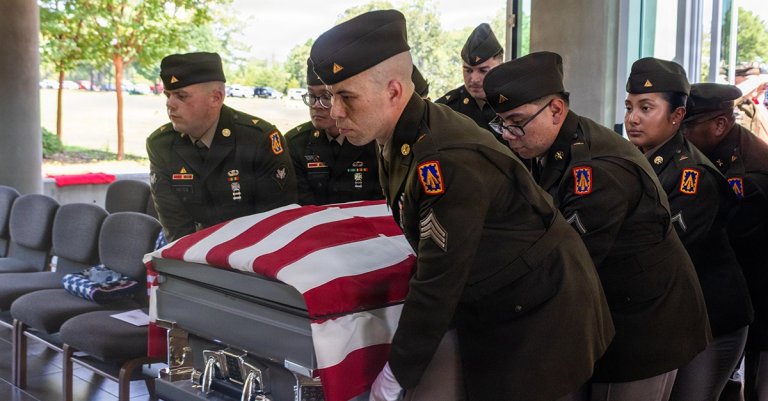
Gutwrenching post from Gold Star spouse shows reality of life after loss
Mia Gonzalez-Swinton lost her husband, Army Sgt. Michael Emmanuel Swinton, on July 19.

One woman entrepreneur is teaching kids to do the jobs America can’t fill.
Milspouses don’t have to wait for someone else to create an opportunity.

Her husband’s deployment was just extended to a year. She says the reality is ‘a gut punch.’
“Please keep our service members and families in your prayers.”
The Access Problem Nobody Designed For
The most striking part of Keri’s experience wasn’t hostility. It wasn’t even neglect. It was fragmentation.
“No one owned the problem,” she said.
Every office handled one piece. Every call required retelling the story. Every delay compounded the last. Progress depended less on eligibility than on persistence—documenting names, tracking calls, escalating politely but repeatedly, learning processes no one formally teaches.
Keri’s turning point came not through official channels but through community. A fellow Marine texted her during Pete’s hospitalization and told her to look into the PACT Act, legislation expanding benefits for toxic exposure-related illnesses. Until that moment, she didn’t know where to begin.
Even then, she couldn’t file independently since, as the spouse, she had no access, according to the VA. Pete, who was fighting cancer and heavily medicated, had to initiate the claim himself. At one point, incorrect information submitted while medicated delayed the process by more than a month. When clarification calls came, representatives still insisted on speaking only with him.
Most recently, the VA sent Pete’s claim to a third-party medical reviewer, which is standard procedure, but the third-party assigned in December had only one provider in the area and no foreseeable availability. The alternative was an appointment up to three hours away.
Keri found this out because she called to follow up.
She then had to return to the VA, request reassignment to a different reviewer, and make the case that the review could be conducted on documentation—pathology reports, surgical records, the factual paper trail—rather than requiring an in-person exam that would mean more travel, more time, and more physical stress for a man still in active treatment.
She was right. It worked. But that’s the problem. She had to know to ask. She had to understand the difference between opinion-based and document-based review and push for the more efficient path, because no one offered it.
The system didn’t fail dramatically. It just stopped moving and waited for someone to notice.

What’s Actually Broken
This isn’t a story about uncaring individuals. Many of the providers and administrators Keri encountered were compassionate and helpful once reached. The failure is structural: the VA system separates medical urgency from administrative eligibility, and families don’t experience them as separate tracks. They experience it as one massive life event that requires coordinated support.
Keri has thoughts on how to make this process more efficient.
She wants the VA to adopt automatic spouse proxy access to records and scheduling, provide caregiver onboarding at diagnosis, and offer provisional benefits during claim review for catastrophic illnesses. None of this requires a complete overhaul. It requires recognizing what spouses are already doing and building systems that acknowledge that reality.
It’s also worth noting what this system demands of families with less context than Keri had. She grew up in a military town, worked in base housing, and has maintained relationships with Pete’s former unit for fifteen years. That background gave her language, contacts, and a baseline understanding of how to navigate. Many spouses, especially those who met their veterans after separation, come in with none of that.
If the process is this hard for someone with her experience and connections, Keri said, it’s nearly impossible for those without them.
The Question We Should Be Asking
The United States spends enormous effort honoring service. We thank veterans publicly, celebrate sacrifice symbolically, and invest politically in promises of lifelong care.
But moments like this force a harder question: what does support look like when it is needed immediately, imperfectly, and by families rather than individuals?
If cancer treatment moves at medical speed while benefits move at administrative speed, the burden of synchronization falls entirely on spouses. That burden has a cost—in hours, in money, in cognitive load, in the specific kind of exhaustion that comes from managing a crisis while the systems designed for exactly this moment ask you to wait.
That is the real added obligation. Not more service time in uniform, but more endurance after service ends. More advocacy. More paperwork. More waiting while life refuses to pause.
An ADSO nobody signed for.
Don’t Miss the Best of We Are The Mighty
• The 3 military spouses you’ll meet at a promotion ceremony
• Here’s why a PCS creates a kind of intimacy regular life can’t
• You can miss them while they’re away and still be angry at them




Loading comments…
Comments couldn’t be loaded. Please refresh the page.