If you asked a civilian to map out the ideal military career, they would likely draw a line through the Sun Belt, connecting the humidity of the Carolinas to the dry heat of the Mojave, perhaps a few years’ vacay in Hawaii sprinkled in. They imagine a life of leisure, of fancy water bottles, SPF 75 sunscreen, and scenic beach parties.
Related: Military spouse side hustles that work no matter where you move
What they rarely visualize is the “Northern Tier” reality: a world where the primary morning obstacle isn’t traffic, but a literal wall of frozen precipitation that has claimed your driveway as its own. In places like Minot or Eielson, the atmosphere here won’t feel like soft summer nights, but a sentient force that actively antagonizes, contesting your ability to get to the PX or the children to school.
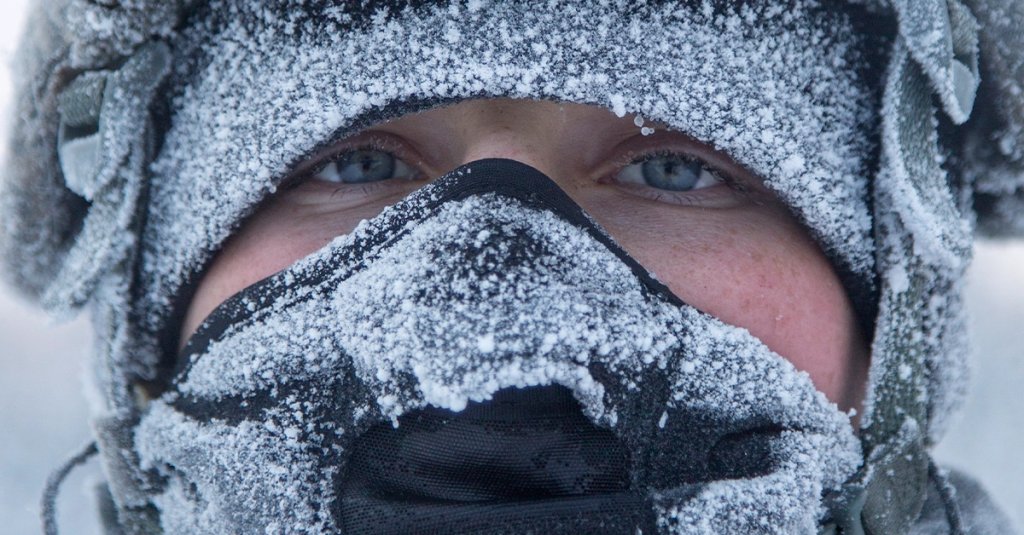
Decade after decade, the Department of Defense has anchored its most vital strategic assets in places where the mercury enters a state of clinical depression. By all means, bring your lighter jackets and sporty hoodies, but only so you can layer in style; you’re in latitudes where the air is a physical attacker that greets you with a sharp, stinging bite, and icicles that form on your brow the second you crack the front door.
This is the story of the families who live on the edge of the Arctic Circle, families who measure their resilience not at a Chuck E. Cheese with their kids and five friends, but in the number of times they’ve successfully jump-started a frozen SUV in a -20 blizzard.
The “Hurt” Hierarchy
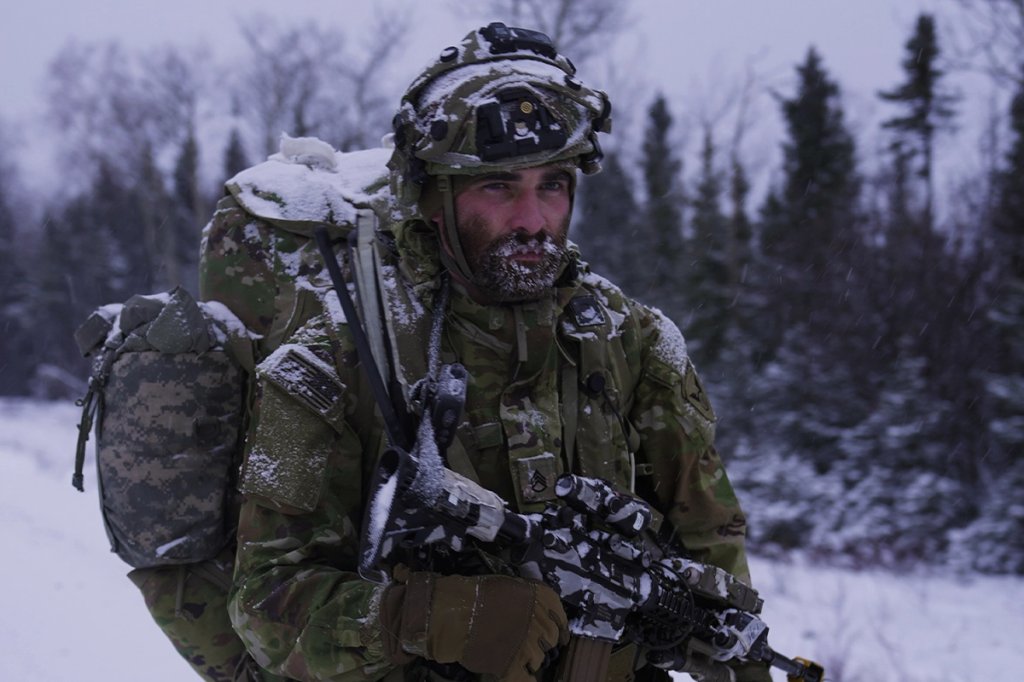
To understand the specific brand of intestinal fortitude required for these orders, you have to look at the three pillars of the American ice-box.
First, there are Minot and Grand Forks, North Dakota. The recruiters love to tell you that “Only the best come North,” which is a clever way of saying they need families with enough mental toughness to survive a landscape that looks like a crisp, clean sheet of printer paper from November to April.
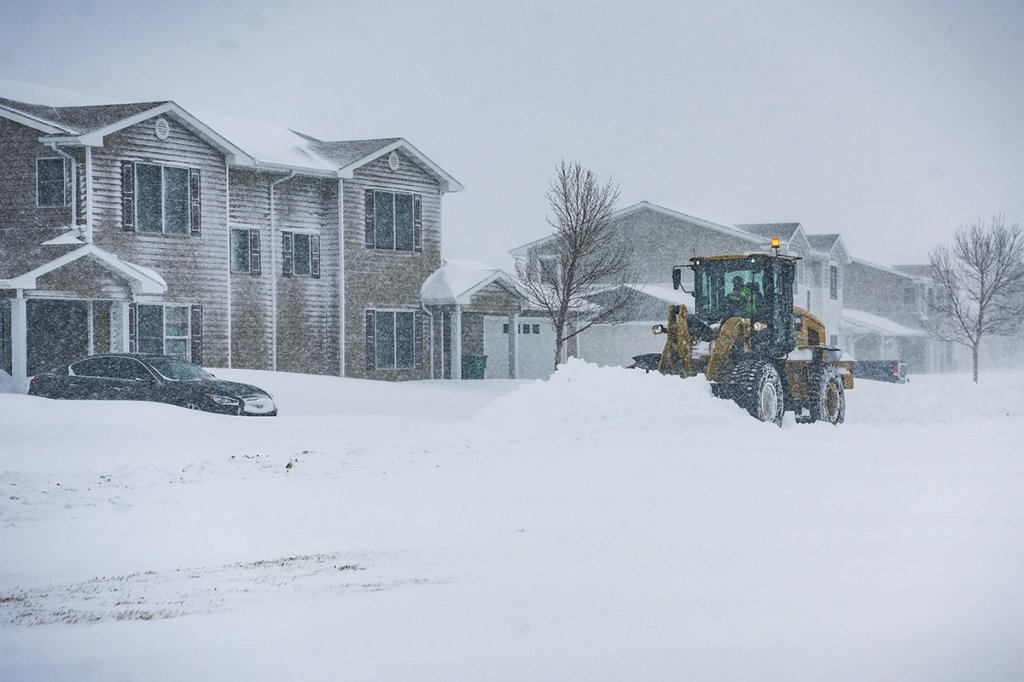
These bases are the “Shield of the High North,” home to the B-52H Stratofortress fleet and the ICBM silos that keep the global peace. But to a spouse, the “strategic deterrent” isn’t a missile; it’s the three-foot snow drift blocking the garage when you have a sick kid and a husband on a 24-hour alert.
Then there is Eielson and Joint Base Elmendorf-Richardson (JBER) in Alaska, the “Last Frontier” of the PCS cycle. Here, the environment is the commanding officer. There is more to this than managing the cold; you’re managing moose, which have more seniority than you or your spouse, and a sun that decides to go on vacation for 3 months out of the year.
Finally, there is good ol’ Fort Drum, New York, way up near that savage Canadian border. Temperatures here live in the negative; however, it’s the lake-effect snow that turns a quick trip to the Commisary into a polar trek that would make even a sled dog consider early retirement.
Giving the Cold a Purpose
Naturally, friends stationed at Marine Corps Air Station Miramar or MacDill AFB, housed in sunny Tampa, will ask why anyone would go there at all. Why not move these missions to a place where water doesn’t only exist as a solid? The answer is as stark as the North Dakota horizon: The Arctic is the potential front line of the future.
As “near-peer” adversaries eye the northern polar routes for trade and tactical reach, these “Face-Hurt” bases have become the most valuable real estate in the inventory. The 2024 Department of Defense Arctic Strategy makes it clear: our presence in the High North is about “monitor-and-respond” capabilities.
We are there because those northern approaches are the early warning system for the entire continent. The strategy behind this isn’t just a document at the Pentagon; it’s the reason you’ve spent three hours researching which engine block heater won’t fail when the wind chill hits -50.
Beyond the Parka
Being a “Frozen Family” requires a level of maniacal intuition that most people never have to develop. It starts with the car, more specifically, the tires. You’ll quickly learn that “all-weather” tires are a marketing ploy once the ground becomes a Slip and Slide.
You learn the distinctive “thump-thump” of tires that have developed flat spots from sitting overnight in the deep freeze. When the defrost actually clears the glass before you have to leave for the morning shift, it feels like a massive victory, a rare moment of planetary cooperation in an otherwise hostile frozen hellscape.
The darkness of a northern winter isn’t just a mood either; it’s a metaphysical hurdle. By January, the use of light therapy and “indoor survival hobbies,” the sudden, inexplicable obsession with gourmet cooking or complex woodworking, isn’t just a seasonal quirk; it’s a must-have defense mechanism.
Leadership has finally acknowledged this “environmental tax.” Under 37 U.S.C. 352 (this is either the code for the amendment or America’s nukes), the military now offers Cold-Weather Assignment Incentive Pay (AIP).
They aren’t dangling a tiny bonus; it’s a very tangible “thank you” for the physical and mental toll of the North. As of 2026, those at “Level 4” bases like Eielson can see a $4,000 lump sum, while those at “Level 2” spots like Minot and JBER receive $2,000.
For the Pentagon to dole out cash like Grandma on your birthday, it’s their way of saying that winterizing a family SUV and buying sub-zero gear for a household is a steep price to pay for “the mission.” By the time you’ve loaded the snow-shovels, the emergency blankets, and the industrial-grade, pet-friendly salt, your vehicle is essentially a mobile survival shelter.
Logic of the Long Winter
There is a recurring flaw in how the “warm” world views military life: they assume we are all the same, regardless of the zip code. But the families of the 11th Airborne, known affectionately as the Arctic Airborne, and the bomber wings know better. They know that in the extreme cold, “good enough” is a dangerous philosophy to adopt.
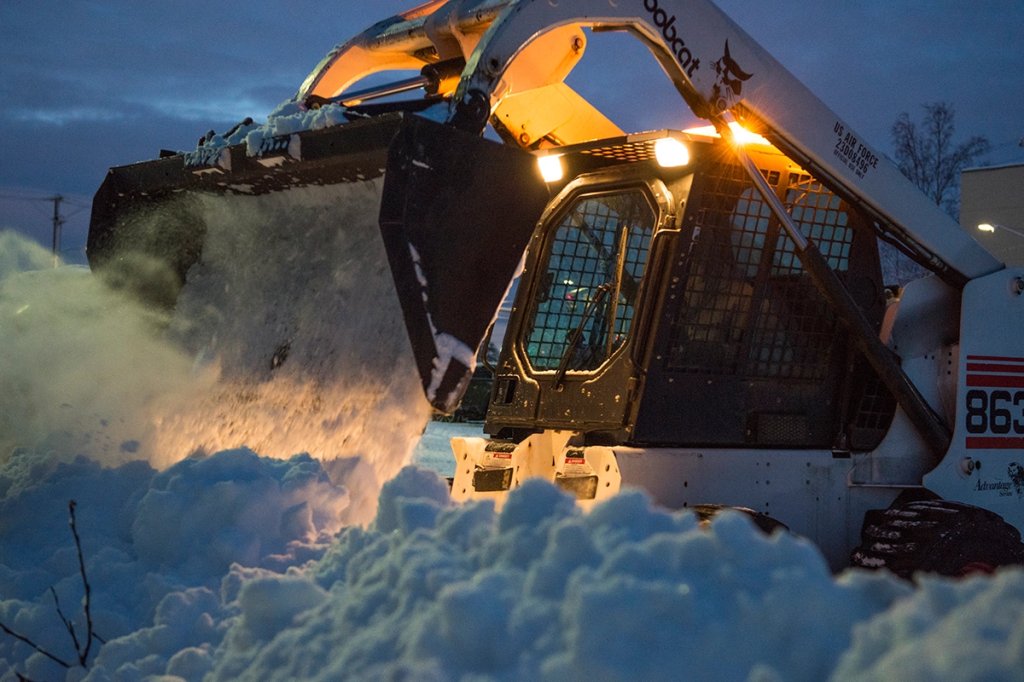
Negotiating with the Arctic is not going to get you far, unfortunately. For example, if your furnace dies in one of these barbaric places, it’s both an existential and literal crisis. Once this realization settles in, you can start to outmaneuver potential pitfalls. A snowblower that won’t start, a loose shovel, or a battery that dies on the coldest night of the year no longer functions as a tool.
Now you will shop with purpose for both your winter gear and reliable neighbors who know how to navigate a white-out, won’t hesitate to assist; you learn to value what is durable over what is flashy.
Toast the Frozen
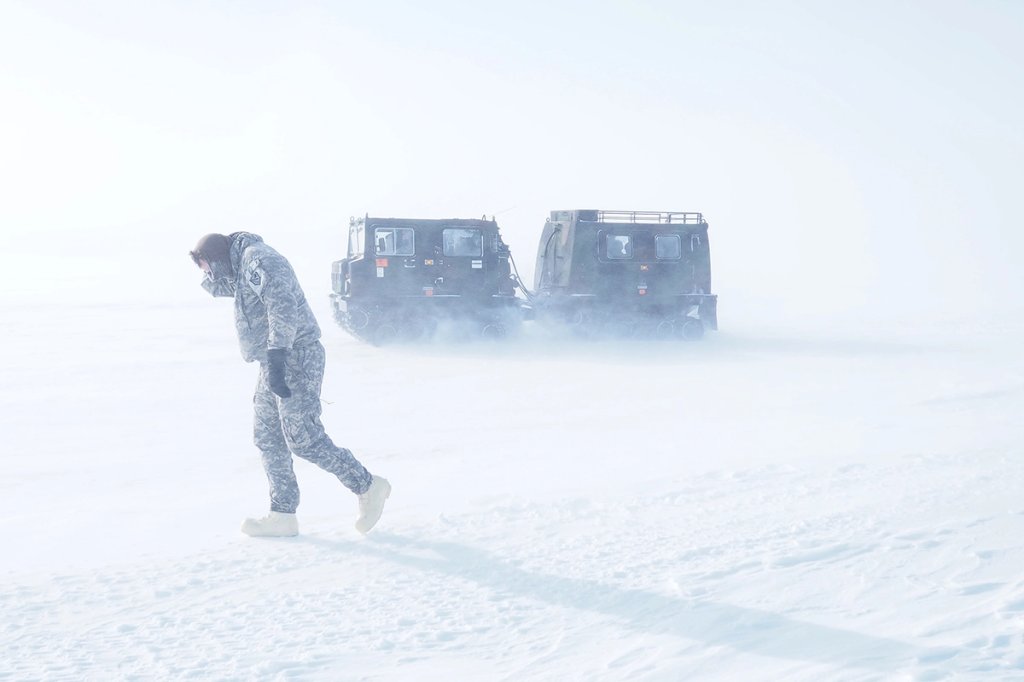
The history of these bases isn’t written in the flight logs; it’s written in the resilience of the families who make them home. There is a specific, iron-clad bond that forms at a “Face-Hurt” base. It’s a “Tundra Bond” created by shared isolation and the common enemy of a -50 wind chill.
It’s the spouse who clears your driveway while your partner is “in the hole” or out on the line. It’s the community that understands that while the air might sting your skin, the warmth of the people in the next unit is what keeps the darkness at bay.
We live here because the mission requires a shield in the North. We live here because the High North is the future of global security. But mostly, we live here because we’ve discovered that a chilly base doesn’t just test your patience, it builds a warm heart.
So, raise a mug of something hot to the legends of the Northern Tier. They aren’t just enduring the winter; they are the sentinels at the Wall.