As NASA’s Artemis II, the first crewed mission to orbit the moon in over 50 years, prepares for a possible February 2026 launch, its journey reflects resilience, readiness, and courage. These are values deeply familiar to military families and veterans.
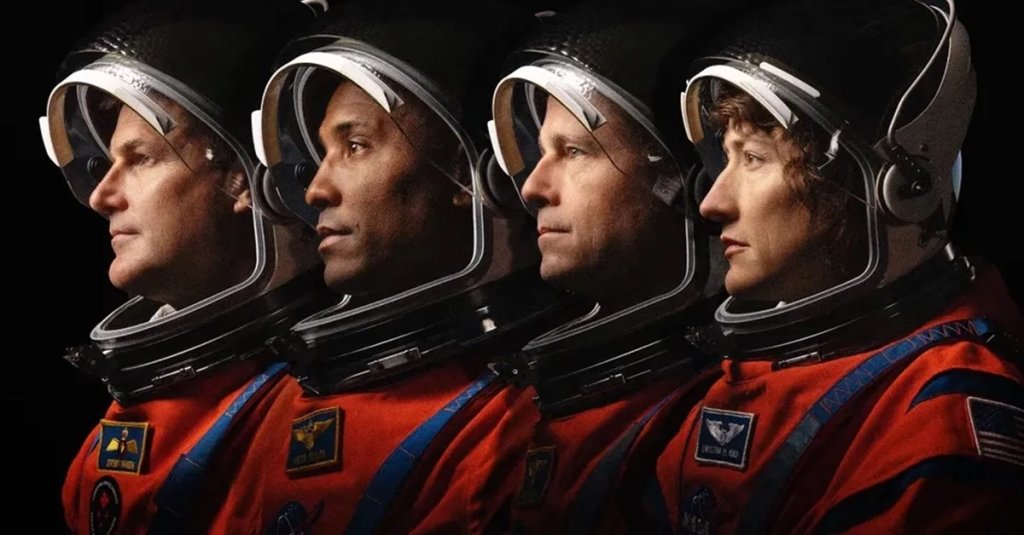
This launch is a lunar spaceflight mission led by NASA under the Artemis program. It is the first crewed Artemis flight with four crew members preparing for a 10-day mission. The crew, which is made up of U.S. Navy Capt. Reid Wiseman (Commander), U.S. Navy Capt. Victor Glover (Pilot), Christina Koch (Mission Specialist), and Canadian Forces Col. Jeremy Hansen (Mission Specialist) will pave the way for future lunar landings and long-term exploration.
If you are a military family watching this major event and keeping up with updates as they unfold, then you know how inspiring and similar some feelings might be. And no, this article is not about comparison. It is about inspiration! And recognizing that some familiar rhythms and realities might be shared.
The Artemis II crew will be using the Space Launch System (SLS) rocket and Orion spacecraft, testing all systems in the deep-space environment. The crew will take flight from Launch Complex 39B at the Kennedy Space Center in Florida. For its first days in space, it will check out Orion’s systems and run tests close to Earth before heading toward the Moon.
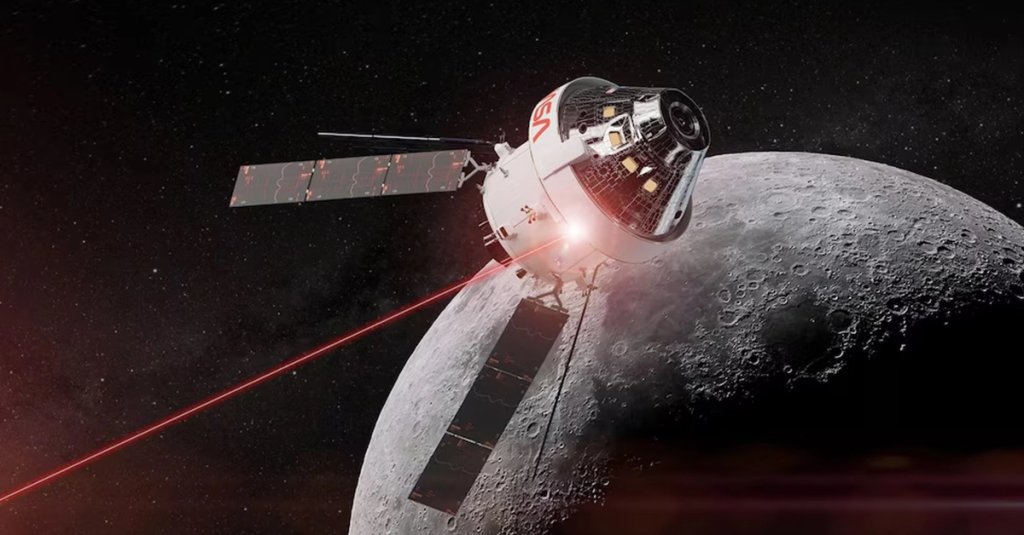
Artemis II will then use the push from Orion’s service module to break free from Earth’s orbit. It will take four days to go around the far side of the Moon and then return to Earth using the Earth-Moon gravity field. The daring journey will end in the Pacific Ocean off the coast of San Diego.
Training for nearly three years, the crew went through an intensive program to properly prepare for their 10-day lunar trip. As military families, we know training comes with many key components, and the Artemis II crew went through rigorous scenarios to manage emergencies and the multiple phases of the mission.
Sound familiar?
Readiness does not appear overnight. From checklists to intensive simulations and cautious plans for the “what-ifs,” every system and bit of training had to be tested and restested. Military families understand the importance of readiness and constantly prepare for those “what-ifs.” We know how personnel rotations can shift timeliness, how missions can change, and how “ready” doesn’t always mean “flawless.”
The realities of both worlds can feel similar. For Artemis II, one reality is waiting for its launch window. Many factors, such as weather, can delay plans. Even after years of preparation, the launch is not guaranteed. For our military families, uncertainty and waiting are real.
From homecoming dates changing, to waiting on orders, to deployments extending, our lives are lived in pencil. The emotional side of anticipation, mixed with pride, tension, anxiety, and of course exhaustion, is a constant battle in our lives. Artemis II reflects our reality. The delays and the unknowns are part of the mission. They are part of what makes our realities complex.
While the spotlight will be on the astronauts and the mission, we know thousands of people are behind the scenes. From technicians to support staff, the everyday work matters. This dynamic is something we understand all too well. Many go unrecognized, and that feels close to home. For many military spouses, the unseen labor and support behind our service members go unnoticed at times.
This is a shared understanding that behind historic moments—whether it is going to war or to the moon—there is a team, a family who supports it all. For military families, pride runs deep, but it is not performative. It is not loud and broadcast for the world to see. We are committed to something bigger than ourselves, and it is that same pride that surrounds Artemis II and its crew.
This launch resonates deeply. Artemis II serves as a reminder that long missions still matter. That careful planning, training, and collective effort are constants.
As Artemis II gets closer to its launch window, military families and veterans may find themselves watching this moment: closely following updates, checking livestream footage, or casually sharing through conversation with friends. This historic launch offers a moment for our military families to pause and reflect. It is a reminder of the hard work, the preparation and training, the weight of waiting, the slow progress, the teamwork, the buildup to the “see-you later,” and more.
Artemis II reflects values our military community knows well. The lived experiences from our service members, veterans, and military spouses are not abstract ideals. At its core, this mission reminds us that progress is rarely instantaneous. It is built through patience, collective effort, and belief in something larger than ourselves. Our military days might not be headline-worthy, but they echo through history, just as this launch will.