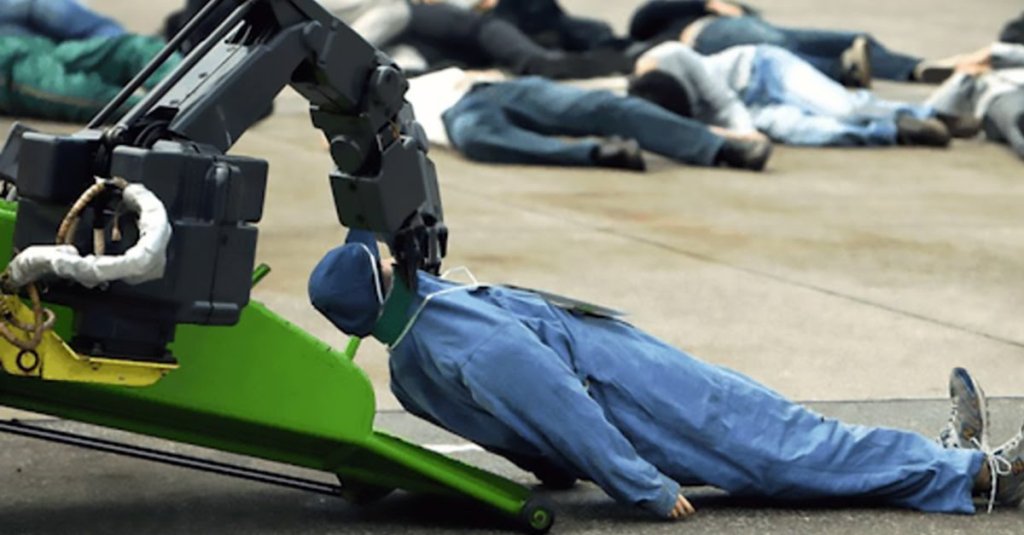
“We completely understand the public’s concern about futuristic robots feeding on the human population, but that is not our mission,” is a sentence no one should ever have had to say. That was Harry Schoell, CEO of Cyclone Technologies, one of the companies making this robot, after a panic-filled scientific world started rumors of corpse-eating (or live human-eating) robots.
This robot was then given the appropriate acronym, EATR (Energetically Autonomous Tactical Robot).
The project began in 2003 and was a DARPA-funded venture between Cyclone Power Technologies and Robotic Technology, Inc. It was designed for long-range operations that also require extreme endurance, but its designers stressed that it could provide material support to units requiring intensive labor or just by carrying the unit’s packs. They also designed it for reconnaissance, surveillance, and target acquisition, as well as casualty extraction.
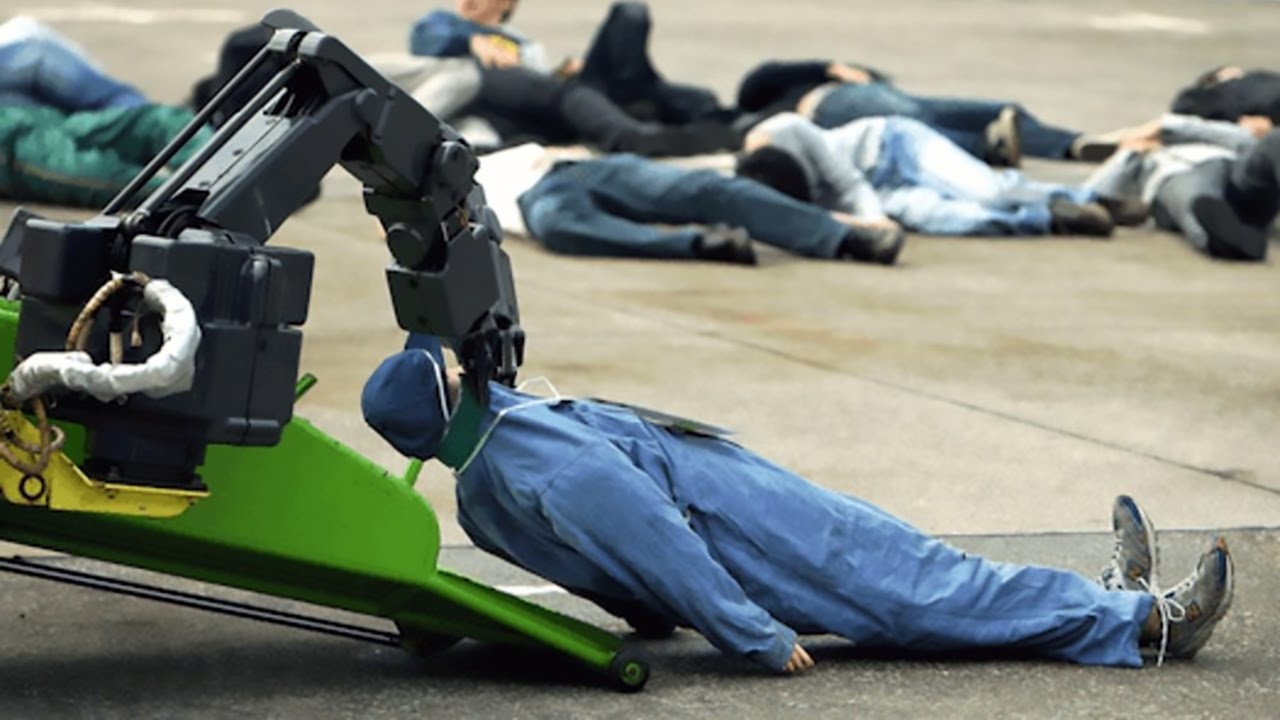
Before we all go crazy—this is an old story, so the internet already went crazy—but still, the desecration of corpses is specifically forbidden by the Geneva Conventions. So the military (likely) won’t be using it for that purpose, if it ever uses it at all.
The designers of the Phase I engine emphasized that the robot is not intended to consume the dead. Instead, it runs on “fuel no scarier than twigs, grass clippings, and wood chips—small, plant-based items.”
Moreover, Cyclone and RTI swear this robot is strictly a vegetarian. The only problem with that is how many times we’ve watched a vegan/vegetarian order a meat-dipped meat pizza slice with extra cheese after six hours of drinking.
As of April 2009, RTI estimated that 150 pounds of biofuel vegetation could provide sufficient energy to drive a vehicle 100 miles. The second phase of the project will have the engine determine which materials are suitable (edible) for conversion into fuel, locate those materials, and then ingest them.
Basically, the plan is for the machine to learn to eat on its own whenever it’s hungry.

The final phase will determine the military or civil applications a robot that can feed itself by living off the land will actually have, as well as where such a system can be successfully installed.