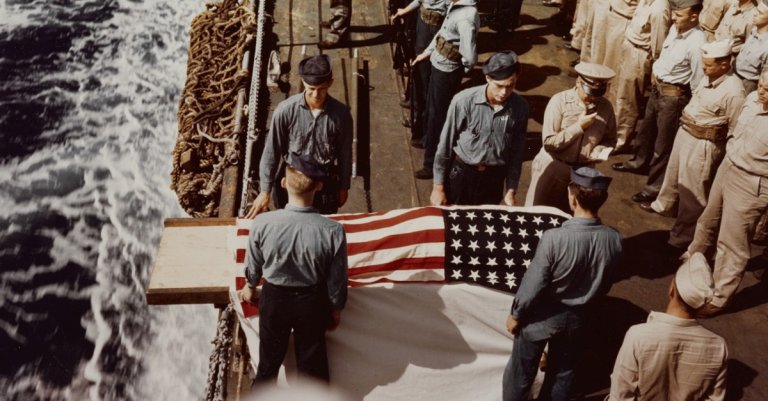
If the military runs on fuel and caffeine, the military family runs on being prepared.
We like to think that the hardest parts of this life are the deployments or the moving trucks. But the real enemy, the one that doesn’t respect your quality of life or your need for sleep, is the bureaucracy.
It’s the silent, paper-cut-inducing third wheel in your marriage. It is the stack of documents you must produce to prove you or your family exist IRL, that you are married, and that yes, you are allowed to buy a genuine Casio watch on this installation.
Related: How you can get all of your old award and service documents
Civilians have “filing cabinets.” Military spouses usually have a binder or folders, tangible and tactile. You know the ones; they’re three inches thick, zippered, and guarded with the same staggering speed of a mother bear if you went to hug her cubs. It contains the history of an important part of your life as well, measured out in triplicate and chicken-scratch signatures.
But not all forms are created equal. Some are annoying gnats; others are “Boss Level” threats that can freeze your bank account or leave you stranded at the gate. So, in the spirit of readiness, it’s time to rank the paperwork that rules our lives.
Tier 4: Grind Your Gears

These are the forms that aren’t necessarily mind-melting, but they can ruin your morning.
Leave and Earnings Statement (LES)
Your first time going over an LES is less like checking a summary of your pay and more like trying to decode a supervillain’s intentions. It is a dense jungle of acronyms, codes, and numbers that kinda explain where the money went, but usually just leaves you with more questions.
Why is there a deduction for a meal card from last year? Why does the “Awards” section appear to have been typed up by a private who appears to be sponsored by Red Bull?
The pain of the LES isn’t just about confusion; there’s anxiety, too. There’s the ever-looming threat of the “No Pay Due.” You learn very quickly after entering basic training that the finance office can accidentally stop paying you instantly, but it takes an act of Congress and virgin sacrifices to get them to start paying you again.
You don’t read the LES for funsies; you scan it for threats as your heart skips beats. You look for the negative signs. You check the entitlements now so you don’t find out at the checkout line at the commissary.
The TRICARE Referral Letter
You have a sinus infection. You know you have a sinus infection. The medic at the clinic knows you have a sinus infection. But unless you have The Letter, you do not have a sinus infection; you will still have the sinus infection, and you will have a bill for $300.
The referral game would test Mother Teresa’s patience. It involves waiting on hold, listening to the same insanity-inducing loop of hold music that sounds like it was played in sanatoriums in the 1930s, just to obtain that sweet piece of paper that allows you to see a specialist 45 minutes away.
And if you dare to show up without that paper? The receptionist will look at you with the dead eyes of someone watching a tourist try to pet the big kitties at the zoo.
Tier 3: The Gatekeepers

Moving up the ladder, we reach the documents that control your physical movement. These aren’t just annoyances; they are the keys to the castle.
DEERS Enrollment (DD Form 1172-2)
If you are not in DEERS (Defense Enrollment Eligibility Reporting System), do you even exist? Philosophically, maybe. Logistically, absolutely not.
The DD 1172-2 is the holy grail of dependency. It is the form that says, “Uncle Sam recognizes this human and may they be blessed.” But the process of updating it is a special kind of torture. It usually requires dragging a tired spouse and crying children to a windowless room, where you will wait for three hours behind a PFC who lost his ID for the third time this month while their NCO slouches in a chair and scrolls their phone.
Now, let’s talk about the ID card photo for a second. The lighting is designed to make you look like you just received a phone call saying you have seven days left, or that you are currently in witness protection. You will carry this card, this unflattering, grayscale portrait of your regrets, in your wallet for years.
Tier 2: The Heavyweights
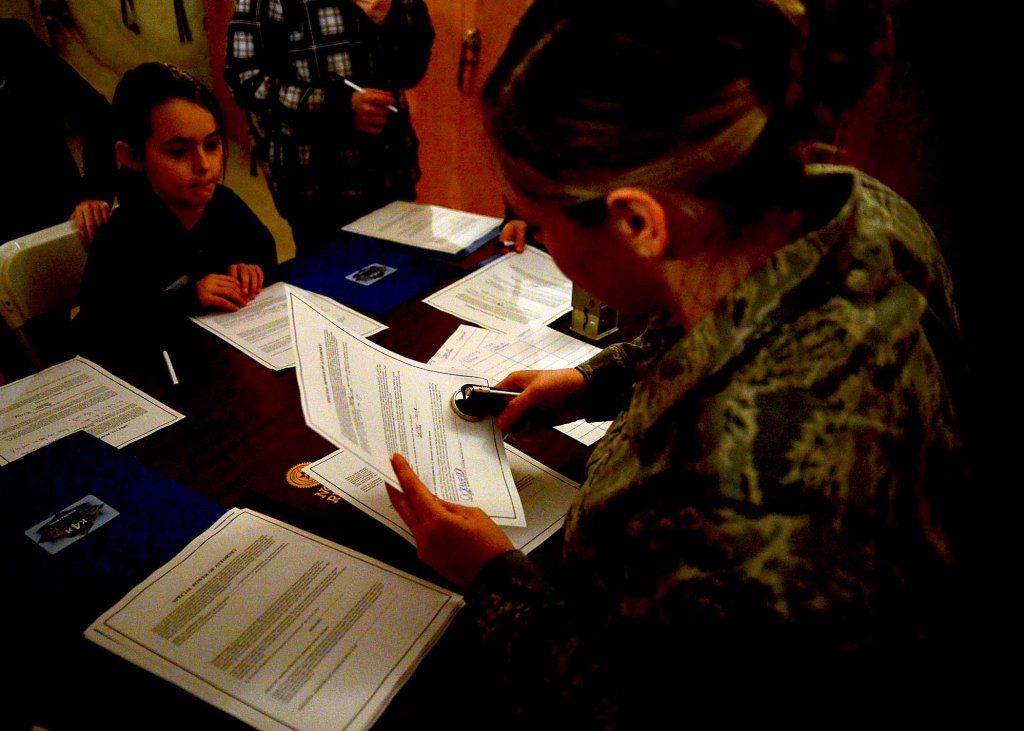
OK, folks, here is when things get real. These documents keep the lights on and the car on the road when the service member is downrange.
The General Power of Attorney (POA):
Yikes. Civilians think “romance” is like a box of chocolates; military spouses know that true intimacy is about signing a General Power of Attorney.
Absolutely nothing says “you are the love of my life” quite like a legal document that allows your spouse to buy a yacht, sell a house, or drain a bank account in your name while you’re napping in a bathroom at work.
We have all had that moment, standing at a leasing office or a bank-teller window, where the person behind the counter says, “I need his signature.” You smile, reach into your bag, and produce the POA like you’re at Hogwarts. It is a straight-up power move; it is the only way to survive a deployment without losing your mind or worse.
The Will and SGLI Update:
We don’t like to talk about these, but they are a thing. They are the grim pragmatism of our lifestyle and true definition of adulting. Updating the SGLI (Servicemembers’ Group Life Insurance) before a deployment is dark is a conversation that happens over dinner, between passing the hot sauce and asking about the kids’ schedule. “If something happens, the money goes here.” It’s heavy, it’s uncomfortable, and it’s necessary.
Tier 1: The Final Boss
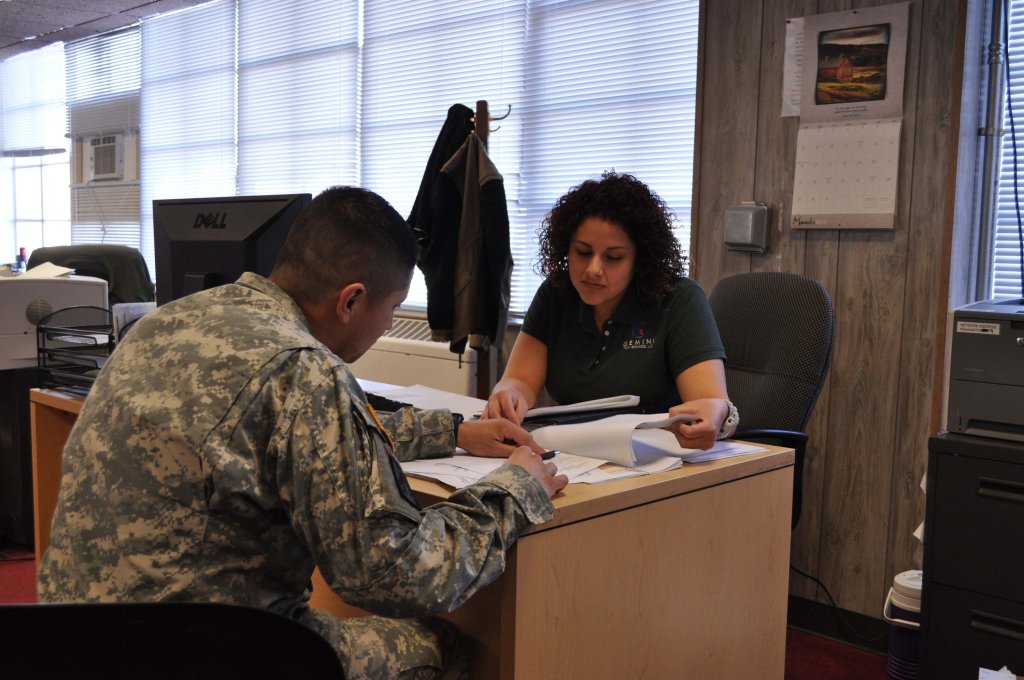
Then there is one form that rules all others.
The DD-214:
The Certificate of Release or Discharge from Active Duty. The Golden Ticket. Freedom.
For the service member, this document represents the end of the watch. It summarizes every hour of every day, every deployment, every award, and every sacrifice made at ages when every moment is so precious. For the spouse, it’s a sacred promise that they will never have to scrub a base housing wall with a magic eraser and fear ever again.
Read Next: The proud World War II history of Navy ship DD-214
But the DD-214 is also a source of anxiety. Legends of the “Member 4 Copy” abound and are passed around like a doobie. “Guard it with your life,” they say. “If you lose the original, you will wander the earth as a wretch, unable to claim benefits and forever hungering for acceptance.”
We treat the DD-214 with more reverence than our marriage certificates. Some might frame it; others will scan it off into the cloud. We email it to ourselves. We put it in a fireproof safe, because we know that without this single sheet of paper, the last four, 10, or 20 years simply didn’t happen in the eyes of the government, employers, or potential dates.
The Afterlife

You thought it was over when you got out? That’s cute.
The paperwork doesn’t end with the DD-214; it festers, then mutates. Now you’re entering the dungeons of the VA claim; difficulty is about to get cranked up to “Insane.”
Now you have to prove that your knee that clicks every time it rains is actually connected to a deployment in 2013. You have to gather medical records that are scattered across three continents and four different electronic health systems like a gimpy Indiana Jones.
The VA paperwork is a battle of attrition, designed to wear you down and steal your soul. Whatever. You have survived PCS moves, deployment breakdowns, and traffic at every gate onto post. You can handle a disability claim.
We joke about the bureaucracy because if we didn’t, we’d start running off into the distance like Forrest Gump. We piss and moan about the forms, the wait times, and the absurdity of it all, because at the end of the day, that battered binder of dead trees in your closet is a scrap book of sorts. It’s a mishmash of memories and sensory experiences, maybe some lessons you still keep with you today.
It’s a record of resilience. Every fuzzy scan of a DD-214 reflects a portion of your youth. Those LESs will remind you of months of hard work, but also maybe some hard laughter. Somehow, even the awful ID card will mark an era of your life you’ll long for one day.
So don’t throw out those folders; hold them in high regard, maybe stash them with the old family photos. Make sure the POA hasn’t expired, if you have the time. Always know where the birth certificates and binders are. And maybe, just maybe, go out and get yourself some laminating sheets. You’ve earned it.