If you’ve ever heard someone say a meeting is at 1630 and then felt your brain do a small cartwheel, you have met the 24-hour clock. In the United States, we mostly live by the 12-hour clock, with a.m. and p.m. designating the morning and afternoon parts of the day. The armed forces do not (and yes, this includes the Coast Guard). They use what many Americans refer to as “military time.”
The choice isn’t about sounding tough or cool (the U.S. military is already cool). It’s about making time unambiguous across radios, continents, services, and even other countries that must act together without tripping over a colon or a stray AM signal. The 24-hour system eliminates a very old problem in a very practical way. If 0600 is sunrise, there’s no chance someone will mistake it for 6 p.m. during a briefing or a static-filled call.
Read: 6 dumb things I thought I knew about the military before joining
That single clarity builder is reason enough when the cost of confusion can be lives or a mission. Aviation, shipping, and meteorology live in the same world of precision, which is why those fields use the 24-hour clock too.
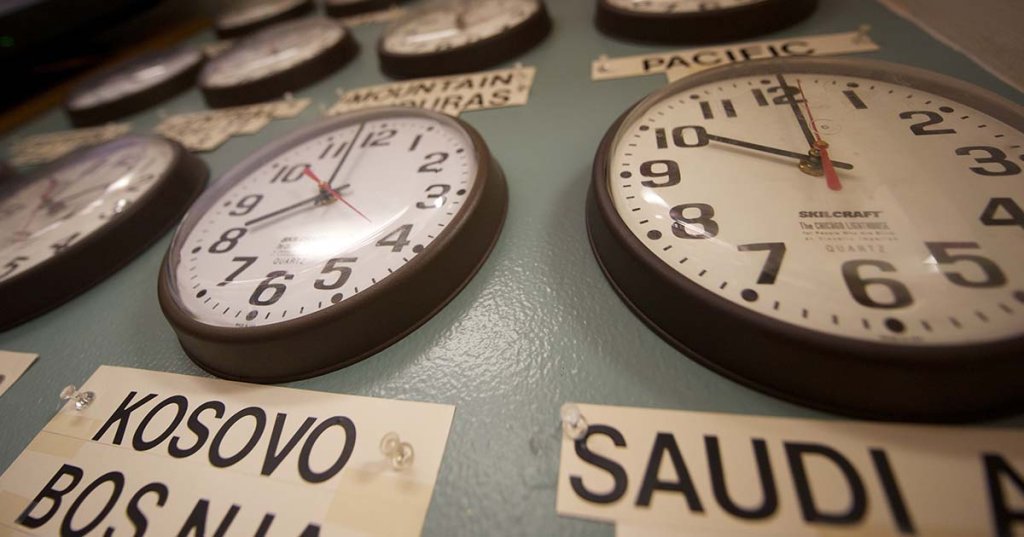
The military also works across time zones constantly. A patrol might step off in Iraq while aircraft launch from a carrier in the Mediterranean, and a headquarters tracks it all from Virginia. Coordinating those pieces requires a standard reference. And get ready: that’s where Zulu time comes in.
Zulu is the military’s name for Coordinated Universal Time (UTC), or Greenwich Mean Time (GMT), the global time standard anchored to the Prime Meridian. When a plan says a strike happens at 0415Z, everyone on the net can convert from the same baseline, and there will be no debate about which daylight saving rule applies this week. Zulu time is used in orders, weather reports, and flight plans because it keeps the whole orchestra in tempo.

If you’ve seen strings like “091530Z OCT 25” in a message, you’ve seen the date time group. The DTG is the military’s compact way to indicate when something happens and where in the world that time is located. It packs day, hour, minute, the Z for Zulu or a letter for a specific zone, the month, and the year in one clean tag. Field manuals teach troops to use DTGs in reports and orders so that radio operators, staff officers, and pilots keep a shared clock across echelons. The habit is baked into formats for everything from sitreps to air tasking orders.
There is also a history lesson here. The 24-hour clock predates modern radios by centuries, but its widespread adoption came with the advent of railroads, telegraphs, and global navigation. Armed forces adopted it early because they had the strongest reasons.
The British Navy made the switch during World War I, and allied forces followed. In the United States, the Navy adopted the 24-hour clock in 1920. The Army did not fully make the switch until 1942, when global war made standard timekeeping a necessity for convoys, air raids, and combined operations.
These changes simplified training, cut down on transcription errors, and made joint planning with allies far smoother. You can see the fingerprints of those decisions today, every time someone on a base says something like “1100 hours.”
The system is also standardized across NATO and partner militaries so that an American platoon in Poland and a Norwegian aircrew talking to an American controller in Germany are literally speaking the same language about time. Allied communications standards assign letters to time zones and define how to express times in messages so that everyone formats their clocks the same way.
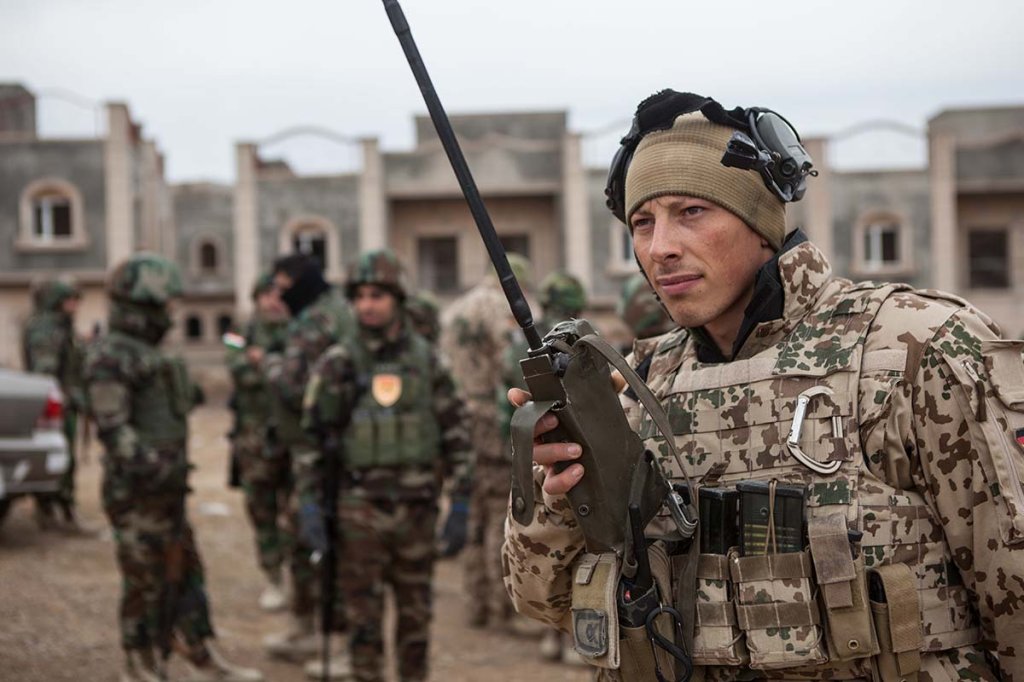
That standardization is why a pilot will read back a time with “Zulu” or “Romeo” and why you’ll see those letters on maps and tasking sheets. The point isn’t about tradition. The point is about joint interoperability.
Clarity and coordination would be reason enough, but there’s a human factor, too. Numbers are faster to read and hear clearly on a noisy net. Saying “1-7-3-0” is less likely to be misheard than “5:30 p.m.,” especially if the P or the M drops out in static. The services also write times without a colon to reduce clutter in typed orders and to keep formats short for radio or chat windows. That small choice scales up when you’re moving thousands of messages per day. The less a person has to interpret, the better and faster they can act.
You can spot how the logic spreads beyond the military. Hospitals, emergency services, airlines, and broadcasters use the 24-hour clock because their work also punishes ambiguity. If a nurse writes “2200” for a dose or a dispatcher assigns a unit at “1442,” no one has to ask if it’s morning or evening.
This same simplicity is why your phone can display a 24-hour option and why international standards bodies recommend it for data formats. Computers and humans both benefit when time is written in a clear and unambiguous way.
There are cultural reasons Americans still default to the 12-hour clock in daily life. Habits are hard to break, and civilian schedules rarely carry life-or-death stakes. The military operates in an entirely different world. It trains to remove avoidable errors and fights with allies who’ve been on the 24-hour clock for more than a century. So the services teach recruits from the jump to say the leading zero and to hear the rhythm of a day that runs from 0000 to 2359.
Within a few weeks, it becomes second nature. Outside the gate, it may sound like gibberish. Inside the wire, it sounds like order. And the U.S. military loves order.
To translate “military time” quickly, subtract twelve from any time greater than 1200 to get the afternoon in civilian terms. If a briefing says 1730, that’s 5:30 p.m. If it says 0030, that’s half past midnight (or “zero dark thirty,” but not over a net). Midnight itself can be written as 0000 at the start of a day or 2400 at the end of one, a final touch that keeps schedules tidy across a page.
Learn those simple moves and you can read a tasking sheet or a flight board like a pro. The reward is the same one the military gets every day. Fewer mistakes. Faster decisions. A shared clock that keeps complex operations humming.

Sponsored Content