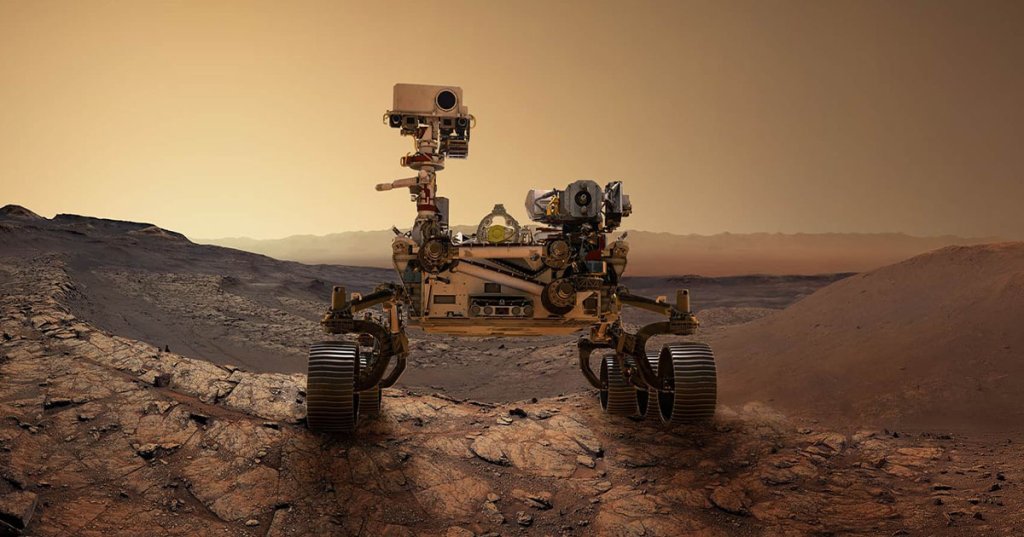
Before it roved across Mars, potentially finding ancient Martian life in the process, NASA’s Perseverance rover spent its lifetime on Earthly battlefields.
Not literally, of course, but piece by piece, bolt by bolt, it carries the genetic code of military engineering. From its nuclear heart to the robotic limbs and hardened electronics that keep it alive, the Mars rover is part war machine, part scientist. And it’s not alone. Its predecessors, Spirit, Opportunity, and Curiosity, were also built with brains, brawn, and battlefield bloodlines. These robotic explorers may have been designed for peace, but they were born in war.
Here’s how a collection of military technologies helped the Mars rovers conquer both Earth and the Red Planet.
1. Cold War Power: The RTG
Every Mars rover needs juice, and on a planet with vicious dust storms and dim sunlight, solar panels don’t always cut it. That’s where the Multi-Mission Radioisotope Thermoelectric Generator (MMRTG) comes in—a nuclear battery that converts the heat from decaying plutonium-238 into electricity, while also making us all appreciate acronyms just a bit more.
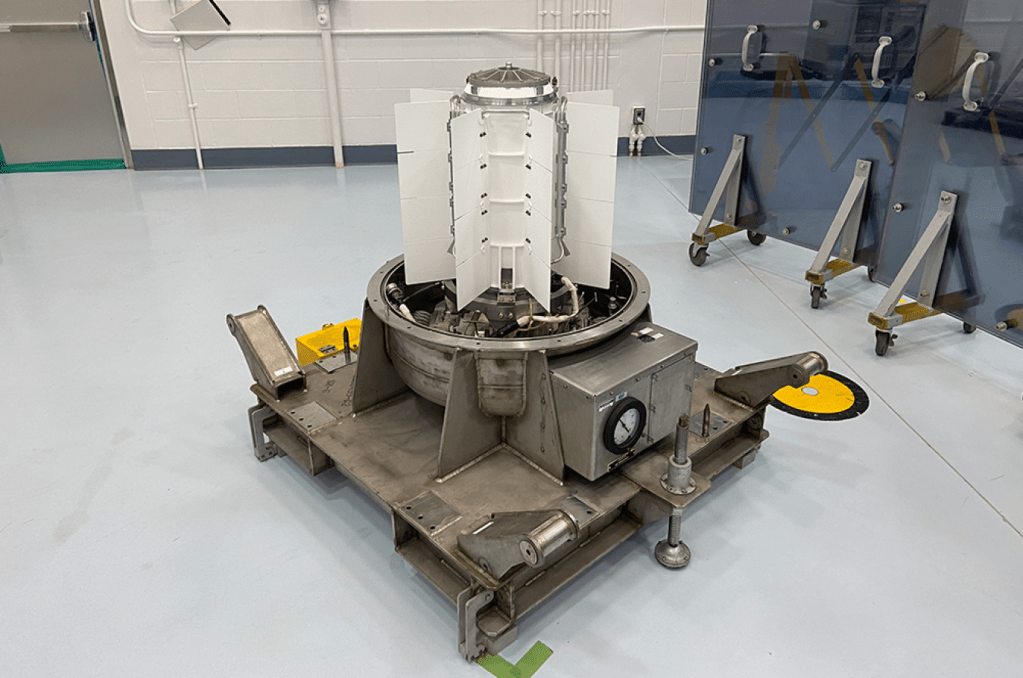
Originally developed to power Cold War-era surveillance satellites and deep-sea listening posts, the RTG was hardened to withstand the extremes of interplanetary exploration, including thermal spikes, shock, and radiation. Today, it powers Curiosity and Perseverance, delivering around 110 watts of continuous power. Think of it as the rover’s reactor core, humming quietly across alien sands as it hunts down its Martian prey just as Mother Earth always intended.
2. Radiation-Hardened Electronics: Survive Anything
Space is basically one giant radiation bubble bath. Solar flares, cosmic rays, and temperature swings would melt consumer-grade electronics in mere hours. That’s why rovers are built with radiation-hardened chips, descendants of the same components meant to survive nuclear strikes.
The RAD750 processor, found in both Curiosity and Perseverance, is a space-grade chip derived from defense tech. It can take a 200,000-rad punch to the face and then ask for more. That’s the same toughness built to keep missile systems and hardened aircraft electronics alive after a nuclear blast.
3. Robotic Arms: From Bomb Disposal to Rock Sampling
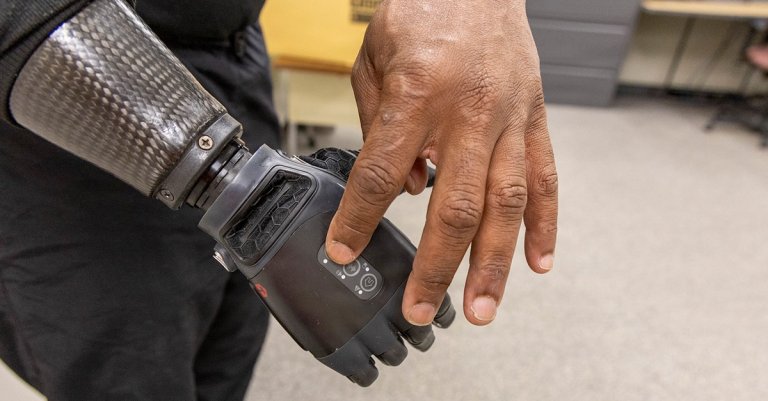
Long before Perseverance drilled into Martian rock, bomb disposal units were using similar robotic arms to neutralize IEDs in places like Iraq and Afghanistan.
The rover’s arm can rotate, extend, and precisely maneuver instruments with sub-millimeter accuracy, features refined in the dark, hot crucible of EOD (Explosive Ordnance Disposal) work. Where one was designed to grip and disarm, the other is meant to scoop, sample, and study. Both are built to reach into dangerous, unpredictable places that mortal fingers best not tread, lest they be lost to the crushing depths of space.
4. Autonomous Navigation: Mars Needs a Driver
Perseverance doesn’t have a joystick operator. With a 20-minute communication delay to Earth, it must steer itself using a combination of cameras, hazard detection, and path-planning algorithms. Sound familiar?
It should; this capability owes a lot to DARPA’s Grand Challenges in the early 2000s, which helped launch military autonomous vehicle research. The same AI logic used to guide convoys through IED-strewn terrain now helps a rover avoid Martian cliffs, dunes, or any potential Martian solicitors.

Perseverance AutoNav Avoids a Boulder
5. Chemical Sensors: From Sarin Gas to Martian Microbes
Many of the spectrometers and chemical analyzers on Mars rovers owe their design DNA to battlefield detection systems. Originally built to identify chemical weapons such as sarin gas or anthrax, the sensors now look for organic molecules and biosignatures.
For example, Curiosity’s Sample Analysis at Mars (SAM) instrument can “sniff” Martian air and soil for compounds that hint at past or present life. In another life, that same detection logic might’ve triggered alarms in a mobile bio lab.
6. Remote Ops: Pilots Without Borders
The ability to pilot a drone over Syria or operate a deep-sea robot from a Navy ship when your captain is in the latrine requires one thing above all: delay tolerance. That same challenge, handling inputs with minutes of lag, drives rover operations on Mars.
The Deep Space Network sends commands to Perseverance hours in advance. Once sent, it’s all up to the rover’s software to act appropriately. Many of these interfaces and decision-tree systems come from the world of military drones and submersible ROVs.
War Tech: The Accidental Peacemaker?
It’s easy to forget that much of our greatest exploration is built on the foundation of conflict. The Mars rovers were not just feats of science; they were quiet beneficiaries of wartime R&D.
Forged in defense labs, sharpened by military needs, and now sent millions of miles from Earth, these robotic explorers carry a strange legacy: technology built to kill, repurposed to discover.
Perhaps the most human thing we’ve ever done on another planet began with machines meant for war. And when it’s given the last ounce of nuclear blood, sweat, and tears for us, we will all respond to this warrior in unison, “Rest now, brother. We have the watch, and we will see you in Valhalla.”