
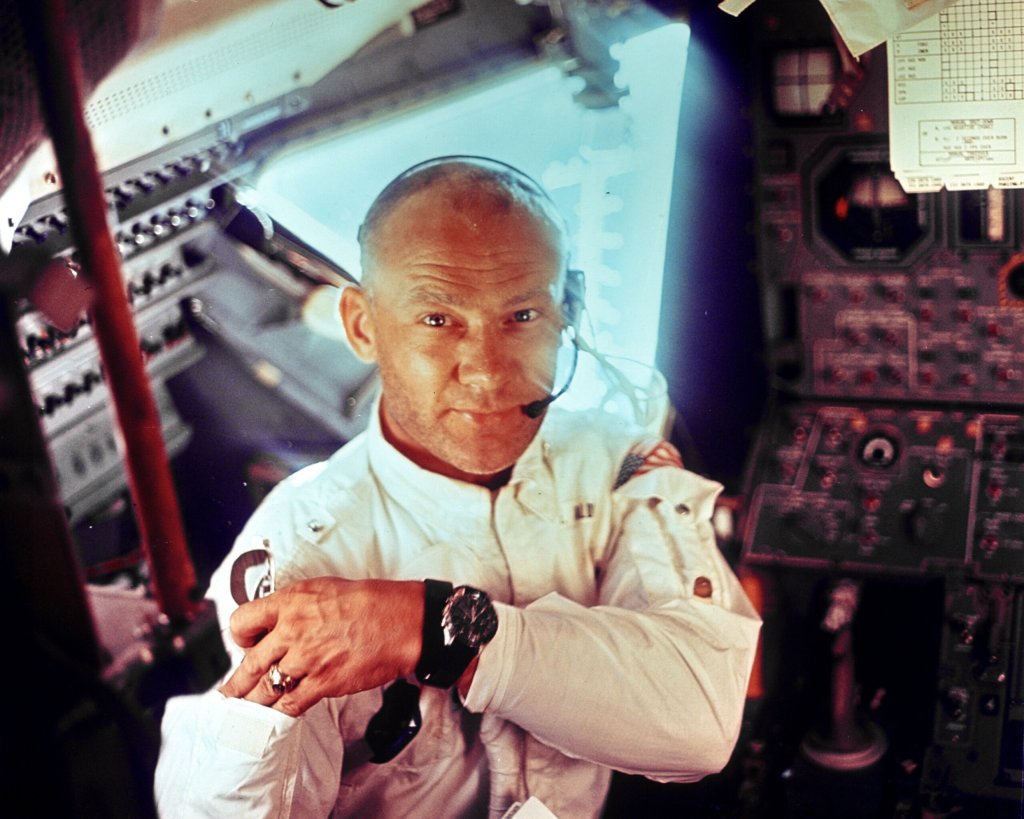
You don’t have to spend long in the realm of watch collecting to learn that the Omega Speedmaster was the first watch that NASA declared as “flight-qualified for all manned space missions.” This was on March 1, 1965. Since then, Omega has done everything it can to ensure that people know it. From marketing of the Speedmaster as the “Moon Watch” for being the first watch worn on the moon to the “Moonswatch” collaboration with sister brand Swatch, Omega embraces its watch’s unique status. But how did the Speedmaster achieve its unique qualification?
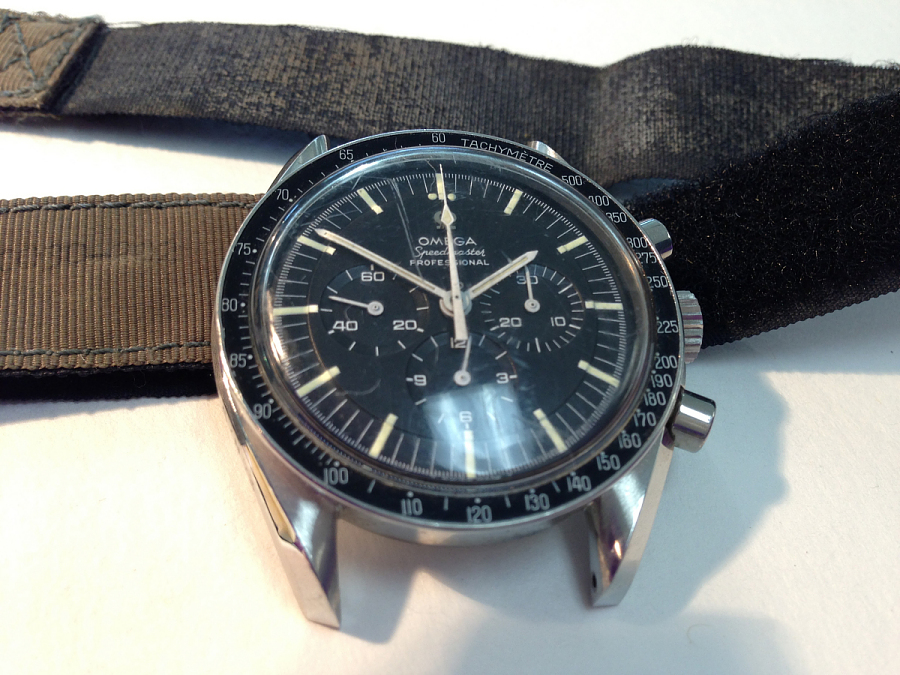
Omega traces its roots back to 1848. Over time, the company developed a reputation as a manufacturer of accurate and reliable movements. As a result, Omega was the official timekeeper for sporting events like balloon races and the Olympics. During WWII, the company supplied military watches including timepieces for RAF fighter pilots. So, when NASA solicited 10 watchmakers to submit entries for a watch in 1964, Omega was a natural inclusion.
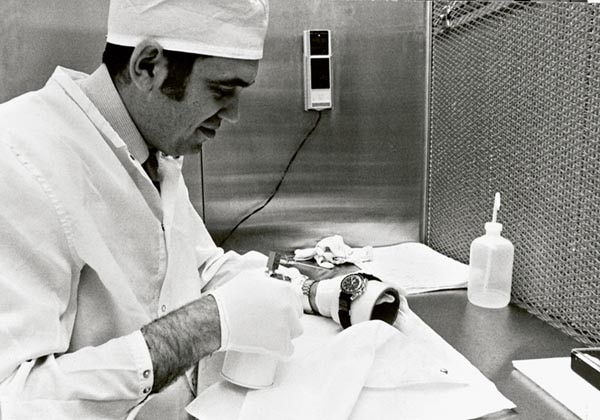
Of the 10 companies contacted by NASA, only four responded: Omega, Rolex, Longines and Hamilton. Per NASA’s procurement memo, all of the watches were chronographs. However, Hamilton submitted a pocket watch rather than a wristwatch as dictated by the space agency and was disqualified. Rolex submitted their reference 6238 while Longines submitted their reference 235T, both of which were powered by the Valjoux 72 caliber. Only Omega’s submission, the Speedmaster, was powered by an in-house movement: the caliber 321.
Despite its modern interpretation as a space watch, the Speedmaster was originally designed as a racing watch. Its clean and legible dial, as well as its chronograph function with tachymeter bezel, made it ideal for the world of racecar driving. During the NASA trial, all three watches were subjected to 0°F and 200°F temperatures, high and low pressures to include vacuum, high and low humidity, 40 G shocks, and heavy vibrations and acoustic bombardments. All of this was to ensure that the watch could survive the trip to the moon and back. The Rolex failed during the humidity test and the high-temperature test, while the Longines failed during the latter test. Only the Omega survived for NASA to qualify it for all manned space missions.

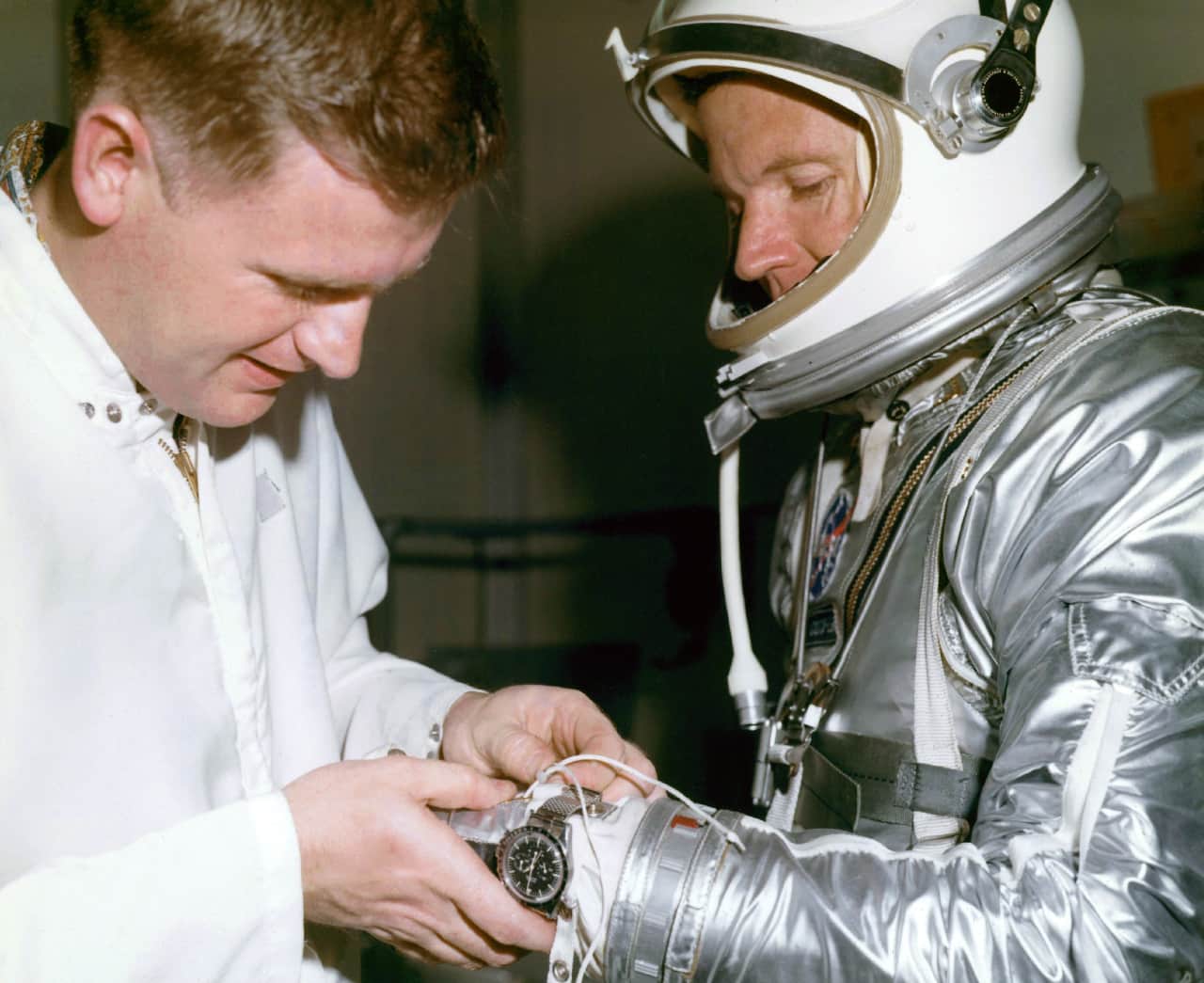
On March 23, 1965, just over three weeks after receiving space flight qualification, the Speedmaster flew into low Earth orbit on the wrists of Gus Grissom and John Young aboard the Gemini III mission. Later that year, on June 3, Ed White wore his Speedmaster for the first American spacewalk on Gemini IV. While these were notable official flights for the watch, the Speedmaster first went to space on the wrist of Walter Schirra, who purchased his watch privately during the Mercury-Atlas 8 mission on October 3, 1962.

The Speedmaster remains qualified for space flight by NASA and the watch is still issued to astronauts. It remains one of the few pieces of equipment issued by NASA that is available for purchase by the general public. In 1998, Omega introduced the modernized Speedmaster Skywalker X-33, with a quartz movement and electronic functions, which is also qualified for space flight. However, the classic Speedmaster Professional will always be the coveted Moon Watch.