Anyone who follows “Terminal Lance” on Instagram can tell you that Marines should never be left unsupervised. The trouble they can get into runs the gamut from playing dangerous (but hilarious) games on the unit floor buffer to multiple international incidents, some involving critical American allies.
Related: A junior enlisted Marine once eloped with Bahrain’s Princess
What Marine Warrant Officer Faustin Wirkus did was pretty spectacular, but it wasn’t actually his fault. In reality, it was just a day in the life of a U.S. Marine. Except this time, the Marine in question ended up being proclaimed king of the island in a voodoo ceremony, and he ended up with a wife—whether he wanted to or not.

At this point, half of everyone reading is wondering what happened, and the other half is wondering if voodoo is why they so rarely see the warrant officers in their unit. We can’t tell you what your WOs are doing; we can only tell you why then-Sergeant Wirkus had to stop showing up for duty.
It wasn’t that Wirkus was opposed to hard work. He was a United States Marine, and he grew up breaking coal from slate in the Pennsylvania Coal Country. It turns out “King Faustin” had an island to rule.
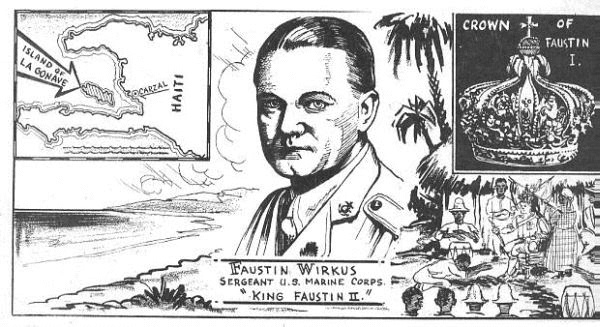
In late July 1915, Haiti suddenly overthrew the American-backed dictator, Jean Vilbrun Guillaume Sam. Caco Rebels installed an anti-American president, Sam was killed, and political violence spiked. President Woodrow Wilson sent United States Marines into Haiti. Publicly, it was framed as a way to prevent chaos. In practice, American policymakers also wanted to protect U.S. financial interests and reduce the chance of European (especially German) leverage in the region as World War I raged in Europe and elsewhere. Wirkus arrived in Haiti in 1915 with the rest of the Marines and spent much of his first year around the capital of Port-Au-Prince.
The Marines weren’t just kicking in doors and sweating through wool uniforms. They were basically helping govern Haiti, doing the policing, building infrastructure, and handling administration. The unglamorous stuff that keeps a country going. That matters because it explains how a Marine like Faustin Wirkus could land on the island of La Gonâve and become the authority figure people actually listened to.
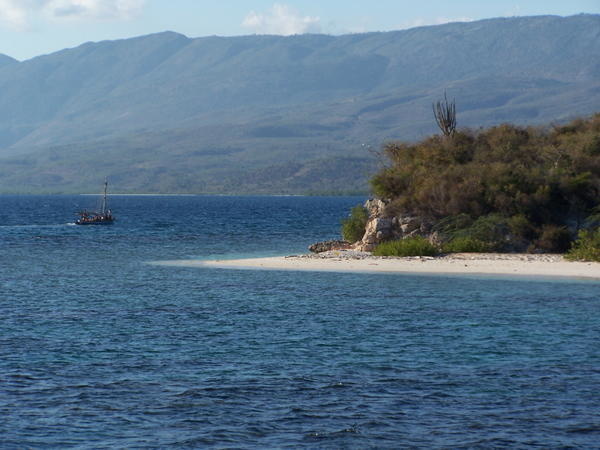
Outwardly, there was nothing special about Wirkus. He was one of many Marines sent to Haiti aboard the USS Tennessee. Wirkus was a Polish-American and spoke some French, which immediately made him more useful than most of his peers. Almost foreshadowing his future, it was aboard the Tennessee that he first saw the island of La Gonâve.
He asked a Marine NCO about the island. The reply was cryptic and short.
“If you’re lucky, you’ll never get any closer to that place than you are now,” his NCO said. “No white man has set foot on it since the days of the buccaneers. There’s a post on it now, but the men stationed there don’t usually come back—and if they do, they’re fit for nothing but the bug house… Place is full of voodoos and God knows what else.”
La Gonâve was large, rural, and isolated enough that local power didn’t always flow neatly from Port-au-Prince. If you were the outsider who settled disputes, treated people decently, and didn’t get everyone killed, you could rack up legitimacy fast, especially if the culture handed you a symbolic costume that made sense to everyone watching.
Luckily, he was kept in the capital during his first deployment in Haiti. He soon fell from a truck and broke his arm. After his recovery in the U.S., he was sent to Cuba and eventually back to Haiti. It was four years later, and the young Marine was now a sergeant, but was a commissioned officer in the local Garde d’Haiti, keeping the Caco Rebels at bay in the outer edges of the island nation.

He was good at it, and so, of course, by 1925, he would be sent to the one place everyone told him he would be lucky never to see. No, it was not Twentynine Palms, it was the mysterious island the NCO warned him about: La Gonâve.
Wirkus was extremely interested in the island. It captivated him, but none of the other Marines could tell him anything about the island’s interior; none of them had ever dared to venture inland. His first assignment on the island was to assess prisoners of the Garde who were charged with “offenses against the Republic of Haiti” and “trivial voodoo offenses.”
Among them was a woman named Ti Memenne, who warned the Marine that she would see him again. If Wirkus was unnerved by her warning, he didn’t tell his squad. He simply sent her on to Port-Au-Prince with a recommendation for lenient treatment. He didn’t know she was the island’s queen.
Wirkus’ job was simple in theory: keep order, collect taxes, and make sure no one started a rebellion. In practice, he became something of an island referee. He resolved disputes. He tried to treat locals fairly. He didn’t steal from them or beat them, which already put him well ahead of most colonial administrators in history.
Wirkus had one other advantage that sounds like a bar bet but mattered in context: his first name. Haiti once had an emperor, Faustin I, who ruled in the 1800s, and the name lingered in folklore and political memory long after the monarchy was gone. Names matter in Vodou traditions. Symbols matter even more. So when a foreign authority figure named Faustin showed up, behaved competently, and seemed oddly destined to be there, some locals decided the explanation was obvious.
Faustin had returned.

“They made me a sort of king in a ceremony I thought was just a celebration of some kind. I learned later they thought I was the reincarnation of a former king of the island who had taken the name of Faustin I when he came into power. The coincidence was just good luck for me.”

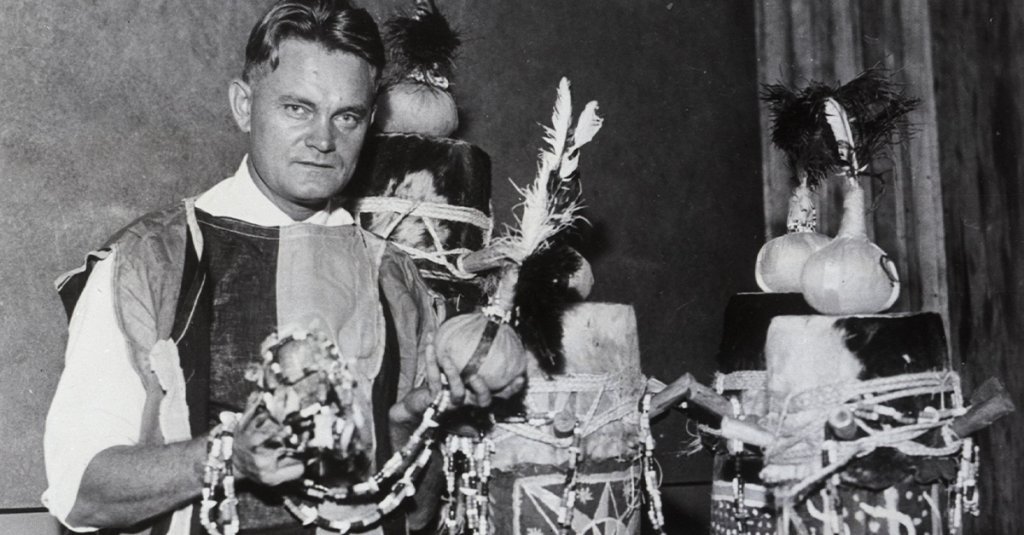
The ceremony was one he didn’t fully understand and didn’t think much of at the time. Only later did he realize that he had just been ritually installed as Faustin II, king of La Gonâve. It reportedly included chants, animal sacrifice, and a Vodou priestess—Ti Memenne—who proclaimed his rule.
Faustin II’s good luck was good luck for the locals. The 19-year U.S. occupation of Haiti did not go as smoothly or nonviolently for the rest of the country. His reign functioned more like symbolic legitimacy layered on top of what he was already doing: governing, mediating disputes, and keeping the peace in a place where authority had to feel real to work.
And for a while, it worked.
Violence decreased. Disputes were settled. The island functioned. Everyone involved, locals and Marines alike, more or less pretended not to ask too many questions about the fact that an American enlisted Marine was being treated as a semi-divine monarch. Eventually, however, reality rudely intruded. Their good luck ran afoul of the President of Haiti, who was able to visit the island for the first time in 1928.
As Haiti’s central government reasserted control and senior occupation officials took a closer look at La Gonâve, the situation became politically awkward. A foreign Marine being hailed as a king, even a symbolic one, was not great optics for an occupation already under criticism. The fix was bureaucratic and deeply American: Wirkus was transferred.
With no Faustin II on the island, the monarchy quietly dissolved.
Not for nothing, but it was the first time Haiti’s president was able to visit La Gonâve without being murdered by the island’s inhabitants, and it was all thanks to the command decisions of King Faustin Wirkus.
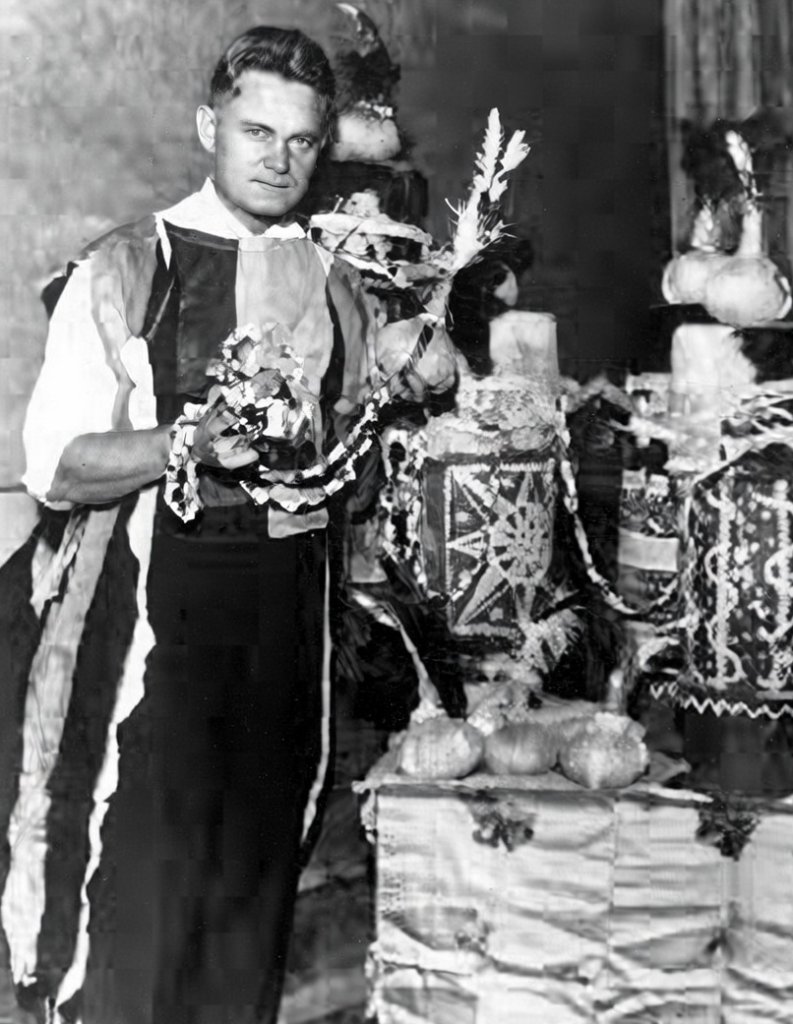
Wirkus left Haiti in 1929 and eventually returned to the United States. He wrote a memoir titled “The White King of La Gonâve” because when history hands you that kind of story, you do not undersell it.
He lived most of the rest of his life as a civilian, carrying the knowledge that for a brief window in the 1920s, the U.S. Marine Corps accidentally produced a king. He returned to active duty in the days before World War II and was appointed a warrant officer, serving in the Navy’s pre-flight school in North Carolina.
Faustin Wirkus, King Faustin II, died just months before the end of World War II and was interred in Arlington National Cemetery.