In 36 BCE, Chinese troops from the ruling Han Dynasty launched a preemptive strike against a group of Xiongnu, a nomadic tribe from Central Asia, at a fortress in what is now Kazakhstan. Zhizhi, their leader, had 13,000 troops holed up in a fortress which was much further West than Chinese armies had ever marched before.
Now Read: The 10 best generals of all time, determined by statistical analysis
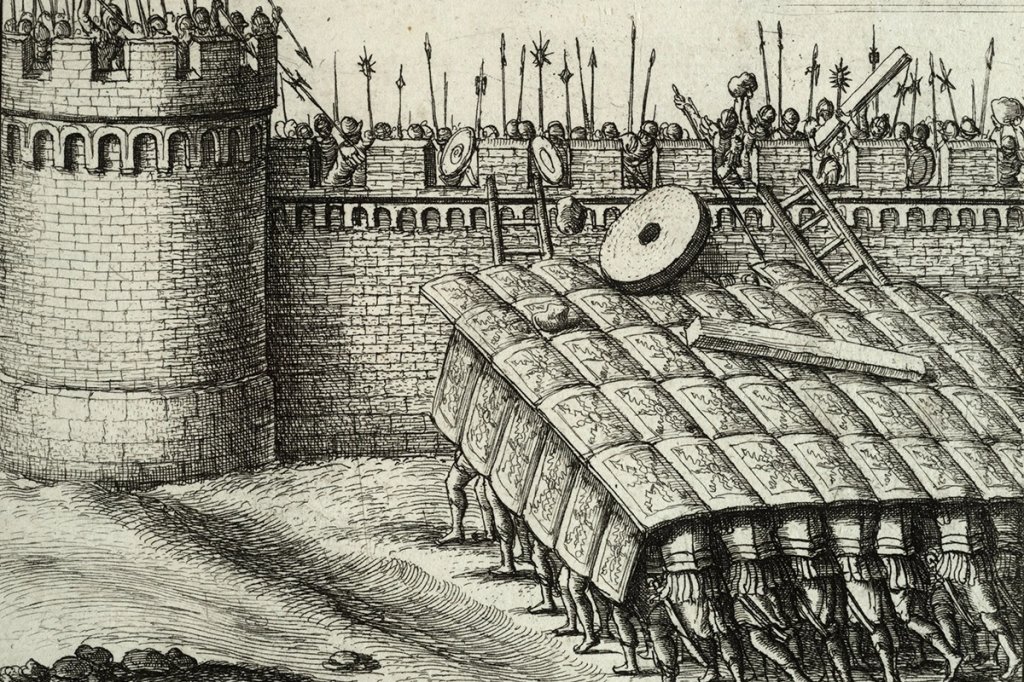
During the battle, the Chinese noted that their enemy employed a strange but distinctive formation. One historian recalled a unit that formed a unique “fish-scale” style of protection, using their shields.
Some modern historians believe the “fish scale” unit was composed of survivors from a Roman legion captured after one of Rome’s most embarrassing battlefield losses. After the battle of Zhizhi, those legionnaires were recaptured and resettled to fight for the Chinese, and historians believe they have DNA evidence to prove it.
In the area near the city of Liqian—or Li Jen, pronounced “legion“—which is today a part of Gansu province in Northern China, people are known to have unique genetic traits compared to those in the rest of the country: Aqualine noses, green or blue eyes, and fair skin are just a few of the features found among the villagers of Zhelaizhai.
In 1955, their unique features caught the attention of Homer Dubs, an Oxford University professor of Chinese history. He speculated that the town of Lou Zhelaizhai is where the ancient city of Liqian once stood, and that those traits are descended from Romans who fought both with and against the Han Chinese. Initially, Chinese scholars scoffed at the idea, but some agreed with Dubs’ theory. For decades, however, no one really took the time to mount a historical or scientific investigation.
But how would a Roman army meet a Chinese army in Central Asia, then settle in China in the first century BCE? Dubs believed it was a confluence of events, shaped by how three different empires used their military forces. It all starts with one of the worst and most famous defeats in military history.
At the time, Rome was still a republic, ruled by the First Triumvirate, which was a hat trick of figures that included Julius Caesar, Pompey the Great, and Marcus Licinius Crassus. Crassus, the clear lesser of the three, was a wealthy man but lacked the military successes of Caesar and Pompey. To fix this, he arranged the Triumvirate so that he would rule Syria so that he could invade Parthia, which was in the middle of a civil war.
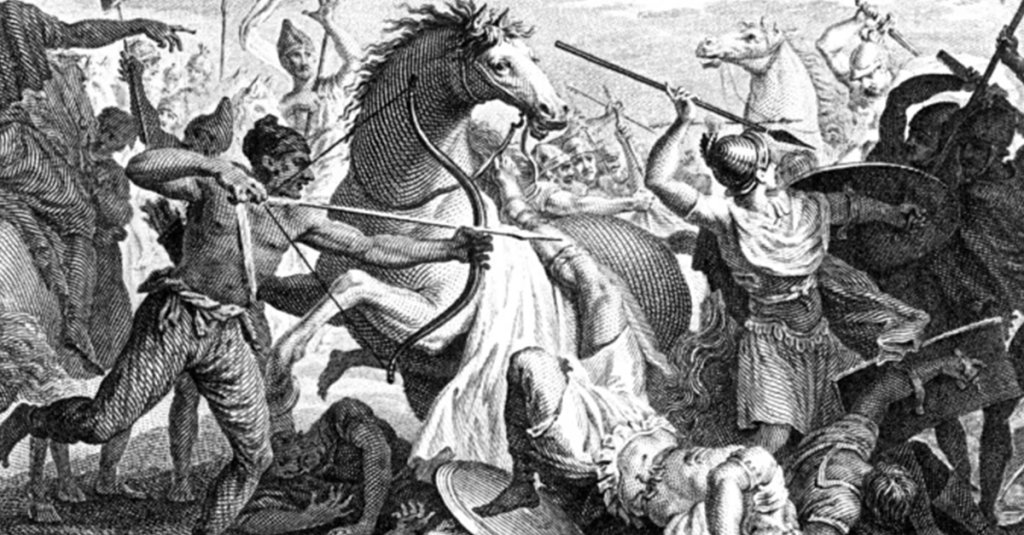
Crassus had experienced military success before, and Parthia was weak; it should have been an easy win. It started out that way. In 53 BCE he experienced some early, easy victories, but while he wintered, the civil war in Parthia ended. Parthia’s leader, Orodes, sent one army to cut off Rome’s Armenian allies from joining the war and another toward Crassus. Crassus ignored the Armenians’ plight and pressed on toward the town of Carrhae with 30,000 troops, where he expected a quick victory over Orodes’ small force of around 9,000 cavalry.
What happened next is still studied by military minds worldwide, including the U.S. Army War College.
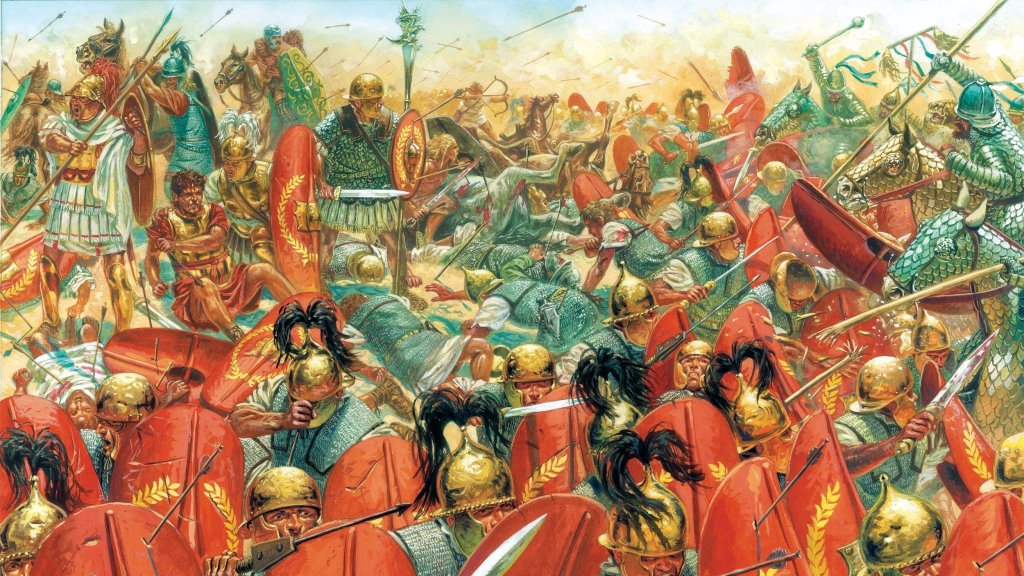
Simply put, Crassus abandoned almost every Roman war doctrine during the battle, and his massive army was defeated piecemeal by an outnumbered but much more mobile force. The Roman general was captured, allegedly had molten gold poured down his throat, and was sent back to Rome (most of him was, anyway).
Most importantly, the Parthians captured 10,000 legionnaires. After a civil war and repelling Rome, the empire was low on veteran troops. Since the Parthians were known to use captured soldiers as border guards, it’s unlikely these prisoners were killed. It’s plausible that Orodes sent the POWs to the Far East, Parhia’s border with China, where escape was all but impossible. The Far East outpost they were sent to, Homer Dubs later theorized, might be the ancient Chinese town of Liqian.
It was in this area that the Xiongnu leader Zhizhi revolted against his brother and raised an army. While the Parthian Empire wasn’t part of the battle, it’s not inconceivable that some Roman legionnaires escaped and either became mercenaries or simply joined Zhizhi’s army as it grew in power. Historians lose contact with the Roman prisoners for 17 years, and a lot can happen in that time.
At the battle, Chinese historians noted that the fort’s defenders used a “fish scale” defense using their shields. While Crassus might have abandoned Roman doctrine, veterans of the legions wouldn’t, and that kind of tactic is what led Dubs to posit that the “fish scale” was a Roman testudo (turtle) formation. Others believe the tactic was descended from Alexander the Great’s Macedonian hoplite formations.

The theory has many naysayers. Some believe the DNA could be the result of contact from Silk Road trading between Rome and the Far East. Others say Caucasian Huns and warriors with other racial backgrounds fought through this area of Asia at the time. As a result of both, the Gobi Desert border regions are full of ethnically Chinese people whose DNA tested 58% Caucasian.
At least one expert believes there just isn’t enough physical evidence to say these Chinese are descended from Roman legionaries.
“For it to be indisputable, one would need to find items such as Roman money or weapons that were typical of Roman legionaries,” Maurizio Bettini, an anthropologist from Siena University, told La Repubblica. “Without proof of this kind, the story of the lost legions is just a legend.”