Every weapon system in the United States military has a face. The gunner, the trigger puller. The one whose name ends up in the citation, the after-action report, the paragraph some war correspondent types up while pawing at a steaming cup of coffee. That person gets the story.
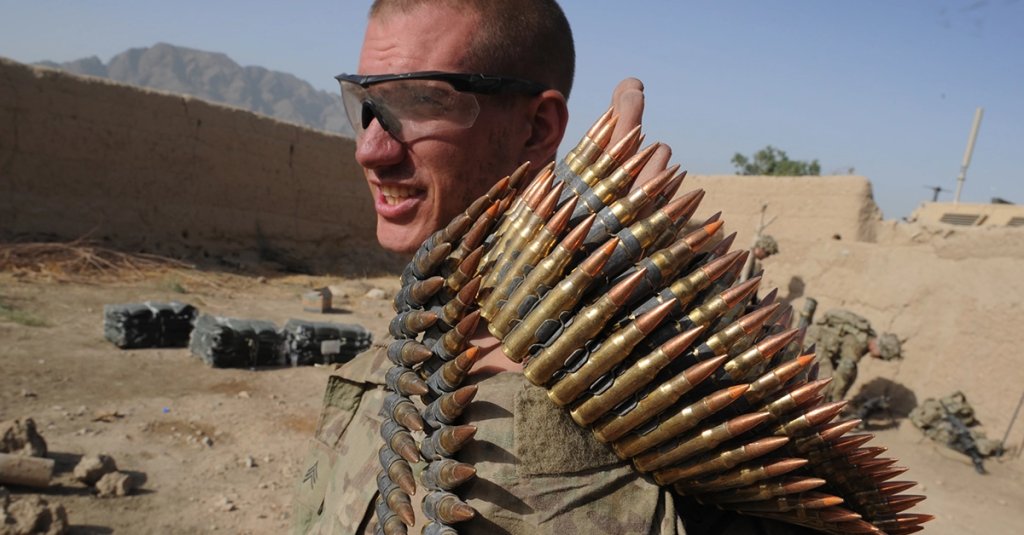
Alongside them, someone was setting up the tripod, feeding the belt, swapping the barrel with heat-mitt hands while brass rained down like confetti, sharing bags of gummy bears: the other guys.
Also Read: The M60 ‘Pig’ caught plenty of hate, but the love was real
Someone who carried the weight so the weapon could provide its function, and then carried it again when the weapon went quiet.
This is for the assistant gunners, the ammo bearers, and every service member across every branch who made the gun go “bang,” kept it going, and never once expected a thank you for it.
The Backbone
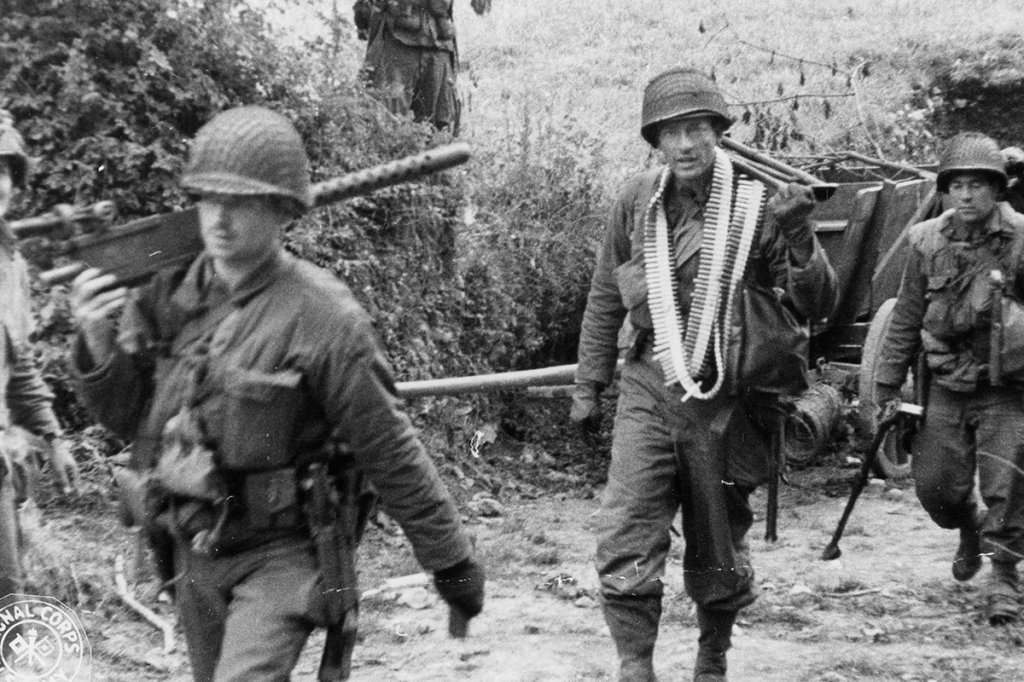
The structure is older than anyone reading this. During World War II, a heavy machine gun squad rolling an M1917 Browning featured a gunner carrying the weapon at 47 pounds, an assistant gunner shouldering the tripod at 50, and multiple bearers hauling ammunition, water, and spare parts.
Three wars and eight decades later, the layout is basically the same. Gunner, check. assistant gunner, check. Ammo bearer, check. The weapons got lighter but the roles did not change.
In a modern U.S. Army or Marine Corps machine gun team, the M240 gunner carries roughly 27 pounds of weapon. The assistant gunner carries the spare barrel, a heat mitt, and the basic-training brainwashing to keep that gun running when things go sideways. An ammunition bearer carries the tripod at around 11 and a half pounds, plus as much linked ammunition as their ACLs will tolerate, which is always more than it should.
Together, these three people form a single unified system. Remove any one of them and the rate of fire drops, the mobility drops, the endurance drops, the confidence drops, and the difference between winning a firefight and losing one gets razor-thin.
VA Waiting Rooms Await You
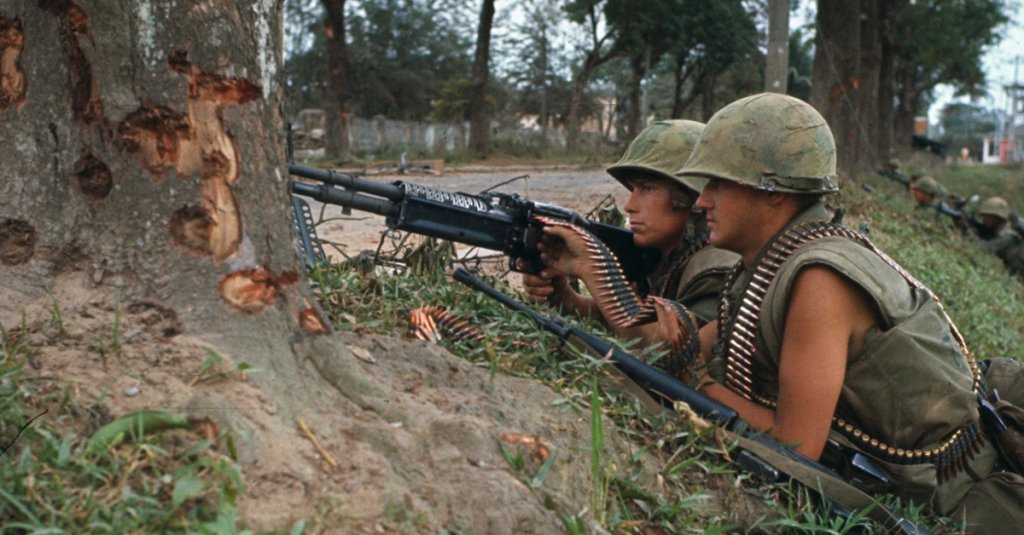
If you’ve never carried a crew-served weapons load, the numbers alone should make your knees ache in sympathy. Vietnam vets still spin yarn about carrying loads weighing up to 120 pounds, lugging their personal gear, claymores, grenades, and hundreds of rounds of machine gun ammo up hill, both ways, in the snow, with newspapers wrapped around their feet instead of those fancy boots the youngin’s get these days.
The weight could be so extreme that soldiers could easily become a turtle; a term that needs no explanation if you’ve ever seen a fully loaded grunt fall backward and lie there, legs kicking fruitlessly in the air, completely unable to stand without someone grabbing a handful of kit and yanking them upright.
Long-term spinal compression is a recurring theme in veteran communities, and it’s not an anecdotal hallucination. Medical research has confirmed that sustained loads combined with body armor significantly impair physical performance and elevate long-term health risks. These injuries are not earned in a dramatic firefight; usually, they’re earned on the way to one.
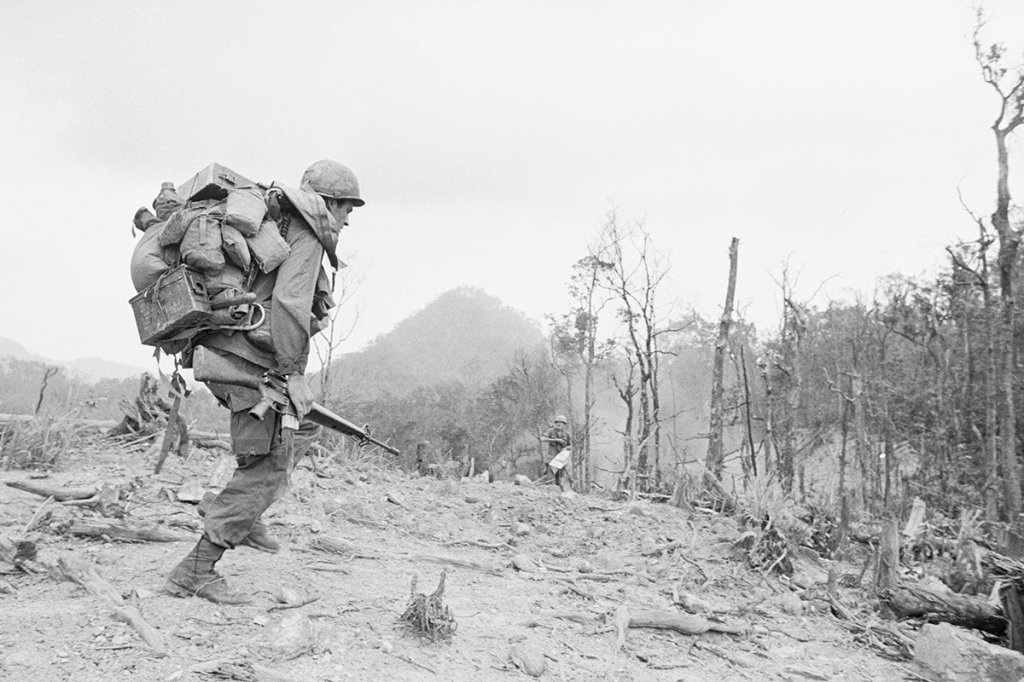
Then there’s the noise. Assistant gunners operate inches from the muzzle of a weapon designed to send rounds downrange at a cyclic rate that turns the air into a jackhammer. One Vietnam veteran reported being deaf in one ear for three days after a single engagement where his team burned through several hundred rounds.
No Purple Heart for that. No line in the citation. Just a ringing that fades, mostly, secure in the knowledge that you’ll be right back next to that muzzle tomorrow.
The Assistant is the Fight
Occasionally, the invisible half of the gun team steps into the light, usually because the moment demands it.
At 5:58 a.m. on October 3, 2009, Combat Outpost Keating in Afghanistan’s Nuristan Province woke up to hell. An estimated 300 Taliban fighters occupied the high ground covering most of the outpost and opened up with recoilless rifles, RPGs, heavy machine guns, mortars, and small arms. Roughly 50 Americans sat at the bottom of a valley that some soldiers described as fighting from inside a paper cup.
Staff Sergeant Clinton Romesha, a section leader with Bravo Troop, 3-61 Cavalry, moved under intense fire to make sure the outpost’s grenade launcher was in the fight. Then he did what any crew-served weapons operator instinctively understands: he went and found an assistant gunner.
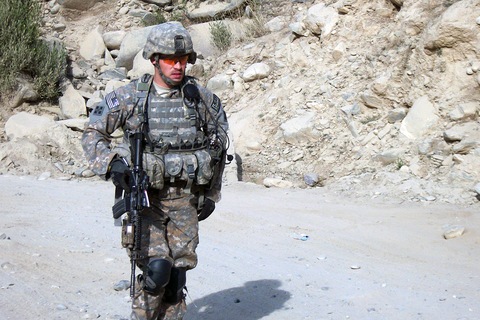
Romesha grabbed an MK-48 machine gun from the barracks, linked up with Spc. Justin J. Gregory, and the two of them pushed through an open avenue raked by RPGs and small arms fire to engage enemy machine gun teams on the high ground.
They took cover behind a generator. Romesha burned through a 200-round belt, started on his second, and then an RPG slammed into the generator and blew him onto Gregory. Romesha checked his AG, determined Gregory was still in the fight, and, not even noticing his own shrapnel wounds, re-engaged the enemy.
When another soldier arrived to help, Romesha handed the MK-48 to Gregory and sprinted back through the kill zone to assemble a five-man counterattack team.
Romesha’s Medal of Honor citation repeatedly mentions the assistant gunner. Not as a footnote either, as a load-bearing element of the narrative itself. Gregory fed the gun, held the position, and kept the weapon system alive while Romesha maneuvered, organized, and led the counterattack that prevented COP Keating from being overrun.
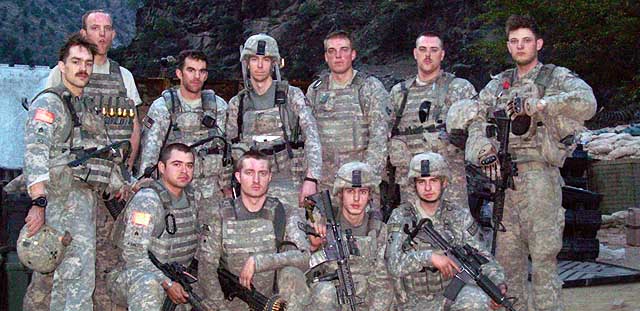
Eight Americans died that day. The toll would have been far worse without the two-man machine gun team that formed in the first desperate minutes of the fight.
This battle would produce two Medals of Honor, a Distinguished Service Cross, at least nine Silver Stars, and 27 Purple Hearts. It remains one of the most highly decorated single engagements of the entire Afghanistan War.
Alas, at its core, in the opening minutes when everything hung in the balance, was a gunner and his AG doing exactly what the doctrine says they’re supposed to do: one operates, the other sustains the fight.
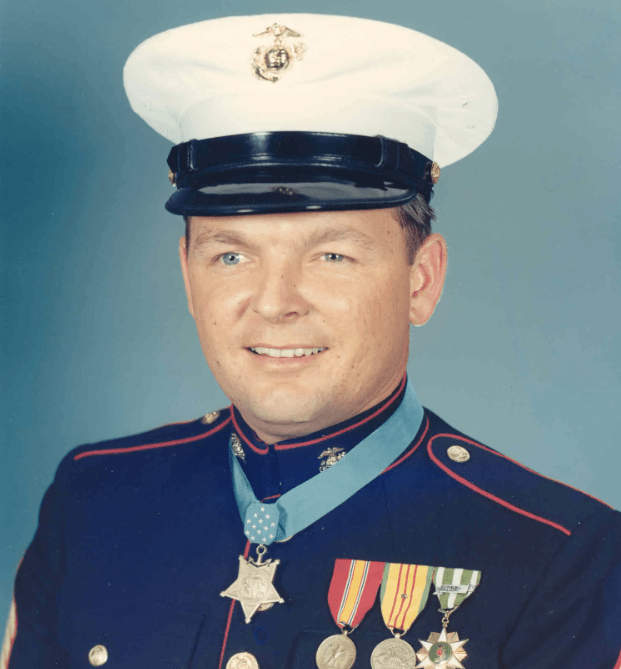
In Vietnam, at the time, Lance Cpl. Richard Pittman was at the tail end of a Marine column moving down a narrow jungle trail when the lead element walked into an ambush. Calls for more firepower came back down the line.
Pittman grabbed the last functioning machine gun, loaded himself with belts of ammunition, and ran forward through enemy mortar and small arms fire to reach the fallen Marines. When 30 to 40 enemy fighters launched a frontal assault, he set up alone in the middle of the trail and raked them with devastating fire. When the machine gun went down, he picked up an enemy submachine gun and a pistol from a fallen comrade and kept shooting until the attack broke.
Pittman wasn’t serving as an AG that day. He became the entire crew-served weapons team in one body: gunner, assistant gunner, and ammunition bearer, all at once. His Medal of Honor speaks to individual heroism, absolutely.
It also speaks to something deeper about these roles. Somebody has to feed the weapon, carry it, fix it, and if necessary, become it.
Doctrine calls them “enablers.” The field manuals give them a line in the task organization chart and a place in the formation. But doctrine doesn’t capture what it feels like to carry the weight of the world up a mountain so someone else can be the one to pull the trigger, or to feed a belt into a gun so hot the barrel is glowing while the muzzle blast tries to rearrange your hours of free dental work.
There is no MOS for thanklessness; you get no ribbon for the pain. The assistant gunner and the ammunition bearer exist as both unrecognized and necessary, the structural foundation of a building nobody thought about until it wasn’t there.
So this one goes out to every AG who fed the gun. Every ammo bearer who ever humped the ammo, and to all who ever will. Every loader, cannoneer, ordnanceman, and unnamed support role who made the weapon system work and never expected anyone to notice. We salute you all.
Until the next drop, stand easy.
Don’t Miss the Best of We Are The Mighty
• Your standard rifle can now be an anti-drone weapon. Seriously.
• The infantry hates the XM7 rifle (and why the Army doesn’t care)
• The M2 .50-caliber ‘Ma Deuce’ will live forever