Some call them “kamikaze” drones, evoking the image of Japanese suicide attacks on the U.S. Navy toward the end of World War II. The U.S. military seems to prefer the unintentionally hilarious term “one-way” drone.
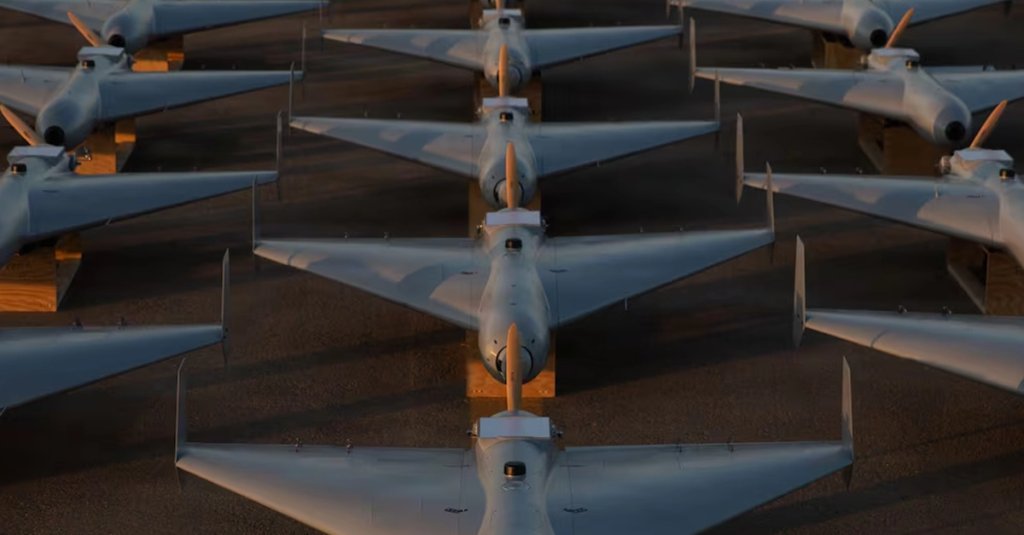
No matter what you call it, America’s newest weapon, dubbed the Low-cost Unmanned Combat Attack System, or LUCAS drone, is now being employed for the first time ever, according to The War Zone.
Also Read: America’s ongoing quest to stop firing $4 million missiles at $30,000 drones

America deploys copy-cat kamikaze drones based on the Shahed 136
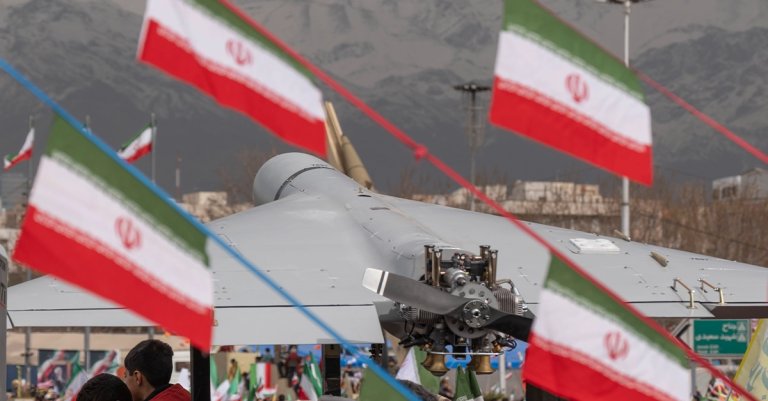
The real irony of the LUCAS drone being deployed against Iran for its debut as an American weapon is not that a country with a nearly $1 trillion military budget is using a relatively cheap option to degrade a military adversary. The irony is that Iran developed the drone, the U.S. just copied it, and is now using it against the Islamic Republic.
Since the Cold War, the United States has spent untold billions developing complex and technologically advanced weapons systems, using anything from lasers to hypersonics to a nuclear reactor-powered nuclear bomber, designed to fly forever and kill using radiation.
But tactics developed by both sides of Russia’s invasion of Ukraine have changed the face of regional warfare. One of the biggest developments was an Iranian-made, rocket-launched, autonomous munition that could be carried to the battlefield on the back of a truck: the Shahed 136.
The suicide drone first made itself known during the Kharkiv offensive of 2022. Ukrainian troops soon realized that its loud “moped” like engine could be heard just before a Shahed strike. While susceptible to small arms fire due to its low-altitude flight, the Shahed is able to detonate near aircraft, making shootdowns unfeasible.
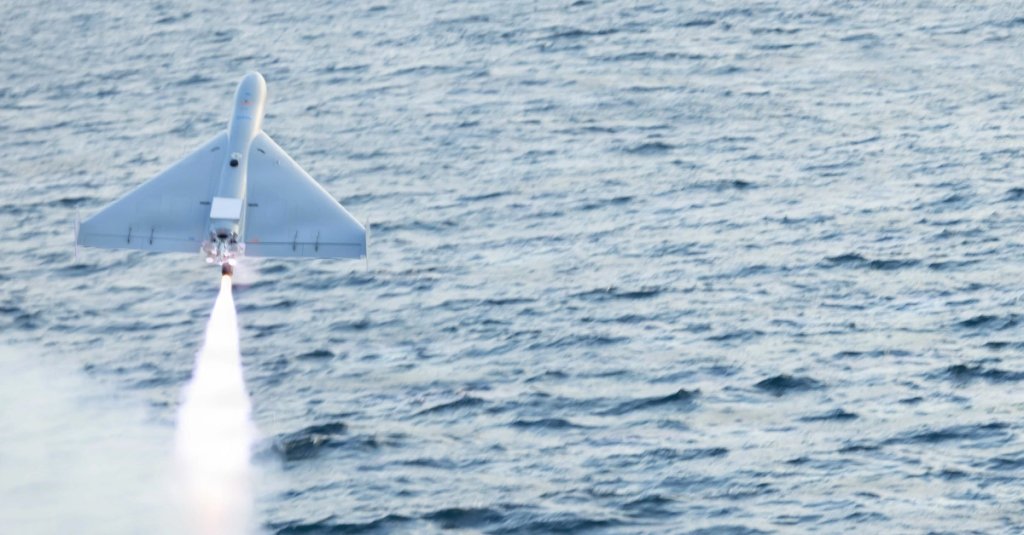
Using surface-to-air defenses against them is incredibly costly in both money and munitions, and the drones can inflict outsized damage when striking their targets.
But the United States didn’t capture a Shahed drone to reverse engineer one of its own in secret. That was done openly by Arizona defense firm SpektreWorks, which created an American version of the Shahed to build targets for anti-drone training exercises.
There are some differences. The American version is lighter and costs less per unit to produce. They are the cheapest missiles in the U.S. arsenal and have twice the explosive power of a Hellfire missile.
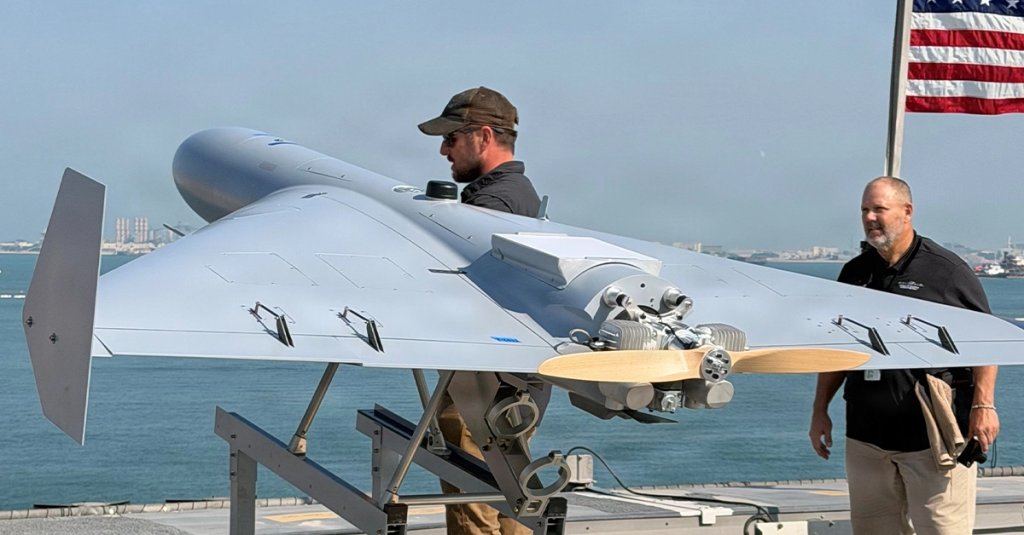
“CENTCOM’s Task Force Scorpion Strike—for the first time in history—is using one-way attack drones in combat during Operation Epic Fury,” U.S. Central Command said in a statement. “These low-cost drones, modeled after Iran’s Shahed drones, are now delivering American-made retribution.”
In another bit of military irony, the first LUCAS drone was test-launched from the USS Santa Barbara in December 2025—in the Persian Gulf.
Don’t Miss the Best of We Are The Mighty
• Lessons Learned: How Iran was able to bruise the US Navy’s 5th Fleet
• The God-Switch: What Elon Musk’s Starlink can actually be used for
• Operation Eagle Claw: The story behind the failed hostage rescue in Iran