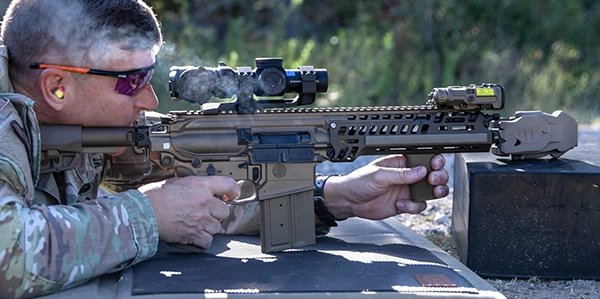
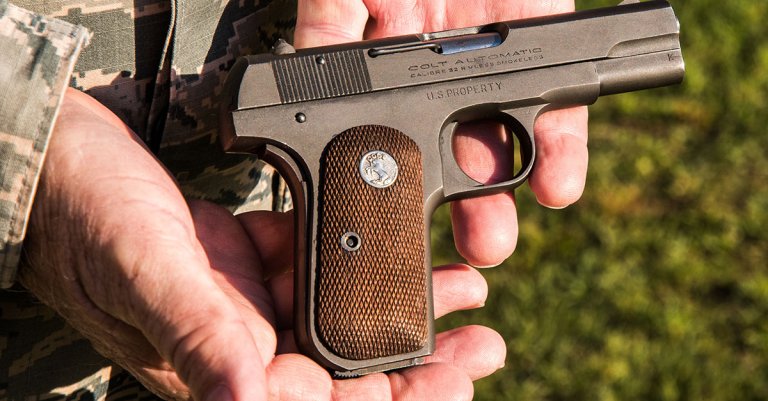
The Army’s adoption of the M7 rifle to replace the M4 carbine, M250 machine gun to replace the M249 SAW, and 6.8x51mm cartridge to replace 5.56x45mm NATO has been met with criticism from both enlisted troops and officers. Furthering the controversy is the military’s continued testing of a completely different system of weapons and ammo.
On October 8, FN America announced that it delivered test evaluation samples of a rifle and machine gun chambered in 6.5x43mm LICC (Lightweight Intermediate Caliber Cartridge) to the Irregular Warfare Technical Support Directorate (IWTSD). I can already hear you asking, “What the heck are 6.5 LICC and IWTSD?” Don’t worry, I had the same questions.
Unlike SIG’s 6.8x51mm, FN’s 6.5 LICC wasn’t developed to compete for a contract. Rather, the round was developed in conjunction with the Army Marksmanship Unit. I maintain that not all troops can actually shoot, and Special Forces Master Sgt. (ret.) Jeff Gurwitch of Modern Tactical Shooting agrees, but AMU absolutely can and knows what they’re talking about. So, a round developed with serious shooters is a promising step.
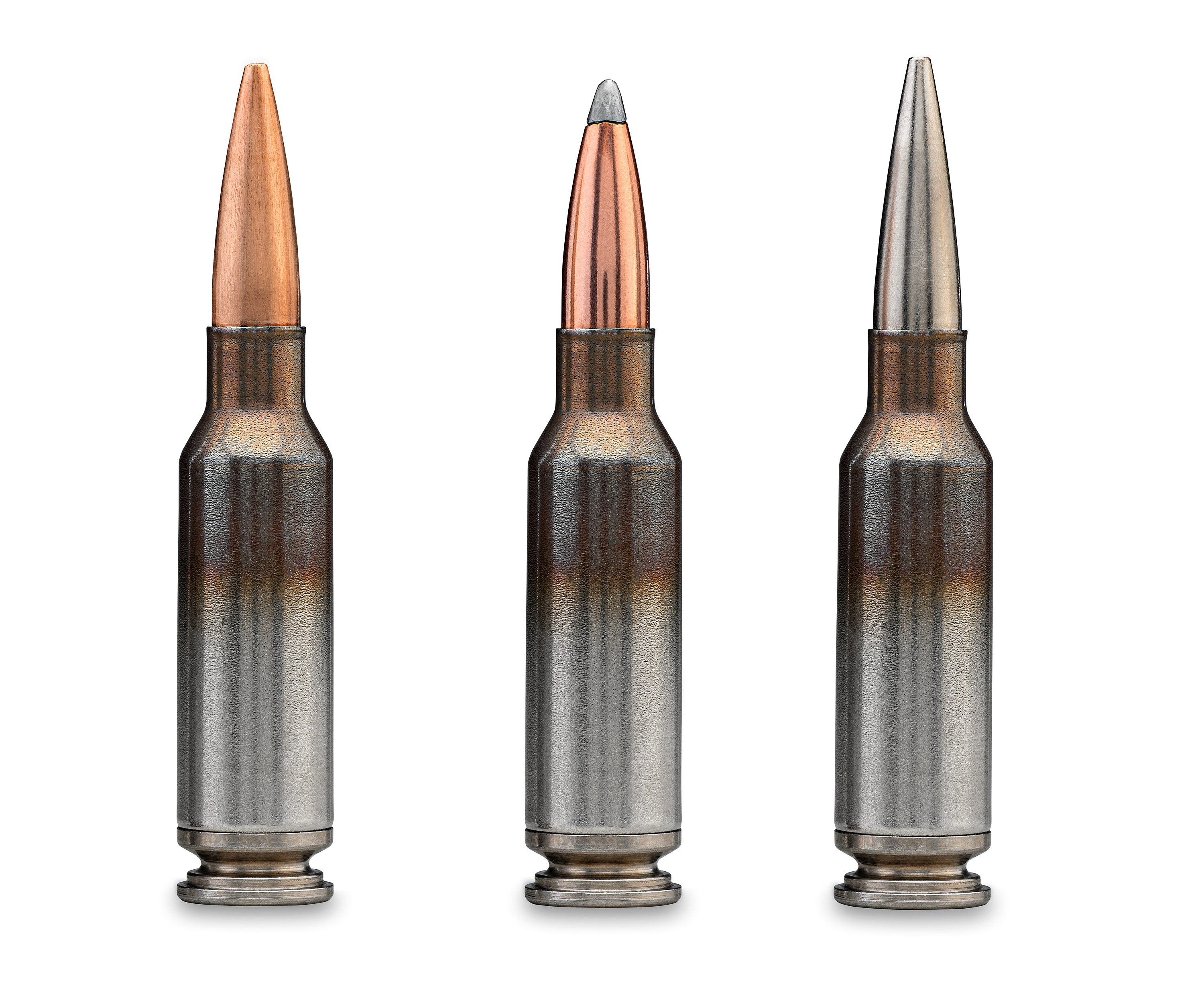
The lightweight, stainless steel-cased round was also developed with input from IWTSD. Under the Secretariat for Special Operations, IWTSD is tasked with identifying and developing capabilities for the military to conduct irregular warfare against both state and non-state adversaries.
With that in mind, FN’s recent delivery is likely in support of a special operations effort to replace 5.56 NATO. WATM reached out to IWTSD for comment and did not receive a response. 6.5 LICC is based on .264 USA, a cartridge produced and tested by AMU, which has been around since at least 2014. The fact that this round is still being developed, despite the adoption of 6.8x51mm, raises questions about the military’s confidence in the new round.
The LICC-IWS (Individual Weapon System) is a modular rifle designed to fire 6.5 LICC. It is being tested with a close-quarters 12.5-inch barrel, 14.5-inch carbine barrel, and 18-inch Designated Marksmanship Rifle/RECCE barrel. The LICC-IWS operates from a self-regulating, long-stroke gas piston system. It is designed to operate reliably and minimize recoil to the shooter with or without its suppressor attached.
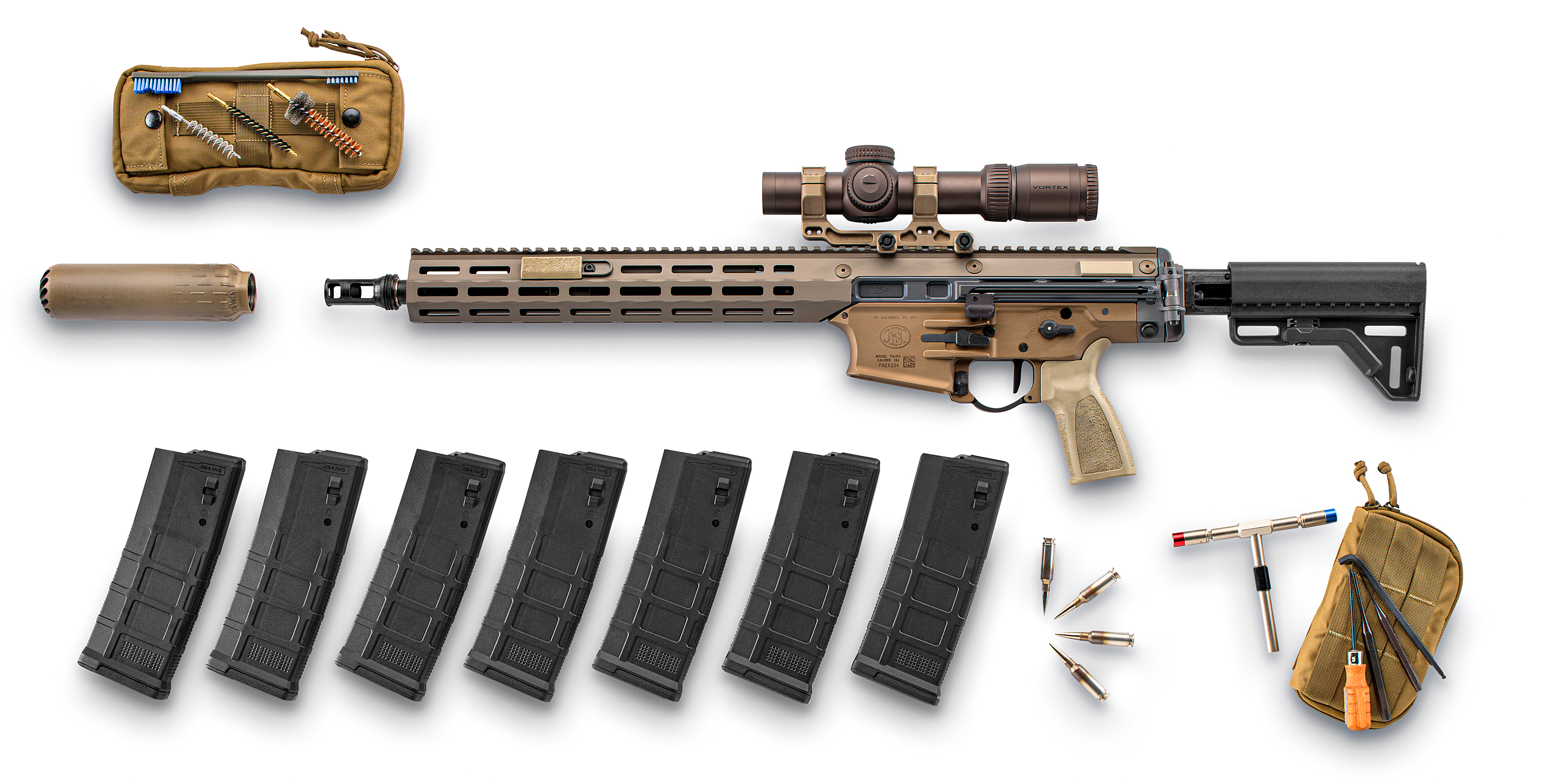
“Initial test firing results from the U.S. Army Marksmanship Unit and other operators show that the accuracy of the LICC-IWS is consistently two times better than the M4A1,” said Jim Williams, Vice President, Military Programs for FN America, in a press release. “Additionally, the LICC-IWS handles like the M4A1, yet remains soft shooting when firing the new 6.5×43 lightweight ammunition.”
Adapted from the FN Evolys, the LICC-AMG (Assault Machine Gun) feeds from a belt and features both automatic and semi-automatic fire modes. It can also accept a suppressor and utilizes controls similar to those of the M4/M16 family of rifles. Notably, the side feed nature of the weapon allows for a continuous, monolithic top rail to attach optics and makes it easier to reload on the move.
The LICC-IWS and AMG are ground-floor developments by FN. The company notes that 6.5 LICC offers a 20% weight reduction compared to equivalent brass cartridges while delivering improved accuracy, range, and performance over the current 5.56 NATO M855A1 round.
“Creating totally unique weapon systems around a specific caliber is in FN’s DNA,” said John Bungard, Sr. Director, Military Development Programs for FN America, in a press release. “As our team worked on the LICC-IWS program, quickly followed by LICC-AMG, we were able to leverage our decades of engineering expertise across multiple weapons and ammunition platforms to come up with the ideal solution for today’s global threats.”
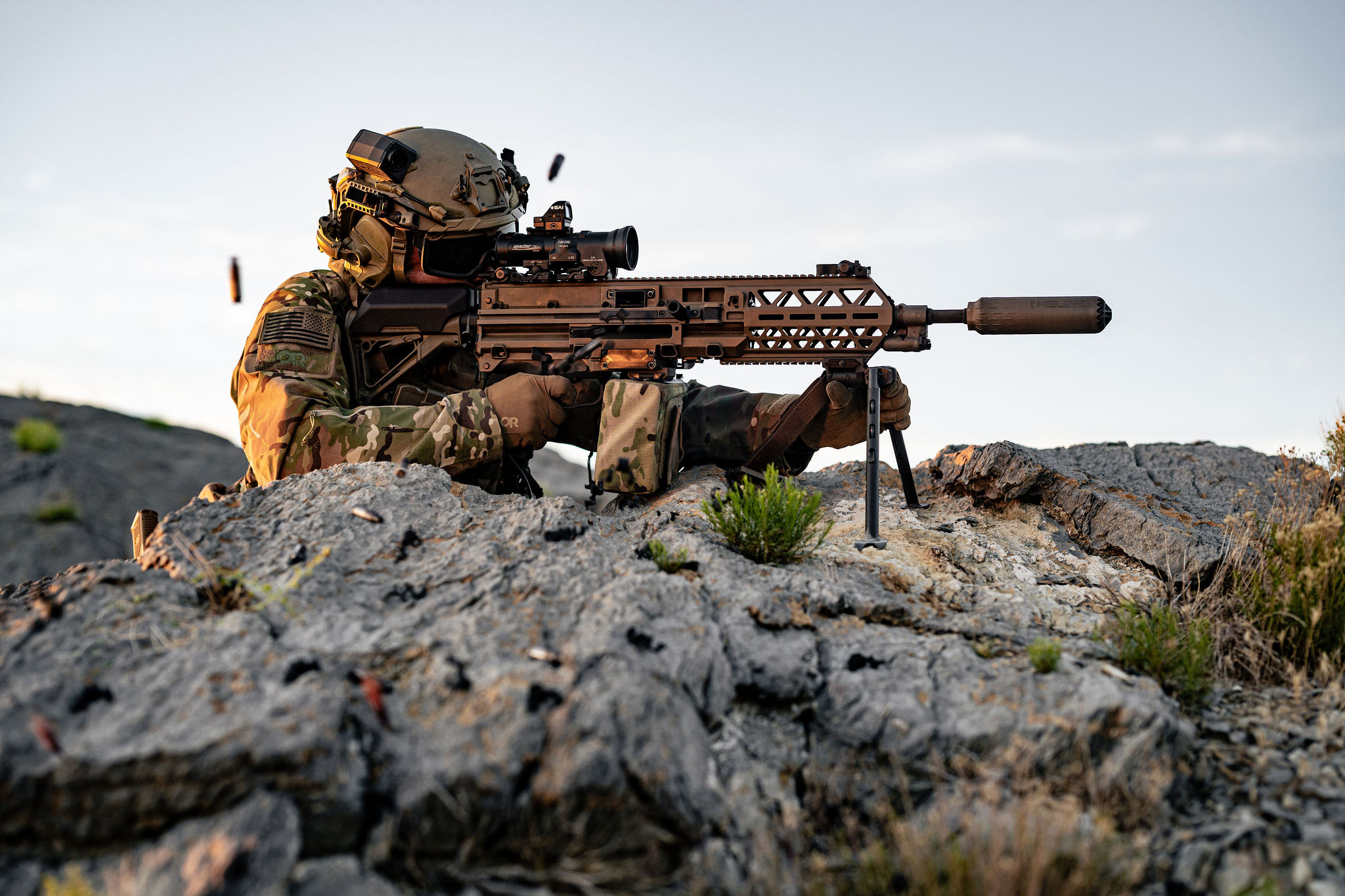
While 6.5 LICC presents the same logistical issues as the Army’s new 6.8mm cartridge, its separate development and continued testing may be indicative of a different way forward for the U.S. military. While other NATO countries have not adopted 6.8mm, Canada has pursued NATO standardization of 6.5x43mm with at least one other unnamed NATO country. Additionally, FN’s cartridge, weapons, and suppressors have all been assigned national stock numbers (NSNs). This makes them available for requisition by the U.S. military and other NATO militaries.
As testing on 6.5 LICC and its weapons proceeds, the future of the U.S. military’s small arms will remain in question. Will 6.8 be issued across the Army and spread to the other services? Will 6.5 LICC make a surprise upset to receive SOCOM and general military adoption? Or, will these new wonder weapons see limited adoption and fall short of replacing the legacy 5.56 NATO cartridge and weapons? Stay tuned to WATM for more news on your tax dollars at work.