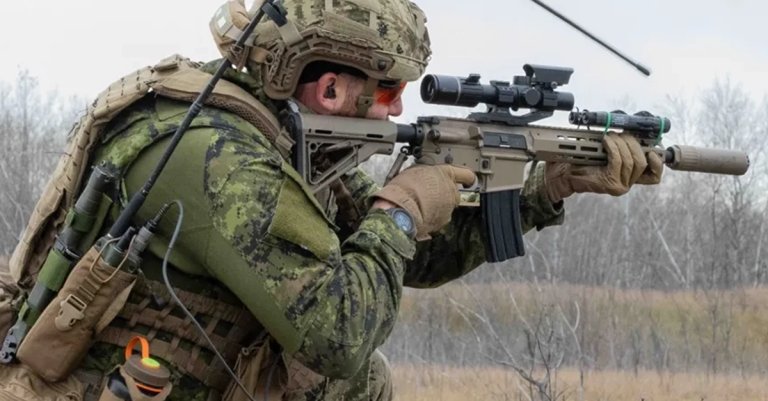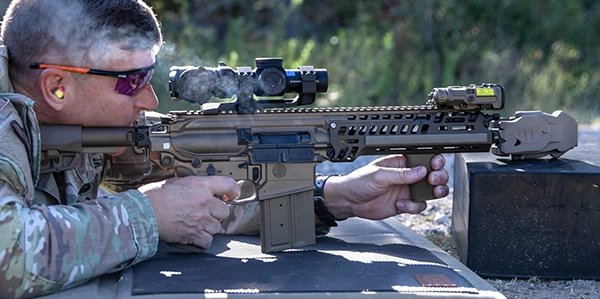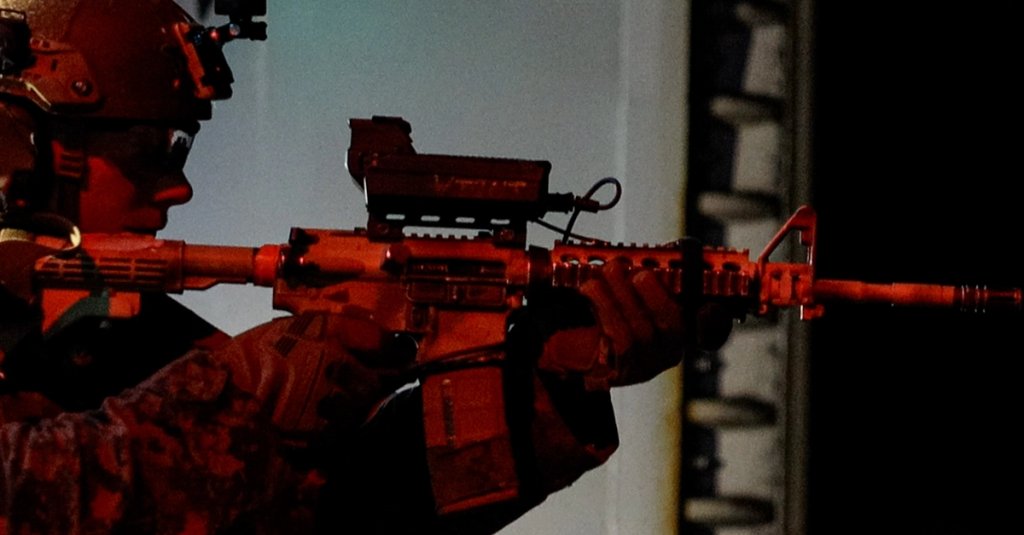
Imagine pulling the trigger on your rifle and having a computer decide whether the bullet actually leaves the barrel. Not a scope that helps you aim, nor a red dot that speeds up target acquisition. We are talking about a system that physically will not let the weapon fire until it has calculated, to the millisecond, that the round is going to hit what you want to go “poof.”
Also Read: Your standard rifle can now be an anti-drone weapon. Seriously.
That’s not a pitch deck from some startup on Shark Tank. It’s fielded hardware, on contract, bolted to M4s carried by U.S. Marines and Army soldiers as you briskly read through this.
Everyone, meet SMASH2000. Your optics favorite optic, but smarter.
Built by Israeli defense firm Smart Shooter, the SMASH 2000L, also known as the SMASH 3000, is a savvy fire control system that mounts on any standard MIL-STD-1913 Picatinny rail. The same rail on your AR-15. The same rail on the M4A1. The same rail on roughly half the rifles in the Western world.
SMASH2000 weighs about a pound and a half (740 grams for you metric folks), measures roughly six inches long, and runs for 72 hours on a rechargeable lithium-ion battery. In your hand, it is similar in size to an Aimpoint CompM5 red dot optic. On the rail, it even sits where your current optic lives.
However, this is where the similarities end.
Behind the housing is a dual-core computer running AI-driven image processing, electro-optical sensors, and a proprietary target-tracking algorithm. The system sees what you see, but it thinks wildly faster than we do, plus it never gets nervous… or inebriated.
Lock, Track, Don’t Miss, Repeat
The magic is in what Smart Shooter calls the Fire Timing Mechanism. Here’s how it works: You look through the see-through reflex sight and put the reticle on your target, whether that’s a paper silhouette, a person, or a quadcopter screaming toward your mate’s position at 60 miles per hour.
All you have to do is press the lock button on the handguard. The onboard computer will instantly draw a digital box around the target and begin tracking it, calculating range, speed, direction, elevation angle; this little guy will even calculate the ballistic profile of the ammunition you’re running.
Then you pull the trigger.
But the rifle doesn’t fire. Not yet. You hold that trigger back, and the system waits. It’s computing in real time, dozens of calculations per second, comparing where the barrel is pointed against where the target will be when the round arrives. The instant those two answers converge, the system releases the firing pin.
One round. One hit. The company claims a probability of hit rate of 95%, which accounts for shooters who are physically exhausted, stressed, or under fire, as well. The Israel Defense Forces, which adopted the system and deployed thousands of units during operations in Gaza, described it as “groundbreaking” and reported that it quadrupled soldiers’ chances of hitting their target.
Let that settle in for a second. Quadrupled.

95% Hit Rate!: This AI Weapon Turns Any Rifle Into a Drone Killer – SMASH 3000 in Action
The Drone Problem Solved at the Squad Level
If you’ve been paying attention to what’s happening in Ukraine, you already know the game. Small, cheap, fast drones have fundamentally broken the old rules of ground combat. A $500 FPV quadcopter carrying a grenade negates all your training, your reflexes, or your marksmanship badge. It just needs to see you.
Traditional counter-drone solutions, electronic jammers, dedicated air defense systems, expensive interceptor missiles, work, but they’re either too heavy, too scarce, or too easy for a creative operator to work around.
Russian drone teams in eastern Ukraine have been cycling through radio frequencies every few days, rendering some jamming systems unreliable almost as fast as they’re deployed.
The SMASH 2000L offers something different: a hard-kill option that doesn’t depend on the electromagnetic spectrum. The system’s dedicated “Drone Mode” software is specifically designed to track the erratic, juking flight patterns of small quadcopters.
A standard rifleman can now engage a drone at 200 meters with regular 5.56mm ammunition. No specialty rounds required. No separate launcher.
Talk about return on investment. A single 5.56 NATO round runs roughly 30 cents. The drone it just swatted out of the sky—one that might have otherwise destroyed a vehicle worth hundreds of thousands of dollars, or killed a soldier—that value is incalculable. That’s the kind of cost effectiveness that makes procurement officers do little happy dances.
Already in the Fight
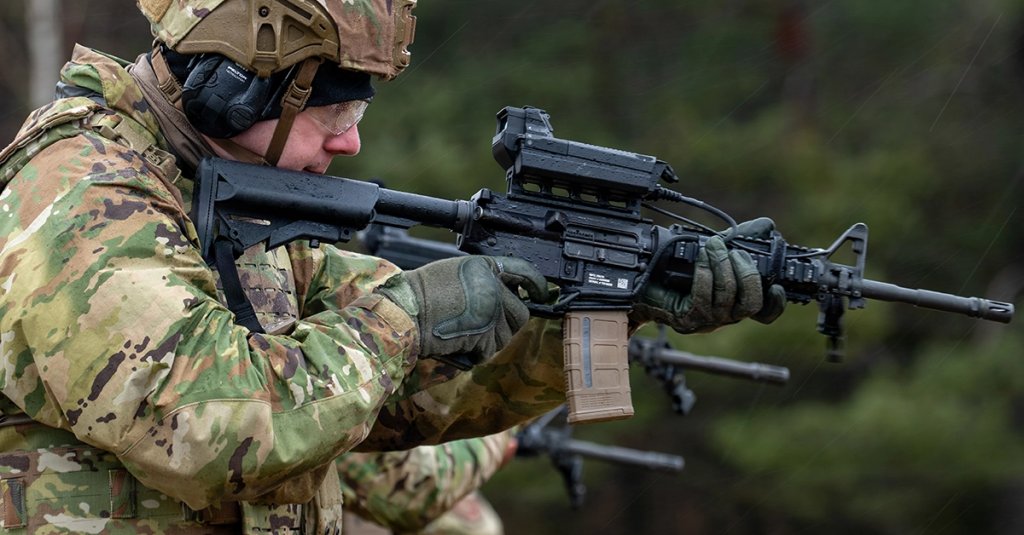
Although it sounds like social media hooey, the U.S. military is all over the tech. In May 2025, the Army awarded Smart Shooter a $13 million contract to field the SMASH 2000L under the Transforming in Contact program, a uniquely futuristic concept that ensures much-needed equipment actually reaches soldiers’ hands quickly, effectively bypassing the decades-long tradition of memos and promises. The U.S. Marine Corps placed its own order, targeting squad-level counter-drone capability for our dismounted Marines.
On the battlefield itself, Ukrainian special operations units have been rumored to be using SMASH-equipped rifles to engage Russian loitering munitions and FPV drones along the front lines, according to open-source intelligence. IDF troops have fully deployed the system across its infantry brigades for both counter-drone and border security operations.
Smart Shooter went public on the Tel Aviv Stock Exchange in early 2026. The market is no longer wondering whether widespread AI fire control has a future; it’s actively pricing one in.
Now Look at Your Rifle
The SMASH 2000L works whether the Picatinny rail it’s sitting on belongs to the United States government or to you. It’s just a rail-mounted accessory. The platform underneath can be an M4, an M16, an HK416, a CZ Bren, or the AR-15 you built in your garage last summer.
Smart Shooter already markets the system for law enforcement applications, including hostage scenarios where the margin for error is measured in inches rather than feet. The civilian market is a question of when, not if. Similar AI-assisted optics have been available to civilian buyers for years, priced between $10,000 and $17,000. The SMASH system reportedly costs less than most companies’ cheapest offering.
Imagine the implications for competitive shooting, for hunting, for home defense. An optic that compensates for every factor a human shooter gets wrong under stress, the flinch, the breathing, the adrenaline, and only releases the shot when the math says it’s a hit. It’s a hunting rifle with a master’s degree.
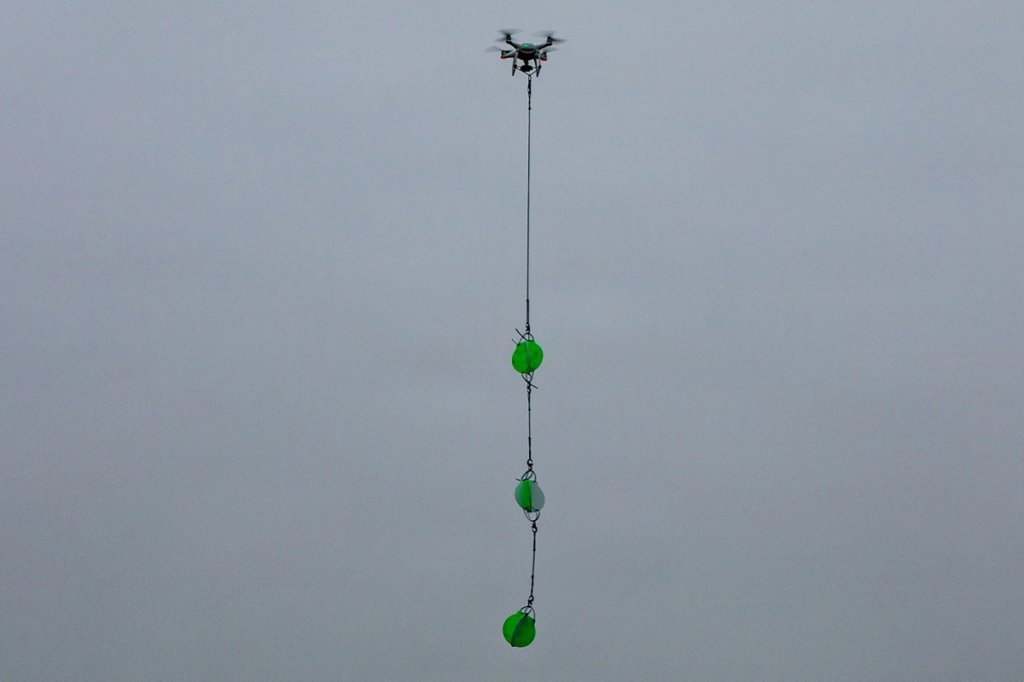
Smart Shooter isn’t slowing down. The SMASH X4 adds 4x magnification and an optional laser rangefinder to the core AI system, effectively turning every rifleman into a designated marksman capable of engaging targets at the maximum effective range of a standard service rifle.
The SMASH Hopper is a lightweight remote weapon station using the same fire control logic, mountable on tripods, vehicles, and unmanned ground platforms. Trials in late 2025 successfully adapted the system for heavy machine guns, enabling engagement of aerial targets at ranges out to 400 meters.
Connectivity is also key. Australia’s evaluation program is specifically testing the SMASH 3000’s ability to share targeting data across a network in real time. One soldier locks onto the target; that data is relayed to the other shooters, remote weapon stations, or friendly drones overhead. The individual would become a node in a system that sees, thinks, and shoots as one. Resistance is futile.
Whether that sounds thrilling or unsettling probably depends on which end of the barrel you’re standing on.
Think long and hard about the last time something changed what a rifle could do. At a fundamental level, it was probably the introduction of the optical sight. Before that, maybe rifling itself. The SMASH2000L belongs in that conversation now.
Not because it replaces the shooter entirely, you still pick the target, you still make the call, but because it removes the gap between intent and impact. Synergy.
The “guaranteed hit” has finally arrived; it fits on your home defense rifle, and the world of drone defense is never going to be the same again.
Until the next drop, stand easy.
Don’t Miss the Best of We Are The Mighty
• The grunt’s 250-year quest for a weapon that actually works
• The Mk-19 grenade launcher and how it helped shape the War on Terror
• Why the M240B earned cult status with GWOT veterans