
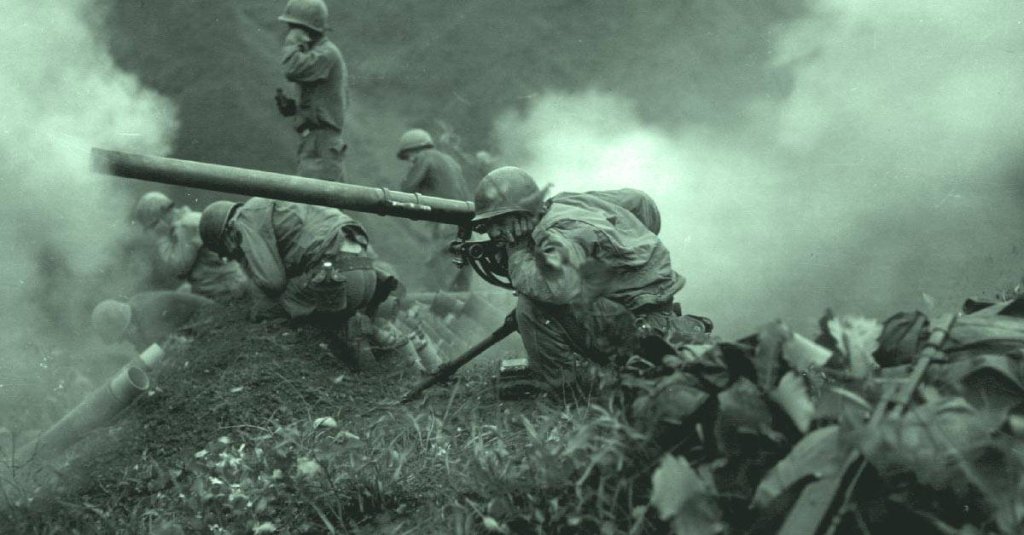
We call it “the Korean War.” The North Koreans call it the “Fatherland Liberation War.” Whatever you call it, on June 25, 1950, North Korean tanks rolled across the 38th Parallel, the border that separated the Communist-controlled and supported North from the capitalist and Western-backed South.
It was the first test of Western adherence to the Cold War doctrine of containment, the American strategy to stem the forced spread of Communism worldwide.
Related: The only all-Black special operations Army unit kicked serious butt in Korea
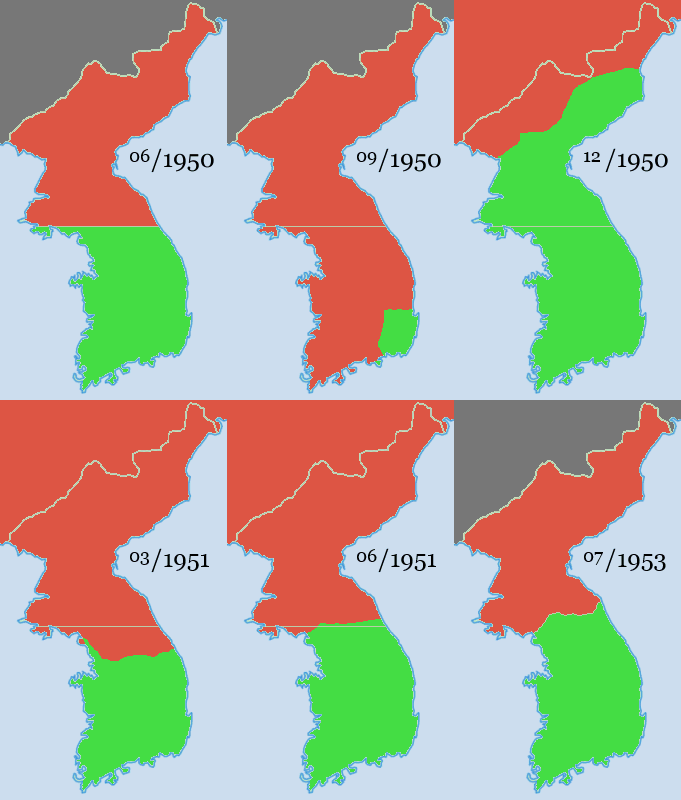
It was a brutal war that pitted North Korea, supported by the Soviet Union and the People’s Republic of China, against the United Nations, led by the United States and South Korea. The war started with a wildly swinging pendulum of momentum that almost drove Western forces into the Sea of Japan. With the U.S. military’s drastic drawdown after the end of World War II, there just weren’t enough forces to fend off a surprise attack.
South Korea was saved from communism only by a heroic United Nations stand at the Pusan Perimeter, and one of the most daring amphibious landings in history at Inchon. The Western counterattack drove the communists all the way to the Yalu River, the North Korean border with China. The subsequent Chinese intervention pushed the then-heavily outnumbered Americans back to the original border and a subsequent two-year stalemate until an armistice ended the fighting in 1953.
It was in Korea that some of the most legendary American military heroes said their most famous lines, made their most famous stands, and overcame seemingly insurmountable odds. The Korean War came just after the long, good fight of World War II, at a time when the world was weary of war.
Just a few years after the Korean War ended, the cultural fabric of the United States would be forever altered with the coming of the war in Vietnam. Being sandwiched between and subsequently overshadowed by these other two, the Korean War has come to be called the Forgotten War, both by historians and the men who fought there.
In an effort to relegate that nickname to the dustbin of history, here are some facts about the Korean War you may not have already known, and we found supremely interesting.
1. A U.S. Army sergeant in Moscow was the catalyst.
Soviet Premier Joseph Stalin essentially forbade a war on the Korean Peninsula since the end of World War II, for fear it would turn into an all-out war with the West. When the KGB recruited an Army NCO from the code room at the U.S. Embassy, they discovered the U.S. had moved the bulk of its forces in the region off the peninsula and to Japan. With this, Stalin then believed the U.S. would not move to defend Korea and gave North Korean dictator Kim Il-Sung the green light to invade the South. Stalin was wrong. The Army sergeant’s identity was never discovered.
2. The South was far from Democratic.
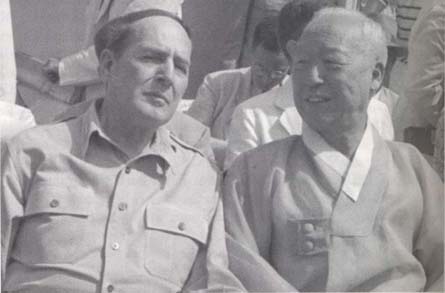
The first President of South Korea, Syngman Rhee, jailed or assassinated his political opponents. He also had an active secret police force to root out North Korean agents, but they detained, tortured, and killed many thousands of innocent South Koreans.
Days after the start of the Korean War, he ordered the Bodo League Massacre, killing more than 100,000 suspected communist sympathizers and their families. Rhee was ousted when thousands of protesters overran the Blue House in 1960. He basically had the dictator’s playbook, and in the interest of keeping South Korea from going red, the U.S. looked the other way.
3. The U.S. knew about the North’s military buildup.
A very young Central Intelligence Agency noticed the North Koreans moving their army toward their Southern border, but thought it was more of a defensive measure. They reported to Secretary of State Dean Acheson that an invasion was unlikely. They didn’t know the Soviets already broke American military and diplomatic codes and knew the U.S. couldn’t mount an effective response to an invasion.
When the war started, the CIA wasn’t much help at first. As North Korea marched on the South Korean capital of Seoul, the CIA reported that “South Korean morale was collapsing.” Then, as the United Nation forces pushed the communists back toward the North Korean border with China, the CIA reported they saw “no convincing indication of a Chinese intervention.” Whoops.
4. It was technically a “police action.”
Related: These 13 photos of US troops with enemy flags show some traditions never die
President Harry S. Truman never asked Congress for a declaration of war, and Congress didn’t offer one. That was back when we cared about these kinds of things. Instead, Truman placed the fighting under the aegis of the United Nations, since South Korea itself was a construct of UN agreements. For the first time since World War II, U.S. troops were fighting in combat. This time, it was at Osan, 30 miles South of Seoul.
5. The U.S. dropped more ordnance on Korea than in the entire Pacific during WWII.
The Korean War absolutely devastated North Korea, and this memory is a major reason why so much animosity still exists to this day. The United States dropped 635,000 tons of bombs on the North, compared to 503,000 pounds dropped on the entire Pacific Theater in WWII, killing an estimated 12-15 percent of the population. Curtis LeMay estimated an even higher proportion – he claimed 2o percent.
6. The Korean War featured the first all-jet dogfight.
Read: This is why ‘MiG Alley’ was one of the deadliest places on Earth
On November 8, 1950, 1st Lt. Russell Brown engaged a MiG-15 in his F-80 Shooting Star. The MiG was clearly a superior fighter, and this discovery led to the development of the F-86 Sabre. It wasn’t superior enough to allow the MiG to win the dogfight, however. Lt. Brown downed the communist jet. The skies over Northwest Korea featured many dogfights in the war years and soon became known as “MiG Alley.”
7. Frostbite was one of the most prevalent injuries.
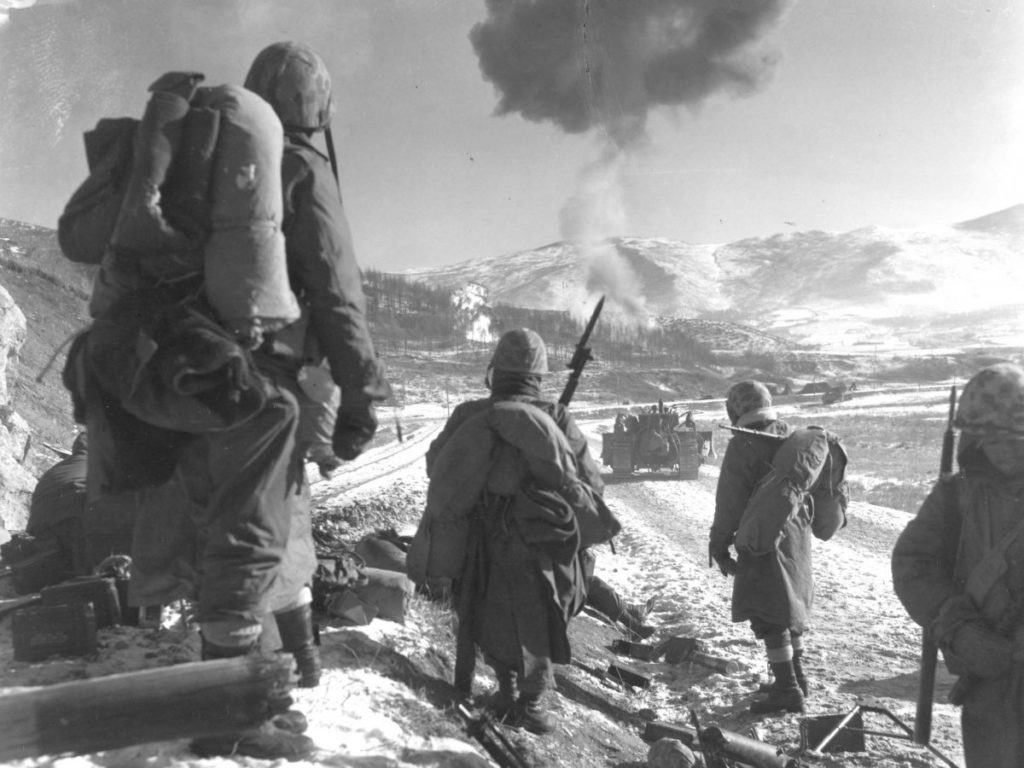
Wars might change, but some things stay the same. Thousands of troops in the Korean War (on both sides) suffered from frostbite, while many suffered from trench foot or a combination of both. Temperatures during some of the coldest fighting were as low as -54 degrees Fahrenheit.
Luckily for the United Nations forces, the U.S. actually cared about wounded troops on the battlefield. So much so, the Army innovated new ways to save lives. The MASH unit (Mobile Army Surgical Hospital) was created when doctors realized a wounded soldier had a 97% chance of survival if moved to a hospital right away. It was just one of many battlefield medical innovations designed to stay close to the front and save the lives of more combat-injured troops.
8. Seoul changed hands four times.
The South Korean capital sits just 35 miles from the North-South border. It was first captured by the North Koreans on June 28, 1950, just three days after the North invaded. It was retaken by UN forces that September. The Chinese seized the city in January 1951 but lost it two months after that. As the front began to stabilize, Seoul could finally begin to rebuild.
9. The first year was the deadliest.
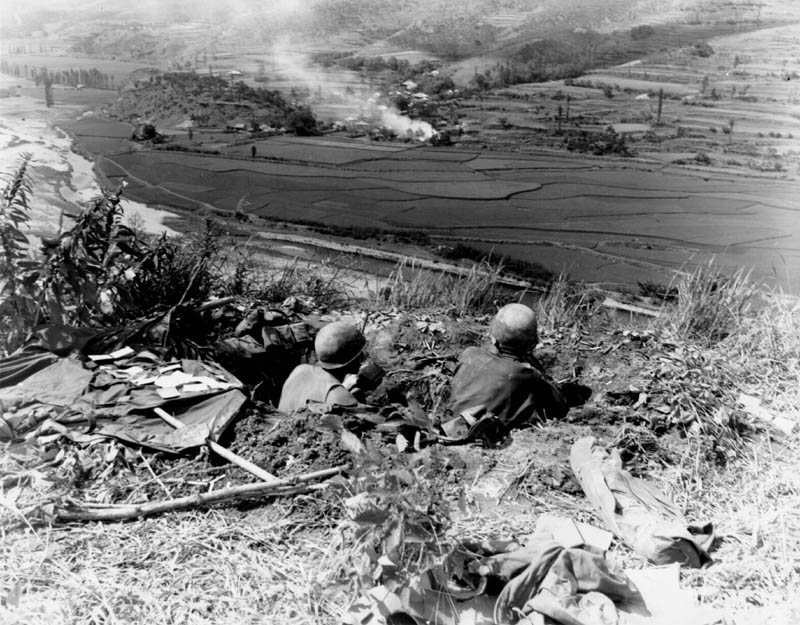
Roughly a quarter of all Americans killed during the Korean War died between August and December 1950, during the battles of the Pusan Perimeter, the Chosin Reservoir, and Kunu-ri Pass. Some 178,426 UN troops were killed in Korea, compared to more than 700,000 Chinese and North Koreans. The first American, Pvt. Kenneth Shadrick, died near Osan.
As the front began to stabilize at the 38th parallel, the battles became more like small fights for hills and chunks of what is now the demilitarized zone.
10. Army Special Forces created an army of their own.
The 8240th Army Unit, Army Rangers, and other soldiers with experience in partisan warfare from World War II raised and advised local partisan armies in Korea on how to fight behind enemy lines and sabotage the communists. The 8240th would advise more than 38,000 partisan fighters.
11. It was more than just Americans and Koreans fighting communists.
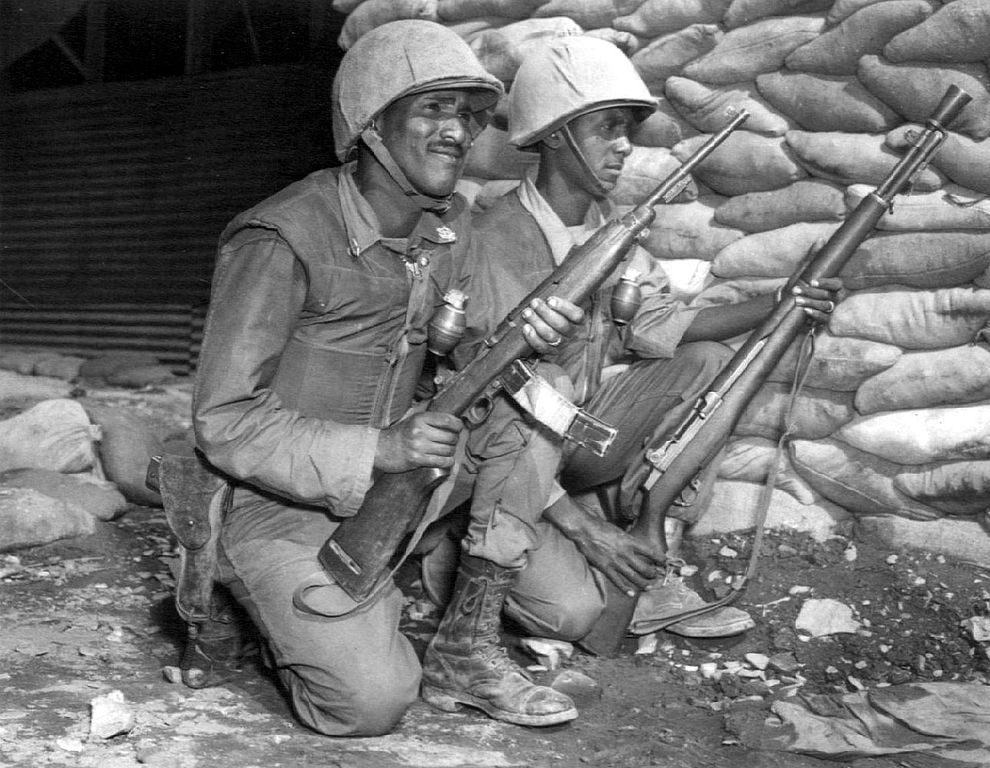
Being a UN police action, other countries joined the coalition of forces fighting to keep the South safe for capitalism, if not democracy. Besides, it was worth fighting for (as the Ethiopians would come to find out after their country descended into communism). Significant forces came from Great Britain and the Commonwealth countries, especially Australia and Canada. Turkish forces faced their biggest military challenge since World War I at the Battle of Kunu-ri Pass. Other countries that provided significant troops included Ethiopia, Colombia, Thailand, and the Philippines.
12. Generals weren’t far from the fighting
These days, you don’t hear much about general officers in the thick of the action unless they’re visiting a combat unit or are on some sort of tour or inspection. That wasn’t true during the Korean War. General Douglas MacArthur went to Korea himself during the Battle of the Pusan Perimeter to assess the situation there and determine how to proceed (the Inchon Landing is what he came up with).
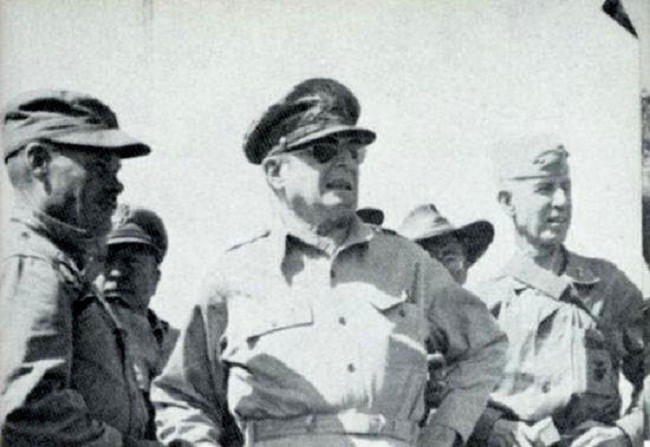
When the Korean War started, Army Gen. William F. Dean was among the last to retreat from Taejon as the North advanced. He wanted to ensure all his men and materials made it out as orderly and safely as possible. While trying to help a wounded troop, Dean was knocked unconscious and captured by the Communists.
As the war raged on in and around the peninsula, a slew of Generals would find themselves in combat. Oliver P. Smith directed the breakout of the Marines surrounded at the Chosin Reservoir and led them back to the port of Hungnam. Chesty Puller was still racking up awards and decorations in Korea. He was promoted to Brigadier General after landing at Inchon and fighting at the Chosin.
13. The Korean War never ended
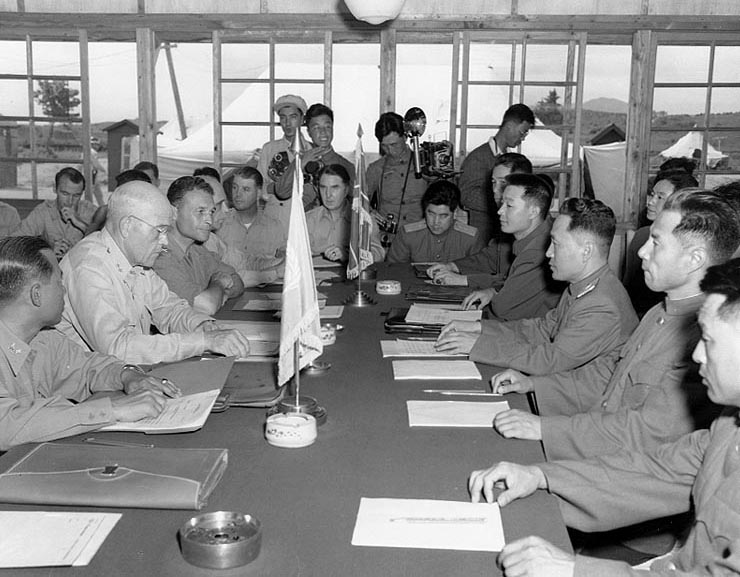
Armistice talks took more than two years to complete. The real hang-up was over the repatriation of each side’s prisoners—because thousands of communist POWs didn’t want to be sent back to North Korea or China. Eventually, the North conceded, and an armistice was signed. The signatories didn’t end the war, however, just the fighting. The war tecchnically continues to this day.
14. Korean War veterans are becoming just as rare as World War II vets.
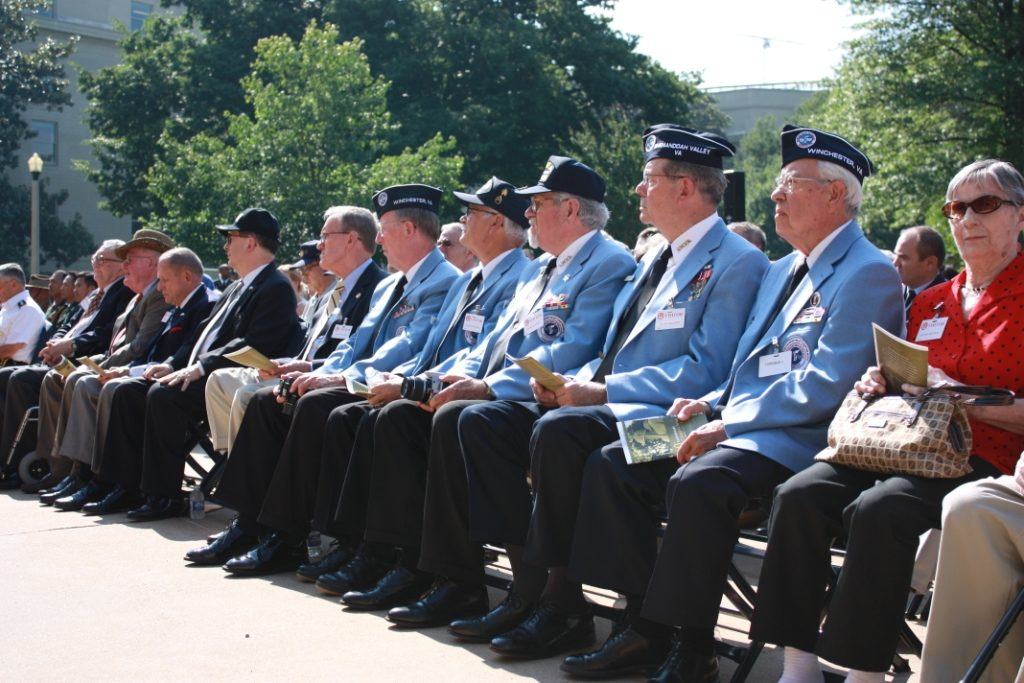
The Korean War fizzled out quietly. The men who fought in Korea didn’t come home to parades or parties and kissing in Times Square. The job of fighting the communists fell to the generation that bore the burden of combat without hesitation or complaint, even after the world forgot the heroism they displayed or the people they kept safe. At an estimated rate of 500 per day, they are slowly and silently passing into history, just as their war did.