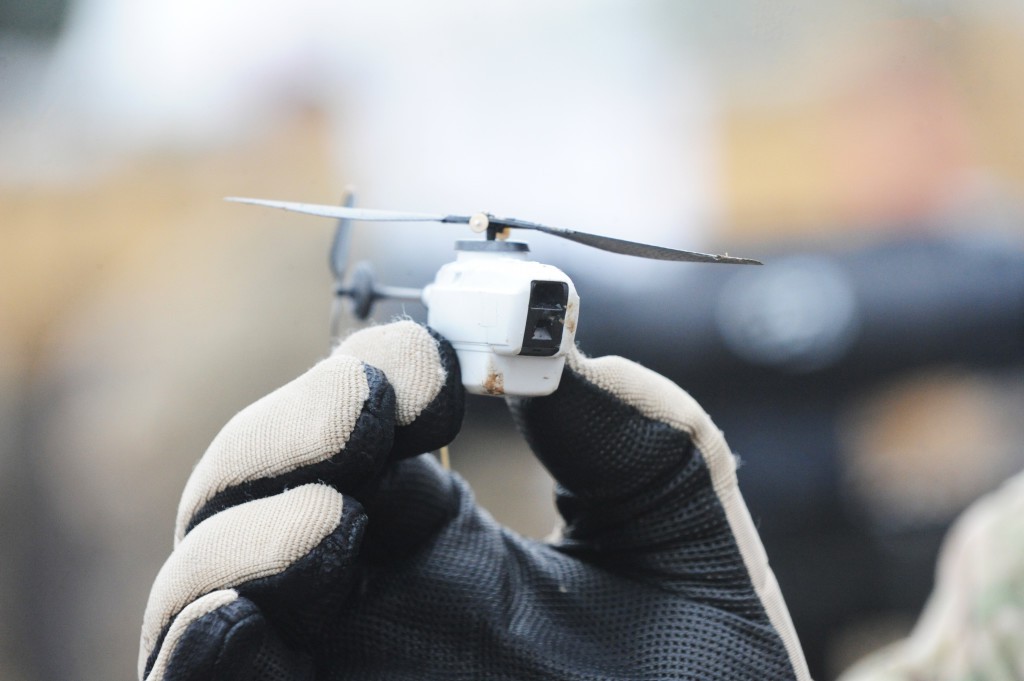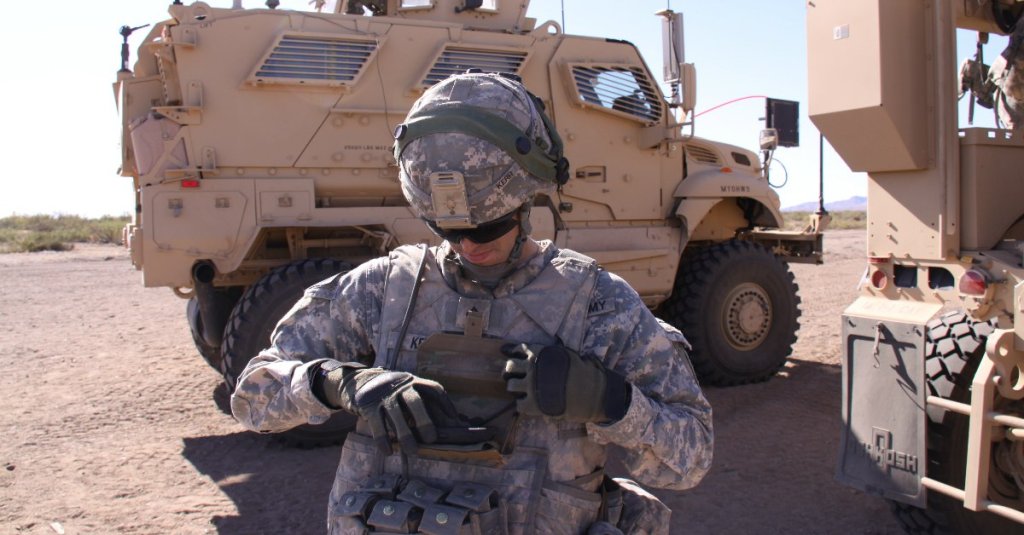
America’s troops have cool gear coming their way in 2016. Here’s a look at some of it:
1. The first Ford-Class supercarrier will take to the seas

Photo: US Navy Mass Communication Specialist Second Class Aidan P. Campbell
The PCU Ford will join the fleet in 2016. It will be the largest and most expensive warship to ever float and features a number of technological improvements over its predecessors. Electromagnetic catapults allow it to more quickly launch aircraft and it has better generators for powering sensors, weapons, and other necessary systems.
2. Soldiers will get an app for calling in artillery strikes
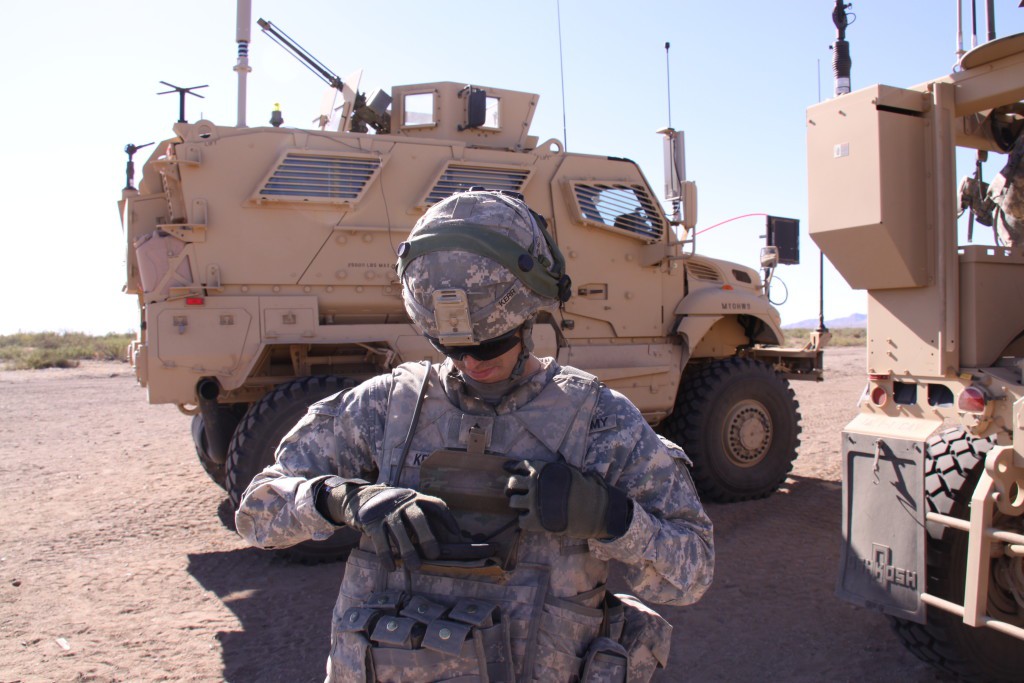
Photo: US Navy Mass Communication Specialist Seaman Casey Hopkins
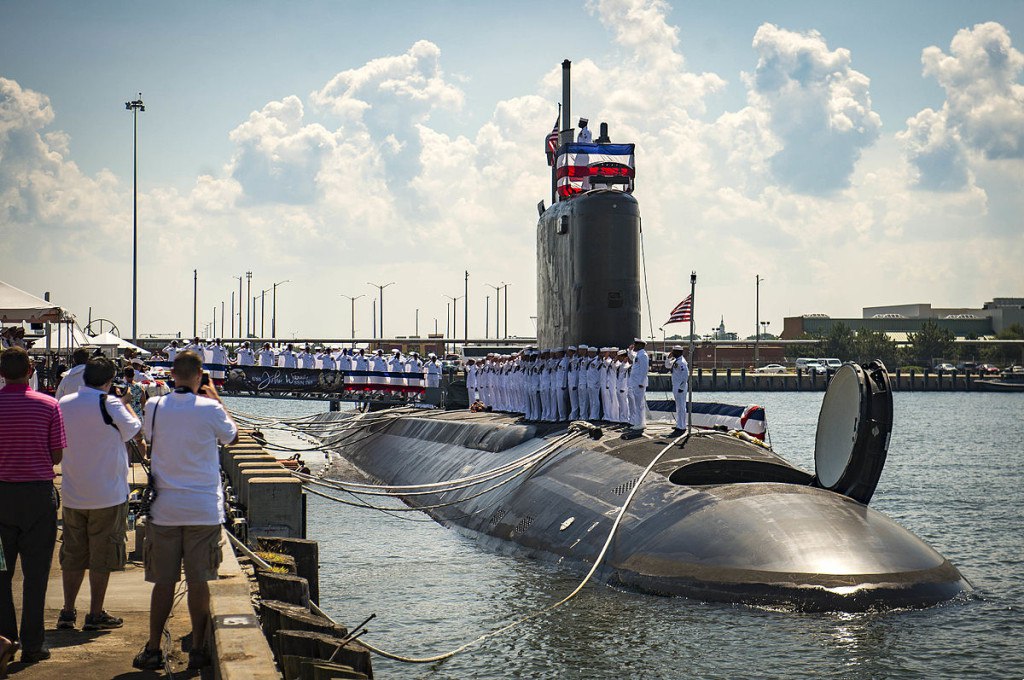
The submarine fleet will welcome two new Virginia-class fast attack subs, the USS Colorado (SSN 788) and the USS Washington (SSN 787). While new Virginia-class subs typically feature the latest and greatest tech in submarine warfare, everything from improved sensors to better acoustic camouflage, the specifics are classified for obvious reasons.
5. New night-vision goggles will let troops see thermal signatures better
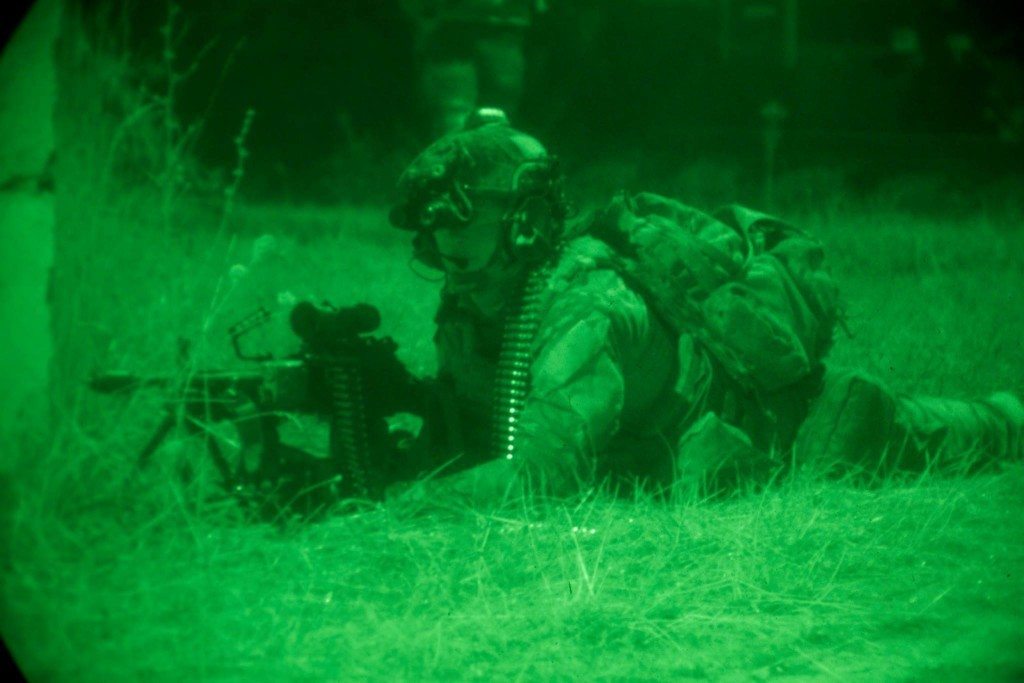
Unfortunately, the weapon sights they work with won’t be ready until at least 2019.
6. New machetes will help prepare the Army for a war in the Pacific
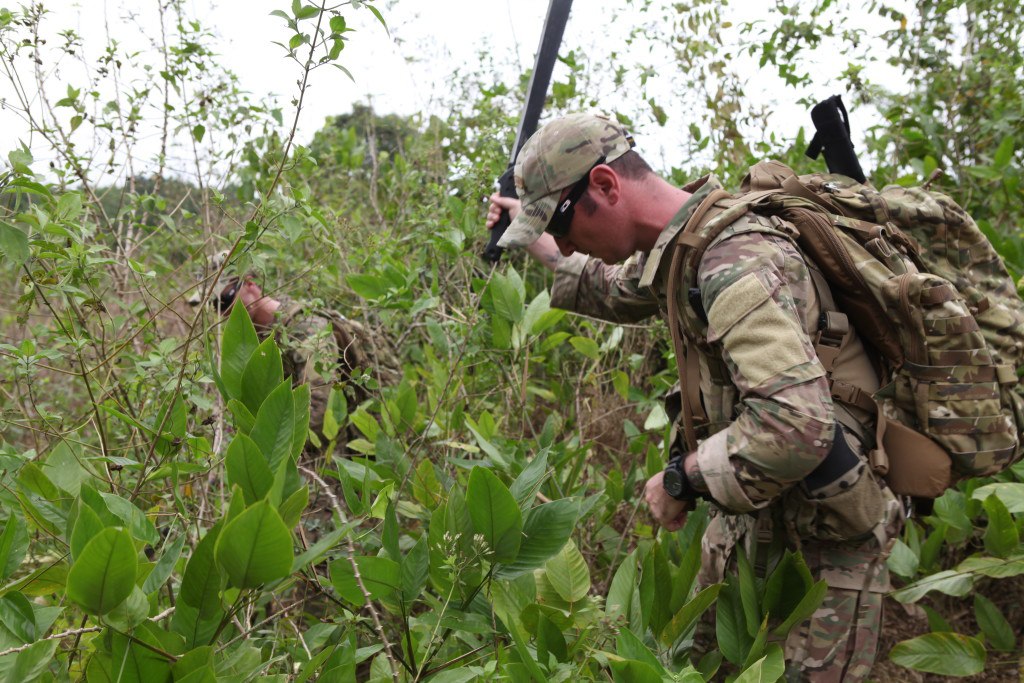
Photo: US Army Sgt. Austin Berner
While new machetes may not be as sexy as drones and submarines, the U.S. Army is part of the pivot to the Pacific and that means preparing for jungle warfare. The Army PEO-Soldier is looking for new machetes with a double-edged blade. One side would be for chopping through vines and the other for sawing through branches.
The Army will also be looking at new materials for uniform items, especially boots, in the coming years for operations in the Pacific.
Did the VA read anything I submitted to them? Are these outside medical exams a scam? Who is willing to fight for me?
Veteran Service Officer Joe Sapien.
These are all common questions that Joseph Sapien, a Southern California-based Veteran Service Officer and Army vet, encounters on a daily basis. Veteran Service Officers, or “VSOs,” serve as a free resource to help vets properly submit disability claims and steer them to all the benefits of their service.
WATM recently spoke with Sapien on what it’s like serving as a VSO and got some advice from him on how to handle issues veterans face during the process of filing claims with the VA.
1. Where do I find a Veteran Service Officer to help with my claim?
Finding a Veteran Service Officer is as easy as picking up the phone and dialing 888-777-4443 to locate the office nearest you or by visiting the Veterans of Foreign Wars, American Veterans, or the Disabled American Veterans. Visiting a VSO is free of charge. Veterans should refrain from paying out of pocket to any agency claiming to offer them help with their claim. There are veterans services available in all 50 states.
2. Who is willingly to fight for me?
One benefit that a lot of veterans don’t take advantage of is calling up their congressman. Sapien says it’s a good idea for all vets to know who their elected officials are and meet them in person.
“This guy listens and tries to help vets, I have seen him give his time and thoughts on veteran matters, and that impressed me,” Sapien says of his local congressman, Rep. Tony Cárdenas.
3.What are some benefits Veterans don’t know about?
Caregiver program: This program provides monthly stipends to pay for support caregivers along with home and vehicle modifications for those who qualify. Caregivers of eligible veterans are urged to apply through the Caregiver Program website or by calling 855-260-3274.
College fee waiver: This program is set up to waive tuition fees for dependents and possibly for spouses. This is a state-based program. Visit your local VSO for more information.
4.What paperwork should I have before visiting a VSO?
Having the most current medical record on hand is key. If it’s not up-to-date, consider tracking the paperworkdown by getting in touch with your previous commands. Have a good solid copy of your service record on hand as well as your DD-214. The better your records are kept, the fewer bumps in the road. Just remember, filing is a process.
If you’re missing some of the documents, you can request them from archives.gov. It typically takes four to six weeks.
5.What Joe would like you to know
“We need to take care of each other. The only reason our era of veterans are getting better treatment and benefits is due to the Vietnam veterans who fought for our government,” Sapien says. “They fought and kept fighting for what was right, not for what was popular, not for the status quo. It’s our turn to stand. It is our turn to fight for future generations, so when they come home, they will be taken care of better than we are today.”
The first female Marine to try to become an infantry officer has been reclassified to a different military occupational specialty after failing her second attempt at the grueling Infantry Officer’s Course, Military.com has learned.
The officer, who has not been publicly identified, began the 84-day course July 6 and was dropped July 18 after failing to complete two conditioning hikes, Capt. Joshua Pena said.
“IOC students may not fall out of more than one hike during a course,” Pena said.
U.S. Marines from Delta Company, U.S. Marines from Delta Company, Infantry Training Battalion (ITB), School of Infantry-East (SOI-E) listen to a combat order brief before stepping off on a raid, which is part of the Infantry Integrated Field Training Exercise aboard Camp Geiger, N.C. | U. S. Marine Corps photo by CWO2 Mancuso, Paul S. Combat Camera
In all, 34 of the 97 officers who began the course have been dropped. Nine, including the female officer, were recommended for MOS redesignation, meaning they will be placed in a non-infantry job within the Marine Corps.
The female officer first attempted the course in April, just months after Defense Secretary Ashton Carter declared all previously closed ground combat jobs open to women and ordered the services to design plans for integration. She was dropped on the 11th day of that attempt, after failing to complete a second hike.
Notably, the officer passed the notoriously challenging first day’s combat endurance test both times she attempted the course.
While 29 female officers had attempted the IOC on a test basis in a three-year period before the integration mandate was handed down, none would have had the chance to enter infantry jobs upon passing the course.
And because all but one of the female officers were volunteers attempting the course for personal improvement and Marine Corps research purposes, they were not guaranteed a second shot at the course the way male officers were. (The other female Marine was attempting to become a ground intelligence officer, a job that opened before other infantry jobs.)
For that reason, female officers now have their fairest shot at passing the course as the Corps looks to integrate previously male-only units.
But it remains to be seen how many women will attempt to enter these formerly closed positions.
Pena said there are now no female officers enrolled or slated to participate in future IOC classes. The current class will conclude Sept. 20.
In April, Navy Secretary Ray Mabus said the Marine Corps would not change its physical standards in an attempt to help its first female infantry officers enter the fleet.
“One of the questions I got at IOC was, ‘OK, five years from now, no woman had made it through IOC. What happens?’ ” Mabus said at Camp Pendleton on April 12. “My response was, ‘No woman made it through IOC. Standards aren’t going to change.’ “
For the first time in over a decade, the US Air Force is publicly acknowledging it runs an air war out of Al Dhafra Air Base, United Arab Emirates.
The US embassy in country recently worked with Emirati counterparts to make the 380th Air Expeditionary Wing — an Air Combat Command-run unit at the base — known, officials told Military.com.
Military.com first spoke with members of the 380th on a trip to the Middle East earlier this summer on condition the name and location of the base not be disclosed, and that full names of personnel not be used due to safety concerns amid ongoing air operations against the Islamic State of Iraq and Syria, or ISIS.
While the 380th was established at the base on Jan. 25, 2002, the US military has had a presence on the base for approximately 25 years. The base is home to a variety of combat operations.
Senior Airman Deandre Barnes, 1st Fighter Wing crew chief, awaits orders from Capt. Blaine Jones, First Fighter Wing F-22 Raptor pilot. USAF photo by Tech. Sgt. Charles Larkin Sr.
In addition to housing one of the largest fuel farms in the world, the wing houses such aircraft as the KC-10 tanker; the RQ-4 Global Hawk high-altitude drone; the E-3 Sentry Airborne Warning and Control System, or AWACS, aircraft; the U-2 Dragon Lady spy plane; and the F-22 Raptor stealth fighter jet.
Together, these aircraft carry out missions such as air refueling, intelligence, surveillance and reconnaissance, command and control, ground attack, air support, and others.
The 380th also runs its own intel analysis and air battle-management command and control center known as “The Kingpin.”
Like moving chess pieces, “Kingpin has the [air tasking order] — they’re talking to people on the ground, they’re making sure these airplanes are provisionally controlled, getting them back and forth to tankers … they’re talking to the [Combined Air Operations Center at Al Udeid Air Base, Qatar], they minimize the fog and friction for the entire [area of responsibility]” in US Central Command, according to Air Force Brig. Gen. Charles Corcoran, commander of the 380th AEW and an F-22 pilot.
Airmen from the 380th Air Expeditionary Wing Honor Guard participate in a special Memorial Day retreat ceremony. Photo by Master Sgt. Jenifer Calhoun.
Meanwhile, the general was candid about what the US mission could be after ISIS is defeated in Iraq and Syria.
Corcoran said, “We’re fighting an enemy — ISIS — in another country — Syria — where there’s also an insurgency going on, but we’re not really invited to be” a part of that, he said. “But we can’t leave it to the Syrians to get rid of ISIS, because that wasn’t working, right? So it’s really an odd place to be.”
He added, “We know … we’re going to defeat ISIS. Their days are numbered. What next?”
Can a rifle turn a novice into a world-class sharpshooter? Yes, based on the shootout scoreboard at a major fundraising event for the Chris Kyle Frog Foundation Saturday.
A sharpshooting showdown pitted a young American woman against the reigning NRA global champion … the novice crushed her opponent at the inaugural American Sniper Shootout Saturday in Mason, Texas.
The victorious novice shooter was Taya Kyle. Founder of the Chris Kyle Frog Foundation, she is the wife of U.S. Navy SEAL sniper Chris Kyle, known as “the most lethal sniper in US military history,” author of autobiography “American Sniper,” and the inspiration for Clint Eastwood’s movie “American Sniper.”
TrackingPoint says that its Precision-Guided Firearms can transform inexperienced shooters into world-class marksmen. To prove this claim, the company put $1 million on the table in an ultimate shootout. If the NRA champion Bruce Piatt could outshoot novice shooter Kyle then he would take home the hefty prize.
But Kyle defeated the champion, with the proceeds from the event going to the Chris Kyle Frog Foundation – here’s how she did it.
The rifles?
Piatt competed with the current military rifles M4A1, M110, and M2010.
Taya Kyle opted for TrackingPoint’s new M600, M800 and XS1 firearms. TrackingPoint touts advanced technology to enhance the accuracy of first-round shots at any distance.
Kyle explained why she chose to be armed with TrackingPoint at the shootout. “The technology of the gun was developed based on conversations with Chris [Kyle] about what factors a marksman has to consider on with every shot,” she told FoxNews.com, via email. “The end result is technology that I know would have saved lives of friends we have lost and will save life and/or limb of those who put it all on the line for the 99% of us they choose to give their life for.”
The rifles incorporate a range of innovations like the company’s “RapidLok Target Acquisition.” As a warfighter pulls the trigger, the target is automatically acquired and tracked. The range is also calculated and measured for velocity. Accuracy is enhanced because all this work is accomplished by the time the trigger is completely squeezed.
The showdown?
Kyle faced off against Piatt in a series of battlefield-simulated challenges.
The competitors had to take shots consistent with those warfighters must take in battle. It meant grappling with realistic challenges like shooting at targets placed at unknown distances as well as moving targets.
To win, both competitors also had to shoot in a range of positions, including prone and off-hand shots. They also had to tackle blind shots when the shooter takes shots while completely hidden without a direct line of sight to the target. The competitors also emulated Chris Kyle’s famous long-distance ‘Sadr city shot,’ which was featured in the film American Sniper.
And Kyle emerged the victor – by a lot. She made ALL of her shots from prone, kneeling, sitting and from cover…as in every single one – 100 percent.
How did the NRA champ fare? Piatt made 58.4 percent of the shots.
The challenges
There were 29 targets with a total of 10,140 points available.
Kyle scored a perfect 10,140. Piatt scored 3,040 points, making 58.4 percent of his shots. The scoring was weighted based on degree of difficulty.
In the challenges where the shooters took on targets without a direct line of sight while concealed from ‘enemy fire’ – Kyle made 100 percent of the blind shots while Piatt did not make a single one.
For practical application in war, this means the TrackingPoint technology has potential to allow American warfighters to stay concealed while still accurately taking on targets. The ability to stay concealed and still shoot accurately could help reduce the risk to warfighters.
Kyle explained further why the tech was developed. “Our first responders and military members regularly face situations most of us cannot imagine,” she told FoxNews.com via email. “They need every advantage for precision and efficiency to protect and serve while minimizing collateral damage and risk to themselves.”
Armed with TrackingPoint tech, Kyle was also able to make moving target and canted shots that Piatt did not.
The event
The day-long American Sniper Shootout was open to the public and also featured music from country singer Easton Corbin, Grammy winner Asleep At the Wheel.
The proceeds from the event benefit the Chris Kyle Frog Foundation. Kyle explained her inspiration for the event as “being able to simultaneously showcase the technology and raise money for CKFF to fulfill its mission … this event was an opportunity to take care of our warriors and their families on many different levels.”
We sometimes overlook the accurate and fantastic portrayals of veterans and troops in fiction, instead criticizing Hollywood’s typical depiction of us as hyper-macho, high-speed ass-kicking machines or broken and fragile husks of human beings.
For a good portion of the armed services, this is far from the truth. This isn’t a grunt versus POG (Person Other than Grunt) thing. It’s a symptom of the civilian-military divide.
There seems to be a perpetual cycle of fiction blowing real military service out of proportion. Civilians who never interacted with service members often believe that fictional portrayal.
Let’s be honest. Veterans are combating the stigma, but it’s an uphill battle.
Hell, most of the stories we tell at bars aren’t helping.
No judging. I will totally back up your claim as a Space Shuttle Door Gunner.
This one goes out to the creators, writers, directors, and actors that gave the world a veteran and stayed away from the stigma. Either intentionally or not, these characters either embody what it was truly like in the service or have exceptional moments that can overlook some of the more silly moments.
If you can think of any others left out, leave them in the comment section.
1. Sgt. Bill Dauterive – “King of the Hill”
Though the 022 MOS doesn’t exist anymore, Bill from “King of the Hill” was a U.S. Army Barber. There are several episodes dedicated to his military service. The 2007 episode “Bill, Bulk and the Body Buddies” even revolved around him trying to get in shape to pass his APFT.
How he manages to go on all the adventures in the show and not be considered AWOL is also a plot point.
(Character by Mike Judge and Fox Studios)
2. Capt. Frank Castle, aka “The Punisher” – Marvel Comics
Not every superhero gets their powers from a science experiment, being an alien, or just being super rich.
Frank Castle, The Punisher, learned his skills in the Marine Corps. Sure. He’s an extreme representation of a veteran. But The Punisher earns his spot on this list because of Jon Bernthal’s monologue in Season 2 of “Daredevil.” His performance and his story about his return from a deployment hits close to home for many people.
3. King Robert Baratheon – A Song of Fire and Ice, “Game of Thrones”
Let’s take away medieval fantasy elements of “Game of Thrones” and recognize that Robert Baratheon used to be a proud, respected, and feared soldier on the front lines.
Ever since putting his service behind him, he got fat, grew a glorious beard, spent his time drinking, hunting, and talking about his glory days. Sound like anyone you know from your old unit?
(Character by George RR Martin and HBO)
4. Pfc. Donny Novitski and his band — “Bandstand”
A Tony Award winning musical may seem an unlikely place to find a true to life depiction of a WWII veteran, but it’s the only Broadway musical with an official “Got Your 6” certification.
The musical is about a group of young vets returning home who form a band to try to reach stardom (the same half thought out plan we all had while we were downrange).
The lead character, Donny, spends most of the story showing his bandmates and the world their sacrifice and talents.
Veterans who’ve seen the show praise it. At the end of every show, they thank the troops around the world and dedicate each performance to a different veteran.
(Characters by Richard Oberacker)
5. Capt. Benjamin Franklin “Hawkeye” Pierce – “M*A*S*H”
The Capt. Hawkeye character is beloved by many for its accuracy. He was drafted right after his medical residency to deploy to the Korean War. Everything about his character was a fresh change to the ordinary war hero cliche.
He resented the Army for drafting him. Each loss of life affected him as the series progressed. He used humor to help cope with the daily stress of combat.
In the 1978 episode “Commander Pierce,” Hawkeye is temporarily in charge of the 4077th. For one episode, he drastically made the very real change to become the leader that his soldiers needed before reverting back to fit the semi-episodic formula.
(Character by Richard Hooker and CBS)
6. Capt. Kathryn Janeway – “Star Trek: Voyager”
While on the topic of the burdens of leadership, the character that best exemplifies this is the commander of the USS Voyager. Many of the ongoing struggles in the series revolve around how Capt. Kathryn Janeway deals with the safety of the crew, the dream of returning home, and hiding her internal doubt.
Oh, and she always drinks coffee, and she always drinks it black.
The senile grandpa of the Simpson family is often the butt of many jokes. His long term memory is hazy and his short term memory isn’t any better.
But then there’s the 1996 “Flying Hellfish” episode. Art and story-wise, this episode is vastly different from most, and is regarded as one of the best in the series.
Grandpa Abe and Bart go on an adventure to reclaim the treasure Abe found back in World War II. Back in the day, Grandpa was a very competent and tactful leader.
When his unit, which also included series antagonist Mr. Burns, discover a fortune in stolen Nazi paintings, they place a life bet on who keeps them.
While Mr. Burns is willing to kill for the prize, Abe still holds onto his honor and loyalty to his unit after all those years. At the end, when the paintings are confiscated by police, Abe tells his grandson why he went after the paintings. “It was to show you that I wasn’t always a pathetic old kook,” he said.
(Character by Matt Groening and Fox Studios)
8. Sgt. Donald Duck – Disney
The sailor suit he always wears isn’t just for show or stolen valor, Donald Duck legitimately was in the Navy and Army Air Force (hence why, in 1984, he was officially given the rank of sergeant and discharge by the real world Army on his 50th anniversary).
Hear me out on this.
In World War I, Walt Disney attempted to join the U.S. Army but was rejected for being too young. He then forged documents to join the Red Cross.
In France, the cartoons he sketched grabbed the attention of Stars and Stripes, later becoming the icon we all know today. In WWII, his love of country and understanding of how propaganda worked lead Disney to use Donald Duck to help the troops.
The “Buck Sergeant Duck” was used in counter-propoganda cartoons and recruitment shorts, even winning an Oscar for “Der Feuhrer’s Face.”
His time in both the Army and Navy is well depicted in many forms — from cartoons to comics. In “DuckTales,” Donald leaves his nephews because he’s being shipped out, which starts the series. The cartoon “Donald Gets Drafted” shows Donald learning (in an exaggerated manner) that recruiters sometimes tell fibs to get bodies in the door.
Even his short temper, aggression, loud voice, cynical attitude, and unprovoked tantrums aren’t a concept lost on veterans.
Former CIA Senior Analyst John Nixon’s new book “Debriefing the President: The Interrogation of Saddam Hussein” provides never-before-seen details into the daily life of Iraq’s deposed dictator in the months before the 2003 US invasion wrenched him from power.
Nixon, who wrote his master’s thesis on Hussein, and whose full-time job at the CIA was to study him, was shocked to find out that common intelligence on Hussein had been wrong.
Iraqi-American, Samir, 34, pinning deposed Iraqi leader Saddam Hussein to the ground during his capture in Tikrit, on Saturday, December 13, 2003. | US Army photo
His most astonishing discovery was that by the time of the United States-led invasion of Iraq in March 2003, Hussein had turned over the day-to-day running of the Iraqi government to his aides and was spending most of his time writing a novel. Hussein described himself to Mr. Nixon as both president of Iraq and a writer, and complained to Mr. Nixon that the United States military had taken away his writing materials, preventing him from finishing his book. Hussein was certainly a brutal dictator, but the man described by Mr. Nixon was not on a mission to blow up the world, as George W. Bush’s administration had claimed to justify the invasion.
Hussein’s own abdication of authority in lieu of his more artistic pursuits did little to make up for his prior brutal actions as the leader of Iraq. However, it did call into question the overall value of removing the dictator from power in the first place.
“Was Saddam worth removing from power?” Nixon asked himself in the book. “I can speak only for myself when I say that the answer must be no. Saddam was busy writing novels in 2003. He was no longer running the government.”
Since 2003, the mainstream political consensus in the US has turned on George W. Bush’s 2003 decision to invade Iraq, with both major party presidential candidates this election cycle condemning the invasion and ensuing occupation of Iraq.
A former Russian-backed separatist in Eastern Ukraine recently completed U.S. Army training, Thomas Gibbons-Neff of the Washington Post reported Monday.
The 29 year old French-American citizen, Guillaume Cuvelier, reportedly spent his youth in the French far-right before going to Eastern Ukraine in 2014. During his childhood in France, he was a member of a neo-fascist group that broke from the National Front. The association presumably fostered his anti-European union views.
Cuvelier’s assumed the militant name Lenormand and fought for the Donetsk People’s Republic, a separatist region of Eastern Ukraine sponsored by the Russian government. A photo WaPo reviewed shows him standing shoulder to shoulder with a militant accused of orchestrating the shoot-down of Malaysian Flight 17.
After arriving in Ukraine, he also set up a unit that declared France is “a slave of the American Empire” and the NATO alliance is a “terrorist military alliance.” Cuvelier appeared to change his tune after going to fight with U.S. backed Kurdish militias in Iraq in 2015. He was eventually kicked out for beating a fellow American volunteer with a rifle. He then made his way to the U.S. to join the Army.
His status in the U.S. military is currently under review “to ensure the process used to enlist this individual followed all of the required standards and procedure,” according to a U.S. Army spokesman’s statement to WaPo.
When confronted with his lurid past, Cuvelier pleaded with Gibbons-Neff not to publish the story saying, “I realized I like this country, its way of life and its Constitution enough to defend it.” He continued, “By publishing a story on me, you are jeopardizing my career and rendering a great service to anyone trying to embarrass the Army. My former Russian comrades would love it. … so, I please ask you to reconsider using my name and/or photo.”
Content created by The Daily Caller News Foundation is available without charge to any eligible news publisher that can provide a large audience. For licensing opportunities of our original content, please contact licensing@dailycallernewsfoundation.org.
A U.S. Marine was killed in a freak accident on August 4 after a tree fell on him during physical training at his California base.
Lance Cpl. Cody Haley, 20, was working out in a wooded area at Camp Pendleton with members of his unit when the incident took place. While on a run, the Marines tried to move a log they were unaware was holding up a dead tree, which fell on top of Haley and killed him, according to a source familiar with the matter.
U.S. Marine Corps photo by Cpl. Robert Knapp
A native of Hardin, Iowa, Haley had deployed in 2016 with the 11th Marine Expeditionary Unit. He was awarded the National Defense Service medal, the Global War on Terrorism Service medal, and the Sea Service Deployment ribbon, the Marine Corps said.
“We are heartbroken at the tragic loss of a member of the Marine Corps family, and we will do all we can to comfort the family, friends and colleagues of the deceased,” the Corps said in a news release to the Marine Times.
Reggae music star Shaggy has a plan to defeat ISIS terrorists, and it involves a lot of weed and reggae music.
The man behind “Boombastic” was asked how to counter the terrible band of murderous militants in Iraq and Syria in a recent interview in the Miami New Times, and he certainly delivered.
“ISIS can go f–k themselves,” he told Dyllan Furness. “That’s some crazy shit what they’re doing. It’s horrible, man. I can’t see … I don’t get that much hate. I just don’t get that level of evil. I can’t understand it.”
Interestingly the 46-year-old singer — real name Orville Burrell — who goes by “Shaggy” does have some military experience, having served as a Marine artilleryman during the Gulf War. But his strategy to fight against the self-proclaimed Islamic State is quite unconventional.
“If you’re able to cut a man’s head off, you’re sick,” he continued, “But right, music evokes emotion. So if they’re listening to Shaggy music or reggae music, they’re not going to want to cut somebody’s head off. There’re two thing you want to do when you listen to reggae: You get somebody pregnant, or you’re f–king high. High people don’t want to kill nothing; they want to love. They need to bag some Jamaican weed and distribute it amongst ISIS. I guarantee there won’t be any more wars out there.”
You hear that, DoD? Drop more weed, instead of high-explosive bombs.
Defense Secretary James Mattis put out his first all-hands message to everyone in the Department of Defense on Friday, and it tells you everything you need to know about how he intends to lead.
Mattis, a retired Marine general revered by his troops, probably made a good first impression among the roughly three million men and women who make up the active duty, reserve, and civilian force. That’s due to the notable language he used in his first sentence (emphasis added):
“It’s good to be back and I’m grateful to serve alongside you as Secretary of Defense.”
As many who served under him can attest, Mattis has always been a humble warrior who led Marines from the front — not from an air conditioned bunker. And the language that he used — serve alongside you, as opposed to lead, or manage you — shows that Mattis will likely bring his beloved leadership style of the Marines with him into the civilian post.
“He’s a leader by example,” retired Sgt. Maj. of the Marine Corps Carlton Kent told Business Insider in December. “He’s not the type that’s ‘do as I say, not as I do.’ He’s out there doing it.”
Secretary of Defense James Mattis and U.S. Marine Corps Gen. Joseph Dunford, Chairman of the Joint Chiefs of Staff, arrive at the Pentagon in Washington, D.C., Jan. 21, 2017. | DOD photo by Air Force Tech. Sgt. Brigitte N. Brantley
Mattis kept his message short and sweet, praising the people who make up the DoD, calling America a “beacon of hope,” and pledging that he would do his best as Defense Secretary.
Here’s the full letter:
It’s good to be back and I’m grateful to serve alongside you as Secretary of Defense.
Together with the Intelligence Community we are the sentinels and guardians of our nation. We need only look to you, the uniformed and civilian members of the Department and your families, to see the fundamental unity of our country. You represent an America committed to the common good; an America that is never complacent about defending its freedoms; and an America that remains a steady beacon of hope for all mankind.
Every action we take will be designed to ensure our military is ready to fight today and in the future. Recognizing that no nation is secure without friends, we will work with the State Department to strengthen our alliances. Further, we are devoted to gaining full value from every taxpayer dollar spent on defense, thereby earning the trust of Congress and the American people.
I am confident you will do your part. I pledge to you I’ll do my best as your Secretary.
Super Bowl commercials that honor military veterans aren’t new, and odds are they’re not going anywhere because dammit they’re effective.
The 2017 Hyundai Super Bowl commercial is no exception. Troops stationed in Poland were treated to a surprise when Hyundai gave them a special Super Bowl screening experience. What they didn’t know was that a few of their family members were also getting a treat.
While the service members watched the game in fully immersive, 360-degree live streaming pods, their families joined them via a Super Bowl LI box suite, complete with huggable high-tech teddy bears (wearing the uniform of the day) and cameras that allowed the family members to livestream with their heroes.
Hyundai teamed up with director Peter Berg (Deepwater Horizon, Lone Survivor) to shoot, edit, and broadcast the event.
“I’m honored to have worked on this project with the troops and [Hyundai] for the Super Bowl. Thank you for your service, and thank you for letting me be part of this,” Berg said.
At the Starbucks at the Langley headquarters of the Central Intelligence Agency it might be best to just remember your drink order because the baristas won’t remember your name.
They’re not known for getting names right anyway.
“They could use the alias ‘Polly-O string cheese’ for all I care,” a food services supervisor at the CIA, told the Washington Post. “But giving any name at all was making people — you know, the undercover agents — feel very uncomfortable. It just didn’t work for this location.”
The agents don’t have to leave the building to get their daily fix, but they won’t get stars to add to their gold card requirements either. Tracking the agents preferences is strictly prohibited, as the Agency fears its data could be used to out secret agents. The receipts just say “Store Number 1.”
The baristas for what is now known as the “Stealthy Starbucks” go through a rigorous background investigation, but still can’t leave the Starbucks without a handler. They are frequently briefed about security risks. During the day, the vanilla latte is the winner. For agents working long hours and night shifts, double espressos and Frappuccinos are what the agents of the world’s most secret intelligence agency need to keep going.
There might be more secretive agents. Somewhere.
“There’s caramel-macchiato guy” and “the iced white mocha woman,” one barista said. “But I have no idea what they do, I just know they need coffee. A lot of it.”