
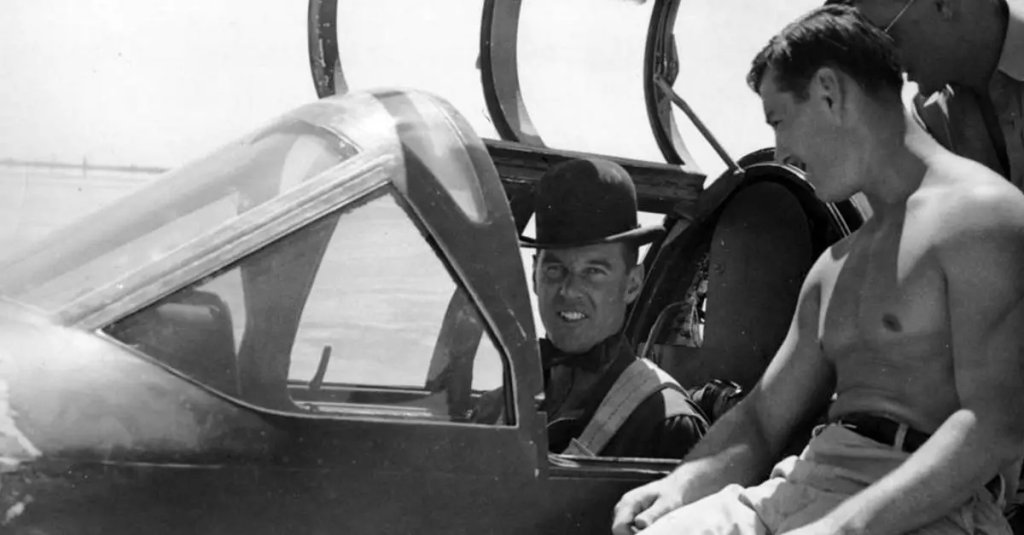
Edwards Air Force Base in California certainly has its fair share of oddball aircraft and eccentric pilots. But a test pilot flying a top-secret airplane in a gorilla suit?
In 1942, Bell Aircraft was developing its P-59 Airacomet, the first jet engine fighter designed by the United States. And although it never saw action, it was an important step in the development of American air power.
It was also a top-secret project at the time. The British had a jet fighter airframe in development since 1941, as did the Nazis. The future of air supremacy in the Second World War might have been on the line, so everything had to be hush-hush.
The jet program was so secret, in fact, that when the P-59 was taxiing, airmen placed a fake wooden propeller on its nose so onlookers wouldn’t notice anything unusual about the aircraft.
In the air, however, it was a different story. Test pilots flying the usual piston-driven aviation engine would report back to base with sightings of a fast-moving plane without a propeller. They also claimed the aircraft was flown by a “gorilla, wearing a derby hat, waving a stogie at them.”
That of course, would be the craziest thing anyone ever heard—except it was true. There was a gorilla test pilot.

The Chief test pilot for Bell Aircraft was Jack Woolams. By the time Bell was testing its P-59 design, Woolams had already served 18 months in the Army Air Corps. He was the man behind the gorilla mask.
Other test pilots who were exposed to Woolams’ prank were convinced by Air Force psychologists that they hadn’t really seen the gorilla flying the plane, “because everyone knows you can’t fly without a propeller.”
Notably, no one really called the story implausible because a gorilla was at the stick. That would be stupid.
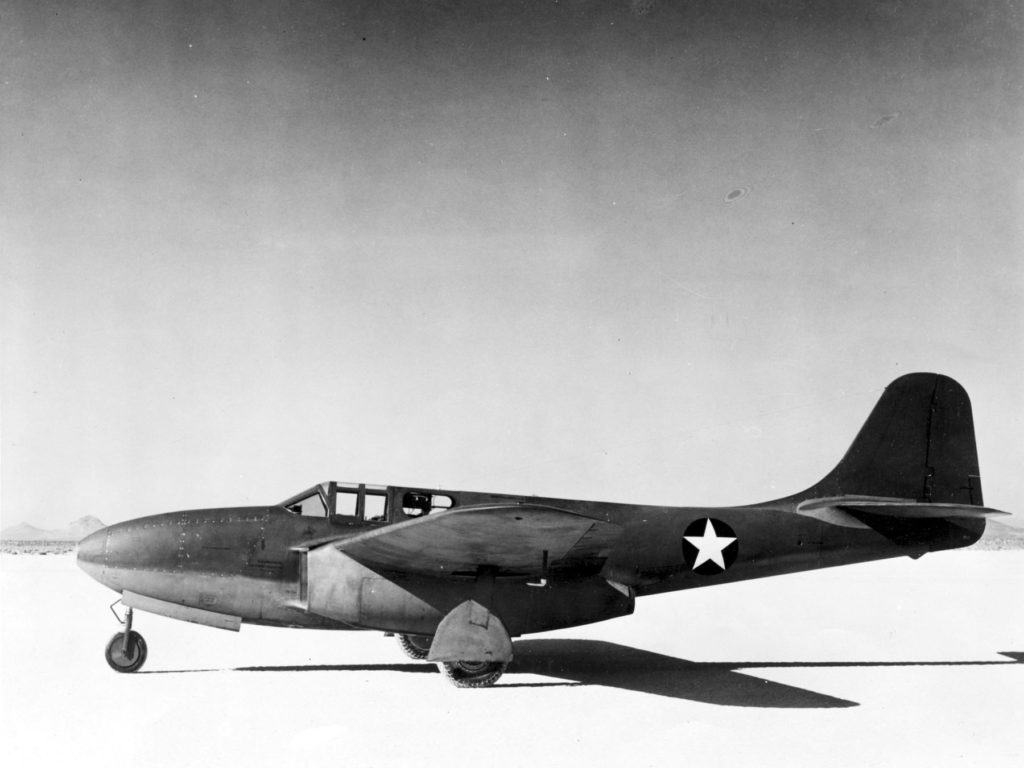
Woolams was also the first test pilot to fly a fighter aircraft coast-to-coast nonstop and set an altitude record in 1943. He died preparing for an air show in 1946, but he was a man ahead of his time — a harbinger of the nonstop, record-breaking years of air power development to come for test pilots in the 1950s and 1960s.

Did a Gorilla Really Fly This Jet? (P-59)

Loading comments…
Comments couldn’t be loaded. Please refresh the page.