
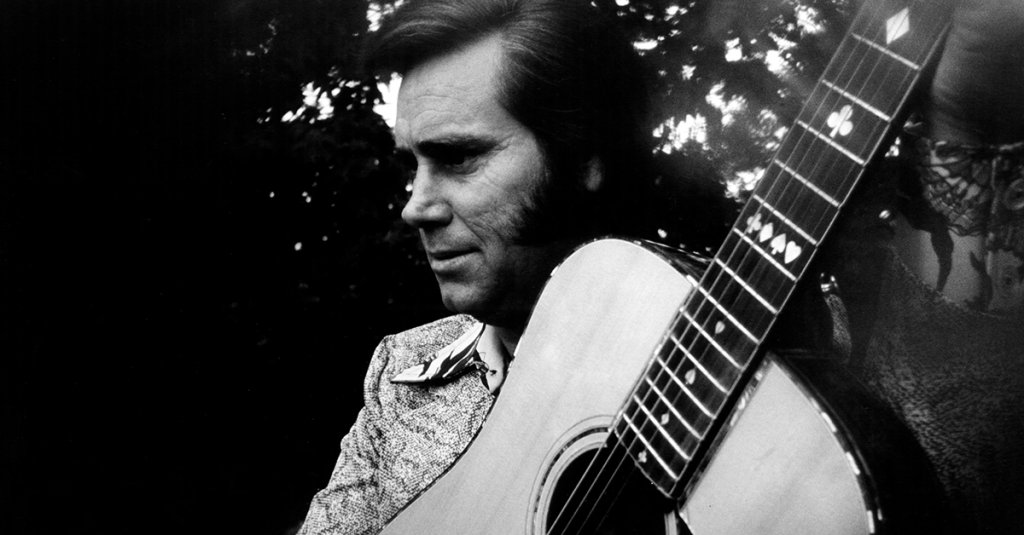
Country music legend George Jones had a lifelong struggle with alcoholism that was as legendary as his voice. Born among the East Texas oil fields in 1931, Jones gravitated to music to escape his alcoholic father’s booze-fueled rampages. He turned to drinking himself to overcome his stage fright and survive the demands of playing on the road.
The emotions that inspired his music only added more fuel to the fire. He’d tried to escape a life of being awakened in the middle of the night to play for his dad and his drunk buddies by singing his way across Texas. Despite multiple marriages and children, as well as a stint in the Marine Corps, the singer’s addiction followed him for most of his adult life.
Read Next: 6 songs that will always remind America of the Vietnam War
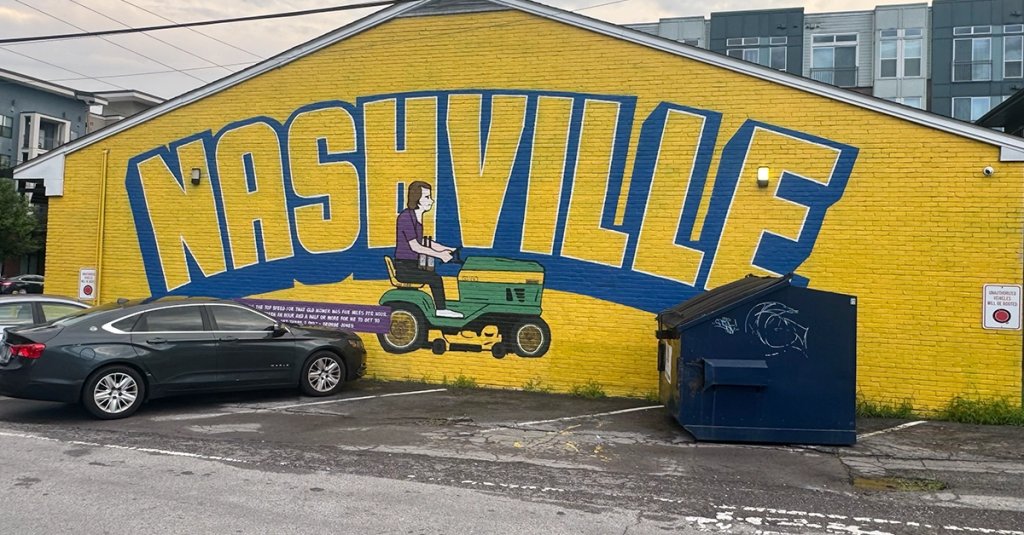
It also led to an alcohol-related incident with his second wife that became the subject of many stories, murals, and no fewer than three recreations in modern country music videos. George Jones recalled the lawn mower incident (and his time in the Marines) in his 1967 autobiography, “I Lived to Tell It All.”
The Jones family was living in a wild, swampy area of Texas call “The Big Thicket” when they finally bought a radio in 1938. George was just seven years old. He and his mother would tune into the Grand Ole Opry on Saturday nights and by age nine, George even had his own guitar.
As he grew up, he began playing the churches and streets of Beaumont. At age 16, he left home for Jasper, Texas, where he began singing on the local radio station. He eventually meandered to the Port of Houston, playing Ernest Tubbs songs in rough honky tonks, protected from flying beer bottles only by chicken wire strung up on the stage.
That’s where he met Dorothy Bonvillion. The couple soon married, but Dorothy’s parents weren’t going to have a honky tonk singer with no money in the family. They tried to get him a job as a house painter, but it didn’t take. The couple were married and divorced before their daughter was born. Jones couldn’t afford the child support payments and he couldn’t afford the jail time for not paying the support payments.
So he joined the Marine Corps.
At 18, he was sent to San Jose, California. With a check from the Corps, he could support his daughter but he made far more money by playing the local nightclubs.
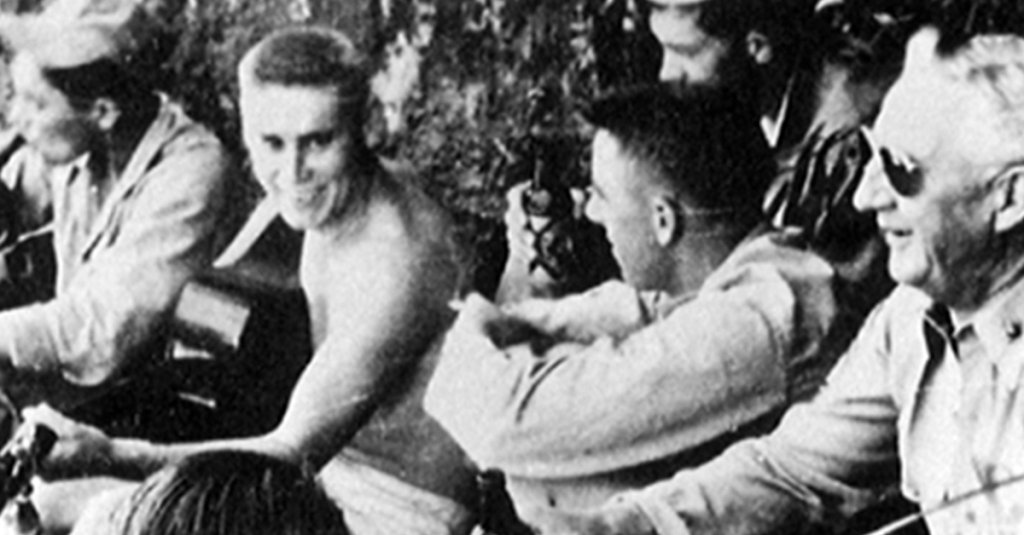
“People have asked what I remember most about the service,” Jones wrote in his 1996 autobiography “I Live to Tell It All.” “I don’t answer with talk about guns or six-mile hikes and the like. The most vivid memory I have is coming in a four o’clock in the morning on New Years Day 1953, after playing a show. I lay down in the darkness and the entire barracks was silent except for one voice. I belonged to the guy in the bunk next to mine.
‘Hey,’ he said. ‘Your buddy is dead.'”
That voice was referring to Hank Williams, whom Jones regarded as country music’s greatest singer-songwriter. Jones’ stage fright was not just a case of the jitters. He was so stricken, he had the opportunity to play electric lead guitar behind William for a radio show, but held his guitar instead, “too afraid to move”paralyzed with fear.”
Jones left the military in 1953, having spent his entire career stateside. He returned to Beaumont, where he became disc jockey, but kept playing music and drinking. The next year, he married Shirley Ann Corley. When they married, he was a relatively unknown musician playing “hillbilly music,” but in 1955 his career took off. He released “Why Baby Why” in 1955, but hit it really big with the number one single “White Lightning” in 1959.
His marriage grew increasingly strained as time went on. The pressures of his newfound fame, constant touring, womanizing, and his severe battle with alcoholism took a heavy toll on the relationship (to put it lightly). In his book, Jones describes benders that lasted for days and even weeks, where he disappeared completely.
Then there’s the now-famous 1967 lawn mower incident, one that even he says “I can laugh at now, years into my sobriety. But no one was amused at the time.

George Jones – Honky Tonk Song
Jones had been drunk for days when his wife finally decided she’d had enough. She would make it physically impossible for him to buy any alcohol. At the time, they lived eight miles from the nearest liquor store in Beaumont. She took the keys from all of their cars and left.
She forgot about the lawn mower.
The singer was angry that he couldn’t find the keys to any car. He eventually found himself just staring out of their window at a light that shined over their property. Like some kind of divine spotlight, he realized it was shining on their riding lawn mower and its ten-horsepower engine.
At a top speed of five miles per hour, it took Jones more than an hour and a half to get to the liquor store on the two-lane highway into Beaumont. George and Shirley were divorced the next year, but the lawn mower incident has been immortalized in country music lore, with Jones poking fun at himself in 1996’s “Honky Tonk Song.”
Jones makes a cameo in Hank Williams Jr.’s music video for “All My Rowdy Friends Are Coming Over Tonight” riding a lawn mower to the party; Mike Judge’s 2017 series “Tales from the Tour Bus,” animates the story for a new generation; and a John Deere lawnmower was even displayed at the George Jones Museum in Nashville.

Vince Gill – One More Last Chance
Although it became the stuff of legend, Jones’ third wife Tammy Wynette apparently didn’t get the memo. Ten year later, the “Possum” would hop on another mower down a main highway, this time to get to a bar 10 miles from his house.
Jones’ boozing more than caught up to him. It might have led to some of his greatest music, but it also led to drunken rampages, missed show dates, lawsuits, and, eventually, bankruptcy. At one point, Jones was homeless and living in his car, weighing only 105 pounds. He was even committed in a psychiatric ward.
In 1984, he sobered up. But even after writing his book in 1996 and laughing at the lawn mower incident, his struggle with alcoholism continued. In 1999, he nearly died after driving his car into a bridge after drinking. That was the last straw. George Jones remained sober until he died in 2013 at age 81.
Don’t Miss the Best of We Are The Mighty
• ‘Jimmy’ celebrates World War II hero Jimmy Stewart for America’s 250th with a new trailer
• SFC’s Chloe Turner on why sport fishing is reeling in veterans
• Army veteran trades filmmaking for music in his 40s
Loading comments…
Comments couldn’t be loaded. Please refresh the page.