
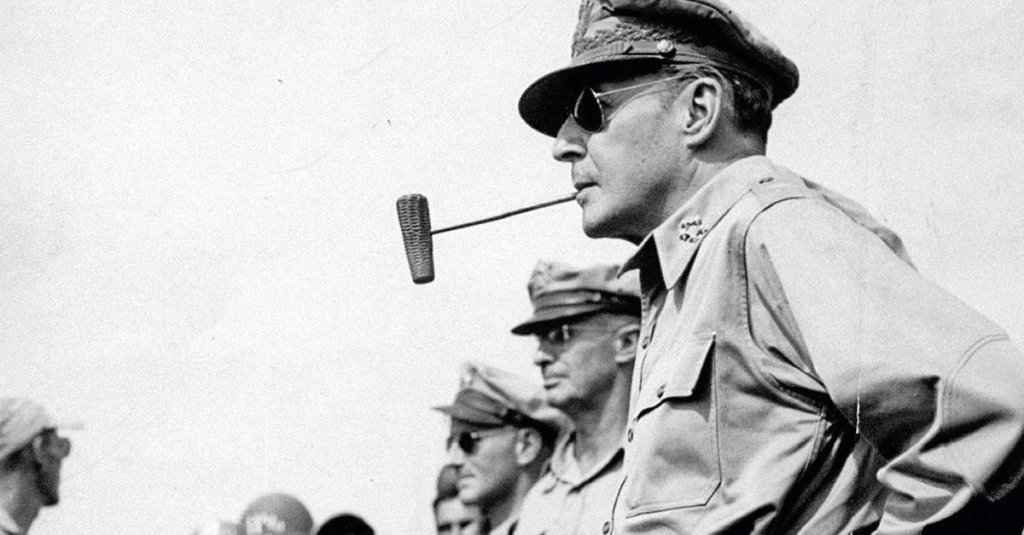
A doorman at Douglas MacArthur’s hotel stopped the legendary general as he prepared to visit the United States Military Academy for the final time.
MacArthur told the inquisitive employee that he was headed to West Point. The reply surprised MacArthur, one of the most imposing military figures in American history.
“Beautiful place,” the doorman said. “Have you ever been there before?”
Also Read: That time MacArthur promised to capture a hill or die on it
The Corps of Cadets chuckled when MacArthur started his famous “Duty, Honor, Country” speech with that anecdote on May 12, 1962. Of the countless times MacArthur returned to the academy since he was a cadet, this one was different.
Knowing he would never see West Point again, he made it count. For more than a half-hour, MacArthur gave an impassioned speech about “Duty, Honor, Country”—the academy’s motto since 1898, the year before his plebe year.
“Those three hallowed words reverently dictate what you ought to be, what you can be, what you will be,” MacArthur told the Corps.
Great Expectations
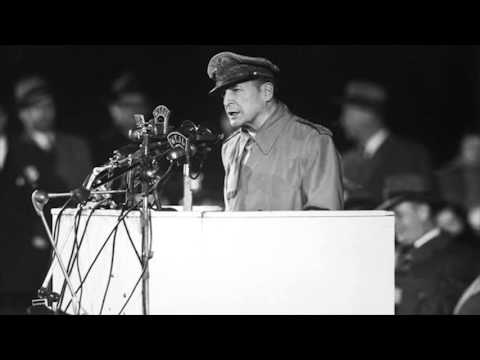
Duty, Honor, Country | Douglas MacArthur | May 12, 1962 | West Point
They did for MacArthur.
MacArthur hailed from a military family. His father, Arthur MacArthur Jr., received the Medal of Honor for his actions at Missionary Ridge, Tennessee, during the Civil War. When Douglas accepted the United States military’s highest award for valor, the MacArthurs became the first father and son to earn the Medal of Honor. (Theodore Roosevelt and Theodore Roosevelt Jr. later joined them.)
When MacArthur arrived for his first year at West Point, complacency wasn’t an option. His mother made sure of it. She stayed on campus and reminded her youngest of three sons that he “must grow up to be a great man.”
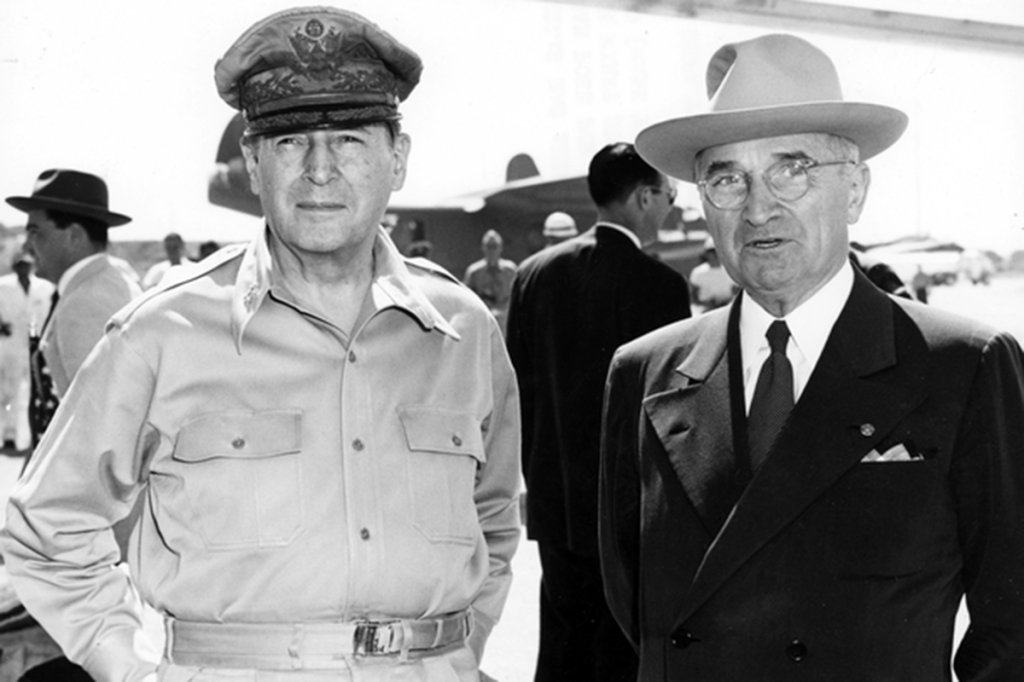
Other cadets might have crumbled under such high expectations. MacArthur didn’t, graduating first in his class in 1903. He went on to serve during World War I, World War II, and the Korean War. Despite his reputation as an excellent military strategist, MacArthur made some tactical mistakes and courted controversy. In 1951, President Harry Truman famously fired the stubborn MacArthur after they butted heads during the Korean War.
That termination effectively ended MacArthur’s time in uniform. His legacy was complicated, but by the time MacArthur spoke at West Point a decade later, he was more reflective. In declining health, the 82-year-old spoke slowly but made sure to make one thing clear. Despite what his faults were, he always tried to live up to three words.
Duty, Honor, Country.
“They create in your heart the sense of wonder, the unfailing hope of ‘what next,’ and the joy and inspiration of life,” MacArthur said to the young cadets. “They teach you in this way to be an officer and a gentleman.”
“The Chalice of Courage”
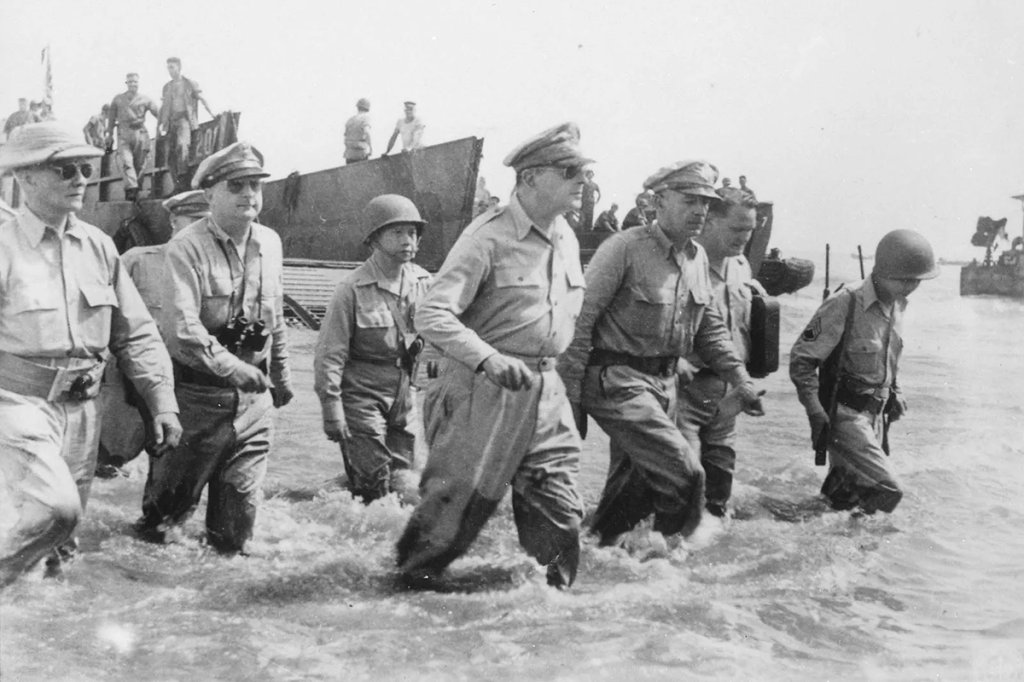
MacArthur viewed “Duty, Honor, Country” as nothing short of a moral code.
He told the Corps of Cadets that while some mock the academy’s motto, those naysayers are misguided. That slogan fortified America’s fighting forces during countless wars. Those words collectively fill soldiers with courage and give them faith and hope in times of duress. They create both a sense of pride and humility, MacArthur said, and steel soldiers as they face the challenges of war. All the while, “Duty, Honor, Country” instills a sense of compassion, too.
MacArthur, who served as West Point’s superintendent from 1919 to 1922, repeatedly saw those qualities in action.
“In 20 campaigns, on a hundred battlefields, around a thousand campfires, I have witnessed that enduring fortitude, that patriotic [selflessness], and that invincible determination which have carved his statue in the hearts of his people,” MacArthur said. “From one end of the world to the other, he has drained deep the chalice of courage.”
MacArthur further paid homage to soldiers, commending their nobility. The highly decorated general lauded the level to which service members are willing to sacrifice during wartime, including giving their lives in defense of freedom.
MacArthur recalled witnessing many Americans who died without complaint during World War I.
“I do not know the dignity of their birth, but I do know the glory of their death,” MacArthur informed the crowd.
MacArthur’s Last Roll Call
As MacArthur spoke, the U.S. was in the early stages of the Space Age.
He acknowledged the rapidly changing world. Priorities and unforeseen developments conspire to shift the country’s landscape. Change is happening—faster than some might like—but MacArthur said the soldiers’ mission remains unaltered through the years. While valuing peace more than anyone, they are primarily there to win wars, MacArthur said.
“The long gray line has never failed us,” he said.
MacArthur finally concluded his speech at a place that he knew like few others. If anything, his “Duty, Honor, Country” speech served as a love letter to an institution that molded him into a great man.
“In my dreams, I hear again the crash of guns, the rattle of musketry, the strange, mournful mutter of the battlefield,” MacArthur said, finishing with a flourish. “But in the evening of my memory, I come back to West Point…. Today marks my final roll call with you. But I want you to know that when I cross the river, my last conscious thoughts will be of the Corps, and the Corps, and the Corps.
“I bid you farewell.”
MacArthur died two years later.
Don’t Miss the Best of We Are The Mighty
• When Patton met MacArthur in the mud of St. Mihiel
• Tom Hanks’ new 20-part docuseries takes a new look at World War II
• Meet the 12-year-old sailor who fought at Guadalcanal
Featured


Loading comments…
Comments couldn’t be loaded. Please refresh the page.