

Mel Brooks’ stomach almost didn’t survive the trip overseas to fight during World War II.
In February 1945, the comic legend and other troops left the Brooklyn Navy Yard in New York on a ship bound for France. As they navigated their way across the North Atlantic, the icy weather and stormy seas relentlessly rocked the vessel. What’s more, the ship sometimes zigzagged to avoid German U-boats—which only added to the tossing and turning.
Also Read: Summer blockbusters we’re already freaking out over
The passengers suffered the consequences. There was so much vomiting below the deck that after several days, Brooks couldn’t bear the pungently foul smell any longer. Only 18 years old at the time, Brooks slipped a seaman $20 to allow him to take his sleeping bag on deck and place it under a lifeboat and tarps.
Brooks never regretted that decision.
“It was rough up on deck, but so much better, both smell-wise and torpedo-wise, than sleeping down below,” Brooks said in a first-person article with HistoryNet in 2022.
“Just Take Cover”
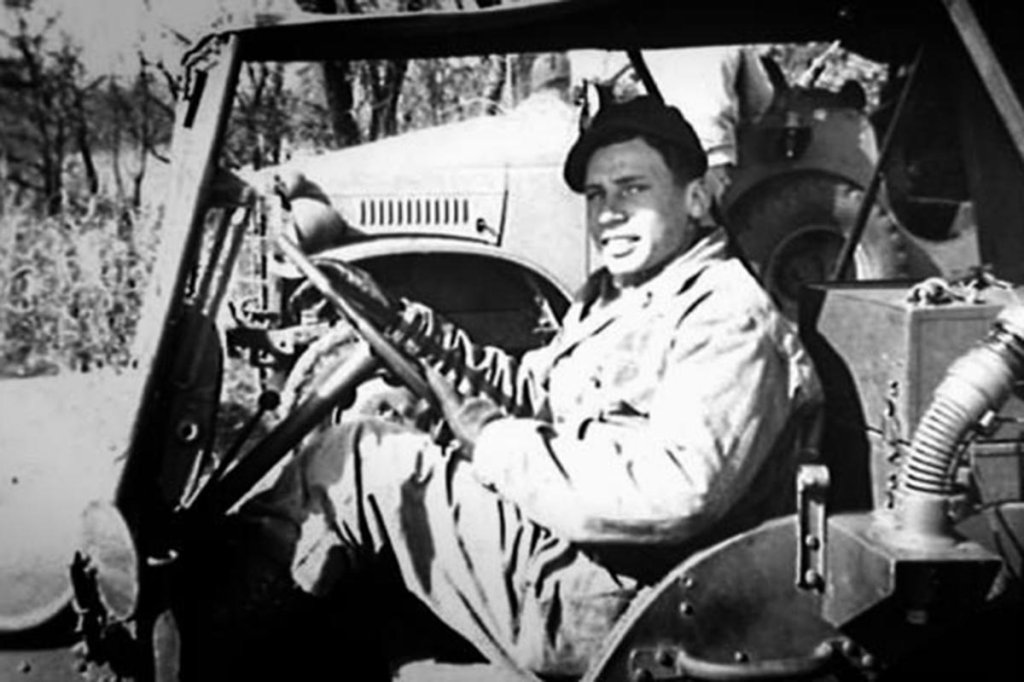
Born Melvin James Kaminsky on the family’s kitchen table in New York on June 28, 1926, Brooks’ memories of serving in the United States Army remain vivid. Even as he approaches his 100th birthday later this month, Brooks still recalls defusing land mines and booby traps, and building erector-set type bridges to allow troops to cross.
All the while, he never lost his comic sensibility, even in difficult moments.
“It’s either a gift of prescience, intelligence, or just plain dumb,” Brooks once told the TV Time Machine. “You’re in a war. Just take cover. I always thought it was kind of like a newsreel anyway. I saw everything in terms of show business.”
Brooks didn’t grow up with much. His father died when he was 2 years old, and with Brooks and his three older brothers in the household, his mother struggled to provide for the household. The Great Depression made it harder.
Still, Brooks somehow persevered. The Army drafted him in 1944 and sent him to Virginia Military Institute for the Army Specialized Training Program. The instructors taught Brooks stuff he never did before, such as ride a horse and hold a saber. From there, Brooks moved on to basic training at Fort Sill. During his time in Oklahoma, he learned about field artillery, operating a radio, and how to put cigarettes in his ears to protect your hearing.
Building Bridges and Defusing Mines
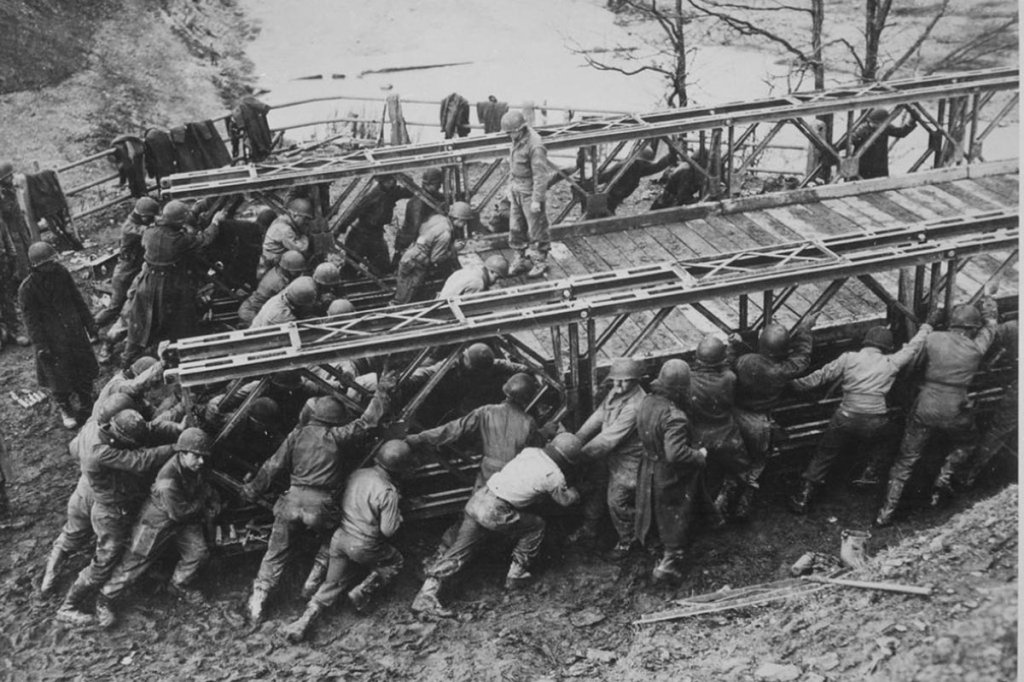
Brooks went overseas believing he was to serve as a field artillery observer. Instead, the Army attached him to the 1104 Engineer Combat Battalion.
Brooks and others in the battalion learned to construct so-called Bailey bridges on one side of a river, then maneuver them to span the divide above the water. He also participated in deactivating mines, although—to the comedian’s ever-loving relief—he wasn’t the one actually doing the defusing.
That job fell to the one guy in Brooks’ platoon with the knowledge (and courage) to perform that highly dangerous work.
“I couldn’t really see exactly what he was doing, because we were a good 20 yards away hunkered down beneath our steel helmets,” Brooks told HistoryNet. “Lucky for me, our expert always defused them without a mistake.”
Brooks’ battalion disarmed Teller mines as well as “Bouncing Betty” S-mines. They also went into buildings in search of booby traps. Those were not the only instances in which Brooks—who participated in the Battle of the Bulge—and his unit found themselves in harm’s way. Because of the nature of war, they were forced to fight five times as infantry and sustained casualties as a result.
Another time that the Allies were in close proximity to the Germans, Brooks heard the Nazis spewing propaganda through their bullhorns in the distance. He couldn’t resist. Brooks found a bullhorn of his own and began loudly singing Al Jolson’s “Toot, Toot, Tootsie! (Goodbye)” to the Nazis.
Jolson was Jewish.
Brooks’ singing shocked the Germans. They didn’t know what to do at first, until a few broke out in applause.
A Proud Military Man
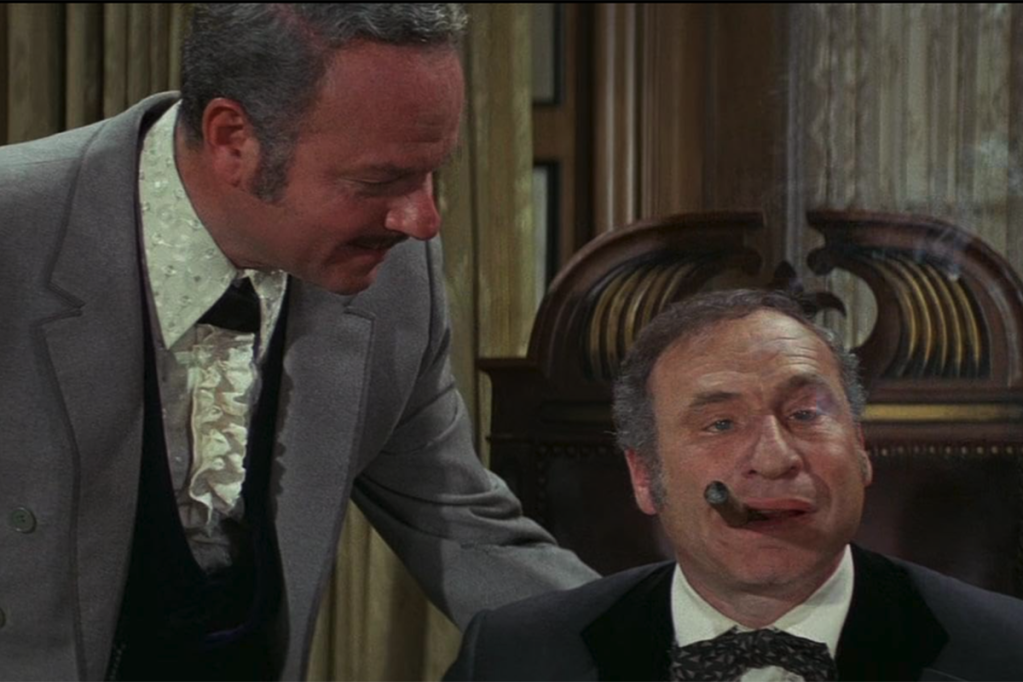
Brooks stayed in the Army long enough to entertain the troops after the war before he received an honorable discharge. He then produced such classics as “The Producers,” “Blazing Saddles,” and “Young Frankenstein,” among many others.
Even as he nears his second century on Earth, Brooks is not completely slowing down. He is working on a sequel to his 1987 film “Spaceballs.” “Spaceballs: The New One” is due in theaters in 2027.
Brooks is a comic at heart but remains a man proud of his military service. Without wearing an Army uniform, Brooks probably never would know what “shit on a shingle” is or why someone would eat something with such an unappetizing name. (He never acquired a taste.) He alsos never would have the experience of going to the bathroom in a latrine full of other soldiers.
“In the Army, it was easy,” Brooks told HistoryNet. “You put on the same clothes every day. But I had actually grown about an inch and put on about 20 pounds while I was overseas, so I had to get a whole new wardrobe. My favorite wing-tipped, black-and-white shoes were heartbreakingly too small to wear anymore.
“I had grown up.”
Don’t Miss the Best of We Are The Mighty
• Hollywood can bridge the divide between civilians and the military. It doesn’t.
• ‘Top Gun: Maverick’ actor and Vietnam veteran James Handy killed at 81
• An Afghan SOF veteran explores America and the universal bonds of special operators in ‘Noori’
Featured
Loading comments…
Comments couldn’t be loaded. Please refresh the page.