
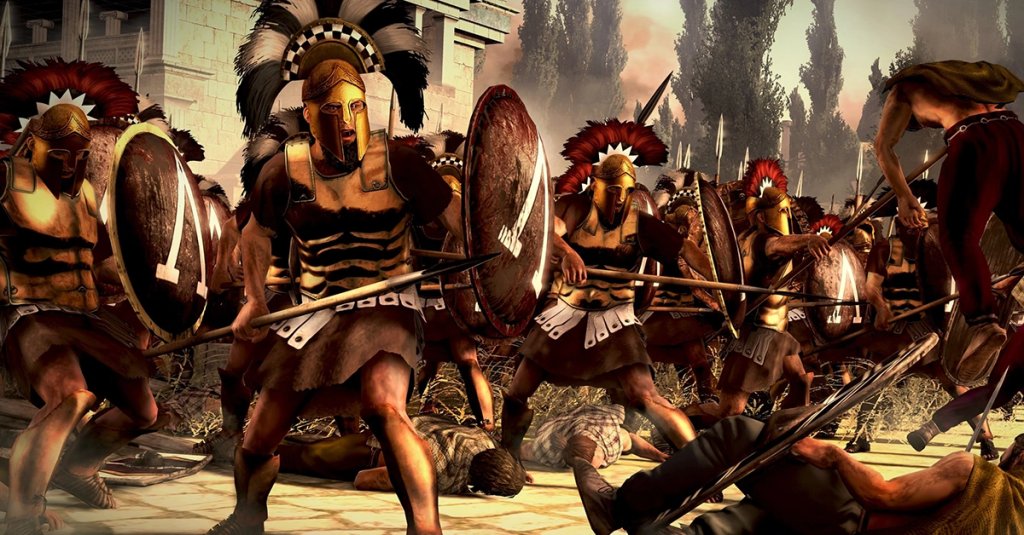
They say you should never meet your heroes. In the U.S. military (and American law enforcement), few cultures are as mythologized, idealized, or as idolized as the ancient Spartans. Author Andrew Bayliss introduces us to the real Sparta in his new book, “Sparta: The Rise and Fall of an Ancient Superpower.”
Also Read: An ‘undead’ general thrashed the Spartans after his execution
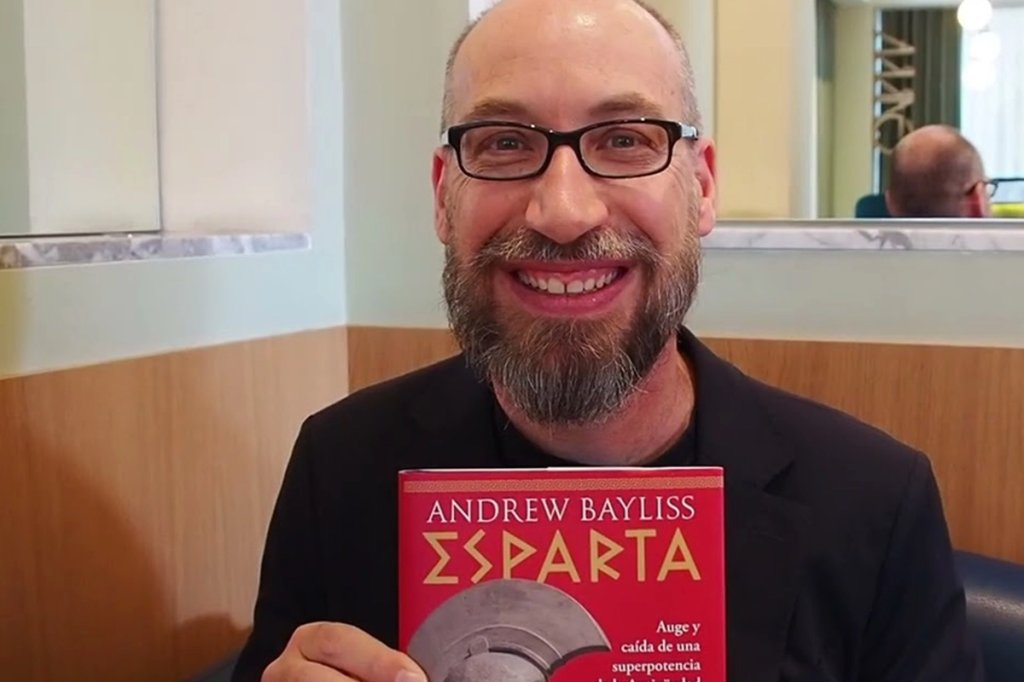
Bayliss is a Associate Professor of Classics, Ancient History and Archaeology at the University of Birmingham. He’s been obsessed with Ancient History after learning about the last stand of the 300 Spartans at Thermopylae at age 12. You know he’s not just being contrarian; he’s also a big fan. The truth is thathe full picture of Sparta doesn’t live up to the usual ideals.
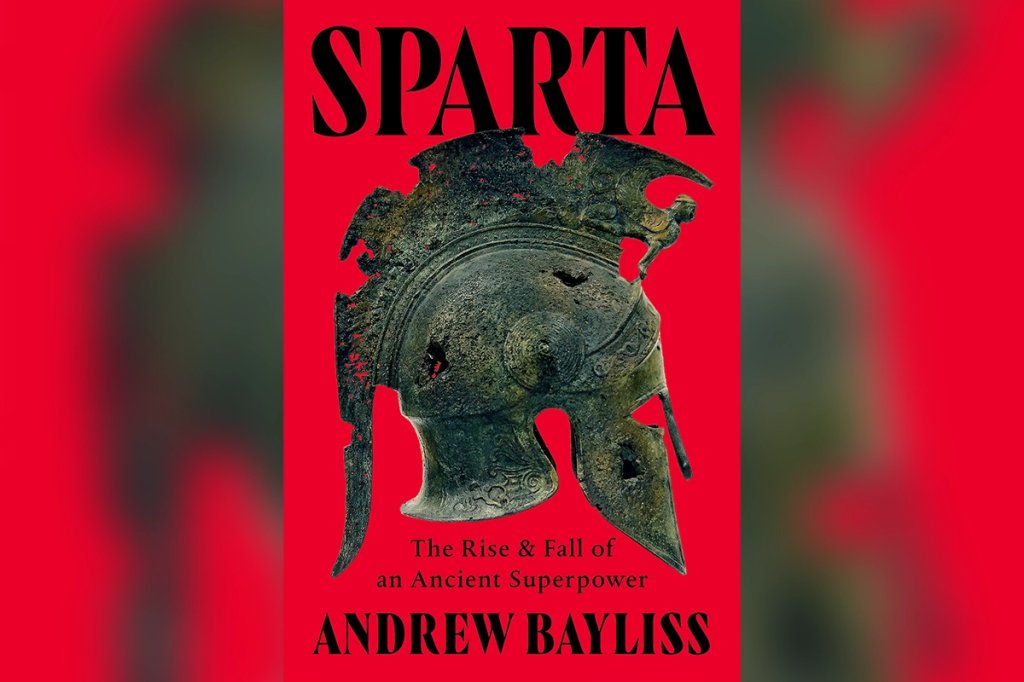
The Spartans, it turns out, were a brutal, contradictory, and in some ways surprisingly progressive society; a far cry from the warrior culture that has been mythologized for centuries.
Bayliss previously authored the Oxford University Press “Very Short Introduction” on the Spartans, but found the constraints of that format pushed him toward something bigger.
“It’s a hard ceiling,” he said of his earlier work. “So if you want to add something more exciting in, you have to cut something out. So this was an opportunity to sort of tell a much bigger story.”
And the bigger story, it turns out, is a lot more complicated than “300” (neither the movie nor the book) let on.
The Myth and the Reality
For military audiences especially, Sparta carries enormous cultural weight. Spartan iconography shows up on unit patches, gym walls, trucks, and tattoos across the U.S. armed forces. But Bayliss says the version we’ve absorbed is filtered through 2,500 years of selective storytelling.
“We usually encounter them via Thermopylae, and it’s such a fantastic story,” he told We Are The Mighty. “It creates an idea of the Spartans that’s kind of distorted. I wanted to show why they were like that then, but also show how often they were doing dodgy things as well.”
When pressed on what he means by “dodgy,” Bayliss doesn’t pull punches. The popular culture versions of Thermopylae, he argued, systematically erase the Helots, the enslaved population whose forced labor made the entire Spartan warrior lifestyle possible.
“They made a lot of noise about freedom, but it was their own freedom that they cared about,” he said. “They were happy to trample on other people’s freedoms. When the Spartans were chosen to lead the Greeks against the Persians, the Helots might have raised a wry eyebrow at that one.”
![300 - Official Trailer [HD] thumbnail](https://i.ytimg.com/vi/UrIbxk7idYA/hqdefault.jpg)
300 – Official Trailer [HD]
The Spartan Soldier
Where “300” and the popular history of the Spartan warrior ethos really diverge from reality, Bayliss argues, is that the “professional soldier” label doesn’t really fit.
“They’re not professional soldiers, and they’re not dramatically different on a certain level than any ancient Greek citizen,” he said. “Any Greek from any city-state would have been expected to fight. What set Spartans apart was time: because they weren’t working, they trained more and became physically formidable.”
In Bayliss’s framing, they were less Special Forces and more “gentlemen of leisure.”
“They’re basically living the life of Homeric heroes in some ways,” he said.
That said, he pushed back on the idea that unpaid service means “amateur.”
“If I went into a modern army camp and said, ‘Hey, you guys don’t spend more than 10% of your time physically fighting, you’re not professionals,’ it’s not going to go over well there,” he said. “Spartans were the closest thing to professionals until professionals happened.”
By this, he meant professional soldiers happened with the rise of Philip of Macedon’s professional army, decades after Spartan dominance ended.
What the Popular History of Sparta Gets Right
For service members who identify with Spartan values, Bayliss had a measured assessment: it’s both accurate and inflated.
“There is a certain element of their training and their behavior that makes complete sense when you’re thinking from your perspective,” he said.
The Spartan schooling system, which began at age seven and ran through age 30, was built on obedience, coordination, trust, and physical conditioning. The Spartans called themselves the homoioi, “the equals,” and they aimed for homonoia—concord, solidarity.
“I think the physicality of their lifestyle, hanging out in the gymnasium, boxing, wrestling, talking, hunting, drinking with restraint in the evenings; I think it’s that kind of brotherhood that I think would have been in the background of the military in its broader sense in modern terms for sure.”
What’s Worth Borrowing
Bayliss pointed to two aspects of Spartan society he thinks deserve more modern attention. The first: their education system made no distinction between rich and poor.
“Even Aristotle, who didn’t like much of anything of Sparta’s, praised them for this,” Bayliss said. “He said the rich and the poor have the same upbringing.”
The second is more surprising. Spartan women held unusually extensive property rights for the ancient world: daughters inherited land alongside brothers, meaning roughly two-fifths of Spartan land was owned by women.
“That is, globally speaking, surprisingly recent,” Bayliss noted, with a dry jab at how recently comparable laws came to the United States.
The Sparta of “300” and the Helot Test
“’300’ is a faithful reconstruction of Frank Miller’s graphic novel ‘300,’ and as a piece of entertainment, it is fantastic,” Bayliss said. “As a historian, it’s not so good.”
He’s warmer on Marine Corps veteran Stephen Pressfield’s novel “Gates of Fire,” calling it a story that “doesn’t leave out the bad bits.”
“The Helots are there, the brutality is there,” Bayliss said. “But he manages to make the Spartans the good guys of the story because he’s telling the story of Thermopylae. I think the connection there is he was a Marine, and when he read Herodotus and the story of Thermopylae, he understood who these guys were.”
For readers who want a quick litmus test for any Sparta content they encounter, Bayliss offered a simple one.
“If it doesn’t mention the Helots, it’s probably not the most well-researched piece.”
Frank Miller, for his part, apparently agreed.
“There was an interview I saw with Frank Miller where he said, ‘Well, of course I had to leave out the helots,'” Bayliss recalled. “‘No one’s going to think they’re the good guys if I have them as slave owners.'”
Don’t Miss the Best of We Are The Mighty
• The best in military entertainment from 2025 (and what sucked)
• Wanna make movies? Here’s a way to start for a dollar.
• ‘Jimmy’ celebrates World War II hero Jimmy Stewart for America’s 250th with a new trailer



Loading comments…
Comments couldn’t be loaded. Please refresh the page.