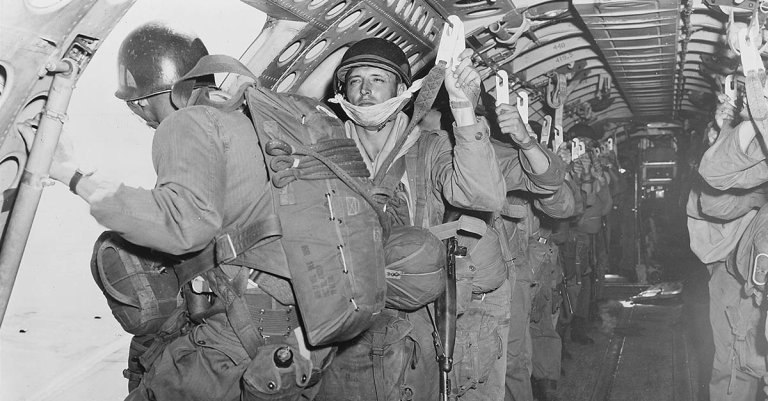
If “Stranger Things” feels less like pure science fiction and more like a greatest-hits album of government bad decisions, that’s because, in part, it is.
Unlike a Demogorgon, the show didn’t jump onto our screens fully formed from the Upside Down. It crept out of the Pentagon’s file cabinet containing documented instances of Cold War paranoia, secret line items, questionable ethics, and experiments that really should have involved more oversight and fewer psychedelics.
Related: Why the US military always loses in a fight against zombies
Among others, “Stranger Things” most prominently draws from Project MKUltra and the unconfirmed Montauk Project, combining documented history with conspiracy-laden folklore to create something that feels both otherworldly and uncomfortably plausible.
What actually happened?
Project MKUltra was a CIA program launched in the early 1950s to explore mind control. The agency was concerned that foreign adversaries had or would master psychological manipulation, so it did what any rational institution would do under pressure: secretly drug people without their consent to see if they could recreate the phenomenon.
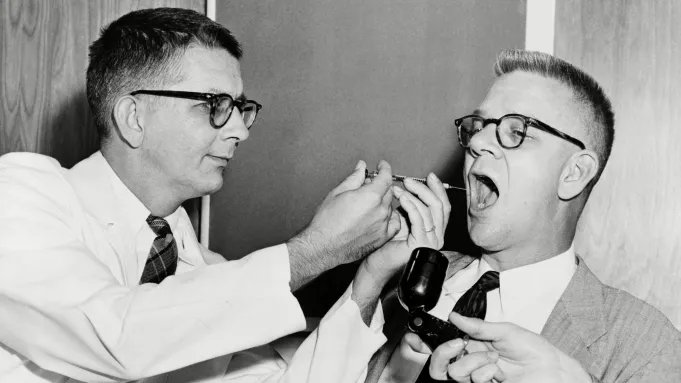
As Matt Duffer, one of the brothers at the helm of the show, told Vulture, “Stranger Things” came about because “… we were talking about some of the mysterious government experiments that we felt were happening at the tail end of the Cold War, right when rumored [projects] like MKUltra were ramping down.”
Over two decades, MKUltra experimented with hypnosis, sensory deprivation, isolation, psychological abuse, and liberal doses of LSD administered to everyone from soldiers to prisoners, psychiatric patients, and civilians.
The experiment is echoed in “Stranger Things,” manifested in a sterile, white-padded-cell school for supersensory, unnamed but rather numbered children. Our show’s heroine, “Eleven,” is one such hostage child whose skills are tested daily across an eerie rainbow playroom, a deprivation tank that simulates an utter void, and dim rooms where the kids inflict psychokinetic torture upon each other. These are straight out of MKUltra’s playbook.
The leader of the experiment in the show, known to the children only as “Papa,” believed that trauma could unlock extraordinary abilities. This interest in mind control was the prevailing logic driving the real-life program. The children in “Stranger Things” may have developed psychic powers, but MKUltra’s real-world legacy is far less “successful”: resulting only in broken lives, erased records, and a U.S. government insistent it had learned its lesson.
Then there’s the Montauk Project, which is where history ends, and the rabbit hole (or Upside Down) opens.
The Duffer brothers had early designs on calling the show “Montauk” and setting it not in Hawkins, Indiana, but on Long Island, New York.
The Montauk Project refers to a conspiracy theory about secret experiments conducted at Camp Hero, a now-defunct Air Force base on the eastern tip of Long Island.
Officially, Camp Hero was a radar installation.
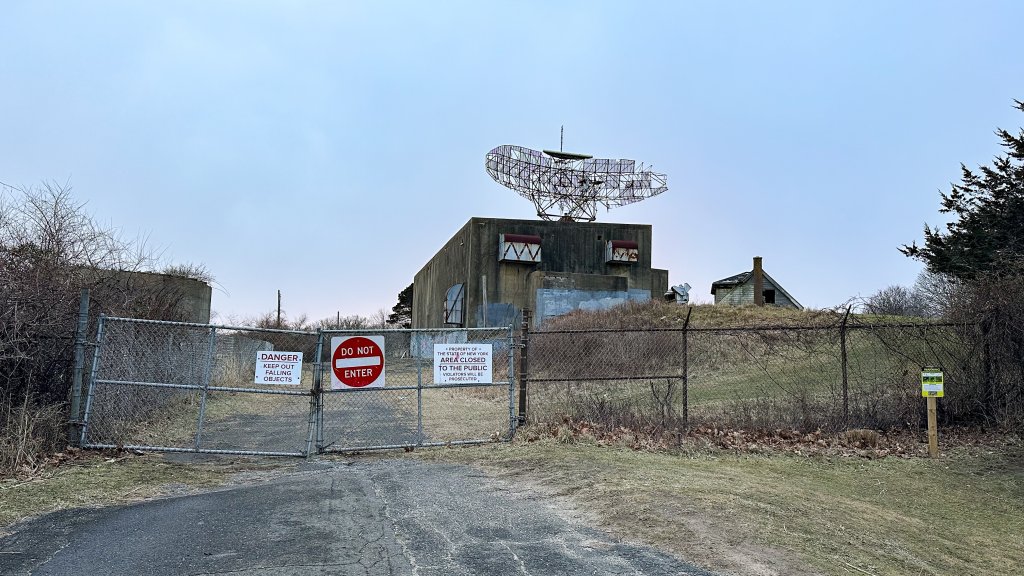
Unofficially, and according to the most ardent conspiracy theorists, self-proclaimed whistleblowers, and more recently, internet lore and speculation, the Montauk Project was a much more clandestine continuation of MKUltra under a new name. Mind control was only the beginning. Psychic amplification, time manipulation, teleportation, and interdimensional travel were also part of the mission.
But Camp Hero owes this reputation less to something historical and more to a 1992 conspiracy book with a rather academic-sounding title: “The Montauk Project: Experiments in Time,” by Preston B. Nichols and Peter Moon.
The book didn’t just add legitimacy to local lore—it seemingly confirmed what people in and around Montauk already felt in their bones. The shuttered military base, it suggested, wasn’t just a Cold War relic quietly rusting by the sea. It was the alleged epicenter of one of the U.S. government’s most secretive and morally questionable research efforts.
On Montauk, a local guide for the area, reports that rumors abound that at Camp Hero, “…extra-terrestrials assisted the CIA with mind control and inter-dimensional travel that opened portals to other dimensions and let in beings from beyond that still roam the site. It is reported the aliens lived in the camp’s underground bunkers. Most disturbing are reports that children were used in the mind control experiments.”
Crucially for “Stranger Things,” the Montauk Project mythology centers on children as test subjects, echoing MKUltra’s unethical experimentation while dialing the horror up several notches. These stories claim children were abducted, conditioned, and used to manifest physical beings through psychic projection—a concept that maps neatly onto the villainous creatures Vecna conjures in the Upside Down.
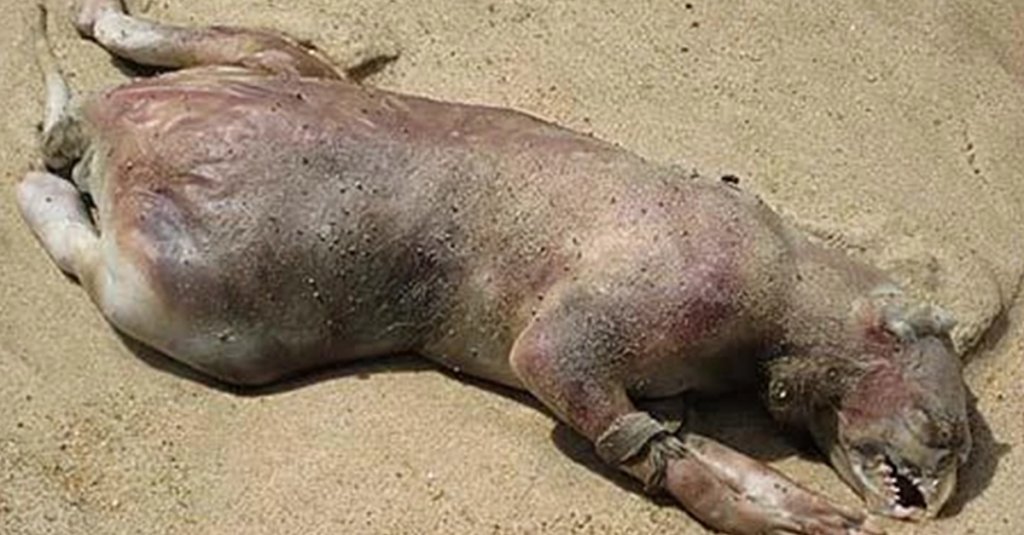
The infamous “Montauk Monster,” an alleged creature said to have escaped the base, feels like a beta test for Hawkins’ Demogorgons, Vecna, and the Mindflayer. Whether it was a hoax, a raccoon, or proof that no one had a containment plan depends on how deep into the forums you’re willing to go.
What makes “Stranger Things” so compelling is how it stitches these two threads together. MKUltra provides credibility—proof that the U.S. government really did experiment on minds, harm people, and attempt to cover it up. But the Montauk Project provides legend—the idea that those experiments didn’t stop, they just evolved into something stranger, darker, and harder to explain, and ultimately, more covert than ever before.
Belief in the Montauk Project conspiracy isn’t required to understand why it resonates. After MKUltra, the idea that there are secrets U.S. citizens will never fully uncover doesn’t feel paranoid; it feels realistic. “Stranger Things” simply found its niche in that space between fact and fear, where potentially innocuous government activity becomes as unsettling as any monster.