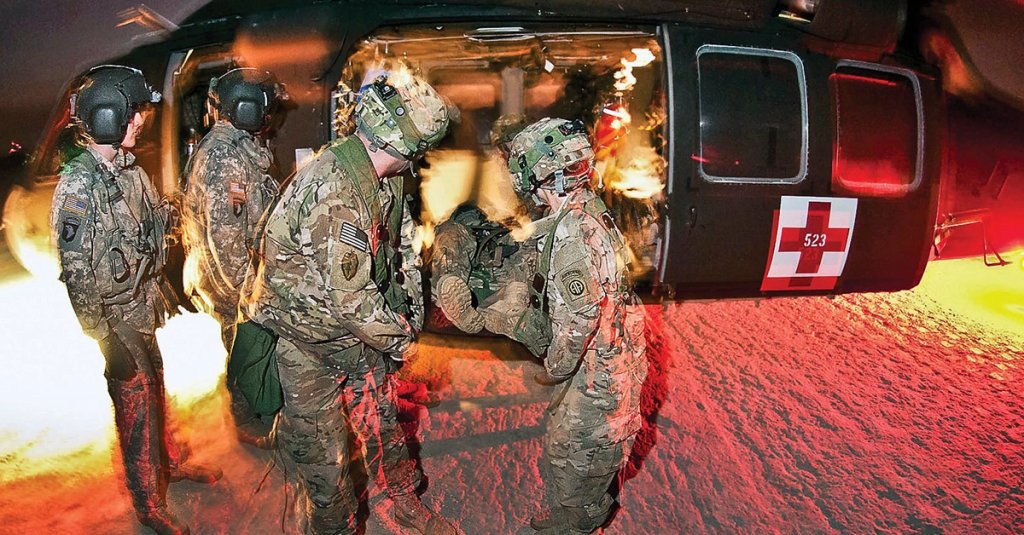
The sound of a helicopter’s rotors beating the air above a highway pile-up on the I-95. A paramedic applying a tourniquet to a driver’s leg. A neurologist at a Level I trauma center is reading a scan from a rural clinic miles away.
To a civilian observer, these are just standard parts of emergency medicine. But to a historian, they are echoes of a system birthed in combat.
Related: 6 military technologies that helped NASA ‘sniff’ for martians
The military’s greatest gift to modern medicine isn’t a specific gadget or a single drug; it’s a ruthless, laser-focused obsession with time. In the chaos of recent conflicts, military planners and medics didn’t invent the idea of the “Golden Hour”—trauma surgeons had been preaching it for decades—but they did something new: they turned it into a hard standard and built an entire system around meeting that 60-minute mark.
They called it the “Golden Hour.” And the infrastructure built to win that race against the clock has quietly revolutionized how civilians survive, heal, and thrive today.
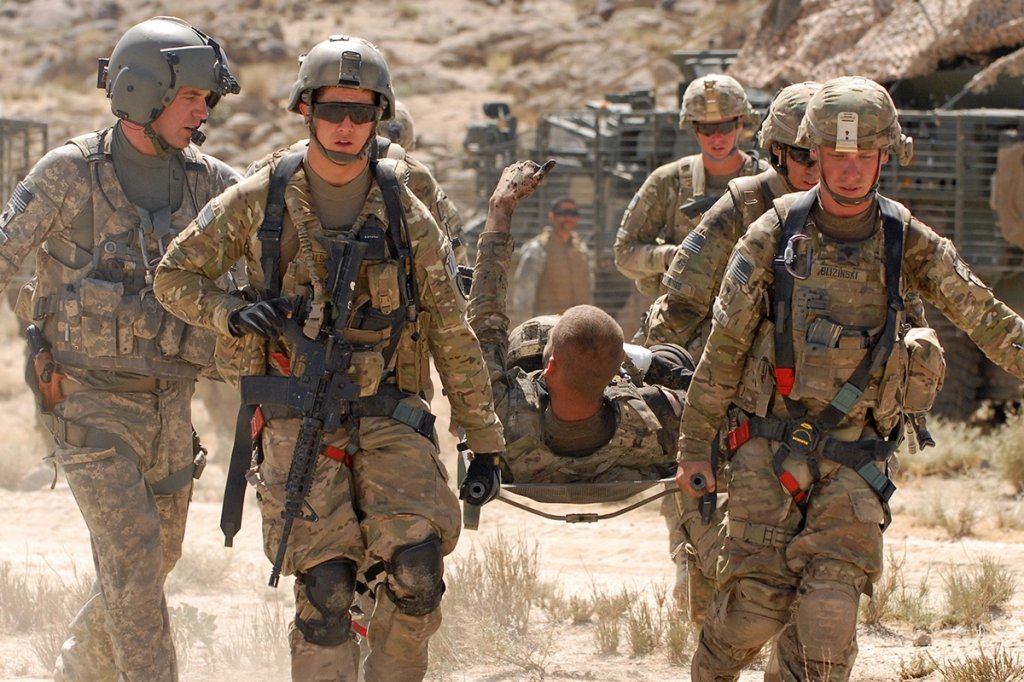
The First 60 Seconds: Winning the Fight Against Time
In the early years of the Global War on Terror, the military confronted a brutal reality: too many battlefield deaths were happening within minutes of the injury, long before a surgeon could intervene. The “Golden Hour” doctrine dictated that survival rates plummeted if a patient didn’t reach care within 60 minutes.
To fight this, combat medics helped completely overhaul pre-hospital care. Through TCCC guidelines, research, and rapid fielding, they pushed out new tools like modern hemostatic dressings, pelvic binders, and, most importantly, the modern tourniquet. For decades, civilian doctors treated tourniquets like malpractice, terrified of nerve damage. Combat medics ignored the mainstream, applied the straps, and brought troops home. The data was undeniable.
Today, that battlefield data has rewritten civilian EMT protocols. If you walk into a standard American ambulance or see a “Stop the Bleed” kit in a public school, you’re looking at gear and protocols directly shaped by combat casualty care data from Iraq and Afghanistan.
The Next 30 Minutes: Erasing Geography
Once the bleeding is stopped, the clock does not stop ticking. The next challenge is terrain and distance: How do you get big-city care to a remote location?
The military’s answer was to erase the distance, first physically, then digitally.
This began with the “Dustoff” pilots of Korea and Vietnam. The military standardized aerial medical evacuation, proving that flying wounded troops directly to surgical units saved lives at scale. During Vietnam alone, Army helicopters evacuated hundreds of thousands of patients. That bold experiment underscores every civilian “Life Flight” helicopter that lands on a highway today.
But sometimes, you can’t move the patient fast enough. So, the military moved the doctor.
Long before the pandemic made video calls the new norm, military doctors were using satellite links to consult on critical cases thousands of miles from the front lines. The VA and DoD were pioneers in this space, and their early adoption set the foundation for the massive telehealth infrastructure that now serves millions of veterans and civilians remotely.
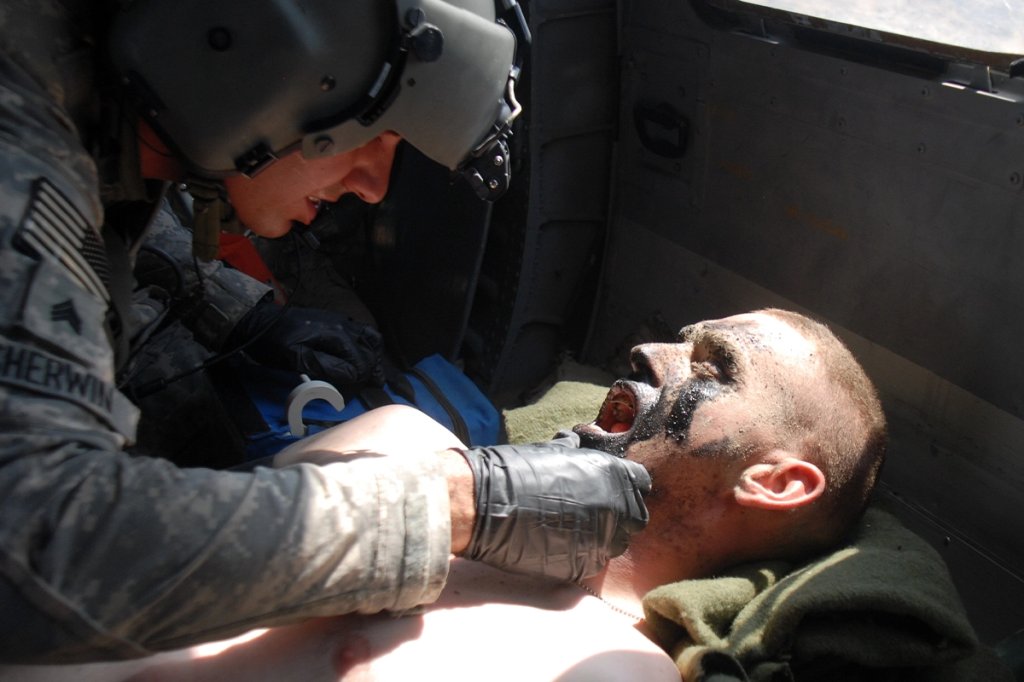
The Long War: Healing
The “Golden Hour” saves a life, but the war doesn’t end when the patient is stable. One of the most complex legacies of modern warfare is the focus on invisible wounds, specifically Traumatic Brain Injury (TBI) and PTSD.
Because Improvised Explosive Device blasts were so common in recent conflicts, the DoD and the VA launched extensive research initiatives into neurology. By tracking hundreds of thousands of TBI diagnoses over two decades, researchers created a large dataset that could revolutionize care.
This investment in brain science fed into a wider wave of experimentation — everything from neuromodulation and deep-brain stimulation trials for severe PTSD to noninvasive brain-stimulation paired with virtual reality exposure therapy. It’s allowing for crossover in diagnostic imaging and neurofeedback, by bleeding over into civilian care, offering actual hope for car crash survivors, athletes with concussions, or even trauma victims who never wore a uniform.
The Next Leap: From the ‘Golden Hour’ to a ‘Zero-Second’ System?
The innovations of the last 20 years were about reacting to injury faster. The breakthroughs of the next 20 years will be about predicting it. The military’s goal is to move from the “Golden Hour” to a “Zero-Second” system, built on technology already under development.
Forget a simple fitness tracker like the ones you’ll see service members wearing on military installations around the world. Imagine every soldier is issued a device containing a “Digital Twin”, a living, predictive AI model of their body, running 24/7 on a secure server. This concept is already being explored by researchers using digital human models to predict injury risks and personalize training.
In this near-future scenario, when a soldier is caught in a blast, the system knows and responds in real time. Before the medic even arrives, an AI agent has cross-referenced the blast data with the soldier’s biometrics against thousands of previous cases uploaded to its knowledge base.
Now, combine that predictive power with augmented reality. Current research programs are developing AR systems that allow medics to visualize a patient’s internal anatomy, literally seeing the injury beneath the skin using predictive visualization. Pieces of this are already in motion—digital human models, wearable blast sensors, AR-guided procedures—but knitting them into a seamless “zero-second” system is still a research problem, not a fielded capability.
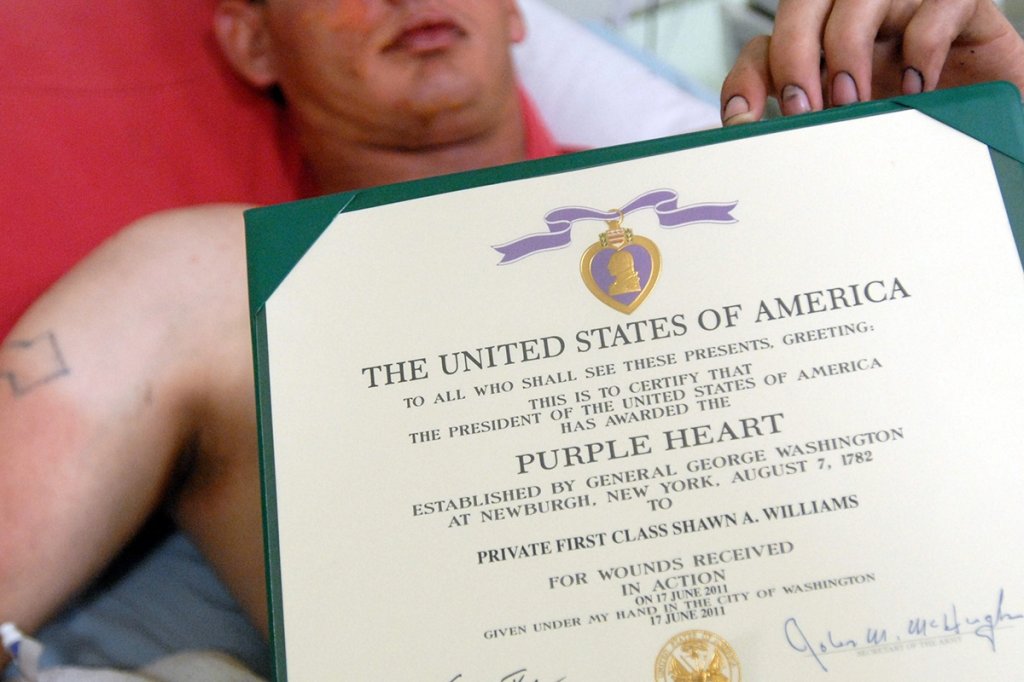
We often think of military innovations as distant or destructive. But the reality is that the modern emergency room is a museum of military lessons learned the hard way. They were made possible thanks to a mindset forged by military medics who refused to bend to doctrine or let the clock beat them.
In 15 years, “Zero-Second” tech might guide a civilian EMT through a mass-casualty event or alert a construction worker to a concussion before they ever stand up.
Fifteen years seems distant; battlefields upon which these ideas are nurtured will feel far away as well, but their impact on you or your loved one’s survival is closer than you might think.