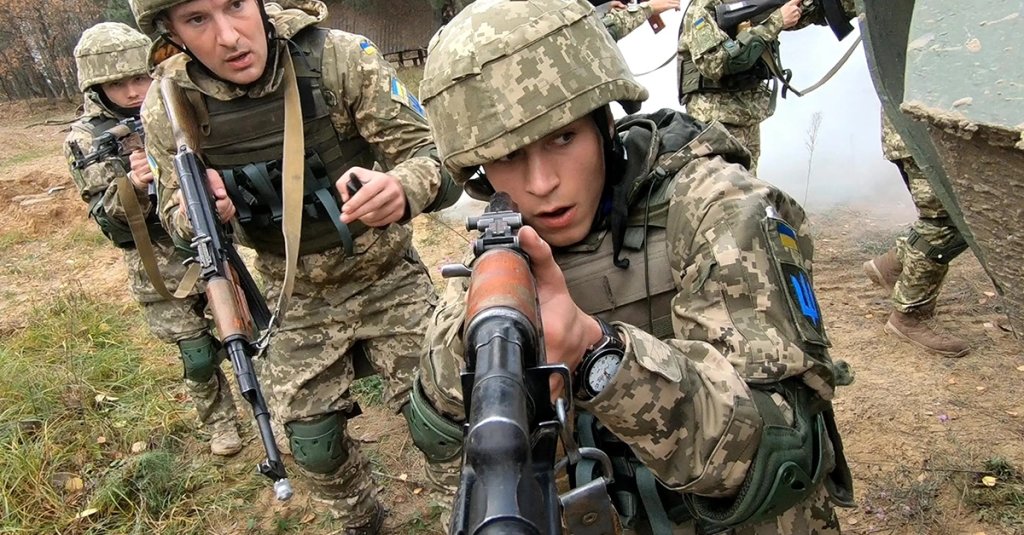
There’s a running dialogue just under the surface of the Russo-Ukrainian War. In a war where each side has achieved a stunning amount with drones, why are there still infantry soldiers being forced into a meat grinder on the frontlines?
What are the Russians/What are the Ukrainians? Stupid?
Related: Wounded Ukrainian soldiers with bionic arms want to return to the front lines
No. Neither side is fully stupid. Even though Russia seemed to be trying to prove itself that way for most of 2022. Each side has figured out how to do amazing things with their drones. And the Russo-Ukrainian War will almost certainly go down in the annals of history as the moment when drone warfare fundamentally changed. However, there are still some things that drones cannot do, but infantry can, just as there are things drones can’t do that artillery or manned aircraft can.
Infantry’s long history as essential workers
So, what does an infantryman do on a battlefield where the drones fly so thick that fiber-optic cables are as dense as the grass that grows beneath them?
Well, the same thing they do everywhere else, they just do it much, much more carefully.
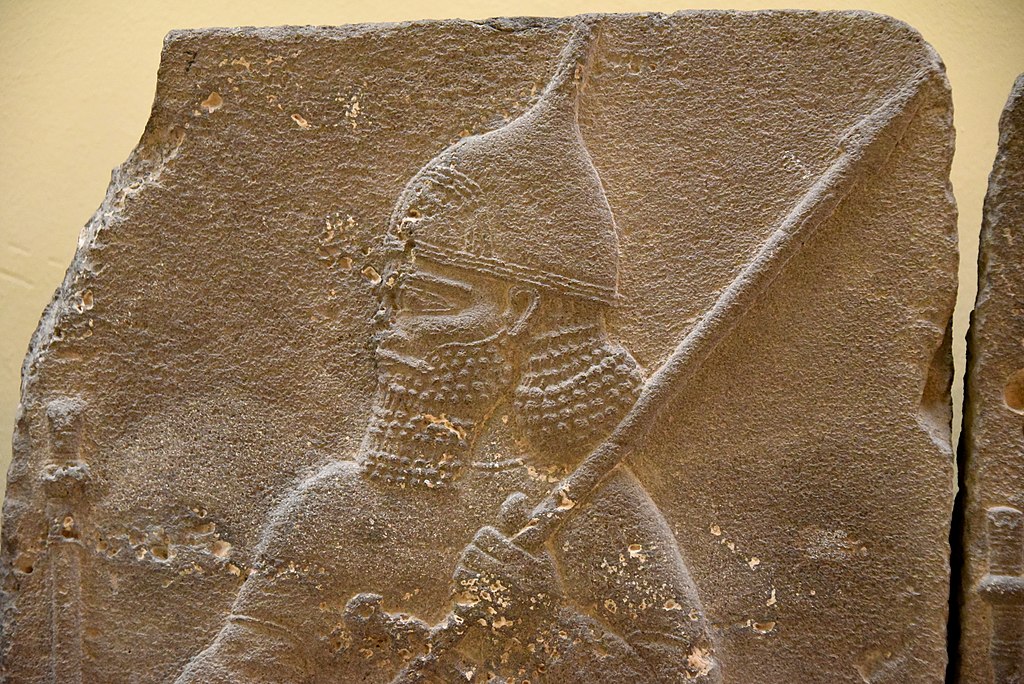
Infantry’s primary role is to close with and destroy the enemy. That’s it, in a nutshell. How that has worked has changed a lot over the last few thousand years. And yes, infantry as a concept, though not always named as such, is older than Greece.
The first known battle took place over 5,000 years ago. The primary evidence of that battle is the pockmarks left by foot soldiers inside a village, who traded stones hurled via slings with the foot soldiers attacking that village. That’s the type of armed skirmish that any infantryman today could recognize and plan (if you’re curious, the battle took place near the place where Turkey, Iraq, and Syria’s borders meet, and the attackers likely won).
Infantry has evolved a lot in 5,000 years
In the five millennia since, foot soldiers have formed the heart of most armies, with a few exceptions in the ancient Middle East and Far East, where cavalry formed the backbone of the force. The foot soldiers transitioned from being armed primarily with slings to swords, from spears to pikes, from shot to muskets, and now to rifles.
Over that time, infantry has stood up to, or lost against, horse archers, chariots, armored knights, catapults, rockets, cannons, actual elephants, machine guns, tanks, and so, so much disease, pestilence, and famine.
The entire time, infantry has remained essential for a simple reason: It’s not your land unless you hold it after the battle, and the person holding it when the dust clears will almost certainly be an infantryman.
So what is infantry doing on drone-saturated battlefields?
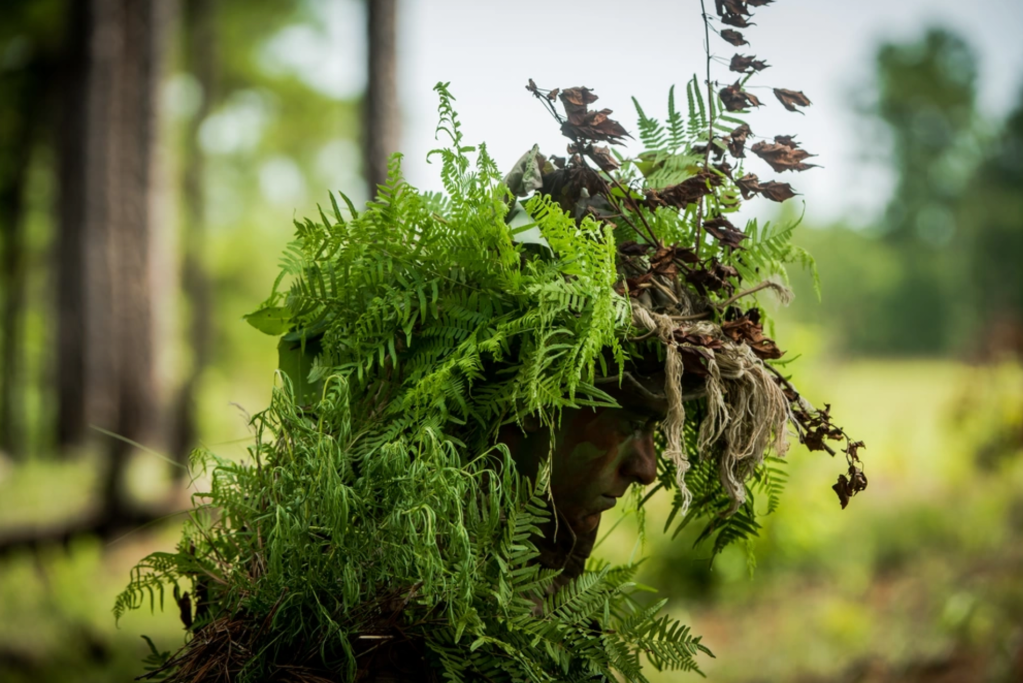
The job of a modern infantryman is, of course, fraught with danger. While that has nearly always been the case, (infantry is often one of the most dangerous jobs in any given war, with rare exceptions like in World War II where strategic bomber, submariner, and merchant mariner were all more dangerous), being a maneuver force on a battlefield absolutely saturated with cameras is extra dangerous. There’s nowhere to hide when there are literally hundreds of cameras in the air.
Infantry still forms the backbone of most major assaults from either Russian or Ukrainian forces. Russia is currently pushing the line harder than Ukraine (We love you, Ukraine, and always hate to admit when Russia is advancing, but, um, we can all look up the maps and see Russia’s tiny, tiny advances). Those Russian assaults often include “infantry assaults” or “infantry infiltration” of Ukrainian lines. Ukrainian defenses always include their own dug-in infantry. When Ukraine attacks Russia, it usually relies heavily on mechanized infantry delivered via Bradleys and similar vehicles. Ukrainian troops then dismount to hit Russian-held defenses.
Early in the war, assaults in either direction were largely infantry affairs, with artillery supporting each side. That’s still the case, but drones have been of increasing importance since 2022, and reports from the frontline frequently include some description of how infantry has to plan to come under assault within minutes of an attempted move.
Again, hundreds of cameras.
Infantry are now enabled or pinned down by drones as much as any other asset
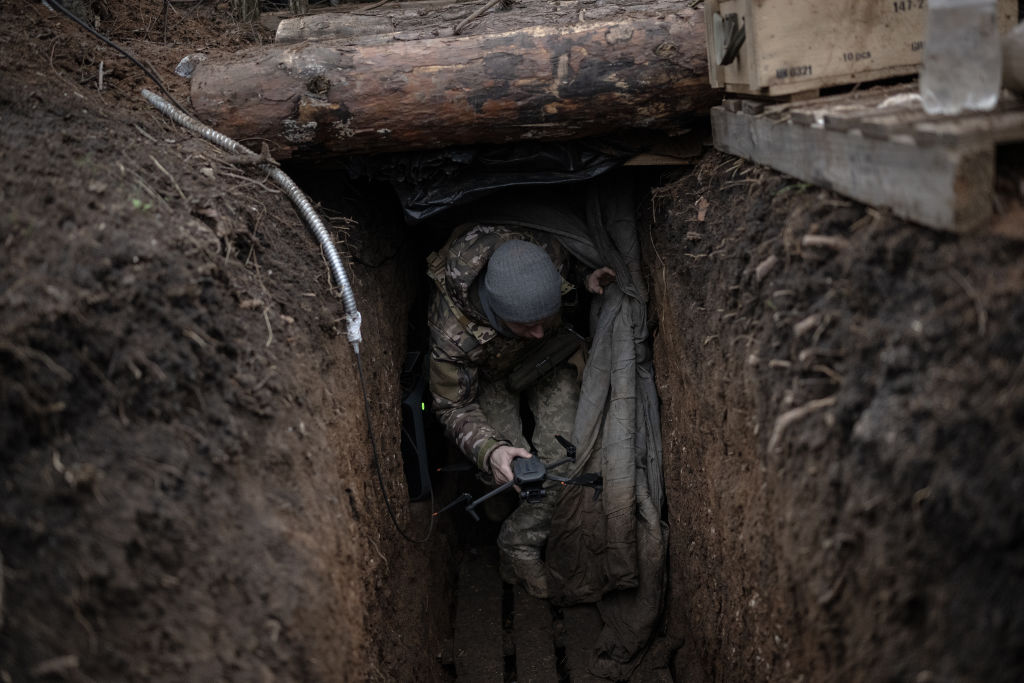
Each side operates hundreds of drones at a time in a variety of missions. So an infantry unit patrolling its own territory or attempting an incursion should count on facing drones: In the air as reconnaissance assets, in the air as a loitering munition, hidden on the ground or in trees to serve as an ambusher or a mobile mine, as a spotter for artillery, or as the forward eyes of the enemy’s defenders or skirmishers.
That’s why many infantry units either have some embedded drone operators or else work with drone units emplaced nearby.
There’s actually a well-understood historical parallel for this moment, though: World War I. In that war, an explosion in mortar and artillery fire, enabled by industrialization, made infantry assaults from prior conflicts no longer effective. It took years, and the invention of the tank, for military leaders to break the stalemate and really figure out what a foot soldier’s job was on a battlefield where entire grid squares could be wiped out from miles away.
Right now, leaders in Ukraine and Russia are constantly experimenting with how to fight against each other in the drone age. And militaries and defense contractors around the world are making guesses on what the next war will look like for the U.S., China, and other major powers.
There’s no question that modern drone warfare has changed combat, likely for a generation or more. But it’s also still true that infantry, the versatile Queen of Battle, is essential.