For most of the 20th century, unidentified flying objects existed at the edge of American imagination. They were part Cold War anxiety, part science-fiction fantasy, and part misunderstood natural phenomena. But over the last decade, public perception and government policy have shifted dramatically. What were once dismissed as “flying saucer stories” are now officially recognized as Unidentified Aerial Phenomena (UAPs) and treated as legitimate matters of intelligence, aerospace safety, and national security.
Related: Official CIA documents reported that a UFO turned a Soviet infantry unit to stone
This change did not occur overnight. It emerged from decades of sightings, decades of unanswered questions, and an accumulation of credible reports from military pilots, radar operators, and intelligence personnel. To understand why Congress, the Pentagon, and the intelligence community suddenly began treating UAPs with seriousness, it helps to revisit one of the earliest and most astonishing cases. The 1952 Washington D.C. UFO incident was an event that shook the nation’s capital and set a precedent for the government’s complicated relationship with unexplained aerial encounters.

A New Era of Transparency
In recent years, the U.S. government has adopted a more structured and open approach to UAPs. Instead of dismissing sightings out of hand, agencies now treat them as anomalies worthy of investigation. This shift can be traced to the release of military cockpit footage in 2017 showing objects that demonstrated extraordinary speed, acceleration, and maneuverability. The credibility of these videos, combined with testimony from Navy aviators, forced policymakers to acknowledge that the issue could no longer be relegated to science fiction.
As sightings continued to be reported and verified by advanced radar and sensor systems, the Department of Defense established the Unidentified Aerial Phenomena Task Force in 2020. Within two years, this effort evolved into the All-Domain Anomaly Resolution Office (AARO), designed to study not only aerial anomalies but also those detected underwater and in orbit. The shift carried an unmistakable message: these investigations were now part of mainstream defense analysis.
Congress reinforced this view by holding multiple high-profile hearings. Lawmakers pressed Pentagon officials on the nature of UAP encounters, the potential threat they pose to national security, and the need for pilot reporting systems free of stigma. Testimony from highly trained aviators, with some describing objects accelerating faster than human physiology could tolerate, captured national attention. The hearings signaled a powerful turning point: elected officials were no longer asking whether UAPs existed, but rather what they are and why they are appearing with greater frequency.
Yet none of this attention is without precedent. Decades earlier, the United States faced a similar moment when unexplained objects appeared not in the distant sky but over the heart of the nation’s capital.
The Roswell Incident
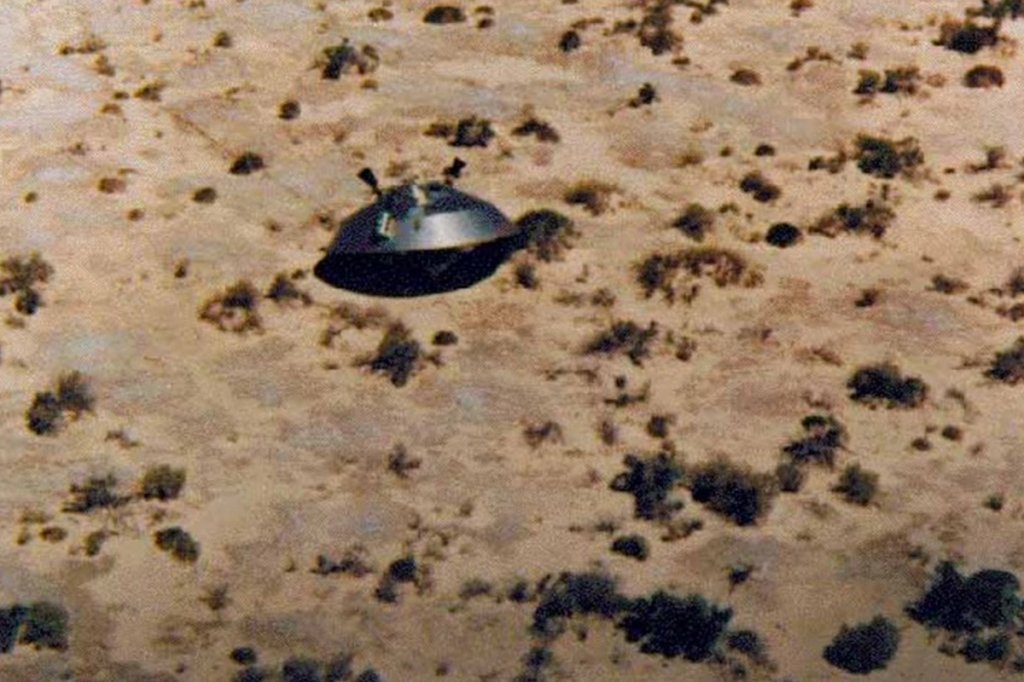
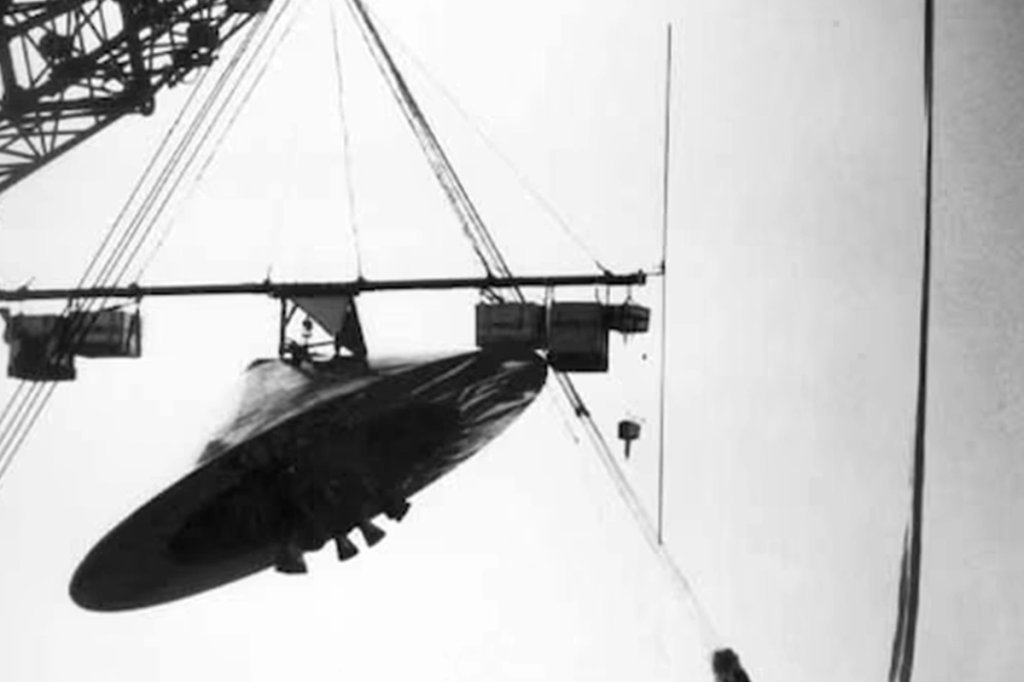
The story of Roswell, New Mexico, begins in early July 1947, when rancher William “Mac” Brazel discovered strange debris scattered across his property. The wreckage was unlike anything he had seen before: lightweight, metallic, unusually strong, and covered in unfamiliar materials. Brazel brought pieces to the local sheriff, who then contacted the Army Air Forces at Roswell Army Air Field. What happened next sparked one of the most enduring mysteries in American history.
On July 8, 1947, the Army released a stunning announcement: they had recovered a “flying disc.”
The press exploded with coverage. Headlines around the country proclaimed that the U.S. military had captured a crashed UFO. For a brief moment, the idea seemed almost officially confirmed. But within 24 hours, the military abruptly changed its explanation. The object, officials now claimed, was nothing more than a weather balloon.
The sudden reversal raised more questions than it answered. The initial declaration was unprecedented in its directness and felt too bold to dismiss as a simple misunderstanding. Soon, witnesses reported seeing unusual materials, strange inscriptions, and even rumors of additional crash sites. Over the decades, Roswell became the cornerstone of UFO folklore, prompting documentaries, government inquiries, and countless theories.
In the 1990s, the Air Force released reports stating that the wreckage was from Project Mogul, a top-secret Cold War program involving high-altitude balloons designed to detect Soviet nuclear tests. This explanation, while plausible, did little to satisfy decades of skepticism. Many remained convinced that something extraordinary had crashed outside Roswell and that the government’s shifting accounts reflected an effort to conceal the truth.
Whether weather balloon, Cold War technology, or something beyond human understanding, Roswell remains the event that ignited America’s modern fascination with UFOs. More importantly, it revealed how quickly official explanations can breed doubt when they change abruptly or fail to address eyewitness accounts.
A Sudden Invasion of the Unknown
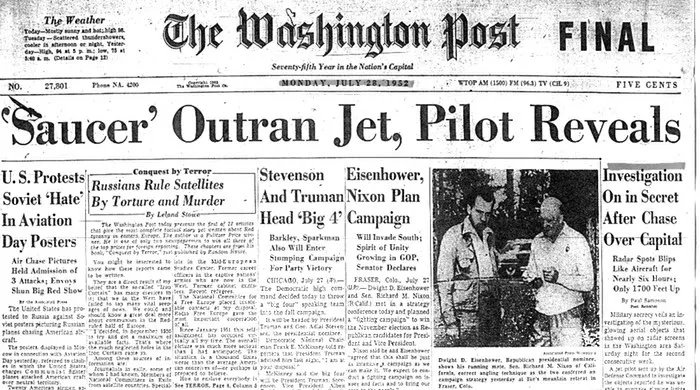
In the summer of 1952, Washington, D.C. became the center of one of the most extraordinary UFO events in American history. Over two consecutive weekends—July 19–20 and July 26–27—radar operators at both National Airport and Andrews Air Force Base detected dozens of unidentified objects moving across restricted airspace. These objects did not simply appear as static anomalies. They moved with purpose, accelerated rapidly, and changed direction in ways that defied the capabilities of any known aircraft.
Commercial airline pilots and air traffic controllers witnessed the same strange lights darting across the night sky. Some described them as glowing spheres or streaks of white light. What made these sightings impossible to dismiss was the simultaneous confirmation across multiple radar systems, all of which aligned with visual reports from trained observers.
The situation escalated to the point that the U.S. Air Force ordered fighter jets to scramble. Pilots made several attempts to intercept, but each time they approached the objects, they either vanished from radar or accelerated out of visual range. In some cases, radar operators reported that the objects seemed to circle behind the fighter jets, as if anticipating their movements. To those who monitored the situation firsthand, the objects displayed intelligence, control, and technology beyond anything the United States (or the world) had at the time.
The press soon learned of these encounters, and newspapers across the country ran sensational headlines about “flying saucers over Washington.” The proximity of the sightings to the White House and Capitol generated widespread concern. For many Americans, it felt as though the unknown had arrived at the center of American power.
Samford Faces the Nation
The growing anxiety compelled the U.S. Air Force to respond publicly. On July 29, 1952, the Air Force held a massive press conference, its largest since the end of World War II. The briefing was led by Maj. Gen. John Samford, Director of Air Force Intelligence, who addressed the nation with a steady, authoritative tone. His goal was to calm fears without admitting that the Air Force lacked definitive answers. He attributed the radar sightings to a temperature inversion, a meteorological condition in which layers of warm and cool air can bend radar waves, producing misleading returns. Visual sightings, he claimed, could be explained as misidentified stars or meteors.
Yet even in his attempt to reassure the public, Samford made a striking admission. He acknowledged that while most sightings could be explained, “a certain percentage” involved credible witnesses describing events that could not be dismissed as illusions or weather phenomena. He maintained that these unexplained cases did not pose a national security threat, but his statement, which was delivered on national television, left the door open to possibilities the Air Force could not fully address.
Newspapers largely accepted the temperature inversion explanation, and public interest cooled. But many of those directly involved, including the radar operators, the pilots, the intelligence officers, remained unconvinced. For them, the behaviors observed in the sky above Washington simply could not be reconciled with weather anomalies.

Maj.General John Samford 1952 Flying Saucers
The Washington D.C. incident became a foundational case in American UFO history, shaping how the government approached unexplained sightings for decades. For much of the Cold War, the military responded to UFO reports cautiously, often emphasizing conventional explanations before acknowledging uncertainty. Projects like Project Blue Book attempted to catalog sightings but often minimized their significance.
Today, the U.S. government’s posture is markedly different. The combination of modern sensor technology, pilot testimony, and transparency demands from Congress has created an environment in which unexplained aerial encounters are taken seriously rather than dismissed. Lawmakers have openly criticized past secrecy and demanded clearer reporting channels. Military pilots now report sightings without fear of ridicule. Intelligence agencies are required to submit regular updates to Congress about UAP activity.
The shift reflects a new understanding: that unexplained phenomena in U.S. airspace deserve attention, not because they point to extraterrestrial visitors, but because they represent unknown technology, potential adversarial capabilities, or natural phenomena that science has not yet categorized.
As congressional hearings continue and government agencies expand their investigation of UAPs, the search for answers enters a new chapter. The era of dismissing unexplained sightings as figments of imagination is gone. The United States now acknowledges that the sky contains mysteries worthy of scientific and military scrutiny.
Looking back to the 1952 Washington incident, it becomes clear that these questions have never truly left us. What has changed is our willingness to confront them honestly. Whether future research uncovers new technologies, atmospheric science phenomena, or something entirely unexpected, one truth is certain: The age of ignoring the unknown is over, and the pursuit of understanding has only just begun.