Early in his second presidential term, George Washington led troops during the Whiskey Rebellion. Harry Truman was the only U.S. president to see combat during World War I. Ronald Reagan desperately wanted to serve overseas during World War II, but he could not because of severe nearsightedness. Instead, he made himself useful by churning out 400 training films for the Army Air Forces.
As the United States prepares to celebrate its 250th birthday, 45 men have been elected its president. Nearly 70% of them, or 31, have risen to the nation’s highest office after serving in the military.
Related: 8 presidents who actually saw combat in a big way
That experience undoubtedly molded their worldviews and shaped the politicians they would become. Here is a look inside what some presidents went through while wearing a military uniform.
Quick Thinking Saved James Monroe’s Life

Four decades before he became America’s fifth president, James Monroe was fighting the Hessians during the Battle of Trenton on December 26, 1776.
Then only 18 years old, Monroe felt an intense pain in his shoulder during the conflict. He was bleeding profusely from where a musket ball had severed an artery. Monroe likely would have died if a nearby doctor did not jam his thumb into the wound to stanch the bleeding.
After recovering, Monroe rejoined the continental army and went on to aid the wounded Marquis de Lafayette at the Battle of Brandywine Creek and survive the harsh winter at Valley Forge.
Andrew Jackson Survived Being a POW
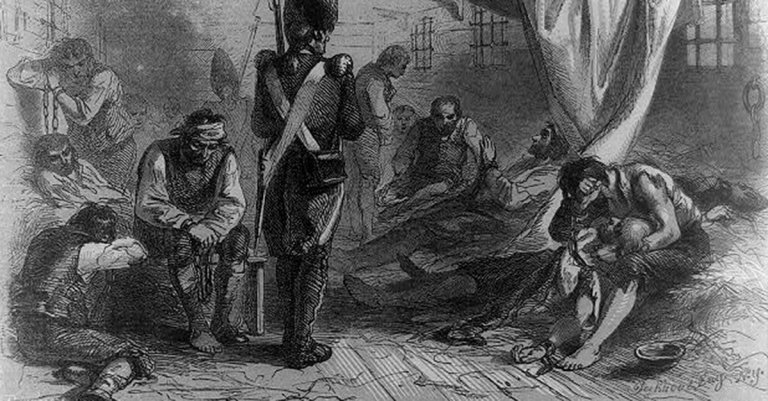
Jackson served as a courier during the American Revolution when the British captured and imprisoned him and his brother Robert in 1781.
Both suffered greatly in captivity.
A British officer once slashed Andrew Jackson with a sword, because the future seventh president of the U.S. wouldn’t clean his boots. Both brothers received little food from their captors and battled smallpox. Both were in danger of dying when their mother negotiated their release, according to the Andrew Jackson Foundation.
While Andrew Jackson survived after his imprisonment, his brother was not as fortunate. Robert Jackson died shortly after his release. That same year (1781), Andrew also mourned the death of another brother, Hugh, at the Battle of Stono Ferry and his mother, who died of cholera.
Jackson became an orphan at 14 years old.
Abraham Lincoln Buried Dead Troops
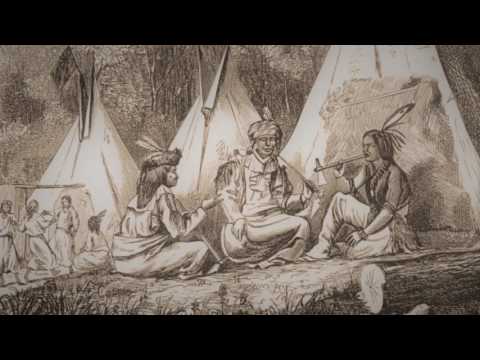
The Black Hawk War: May 1832
Before he guided the United States through the most tumultuous period in its history, Abraham Lincoln was just another volunteer service member.
He stepped up to fight against Native Americans during the Black Hawk War of 1832, and although he never saw actual combat, Lincoln fulfilled an important role during the four-month skirmish in Illinois. He buried those who had been scalped and took the solemn, essential task seriously. Lincoln treated those burials with the appropriate empathy.
Lincoln never forgot that awesome responsibility as he ascended to the White House. His direct knowledge of what soldiers sacrificed on the battlefield served him well when he sent Union troops into harm’s way during the Civil War.
“Are You Going to Leave Your Colonel Here for the Enemy?”
Seven presidents saw action during the Civil War, and Rutherford B. Hayes arguably had the highest pain tolerance of them all.
The commander of the 23rd Ohio Volunteer Infantry, Hayes was injured five times during the conflict. He sustained his most serious injury during the Battle of South Mountain on September 14, 1862, in Maryland.
A musket ball hit Hayes in the left arm, and fearing an artery had been cut, he asked a soldier to tie a handkerchief above the wound. Hayes felt weak and nauseous, according to his diary.
Severely wounded and exposed to enemy fire, Hayes could feel the surge of air as shots whizzed past him and hit the ground nearby. Caught between Union and rebel lines, Hayes saw an opportunity once the shooting lessened.
“[Hello] twenty-third men, are you going to leave your colonel here for the enemy?” Hayes yelled out.
Needless to say, Hayes received the appropriate response.
James Garfield’s Daring Dash Saved Union Lives
James Garfield’s legacy as a war hero was long established by the time an assassin’s bullet ultimately led to his death in 1881.
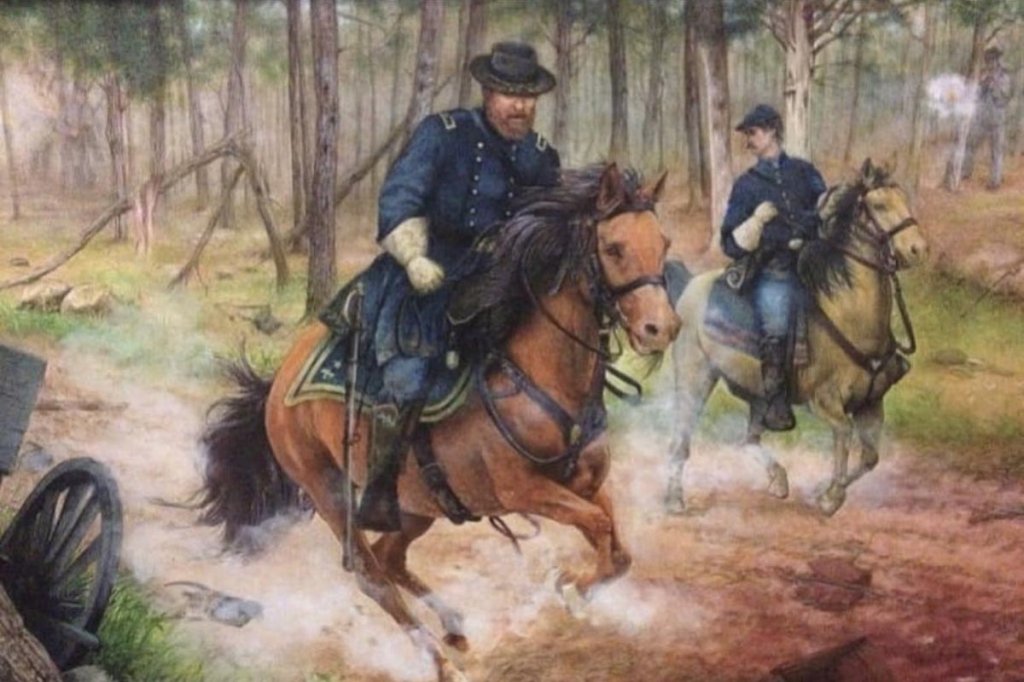
Garfield, who served only 200 days as America’s 20th president, was in the Army of the Cumberland during the Battle of Chickamauga in Georgia in September 1863. The Union forces were struggling to maintain their ground when Maj. Gen. William S. Rosecrans ordered his men to retreat.
Realizing Maj. Gen. George H. Thomas’ forces were still on the front line, Garfield ignored Rosecrans’ directive. Mounting his horse, Garfield raced to inform Thomas despite tremendous enemy fire.
While the Confederates were victorious at Chickamauga, they endured a couple of thousand more casualties than their counterparts. The number of wounded and killed Union soldiers would have been higher if not for Garfield’s courageous, split-second decision.
Jimmy Carter Assists in Nuclear Reactor Cleanup
Before becoming the 39th president of the U.S., Jimmy Carter responded to what is believed to be the world’s first major nuclear reactor incident.
An experimental nuclear reactor in Chalk River, Ontario, Canada, sustained issues in late 1952 that resulted in “overheating fuel rods and significant damage to the NRX reactor core,” according to a Government of Canada webpage.
With explosions and severe flooding occurring at the facility, the Canadians needed help. Carter, then working on a Navy nuclear submarine project in New York, was sent to the site and led a team. After painstakingly working on a replica of the reactor, team members were limited to working in 90-second shifts because of the high potential of contamination.
“In [Carter’s] case, at least, he was lowered into the building… with his wrench, and he had to run over to the reactor casing and he had one screw to turn,” author Arthur Milnes recalled. “That was all the time he had. And then, boom, back up.”
Carter had radioactive urine for weeks and was told he would not father any children, according to Milnes. Carter and his wife Rosalynn went on to have four children, as well as occupy the White House.
George H.W. Bush’s Survivor’s Guilt
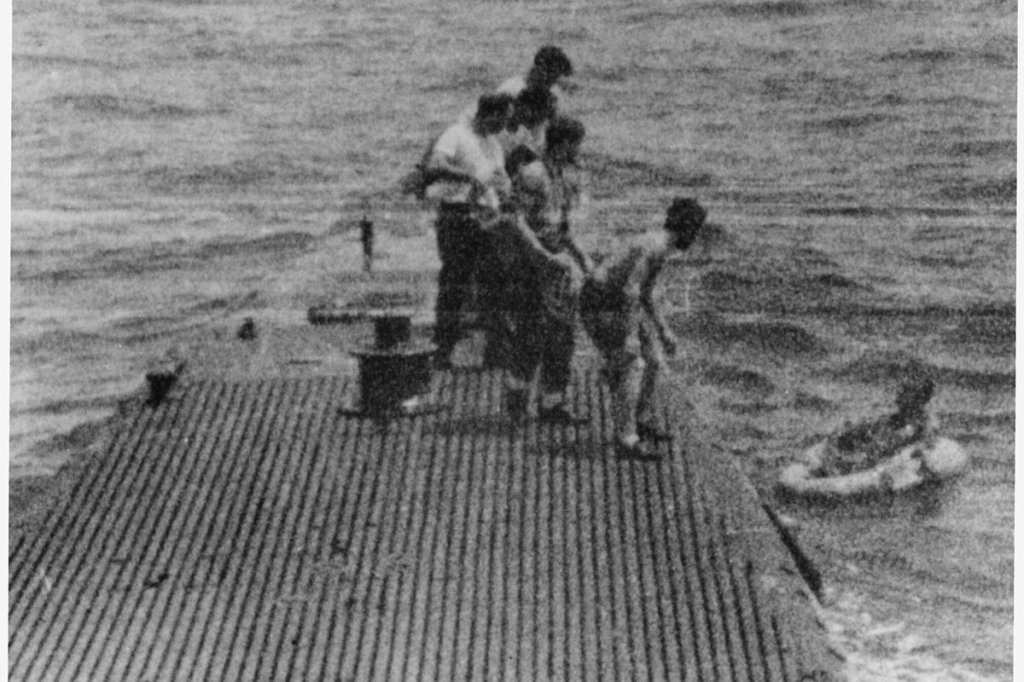
When George H.W. Bush became a naval aviator during World War II, he was 19 years old. At the time, he was the youngest Navy pilot ever.
Bush showed he was more than up for the task, though. He flew 58 combat missions during the war, constantly putting himself in dangerous situations for his country. One of those situations occurred on September 2, 1944, on the Japanese island of Chi Chi Jima.
Radioman 2nd Class John Delaney and Lt. Junior Grade William White accompanied Bush on a bombing run when anti-aircraft fire hit their Grumman TBM Avenger. With smoke engulfing the cockpit, Bush completed the run before navigating the bomber over water.
After telling Delaney and White to bail out, Bush parachuted out of the doomed aircraft. The other men were never found, leaving Bush with a severe case of survivor’s guilt.
“I wonder why the chute didn’t open for other guys,” Bush told CNN in 2003. “Why me? Why am I blessed?”
Don’t Miss the Best of We Are The Mighty
• Was George H.W. Bush almost eaten by cannibals?
• President Lincoln personally led a recon mission during the Civil War
• The stunning way Andrew Jackson prevented a mass desertion
Featured