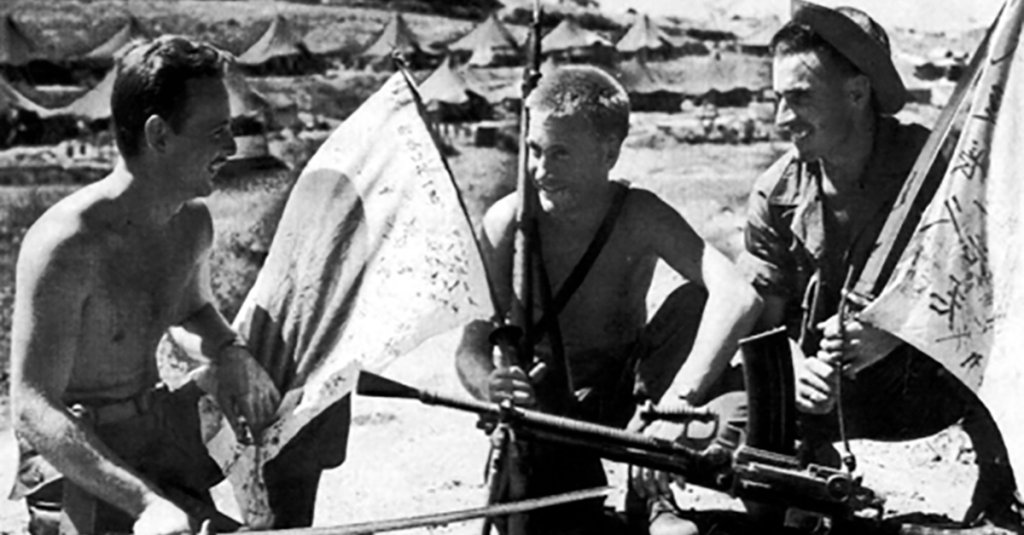
In October 1944, Beauford Anderson dodged enemy fire as he raced 50 yards to rescue two service members in the Philippines.
Anderson received a Bronze Star for his selfless and courageous act. Six months later, the Army technical sergeant’s heroism during World War II again was on full display at the Battle of Okinawa.
Related: A World War II POW who defied Nazis to protect Jewish soldiers will receive the Medal of Honor
After single-handedly repelling a fierce Japanese attack and safeguarding his unit’s flank on April 13, 1945, Anderson received the Medal of Honor.
The fearless soldier realized he had a choice that day.
“[During a crisis, it’s either do something or else,” Anderson reasoned.
No Stranger to Taking Charge
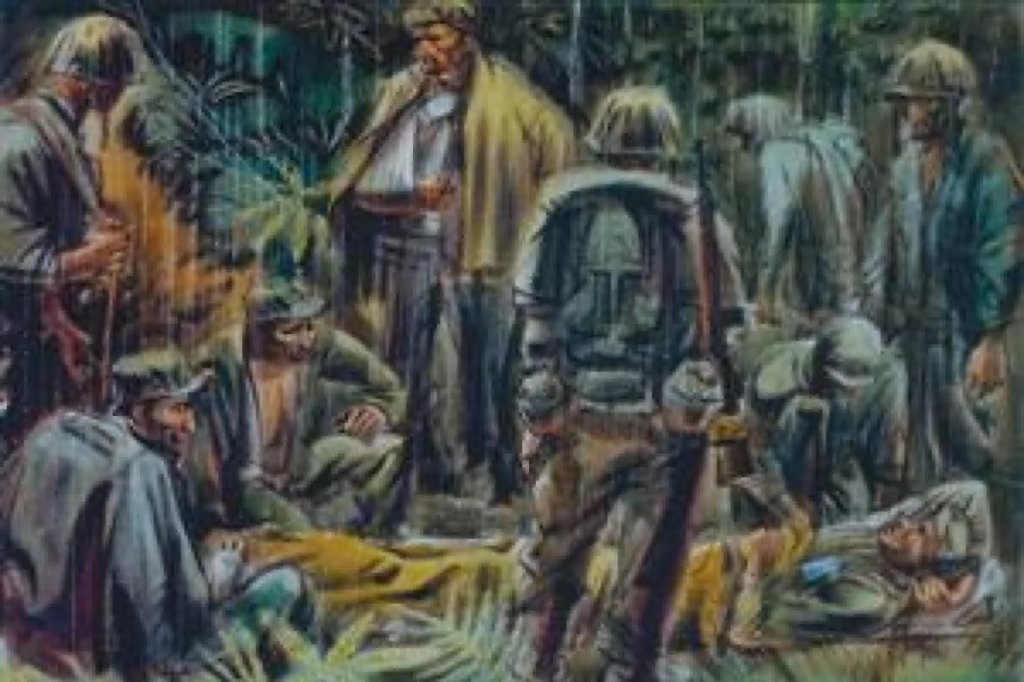
Anderson was only 20 years old when he enlisted in the U.S. Army in 1942.
Despite his youthful appearance, he was intimately familiar with the value of hard work. As a small business owner in his native Wisconsin, Anderson was so used to putting in absurdly long days that he once joked that basic training was easy by comparison.
“Nobody likes being shot at, but I didn’t even know what a day off was before I went into the Army,” he said, according to a 2021 article from the National WWII Museum in New Orleans.
Anderson enjoyed few days off after the Army assigned him to the Pacific Theater. He was part of Weapons Platoon, Company A, 1st Battalion, 381st Infantry, 96th Infantry Division when the Battle of Okinawa started on April 1, 1945. Lasting a hellacious 82 days, the Americans ultimately prevailed in the campaign but at a great loss. The U.S. incurred 49,151 casualties, including 12,520 killed or missing.
Anderson, a mortarman, was determined not to die on Okinawa.
Facing Extremely Long Odds

World War II in HD: Okinawa | History
The 96th Infantry Division and other Tenth Army divisions advanced in southern Okinawa precisely to where the Japanese lay waiting at Kakazu Ridge. Known as the Deadeyes because of their emphasis on marksmanship, the 96th Division repeatedly tried to take the ridge without success. The Japanese met them with intense fire, along with satchel charges and grenades.
Early on April 13, a Japanese force of 75 soldiers boldly tried to break through the American contingent in an area separating Kakazu Ridge and Kakazu West. Only one mortar squad could stop them. Anderson was its leader.
After relocating his men to a secure position, Anderson ventured out alone with only an M1 carbine and a limited number of hand grenades. Outmanned but fiercely determined, Anderson fought valiantly but was running out of options.
With no more grenades to unleash, he had to think of something quickly.
Literally a One-Man Army
Anderson noticed a dud enemy mortar round sitting nearby and hurled it at the enemy. Several died after the explosion.
The fearless soldier then double-timed it to locate one of his squad’s 60mm mortar rounds. Anderson went between throwing shells and firing his carbine.
His plan was working.
As the sun began to rise over Okinawa, the result of Anderson’s determined fighting was clearly evident. Twenty-five enemy soldiers were dead, and the Japanese had retreated to the south, per the National WWII Museum.
Anderson didn’t stop there despite bleeding severely after shrapnel struck him. Over other soldiers’ objections, Anderson struck out once more to alert the company commander of the Japanese’ retreat, allowing U.S. artillery to dispose of the remaining enemy forces.
A Longtime Military Man
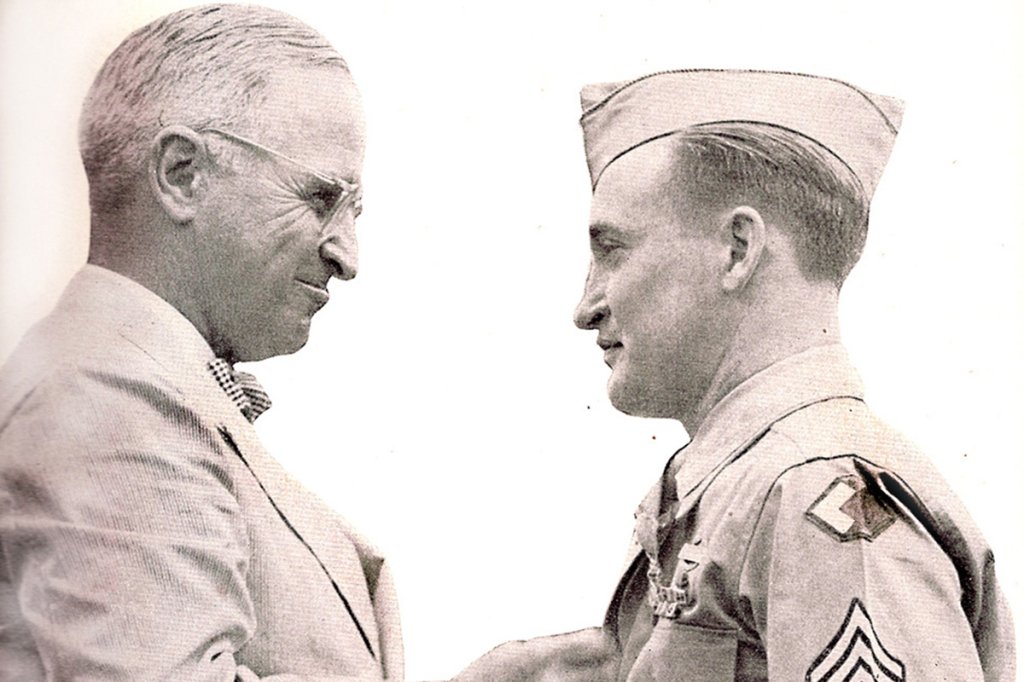
Anderson traveled to the White House on June 14, 1946, so President Harry Truman could present him and four other military members with Medals of Honor.
Anderson left the Army after World War II but reenlisted in 1948 and served during the Korean War. He later served in the Army Reserve.
Nothing topped what Anderson did on Okinawa, not that anyone heard him talk about it much. Not even his immediate family. After he died on November 7, 1996, at the age of 74, his son James reportedly said what he learned about his father’s military exploits, he learned from a book.
That likely came as no surprise to those who served with Anderson. Despite being only 5 feet, 7 inches tall and weighing 130 pounds, he never stood taller than he did on Okinawa.
“He was always teaching us something, teaching us to survive, and teaching us to be better soldiers,” one soldier recalled.