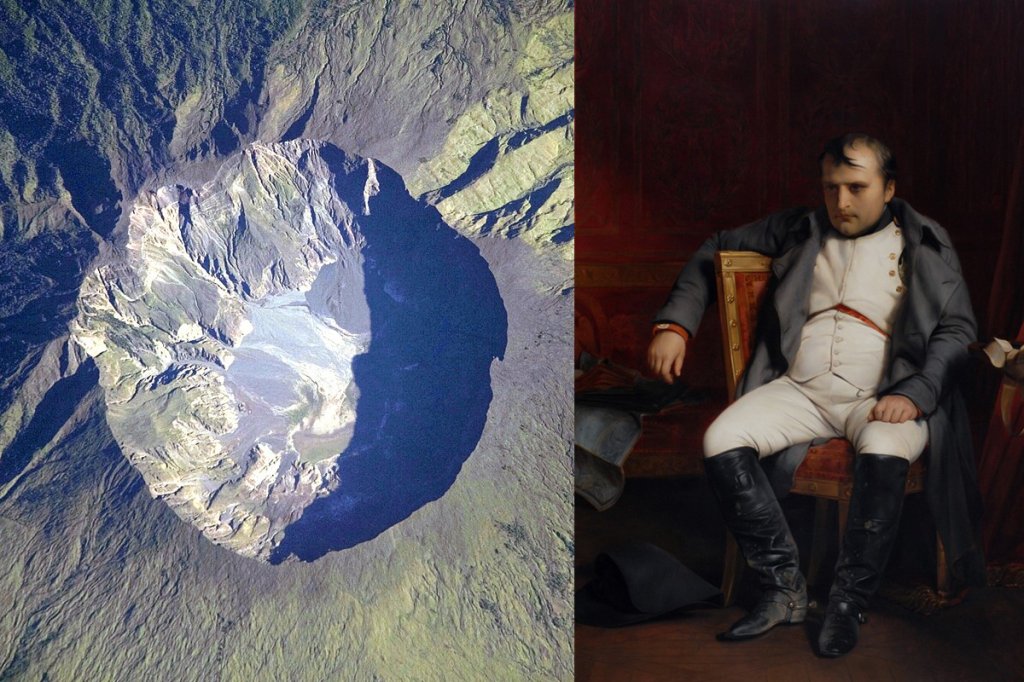
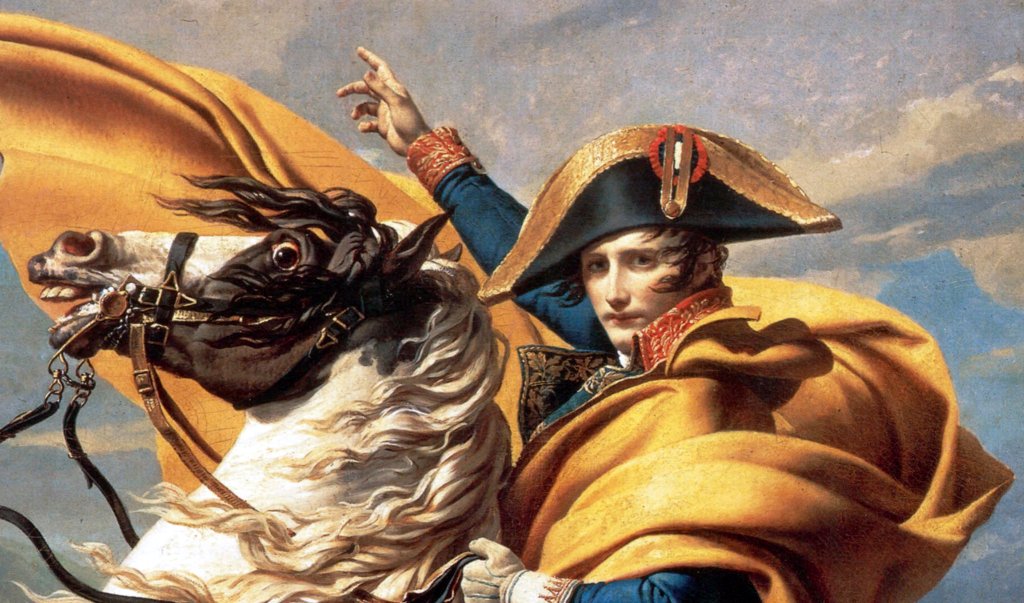
Napoleon Bonaparte was, arguably, the greatest general of all time. And we mean that an actual statistician went full “Moneyball” on military history and actually argued that Napoleon Bonaparte is the greatest general who has ever fought.
At the very least, he’s certainly one of the greats, rising from a whelp in a military academy to an artillery officer and then emperor of France in 1804, as well as the King of Italy and the Protector of the Confederation of the Rhine.
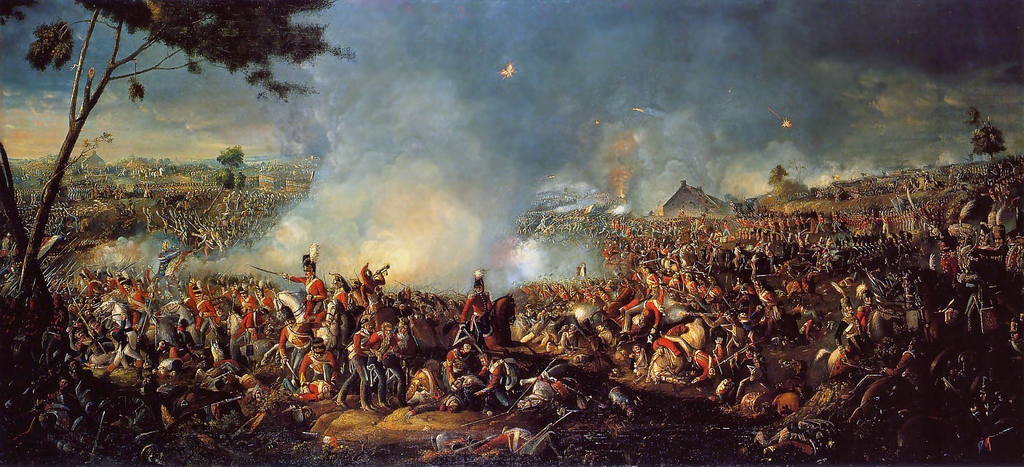
The previous success is part of why the result of the Battle of Waterloo, where Napoleon was finally defeated for good, was so surprising. Napoleon was outmanned and outgunned while forced to attack against Wellington’s defense, so any normal military leader would be expected to lose.
But this was Napoleon, and he’d succeeded in worse conditions many times.
And Field Marshal Arthur Wellesley, 1st Duke of Wellington, later said that the battle was “the nearest-run thing you ever saw in your life,” meaning that he’d frequently thought Napoleon was about to break through his defenses and force him back.
So how did the Seventh Coalition and the Duke of Wellington succeed in stopping the returned French Emperor? Modern researchers think that the Coalition got an assist from an Indonesian volcano.
Yes, really.
The muddy ground and an eventual victory for the Seventh Coalition
Between that and all the lice in his invasion of Russia, we’re starting to think God might have really hated the emperor.
The Indonesian volcano theory is pretty simple, even if it sounds outlandish. Basically, the weather conditions at Waterloo seriously disadvantaged an attacker. Unseasonal mud made maneuvering extremely hard, and, combined with the local hills, made uphill attacks nearly suicidal. And the mud made moving Napoleon’s heavy guns–he was relying on 12-pounders to break up Coalition defenses during his main attack–nearly impossible.
That mud was odd for the time of year, since Brussels usually gets rain a little less than half the days in June, and warm weather dries the ground quickly when it does rain. Instead, Napoleon faced battle after a massive storm, followed by a few hours of relative cold. He couldn’t wait any longer than he did, since every hour of delay increased the number of Prussian troops who would reach the defenses during the battle.
So Napoleon attacked across mud-soaked ground and attempted to press his attack as quickly as he could, hoping to break the enemy defenses before the pace of reinforcements overwhelmed his capabilities.
His attack was nearly successful, which is an accomplishment worth acknowledging. Against a vastly larger force, with unfavorable weather conditions, just months after he escaped exile, Napoleon nearly defeated the Seventh Coalition and re-established himself as the pre-eminent force in Europe.
But you know the saying about close, horseshoes, and hand grenades. Instead, he did face mud, he didn’t get the heavy cannons into position, his enemy was able to reinforce across relatively dry ground, and he did lose.
The volcano theory of Napoleon’s defeat

The volcano theory suggests that the mud and cold were both the result of a massive Indonesian Volcano Eruption on April 10, 1815, from Mount Tambora. For the record, that was about three weeks after Napoleon escaped Elba.
The smallest particles of ash to escape the volcano flew over 27 miles into the atmosphere and created temporary cooling over the Northern Hemisphere, which lasted for multiple years. It reduced the amount of sunlight reaching the Earth’s surface to such an extent that it caused widespread crop failures and starvation, as well as prolonged muddy conditions after every rainstorm.
So the Duke of Wellington brought Napoleon’s Hundred Days to an end at the Battle of Waterloo in, according to him, one of the closest-run victories possible, and he did it thanks to weather conditions that likely resulted from a volcano erupting over 7,500 miles away.