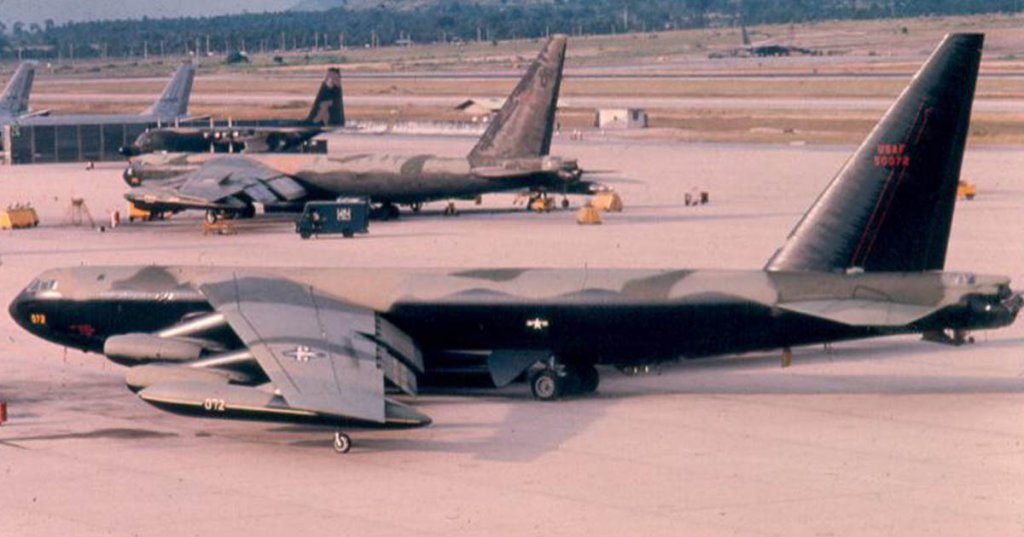
History fans are probably familiar with the sight of gunners in World War II-era B-17 and B-29 bombers firing heavy machine guns at enemy fighters. As propeller-driven aircraft gave way to jet engines and missiles became the weapon of choice in aerial combat, you might think fitting aircraft with machine guns would have been a thing of the past.
You’d be wrong.
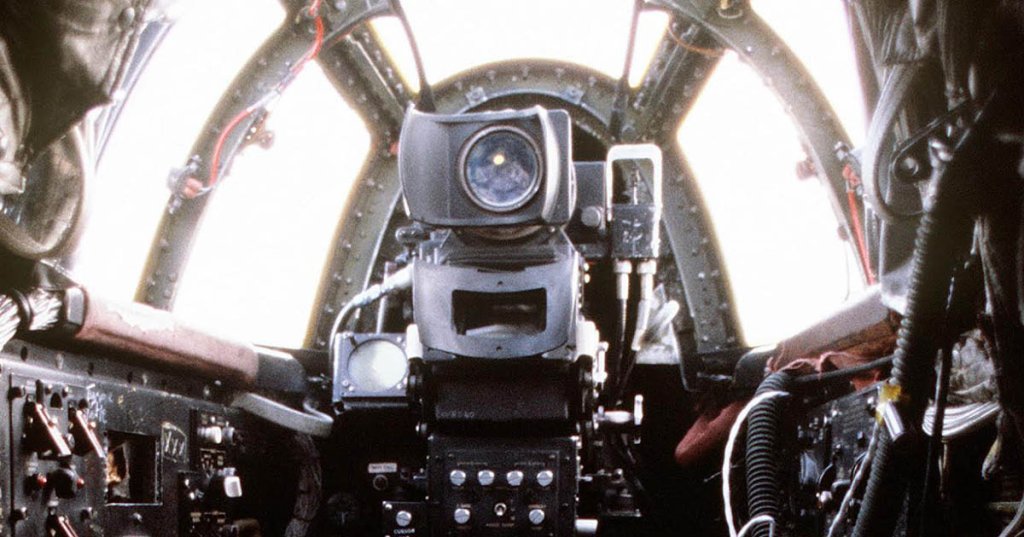
The B-52 Stratofortress, lovingly referred to as the “Big Ugly Fat F*cker” (or BUFF) by its aircrews, is a strategic bomber capable of delivering massive amounts of ordnance on any enemy, almost anywhere in the world. But America’s oldest operational strategic bomber, first flown in 1955, carried a tail gunner until 1991. And two of those tail gunners can boast air-to-air kills, both of which came during Operation Linebacker II in the skies over North Vietnam.
Their B-52 missions were part of the 1972 Christmas Bombings, a strategic bombing campaign against North Vietnamese logistical and industrial targets conducted from December 18 to 29, 1972. President Richard Nixon ordered Linebacker II after the breakdown of the Paris peace talks, in an effort to bring the North Vietnamese back to the table. The operation dropped over 20,000 tons of ordnance and was the last strategic bombing campaign in Vietnam, as well as the most extensive bombing campaign since the 8th Air Force during World War II.
Not to mention the two separate B-52 bombers that scored aerial victories against Soviet-built North Vietnamese MiG-21 Fishbed fighters.
KILL NUMBER I
On Dec. 18, 1972, a combined 129 B-52 bombers from U-Tapao Royal Thai Air Force Base, Thailand and Andersen Air Force Base on Guam launched to hit railyards and logistical facilities near Hanoi, North Vietnam’s capital. The B-52s had hit their targets and were returning to base when North Vietnamese MiG-21s took off to intercept.
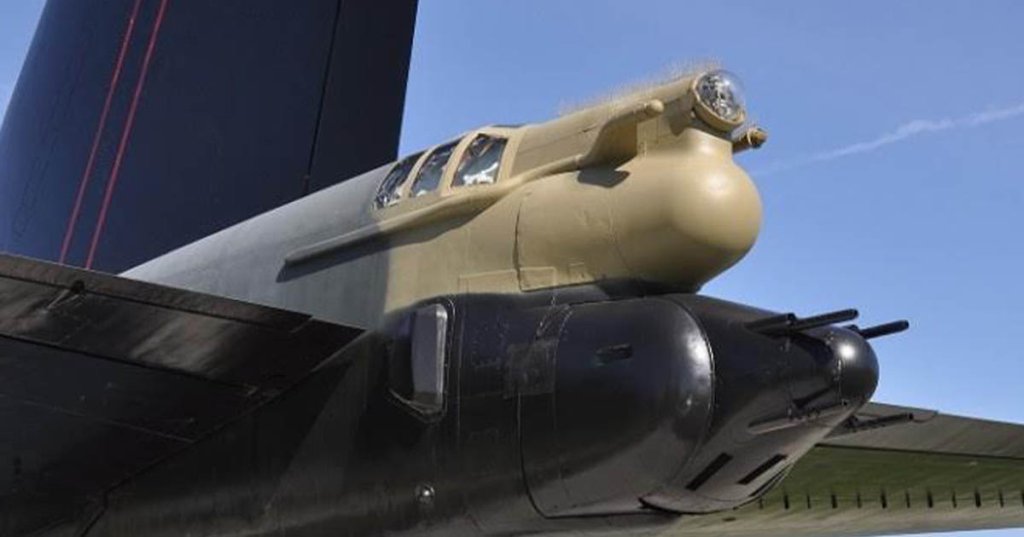
Staff Sgt. Samuel Turner was the gunner on the B-52D, call sign Brown III. The D model B-52 still had the gunner position located in the tail, armed with four .50-caliber machine guns, each with 600 rounds, and assisted by the A-3A fire control system’s search and tracking radar.
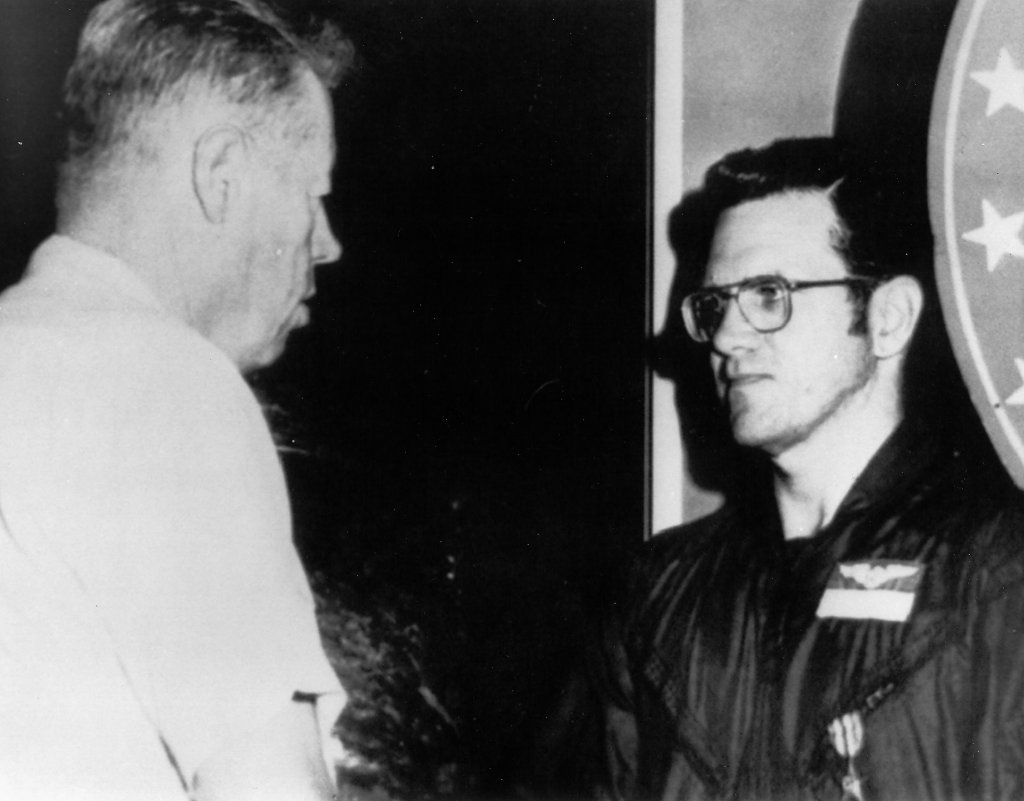
As one of the MiG-21s was preparing to fire its missiles against Brown III, Turner was able to lock on to the approaching Fishbed and open fire, hitting the rear of the MiG, which exploded in a huge fireball. This kill was the first for a bomber crew since the Korean War, and the first from a B-52 tail gunner. The kill was also confirmed by MSgt. Lewis E. Le Blanc, who was a gunner on another B-52.
Today, B-52D tail number 55-0676 is preserved at the Fairchild Air Force Base’s Heritage Park, featuring the classic “MiG Killers” emblem, a red star positioned under the cockpit.
KILL NUMBER II
It was Christmas Eve, 1972, when more than 30 BUFFs with the 307th Strategic Bomb Wing launched from U-Tapao on a mission to destroy the railyards at Thai Nguyen near Hanoi. During the bomb run, the B-52s were jumped by North Vietnamese MiG-21s. Airman 1st Class Albert Moore, then just 18 years old, was the tail gunner of the B-52D “Diamond Lil.” He was manning the gunner’s station and acquired one of the MiGs on his radar scope. Moore locked on at approximately 4,000 yards and fired until his radar screen was clear.
“I observed a target on my radar scope 8 o’clock low at 8 miles,” Moore wrote in his report. “I immediately notified the crew, and the ‘bogey’ started closing rapidly. It stabilized at 4,000 yards, 6 o’clock. I called the pilot for evasive action and the EWO for chaff and flares. When the target closed to 2,000 yards, I notified the crew that I was firing. I fired at the bandit until it ballooned to three times in intensity, then suddenly disappeared from my radar scope at approximately 1,200 yards. I expected 800 rounds in three bursts.”
Another gunner confirmed Moore’s kill. Tech Sgt. Clarence Chute verified the kill in his report:
“I went visual and saw the ‘bandit’ on fire and falling away. Several pieces of the aircraft exploded, and the fireball disappeared in the undercast.”
Moore’s MIG kill was the last recorded by a strategic bomber in wartime. He was awarded the Silver Star, the nation’s third-highest award for heroism, and continued to serve in the U.S. Air Force until 1975. He passed away in 2009 at the age of 55.
Diamond Lil flew more than 15,000 hours and over 200 combat missions between 1957 and 1983 and is now on display at the U.S. Air Force Academy. In honor of his achievement, a plaque recounting the mission that day is displayed alongside Diamond Lil.
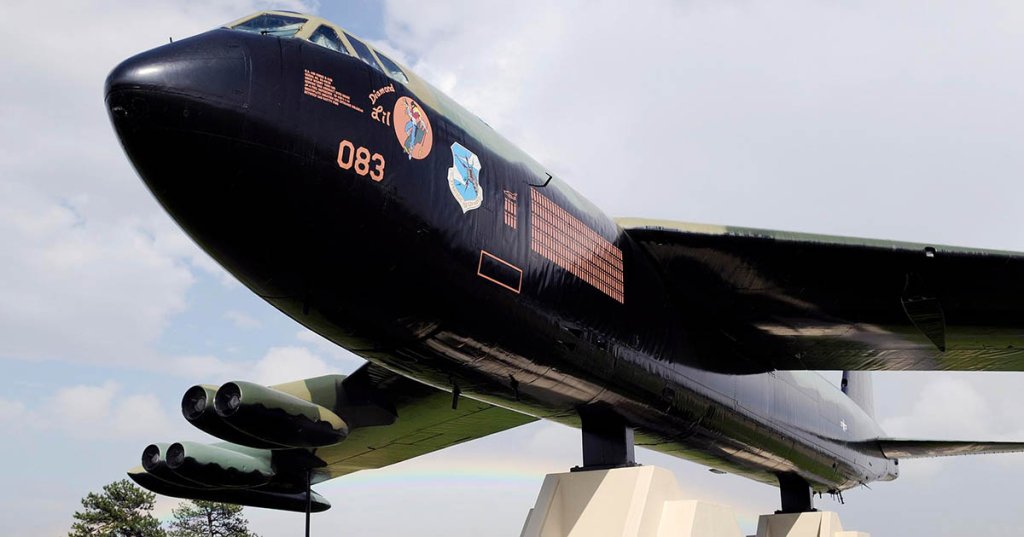
“On Dec. 24, 1972, 18-year-old Airman 1st Class Albert Moore was manning the tail gun of Diamond Lil (the B-52D Stratofortress located near the Academy’s North Gate) for this bombing mission,” the plaque reads. “When a MiG-21 enemy aircraft began maneuvering into attack position, Moore successfully defended his aircraft by shooting down the MiG-21. This was one of two confirmed MiG kills by a B-52D Stratofortress in the Vietnam War and the last confirmed kill by a tail gunner in wartime using machine guns.”
A total of 31 B-52s were lost during the war in Vietnam. Eighteen were lost to surface-to-air missiles (SAMs) or ground fire, and the other 13 were non-combat losses. No B-52s were shot down by enemy aircraft.