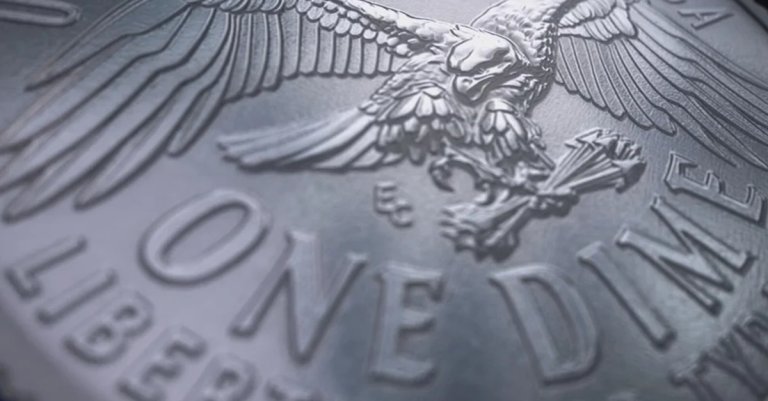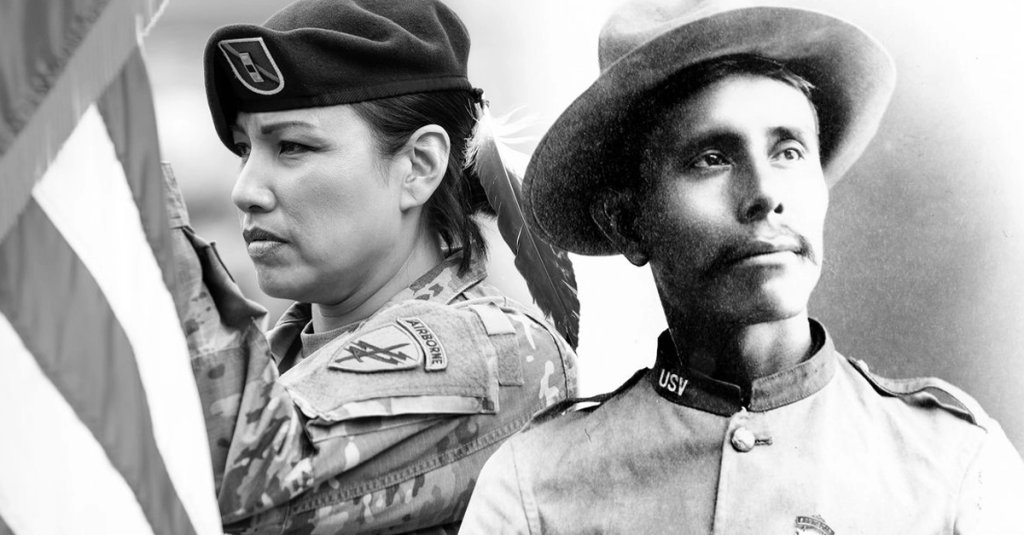
As the United States Marine Corps celebrates its 250th anniversary in November 2025, Americans everywhere reflect on two and a half centuries of courage, sacrifice, and service. The Marine Corps’ motto, “Semper Fidelis”—always faithful—has long represented the unwavering spirit of the Marines who defend the nation. But within that proud tradition lies a deeply interwoven story: the profound and enduring contributions of Native Americans to the defense of the United States.
Related: The original Green Berets: tracing the roots of US Special Forces
This milestone year also coincides with Native American Heritage Month, a time set aside to honor the history, culture, and achievements of Indigenous peoples. From the Revolutionary War to modern conflicts, Native Americans have stood among America’s defenders—serving in disproportionately high numbers, often without recognition or equality. Among their most remarkable contributions to the Marine Corps and American military history were the Navajo Code Talkers, whose brilliance and bravery helped secure victory during World War II.
A Warrior Spirit Older Than the Nation Itself
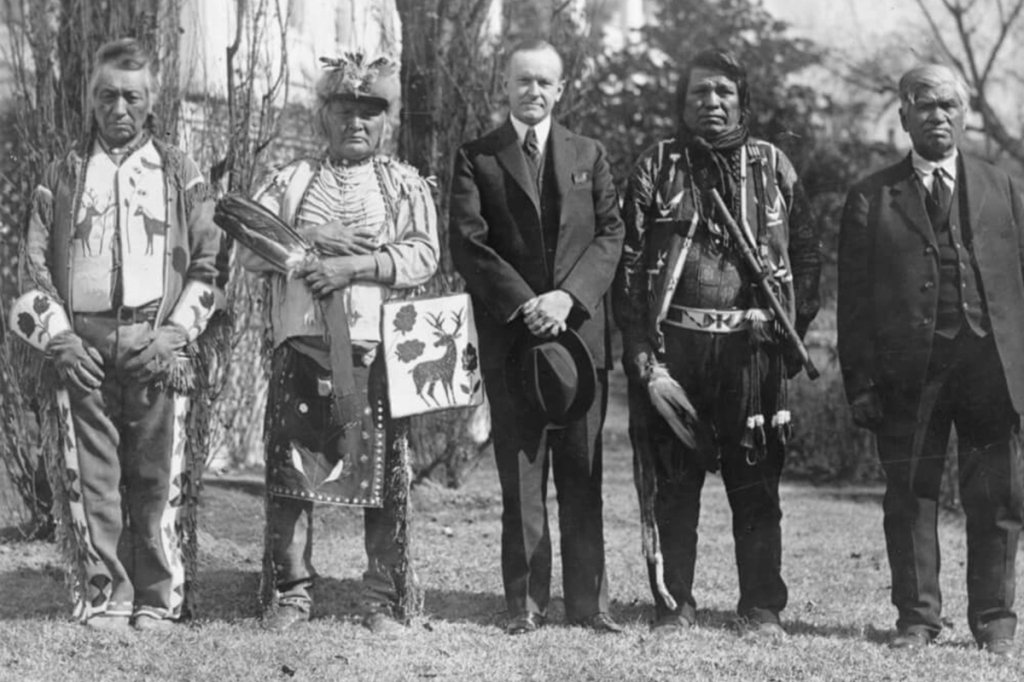
Native Americans have a long tradition of military service dating back centuries before the founding of the United States. Warriors from various tribes—Cherokee, Choctaw, Lakota, Hopi, and many others—served as scouts, interpreters, and front-line soldiers during America’s earliest conflicts. During the Revolutionary War, Native allies fought alongside both British and Continental forces, often choosing sides based on which alliance they believed would best protect their lands and sovereignty.
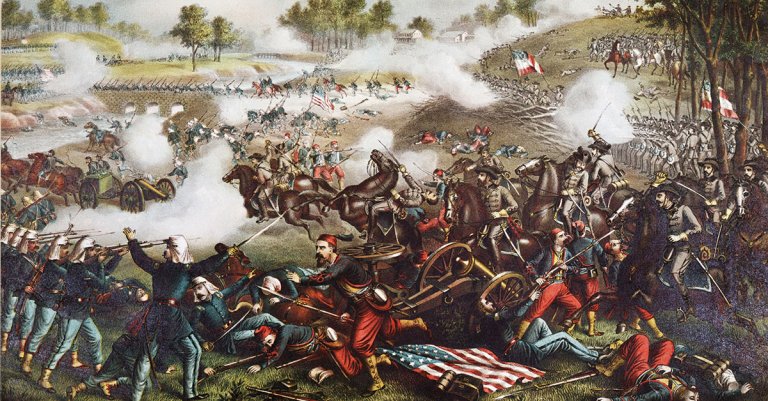
In the War of 1812, figures like Tecumseh, the Shawnee leader, demonstrated exceptional military strategy and leadership. Later, during the Civil War, over 20,000 Native Americans served in both the Union and Confederate armies. Despite enduring displacement, broken treaties, and assimilation policies, Native people continued to enlist in the U.S. military throughout the 19th and 20th centuries—driven by a deep sense of duty, honor, and warrior tradition.
By the time of World War I, thousands of Native Americans volunteered for service even before they were legally recognized as U.S. citizens (citizenship was not granted universally to all Native Americans until 1924). Their valor continued into World War II, where an estimated 44,000 Native Americans served across all branches of the U.S. Armed Forces, a remarkable figure considering the total Native population at the time was fewer than 350,000.
The Birth of the Code Talkers
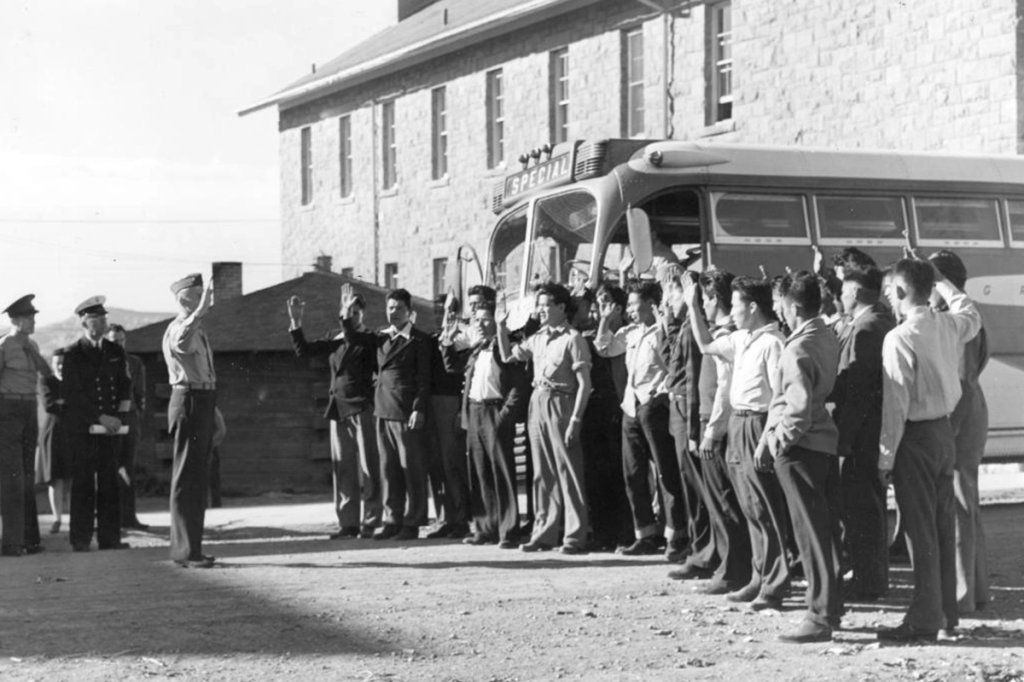
When the United States entered World War II, secure communication became a matter of life and death. The Japanese military had proven adept at intercepting and decoding American messages, often turning U.S. plans against them. In early 1942, Philip Johnston, a World War I veteran and civil engineer who had grown up among the Navajo people, proposed a radical solution to the Marine Corps: use the Navajo language as the basis for a code.
Johnston understood that Navajo was an unwritten, tonal language with complex syntax and unique phonetics, making it nearly impossible for anyone outside the Navajo Nation to learn or interpret. In May 1942, the Marine Corps recruited 29 Navajo men to test the concept. These men, later known as the “Original 29,” were tasked with developing a military code based on their language, one that could be used to transmit messages quickly and securely under combat conditions.
Creating the Unbreakable Code
The 29 Code Talkers devised an entirely new lexicon, blending their traditional language with modern warfare terminology. They created a dictionary of over 600 specialized terms, assigning Navajo words to represent letters, numbers, weapons, and military units.
- “Iron Fish” meant Submarine
- “Buzzard” meant Bomber
- “Turtle” represented a Tank
- “Chay-da-gahi” (Turtle) stood for Tank
- “Toh-Dinehih” (Sea Force People) became the word for Marines
The result was a dual-layered code. Messages were both encoded and transmitted in a language unknown to the enemy. Even if a message was intercepted, the Japanese had no means to decipher it. This system proved so secure that not a single Navajo message was ever broken throughout the war.
Turning Tide in the Pacific
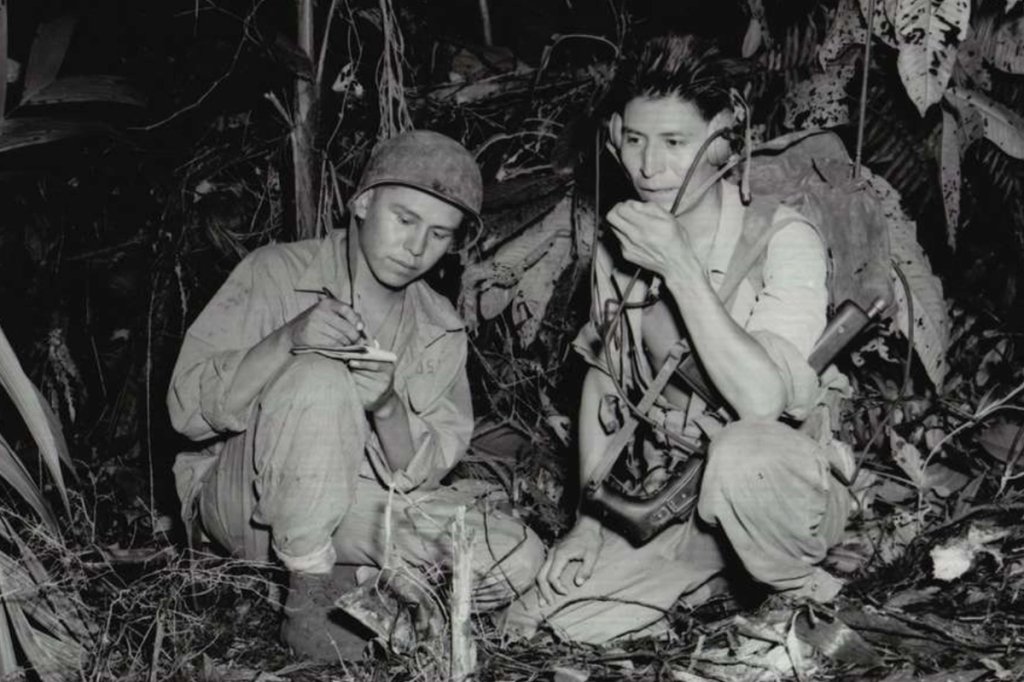
The first group of Code Talkers completed training at Camp Pendleton, California, and deployed to the Pacific Theater. As the war intensified, their communications became indispensable in major campaigns across the Pacific, including Guadalcanal, Tarawa, Saipan, Iwo Jima, and Okinawa.
During the Battle of Iwo Jima in 1945, Navajo Code Talkers played a pivotal role in coordinating operations under heavy enemy fire. Over the course of two days, they transmitted over 800 messages flawlessly, helping turn the tide in one of the war’s bloodiest battles.
“Were it not for the Navajos, the Marines would never have taken Iwo Jima,” Maj. Howard Connor, the 5th Marine Division’s signal officer, later stated. By war’s end, more than 400 Navajo Code Talkers had served with distinction in the Marine Corps. Their code was credited with saving countless American lives and shortening the war in the Pacific.
Secrecy, Silence, and Recognition
The Code Talker program remained classified until 1968, long after the men returned home. Because of this secrecy, the Code Talkers received no public recognition for decades. Many quietly resumed civilian life, carrying the burden of unacknowledged heroism.
It wasn’t until 2001 that the United States officially recognized their service when President George W. Bush awarded the Congressional Gold Medal to the Original 29 and Silver Medals to other Navajo Code Talkers. This long-overdue honor symbolized national gratitude for their unmatched service and sacrifice.
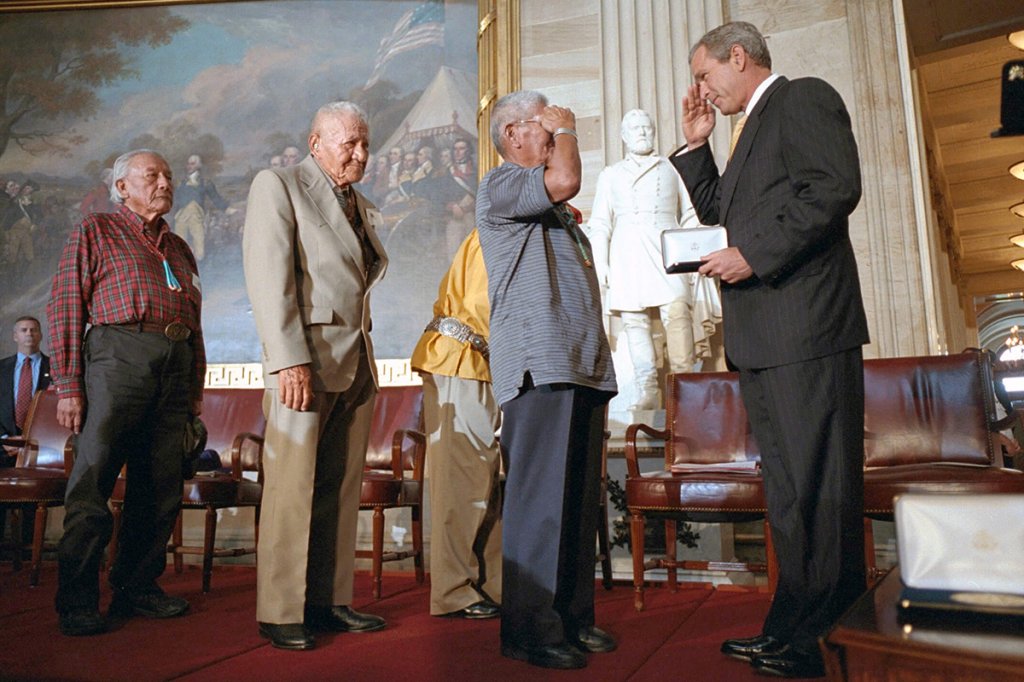
While no Code Talker received the Medal of Honor, other Native Americans in World War II did, like 2nd Lt. Ernest Childers, a member of the Muscogee (Creek) Nation. He was the first Native American to receive the Medal of Honor during the war. On Sept. 22, 1943, in Italy, despite a broken foot, Childers single-handedly captured enemy machine gun positions and took prisoners—an act of extraordinary bravery that exemplified the valor shared by so many Native warriors across generations.
The Muscogee (Creek) Warrior Who Defied the Odds
Name: Ernest Childers
Tribal Affiliation: Muscogee (Creek) Nation
Birth: February 1, 1918 — Broken Arrow, Oklahoma
Death: March 17, 2005 — Tulsa, Oklahoma
Branch of Service: United States Army
Unit: 45th Infantry Division, Company C, 180th Infantry Regiment
Rank at Time of Action: Second Lieutenant
Theater of Service: World War II, European Theater (Italy)
Award: Medal of Honor
Early Life and Background
Ernest Childers was born in Broken Arrow, Oklahoma, a member of the Muscogee (Creek) Nation. He was one of seven sons and grew up during the Great Depression. Despite economic hardship, his upbringing instilled in him strong values of community, courage, and self-reliance—virtues deeply rooted in Native tradition.
He attended Haskell Institute (now Haskell Indian Nations University) in Lawrence, Kansas, a boarding school established for Native American youth. It was there that Childers joined the school’s ROTC program, laying the foundation for his future military career.
When World War II broke out, he enlisted in the Oklahoma National Guard and was assigned to the 45th Infantry Division, known as the “Thunderbird Division.” The 45th was a unique and historic unit, with a large number of Native Americans—particularly from Oklahoma tribes such as the Cherokee, Choctaw, and Creek Nations.
Childers’ World War II Service
In September 1943, then-2nd Lt. Ernest Childers was serving with his division in southern Italy as the Allies pushed north following the invasion of Sicily. On Sept. 22, 1943, near Oliveto, Italy, Childers and his men were ordered to clear a series of German machine-gun nests that were halting the advance. During the battle, Childers injured his foot in a fall, fracturing it badly, but he refused evacuation. Instead, he pressed forward with his platoon, crawling and hobbling over rocky terrain under heavy enemy fire.
Despite intense pain, Childers maneuvered close enough to throw hand grenades into enemy positions. He then used a Tommy gun and his pistol to eliminate several enemy soldiers and force others to surrender. His incredible courage inspired his men to advance and secure the area.
For his “conspicuous gallantry and intrepidity at the risk of his life above and beyond the call of duty,” 2nd Lt. Childers was awarded the Medal of Honor. His citation reads, in part:
“Although previously wounded in the foot, Second Lieutenant Childers continued to lead his platoon up a hill under enemy fire. Crawling forward alone to reconnoiter enemy positions, he killed two snipers and silenced a machine gun nest. He then ordered his men to advance and captured an enemy mortar observer. His actions inspired his platoon and were instrumental in the success of the mission.”
Childers’ heroism demonstrated not only tactical skill but also extraordinary moral strength; an unwillingness to abandon his duty even when injured and facing overwhelming odds.
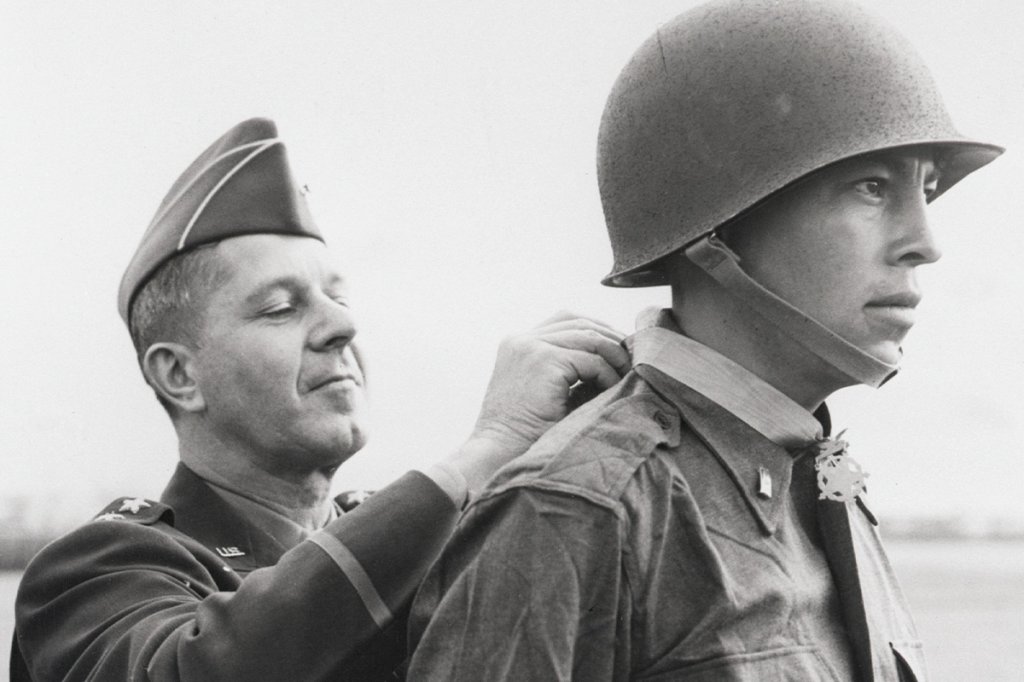
Childers’ Recognition and Legacy
Ernest Childers was formally presented the Medal of Honor by Gen. Mark W. Clark, Commander of the U.S. Fifth Army, in Anzio, Italy, on April 8, 1944. He became the first Native American recipient of the Medal of Honor in World War II, and the second overall from Oklahoma (after Joseph Oklahombi, a Choctaw hero of World War I, who received the Croix de Guerre from France).
Childers continued to serve in the Army after the war, rising to the rank of Lieutenant Colonel before retiring. After returning to Oklahoma, he remained active in Native American affairs and frequently spoke about the importance of service, education, and honoring one’s heritage.
In his later years, he received numerous honors, including:
- Induction into the Oklahoma Military Hall of Fame
- The Haskell Indian Nations University Medal of Honor Tribute, where a dormitory now bears his name
- The dedication of the Ernest Childers Middle School in Broken Arrow, Oklahoma
“I was just doing my duty. I didn’t think about medals or honors. I just knew my men needed me,” Childers once humbly said
Final Years and Resting Place
Ernest Childers passed away on March 17, 2005, at the age of 87. He was laid to rest with full military honors in the Veterans Field of Honor at Floral Haven Memorial Gardens in his hometown of Broken Arrow, Oklahoma.
Today, his story stands as a powerful example of the courage, determination, and patriotism that define the Native American warrior tradition. His actions continue to inspire generations of service members—Native and non-Native alike—who live by the same principles of duty, honor, and country.
A Legacy Remembered
Childers’ heroism is part of a greater continuum of Native American military service that includes the Navajo Code Talkers, Ira Hayes (Pima, one of the Marines who raised the flag on Iwo Jima), and countless others who have defended the United States in every conflict since its founding.
While no Navajo Code Talker was ever awarded the Medal of Honor, Childers’ story reflects their same spirit of unyielding bravery and service under fire—proof that the warrior heart of America’s First Peoples continues to beat strong within the ranks of the U.S. military. An Inscription at Ernest Childers Middle School, Broken Arrow, Oklahoma reads:
“He fought for freedom with honor, led with courage, and served with the spirit of his people.”
The Legacy of Native American Service
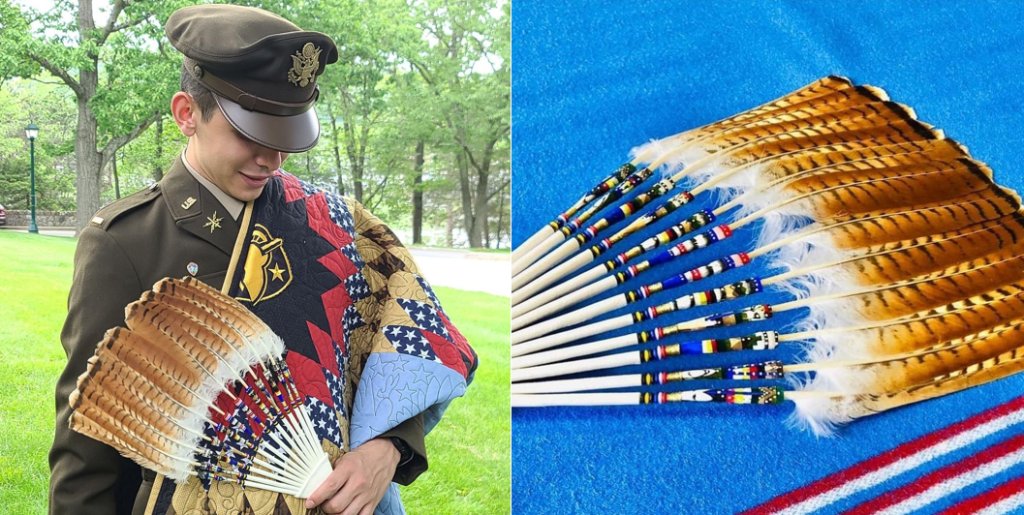
The Navajo Code Talkers are part of a much larger story of Native American military service. From World War I Choctaw code talkers to modern-day Native service members in Iraq and Afghanistan, Indigenous people have continued to protect the United States at rates far exceeding their population percentage.
Their service reflects an enduring cultural value of defending the land, a belief rooted deeply in Native identity. For many, serving in the U.S. military represents both a continuation of warrior traditions and a statement of sovereignty, defending their homeland as they always have.
The Origins of Native American Heritage Month
Native American Heritage Month traces its origins to the early 20th century, when Dr. Arthur C. Parker, a Seneca archaeologist, and other advocates pushed for recognition of Native peoples’ contributions to American history. In 1916, the first American Indian Day was declared by the Governor of New York. Over time, advocacy efforts grew, culminating in 1990, when President George H. W. Bush signed a joint congressional resolution designating November as National American Indian Heritage Month.
Today, the month serves as both a celebration and an education: a time to highlight Native Americans’ cultural richness, resilience, and service to the nation.
A Shared Legacy: 250 Years of Faithful Service
As the U.S. Marine Corps marks its 250th anniversary, the nation honors not just the Marines who have served in every generation but also the Native Americans who have contributed immeasurably to its success. Their courage at home and abroad embodies the shared values of honor, courage, and commitment.
The voices of the Navajo Code Talkers—and the valor of all Native American service members—resonate as a timeless reminder that America’s strength lies in its diversity, unity, and gratitude toward those who defend it.
Semper Fidelis—Always Faithful. Ahéhee’—Thank you.
To learn more about Native Americans and military service, visit the online exhibit Native Americans in the U.S. Armed Forces at the Smithsonian Institution’s National Museum of the American Indian.