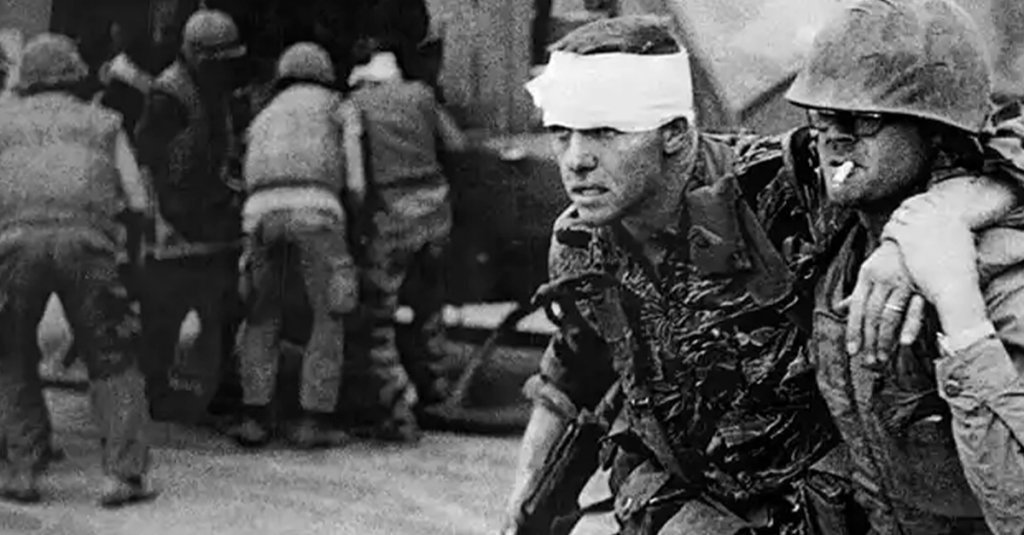
In February 1968, American forces in Vietnam were still reeling from the sudden onslaught of the Tet Offensive. The January surprise attack by the North Vietnamese and the Viet Cong saw strategic but widespread strikes on military and civilian command and control centers throughout the country.
While U.S. and South Vietnamese units scrambled to beat back surprise attacks on cities, bases, and provincial capitals, the Green Berets and irregulars at the remote special operations camp at Lang Vei found themselves staring down something they had never faced before in the South: North Vietnamese tanks.
Related: The difference between Special Forces and special operations
Their stand at Lang Vei, in the shadow of Khe Sanh, would turn that small hilltop outpost into one of the most ferocious and consequential fights of the war.
Tet is the Vietnamese Lunar New Year, Tết Nguyên Đán. Hanoi used the holiday period for a massive offensive because the Tet holiday was traditionally a time of truce between North and South. The large number of South Vietnamese forces on leave not only left critical facilities understaffed and units understrength, it also gave cover to South Vietnamese supporters of the NVA to move critical weapons and supplies.
Hanoi believed a series of decisive assaults could trigger instability in the south, as citizens would doubt the military’s ability to defend against the communists, leading to defections and an uprising, and ultimately the collapse of the South Vietnamese government.
During Phase One of the offensive, U.S. troops had their hands full across the country, as more than 80,000 North Vietnamese and Viet Cong staged attacks on more than 100 cities and towns.
In the north, four miles west of Khe Sanh, sat Special Forces Camp Lang Vei. The camp was manned by 24 U.S. Army Green Berets from Detachment A-101 and approximately 500 Vietnamese and Montagnard Civilian Irregular Defense Group (CIDG) forces.
An old camp at Lang Vei was destroyed in May 1967 when a sympathizer helped Viet Cong forces infiltrate the installation. Several Special Forces operators were killed or wounded, which resulted in the unit being removed from ready status.
The 5th Special Forces Group quickly filled the positions and stood up Det. A-101. The new team determined that the old camp could not be adequately defended, and a new location on a hillock overlooking Route 9, near the Laotian border, was chosen for the new camp.
Construction began in 1967, with Navy Seabees building hardened weapons pits with reinforced concrete, installing steel plating on entrance doors, building an observation tower, and hardening the ops bunker. As the camp came together, commanding officer Capt. Frank Willoughby oversaw security, recruited more CIDGs, and conducted patrols. None of them caught the NVA recon teams outside the wire, who watched the entire construction.
The Green Berets had no idea until Jan. 30, 1968, when an NVA deserter with an AK-47 walked right past the sleeping CIDG security guards and into the A-team’s house. North Vietnamese Pvt. Luong Dinh Du slipped into the American camp unnoticed and caught Sgt. 1st Class William T. Craig while he was making breakfast.
The need to reinforce Lang Vei should have been punctuated on Jan. 21, 1968, when the North Vietnamese launched an attack on Khe Sanh, a strategically vital base and a forward operating base for the highly-classified Military Assistance Command, Vietnam-Studies and Observation Group (MACV-SOG) and the launchpoint for recon teams moving into Laos for intel on the Ho Chi Minh Trail. The assault was a massive siege that would go on for months, one that would require a sustained aerial bombing campaign and a relief expedition to break.
Yet, the intelligence provided by the deserter was brushed aside. What the Green Berets couldn’t ignore, however, was the enemy assault on Ban Houaysan in neighboring Laos.
A few days before Luong walked into the Green Berets’ house, the North Vietnamese struck Ban Houaysan, routing the 33rd Laotian Elephant Battalion and pushing it along with 2,200 civilians over the South Vietnamese border toward Lang Vei. When enemy infantry and tanks took down Ban Houaysan, survivors were able to warn Lang Vei that armor was now in play, only a few miles away.

SSGT Peter Tiroch describes the battle of Lang Vei
Lang Vei was the next tiny obstacle between Northern tanks and the raging battle at Khe Sanh. The Tet attacks were raging across South Vietnam, and this part of it knocked out a critical tool for American intelligence monitoring the Ho Chi Minh Trail. It was shortly after midnight on Feb. 7, 1968, that the North Vietnamese Army opened its main assault on Lang Vei with a coordinated tank-infantry and sapper attack.
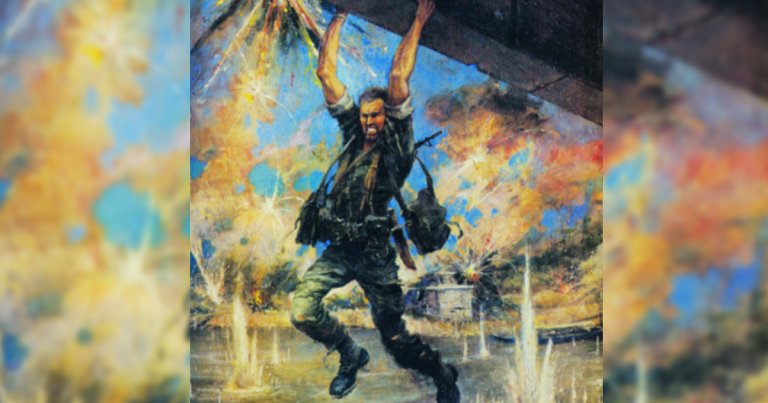
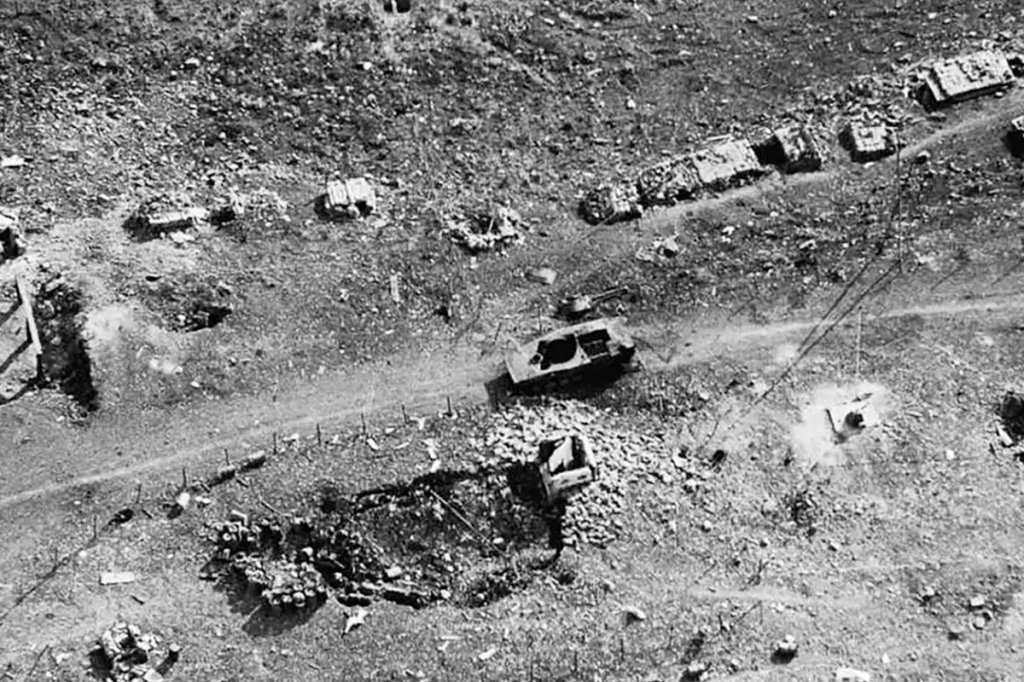
In the hours before, NVA gunners had already softened the camp with mortars and 152mm artillery, wounding defenders and damaging its hardened bunkers. NVA sappers cut through the perimeter wire, setting off trip flares, warning the camp of the enemy attack. As defenders raced to the breach, they were greeted by two Soviet-made PT-76 tanks coming through the wire. Behind the tanks, two battalions of NVA troops were flooding into the camp. On the opposite side of Lang Vei, six more PT-76s had cut off other access points.
Around a dozen PT-76 tanks, supported by several infantry battalions and sapper companies, pushed in from multiple directions, using the darkness and ground fog to mask their approach. As sappers blew other gaps in the wire with satchel charges and flamethrowers, the tanks crashed through the perimeter, their 76mm guns and machine guns raking the Bru CIDG trenches and fighting positions while infantry poured in behind them.
The Green Berets and the CIDG hit back hard. They engaged the NVA with .50-caliber machine guns and 106 recoilless rounds, while the security groups cut loose with claymores, small arms, and finally hand grenades as the camp was overrun. Two-man tank killer teams took out the first two tanks with 106 rounds and M72 LAW rockets.
With the assault on Khe Sanh ongoing, Airmobile and artillery support were severely limited, straining its ability to help Lang Vei. Willoughby still called for artillery from Khe Sanh and coordinated Air Force and Navy air strikes, including an AC-47 gunship and A-1 Skyraiders, which tore into the NVA massed around the camp.
“It was total chaos” Mobile Strike Force commander, 1st Lt. Paul Longgrear, recalled. “A wild west fight with Indians everywhere. We were outgunned and vastly outnumbered. Everybody outside the ops bunker was doing his own thing. Camp defenses were collapsing all around. The NVA tanks and sappers focused first on our ammo and fuel dumps and then the heavy weapons positions to systematically destroy them.”
Tanks rolled over trenches and bunkers and sappers silenced key heavy-weapons positions with satchel charges, organized resistance collapsed in much of the camp. Many of the surviving Americans and Vietnamese fell back to the reinforced concrete operations bunker, which soon came under direct fire.
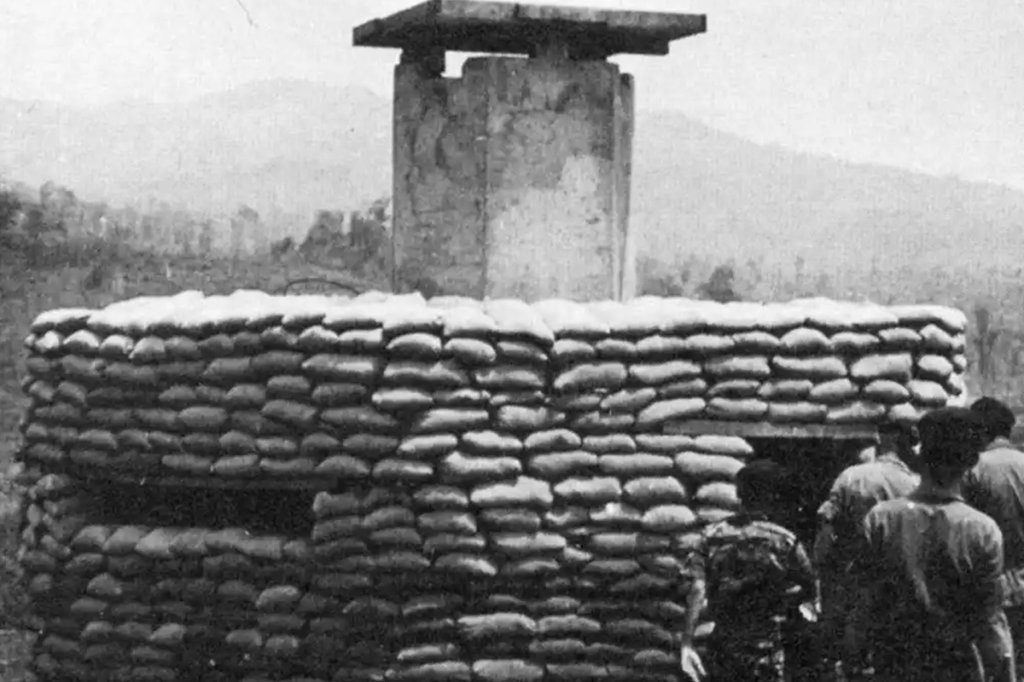
One enemy tank drove onto the roof, crushing the antennas and cutting off most communications, denying the soldiers inside everything except oxygen. Still, NVA troops tried to force a surrender with concussion, fragmentation and tear gas grenades dropped down air vents.
A South Vietnamese NCO and a few others took the NVA up on a surrender and moved outside, where rifle fire was heard. Their fate was unknown. Again, calls for surrender came down the shaft. After a few choice words from the American personnel, more grenades went down the shaft. Surrender was not an option.
Outside the wire, Sgt. 1st Class Eugene Ashley Jr., was with survivors from the attack in Laos at the old Lang Vei camp, which had been left unscathed by the fighting. His troops began supporting the Green Berets with illumination and high explosive mortars. He organized a scratch rescue force with two other soldiers and a cadre of local fighters. The locals, however, would not counterattack the NVA until daybreak.
Ashley’s crew launched five assaults on Lang Vei, under fierce enemy machine gun fire, through mortars, grenades, and satchel charge booby traps. Between those assaults, he directed Marine artillery and Air Force forward air controllers to pound NVA positions and open a route to the base. On his fifth attempt, he called in danger-close strikes to push the enemy back. It was during this counter that he was hit by a .50-caliber round, and dragged off the battlefield. An enemy artillery round landed near his position, killing him.
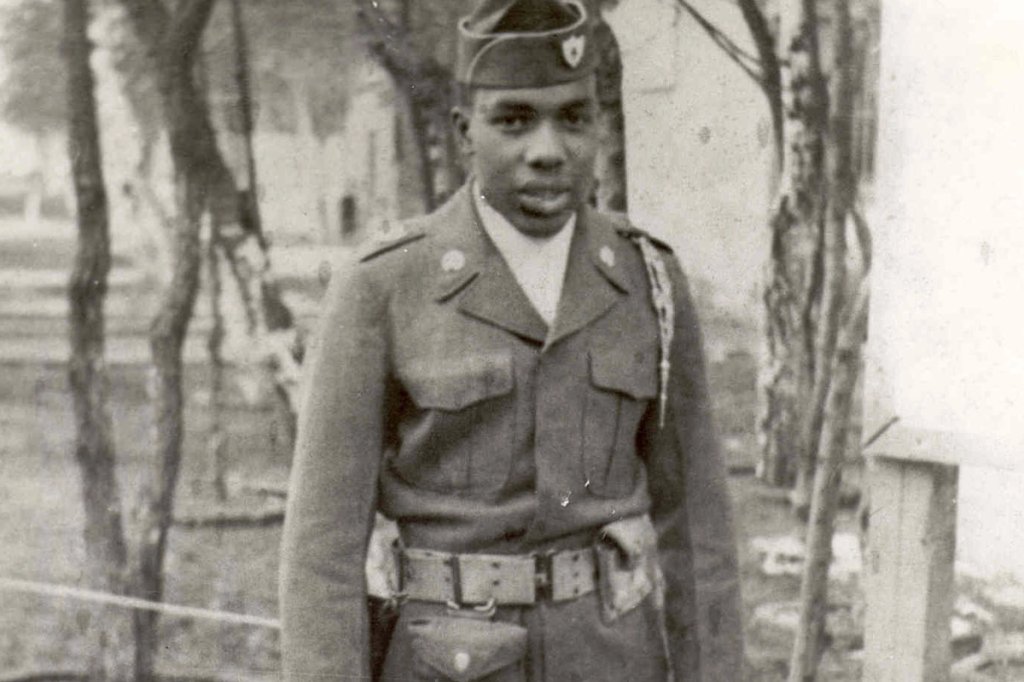
His actions that day not only earned him the Medal of Honor, it bent the battlefield, allowing the defenders to carve a path to safety. Inside the bunker, the trapped Special Forces team used a surviving radio to work with a forward air controller overhead, calling in airstrikes almost on top of their own position to keep the NVA at bay. When the bombardment opened a hole in the bunker wall, the Americans were able to break out.
Although the Marines initially rejected a night reinforcement against armor, Gen. William Westmoreland, commander of U.S. forces in Vietnam, weighed in and ordered U.S. Marines to supply enough airlift for a 50-man rescue team. Covered by air and, finally, by Marine helicopters, they fought their way out through scattered NVA troops and made for old Lang Vei, where CH-46 Sea Knights and Army Hueys lifted out the surviving U.S. and some indigenous defenders.
Of the 24 members of Det. A-101, 10 were killed and missing and 13 wounded. One of the captives was Staff Sgt. Dennis Thompson, who watched the last CH-46 rescue bird take off. Thompson managed to contact a Huey gunship in the area with his PRC-25 radio, which headed his way. Before their arrival, Thompson was captured, then escaped, then captured again, and spent the rest of the war in the Hanoi Hilton before his release in 1973.
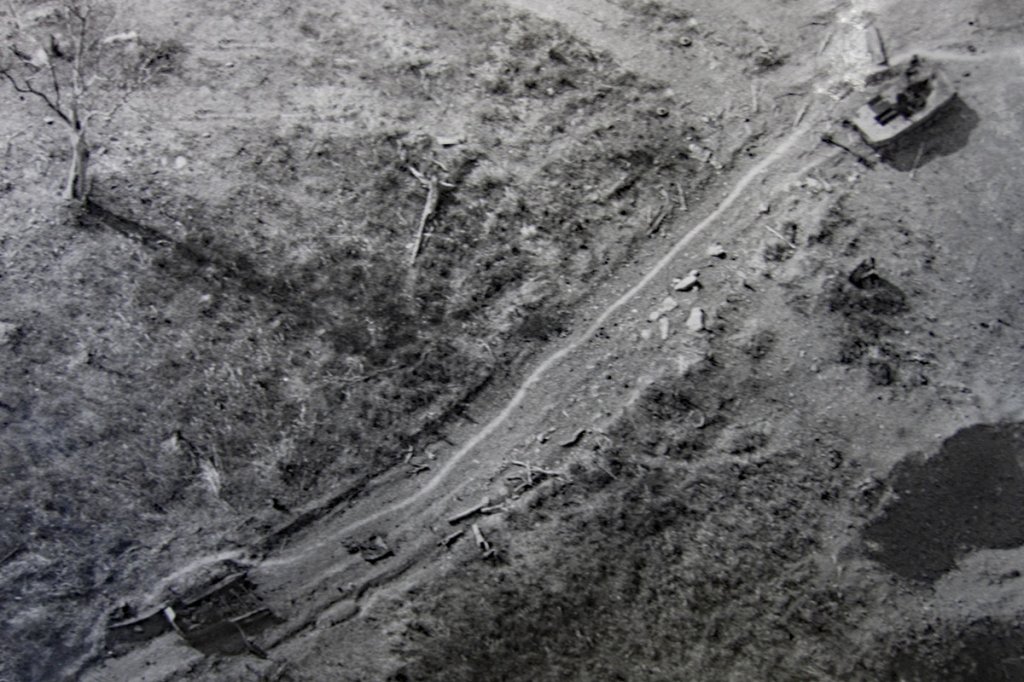
By one estimate, the Lang Vei CIDG troops suffered 309 dead, 64 wounded, and 122 captured. Accurate PAVN numbers will never be known. They claimed 90 killed and 22 wounded.
The use of tanks signaled a change in NVA strategy. They intended to take Lang Vei, move on to Khe Sanh to control the whole sector, and then conquer the south, but the Battle of Lang Vei was a warning shot for Khe Sanh that an armored thrust was on the way, and is often cited as a factor that helped prevent an all-out collapse at Khe Sanh.
The new lang Vei camp was never rebuilt, and the Khe Sanh Marine Corps base was closed later in 1968.