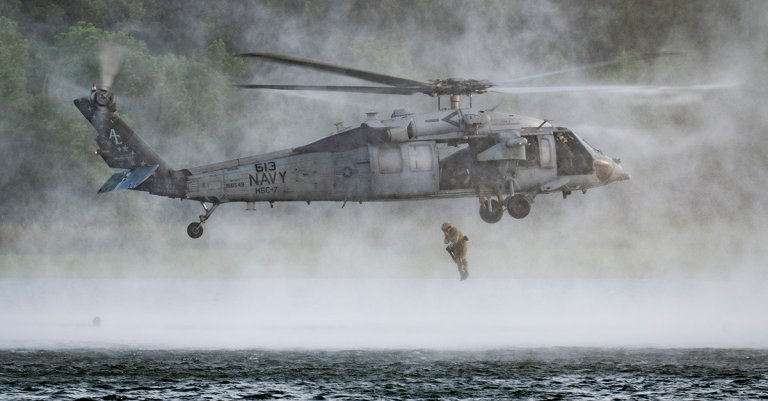
As the anniversary of Operation Restore Hope approaches, Americans pause to reflect on one of the most significant humanitarian and military missions of the post–Cold War era. Launched in December 1992, this operation placed the United States Marine Corps at the forefront of a desperate global effort to save a nation devastated by famine that had already killed hundreds of thousands and left more than a million at risk. What began as a bold and compassionate initiative to get food to the Somali people would evolve into one of the most complex and controversial military engagements of the 1990s and ultimately culminate in the infamous events known as “Black Hawk Down.”
Related: How AC/DC helped save a POW in Mogadishu
By the early 1990s, Somalia had ceased to function as a nation. The ousting of dictator Siad Barre in 1991 created a power vacuum that plunged the country into brutal clan warfare. Rival warlords such as Mohamed Farrah Aidid and Ali Mahdi Mohamed battled for dominance, turning city streets into combat zones while civilians suffered the consequences.
With infrastructure destroyed and violence spreading unchecked, famine swept through Somalia. Crops could not be harvested, supply routes were controlled by militias, and humanitarian goods arriving at the port of Mogadishu were looted before ever reaching those in need. Starvation claimed an estimated 300,000 lives, and millions more were at risk. Aid agencies were desperate, but without security, their efforts were doomed. It was in this moment of global alarm that the world turned to the United States.
Restore Hope Begins
On Dec.4, 1992, President George H. W. Bush announced Operation Restore Hope, a multinational U.S.-led mission under the Unified Task Force (UNITAF). Its objective was clear: secure the environment so humanitarian aid could flow freely. The mission was unprecedented, combining military strength with humanitarian purpose on a scale the world had rarely seen.
Five days later, the United States Marine Corps spearheaded the initial entry. Under the glare of news cameras broadcasting live around the world, Marines landed on the beaches of Mogadishu in a dramatic nighttime amphibious assault. They arrived not as conquerors, but as protectors—fully armed and prepared, yet mission-focused on saving lives. Their arrival marked the first step in stabilizing a nation teetering on collapse.
A Mission Without a Blueprint
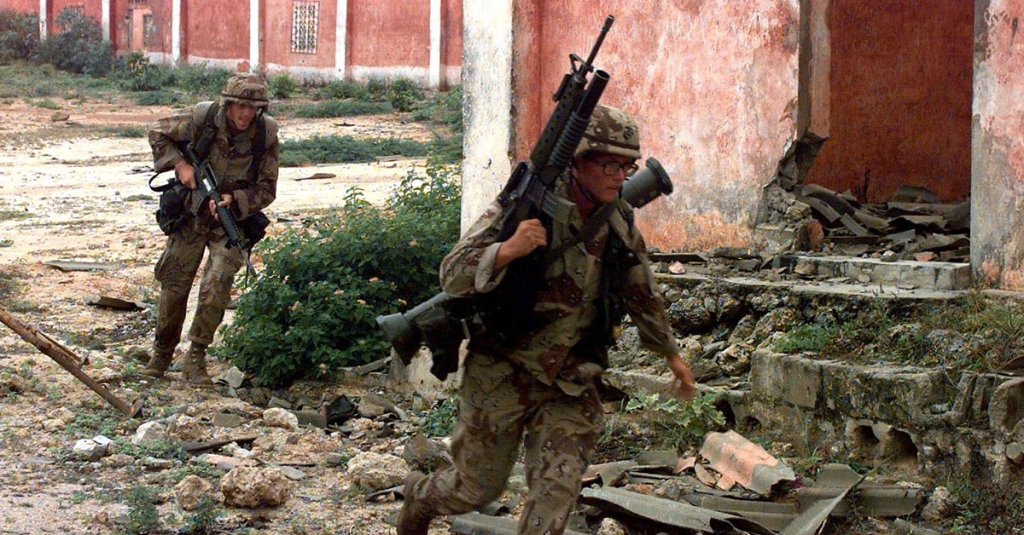
For the Marines, the Somalia mission demanded extraordinary adaptability. This was not a conventional battlefield with clear enemy lines or structured objectives. Instead, Marines navigated a fractured urban landscape where armed militias roamed, loyalties shifted rapidly, and civilians lived side by side with combatants.
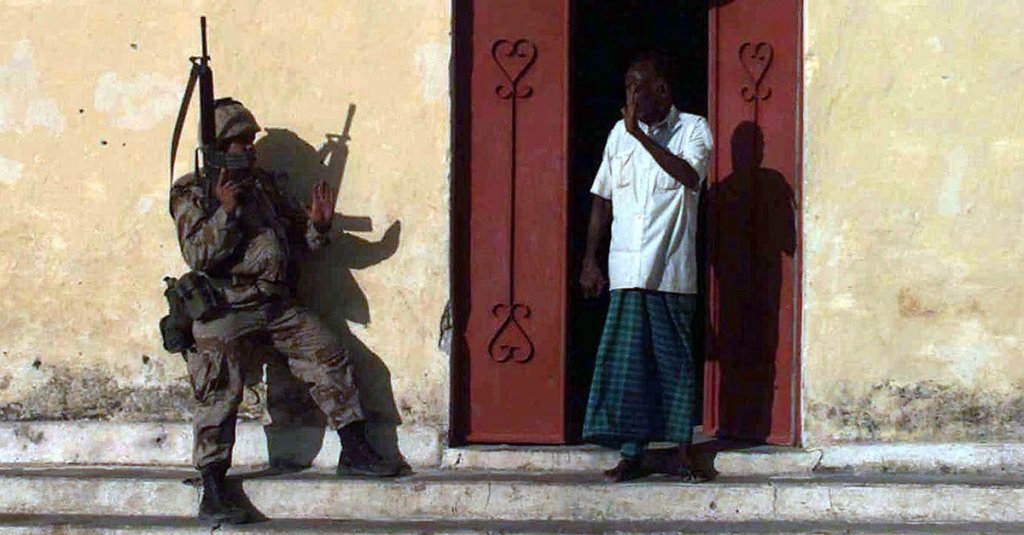
Marines conducted foot patrols through Mogadishu’s streets, secured key installations, and established safe zones for humanitarian distribution. They worked closely with NGOs, UN officials, and clan elders, forging relationships that helped de-escalate violence and foster community trust. At the same time, they stayed vigilant. Any street corner could become a flashpoint, and any checkpoint could turn hostile without warning.
Yet despite the dangers, Marine leadership and discipline resulted in rapid progress. Aid convoys moved more freely. Food distribution sites operated with growing stability. The visible presence of Marines helped restore a measure of confidence among Somali civilians who had known only chaos for years.
Transition to UNOSOM II and Rising Tensions
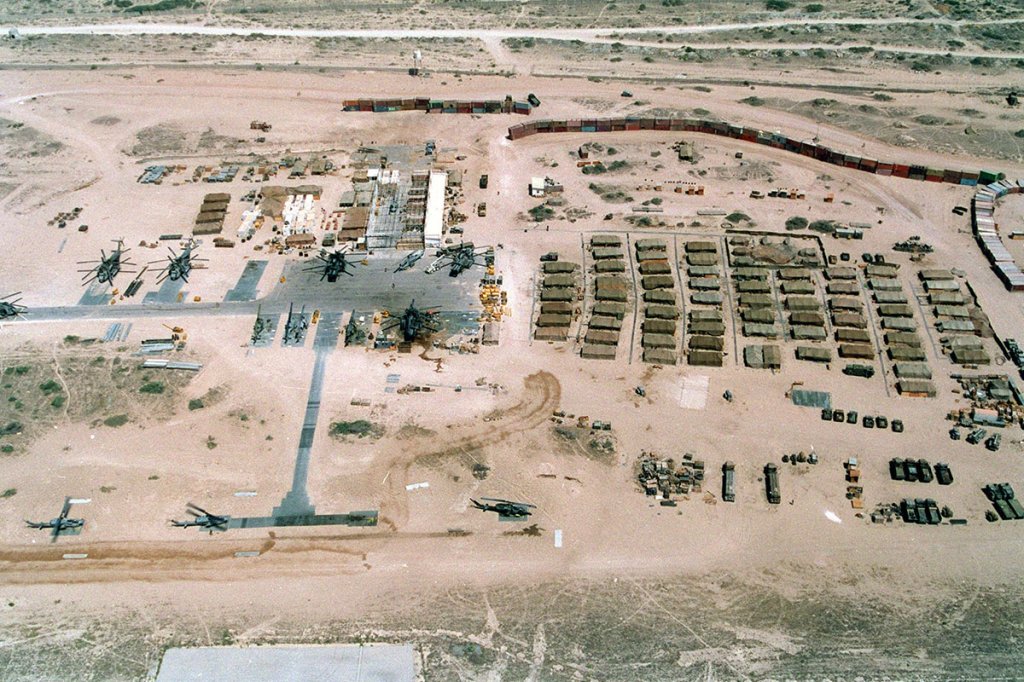
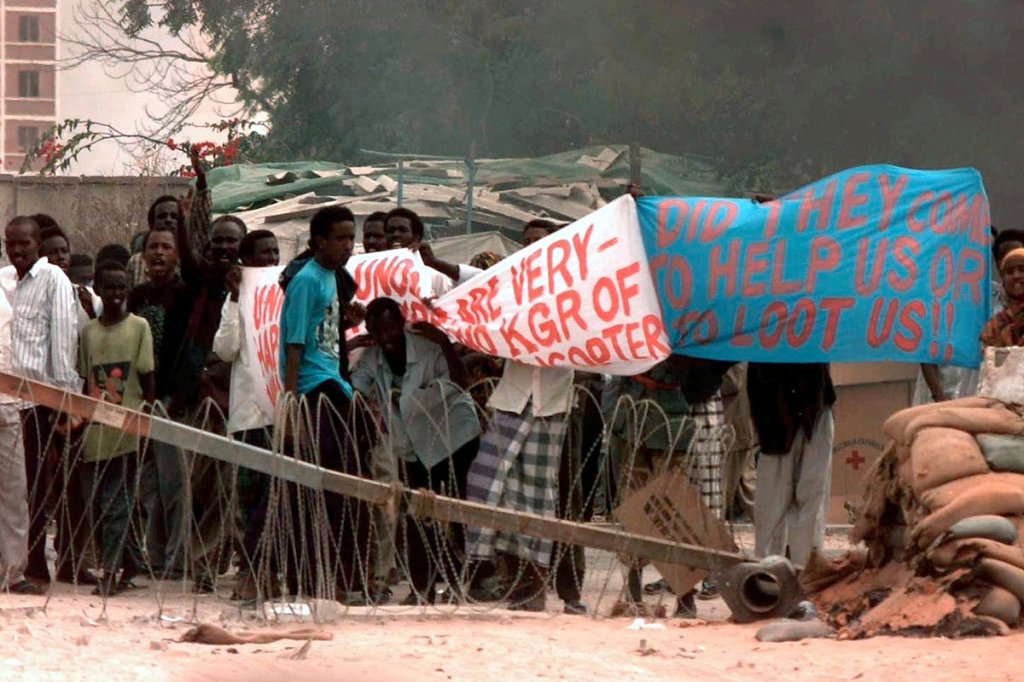
By mid-1993, the groundwork laid by the Marines enabled UNITAF to transition into a new United Nations mission, UNOSOM II. Unlike Operation Restore Hope, which was focused on securing aid, UNOSOM II aimed to rebuild Somalia politically, disarm militias, and create long-term stability. This shift dramatically altered the nature of the mission.
Most Marine units completed their rotations before the most intense period of fighting began. However, the transition to UNOSOM II heightened tensions, particularly with General Aidid’s faction, which resisted disarmament and viewed UN forces as a hostile presence. As the mission expanded its goals, violence increased, and Somalia became a far more dangerous and unpredictable environment for the remaining U.S. forces in Mogadishu.
The Road to “Black Hawk Down”
As Aidid’s militia became increasingly aggressive, the United States reinforced its presence with Army Rangers, Delta Force operators, and soldiers from the 10th Mountain Division. Their task was to conduct precise raids to capture or neutralize key members of Aidid’s leadership network.
On Oct. 3, 1993, U.S. forces launched what was intended to be a quick one-hour operation to detain several of Aidid’s top lieutenants. What unfolded instead was a catastrophic 17-hour battle, the most intense American ground combat since the Vietnam War.
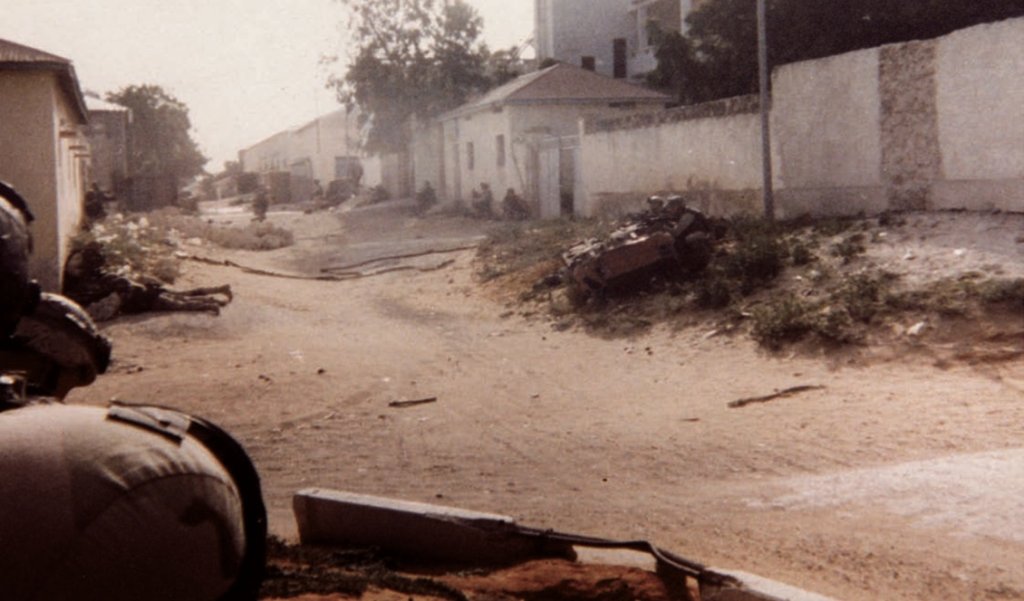
In the midst of the raid, Somali fighters armed with RPGs shot down two UH-60 Black Hawk helicopters. The crashes left American soldiers scattered and isolated throughout Mogadishu. Rangers, Delta operators, and supporting soldiers fought block by block, rooftop to rooftop, to reach and defend the crash sites. Thousands of Somali fighters encircled them, turning the city into a labyrinth of gunfire, chaos, and desperation.
By the end of the battle, 18 American soldiers were killed, and dozens more were wounded. Hundreds of Somali fighters and civilians also lay dead. The shocking images of Americans being dragged through the streets of Mogadishu were broadcast worldwide, shattering public support for the mission and transforming the way Americans viewed humanitarian intervention.
“Black Hawk Down”
The events of October 1993 might have faded from national memory were it not for Mark Bowden’s bestselling book “Black Hawk Down” and the 2001 Ridley Scott film adaptation. The movie introduced the battle’s intensity to millions of viewers and immortalized the heroism displayed by U.S. forces, including Sgt. First Class Randy Shughart and Master Sgt. Gary Gordon. Both were posthumously awarded the Medal of Honor for their selfless defense of the downed crew of Super Six Four.
While the film earned praise for gritty realism, it also sparked debates about its portrayal of Somali civilians and the broader context of America’s involvement. Still, it succeeded in ensuring that the sacrifices of those on the ground, from the Marines who secured the initial relief corridors to the Rangers, Delta operators, 10th Mountain soldiers, and UN troops who fought through Mogadishu’s streets, would not be forgotten.
A New Chapter in U.S. Foreign Policy
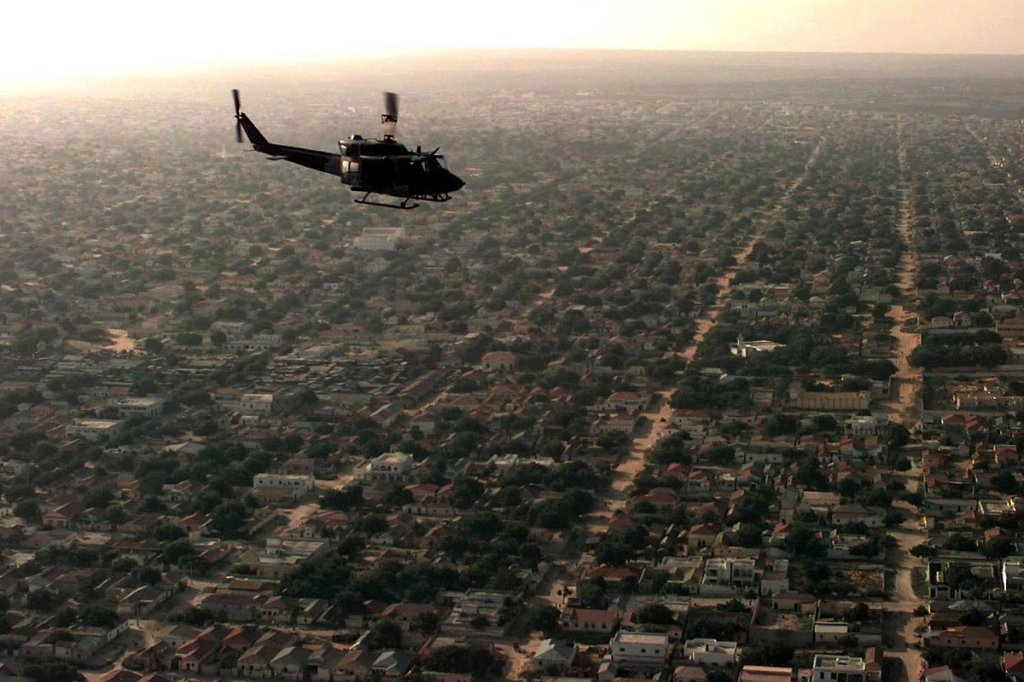
The tragedy of October 3–4 had immediate and long-lasting consequences. President Bill Clinton soon ordered the withdrawal of U.S. combat forces by March 1994. The United Nations mission faltered shortly after, unable to achieve its far-reaching goals without American military support. Somalia continued to struggle with instability for decades to come.
Politically, the battle shifted American foreign policy. Leaders in Washington became far more hesitant to commit U.S. troops to dangerous humanitarian interventions—a reluctance often called the “Somalia Syndrome.” This caution influenced decisions during the Rwandan genocide in 1994, the Haiti intervention in 1995, operations in the Balkans, and even later conflicts in Iraq and Afghanistan. The lessons of Somalia cast a long shadow.
Legacy of Operation Restore Hope
Despite the tragedy that followed, the legacy of Operation Restore Hope remains deeply significant. For the United States Marine Corps, the operation demonstrated the remarkable capability of Marines to provide stability, protection, and hope in a collapsed society. Their initial success saved countless Somali lives and showcased the ability of American forces to conduct humanitarian operations under fire.
Somalia remains a stark reminder of both the promise and the peril of military involvement in humanitarian crises. Yet the courage and discipline of the Marines who first set foot in Mogadishu continue to stand as a testament to the highest ideals of their service—faithfulness, initiative, and the unwavering commitment to protect those who cannot protect themselves.
Don’t Miss the Best of We Are The Mighty
• This U.S. Marine went to Somalia and became a warlord
• Today in military history: Marines storm Mogadishu
• Osama bin Laden trained Somalis in the ‘Black Hawk Down’ incident