
In 1857, unrest surrounding elections in Washington, D.C., was so out of control that President James Buchanan called in the Marine Corps.
As Marines faced off against the so-called Plug Uglies—violent rioters hired to intimidate voters and seize polling places—the Commandant of the Corps, Archibald Henderson, walked the streets. Henderson was not in uniform, but his mere presence meant he was a target.
Related: Remembering 250 years of Marine Corps Commandants
It wasn’t long before the Plug Uglies fired at Henderson. In one instance, Henderson’s life was saved only when a Marine used his musket to knock a gun out of an agitator’s hand. That allowed Henderson enough time to grab the lowlife and take him to jail.
“A man came rapidly through one of the openings in the Market House, discharging a pistol in the direction of a sergeant and myself, then turned to save himself by flight…,” Henderson wrote, according to a 2024 article from the Marine Corps Association. “I jumped forward and seized him by the collar and made him my prisoner.”
Henderson was 74 years old at the time.
Fighting for Marines
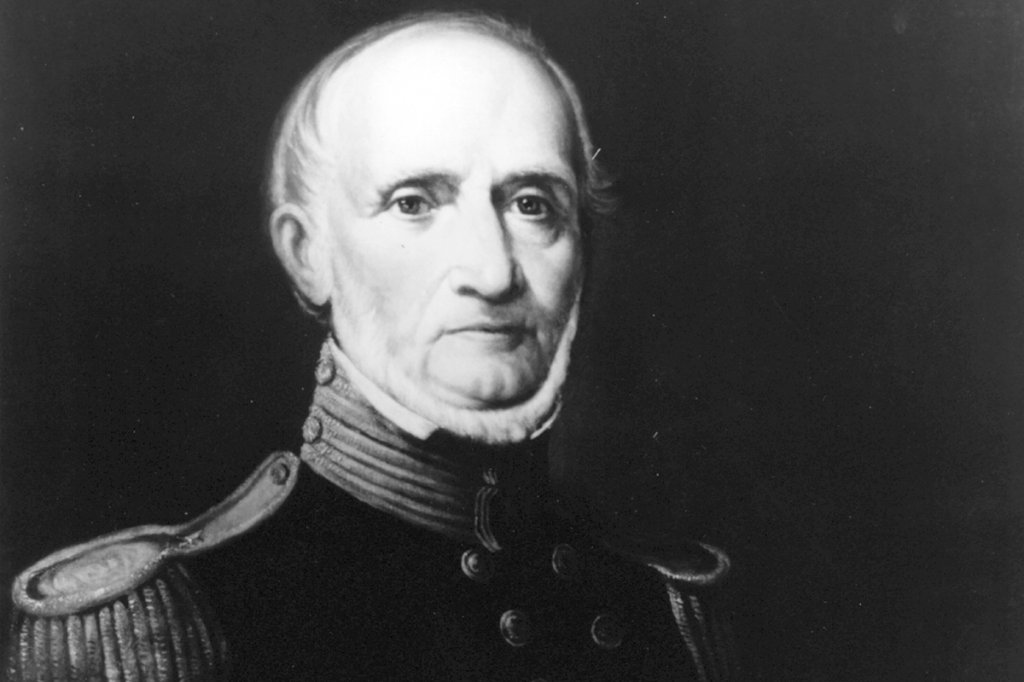
Since the Marine Corps was founded at a tavern in Philadelphia on November 10, 1775, a total of 39 men have served as its Commandant. None lasted longer than Henderson, “the Grand Old Man of the Marine Corps” who held that position for a staggering 38-plus years.
Beginning as Commandant in 1820, the War of 1812 veteran did not inherit an ideal situation. The morale among Marines was startlingly low, and Henderson wasted little time in trying to bridge that divide. He traveled to stations, met with Marines personally, and increased the public’s awareness of their mission.
Henderson was also not above speaking truth to power. If President Andrew Jackson didn’t know that already, he learned it in 1829 when he proposed combining the Marine Corps with the Army. Henderson thought that was not a good idea, to say the least, and determined to keep the Corps as a separate military branch, he took his argument to Congress. Like so many other battles, Henderson won that one, too, leading to the Marines being placed under the auspices of the Department of the Navy in 1834.
Henderson’s actions earned his fellow Marines’ respect. He tried his best to make himself seen as one of them, willing to do whatever it took. That was never more apparent than during the Second Seminole War, which broke out after the U.S. government attempted to relocate Indians from Florida to west of the Mississippi River.
Henderson didn’t remain far from the action. He went toward it, even posting a note at Marine headquarters in Washington, D.C.: “Have gone to Florida to fight the Indians. Will be back when the war is over.”
The Second Seminole War
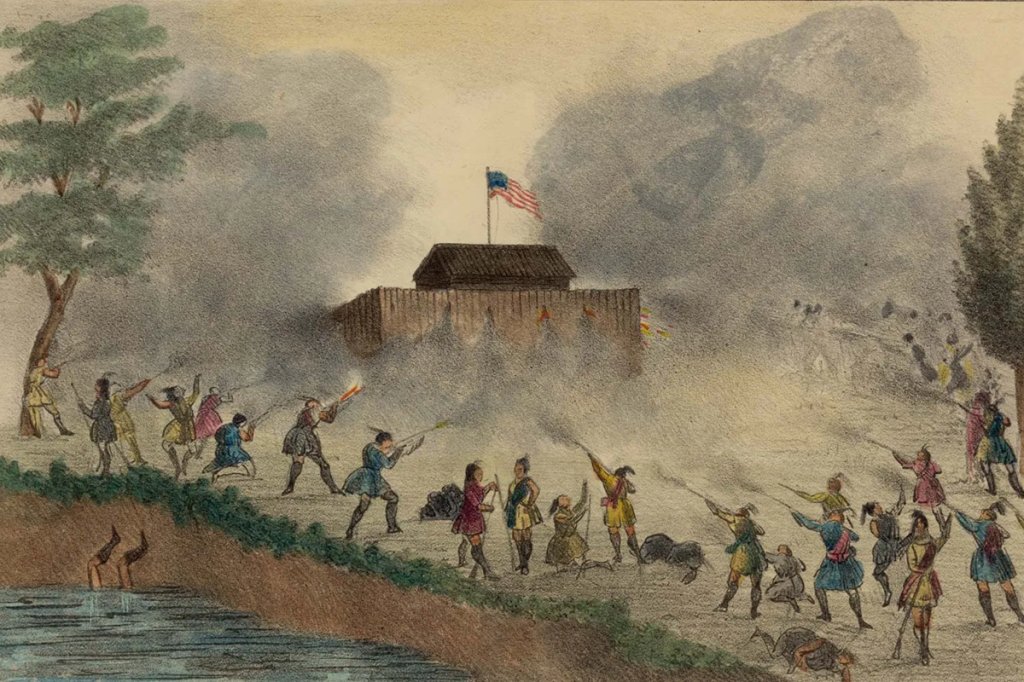
The Second Seminole War seemed inevitable after Jackson signed the Indian Removal Act in 1830. The Indians undoubtedly viewed the legislation as akin to a broken promise, because it violated previous treaties to which the U.S. government agreed.
Several years later, tensions escalated after negotiations with the Seminoles failed to reach a resolution. Those rose even further when Jackson approved the use of military force, if required.
On December 28, 1835, the Seminoles and others ambushed a group of 100-plus soldiers; only three troops survived the attack. With the Army struggling to contain the Indians in the early days of the Second Seminole War, Henderson offered a regiment of Marines for support.
Jackson gratefully accepted Henderson’s offer, and off the Marines went. (Some Marines already were involved in the fighting.) Under Henderson’s leadership, the Corps provided 38 officers and 424 enlisted Marines. When Henderson left Florida in 1837—the Second Seminole War lasted another five years—two companies stayed.
More than 1,500 U.S. service members died in the conflict. Up to 4,000 Seminole Indians resettled west, leaving only a few hundred behind. The war ended without the signing of any peace treaty.
A Commandant to the End
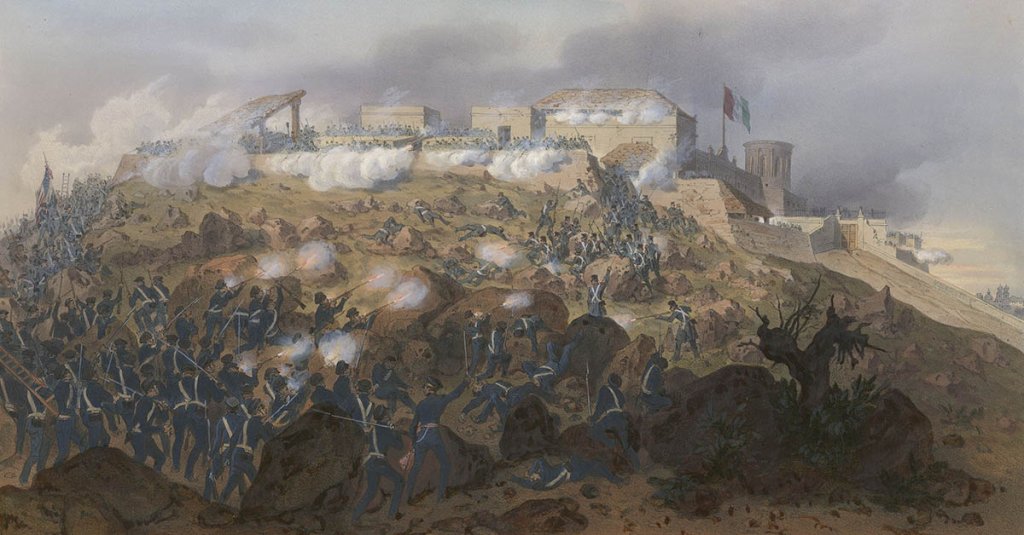
Under Henderson, the Marines deployed around the world, including in China, Central Florida, the South Pacific, and Africa. They also played an important role during the Mexican-American War, during which the Marines famously stormed “the Halls of Montezuma.”
Also of note, Henderson ordered the color of the Corps’ uniforms change from green to blue with scarlet trim while he was Commandant.
By the time that Henderson’s tenure ended, he served twice as long as anyone in the role (before or since). That record never will be broken, and true to his leadership style, Henderson went out on his own terms. The longtime Commandant took a walk, returned home, and died in his sleep on January 6, 1859.
He was 75 years old. Henderson spent more than 52 of those years in the Marine Corps, creating a shining example that survives to the present day.
Don’t Miss the Best of We Are The Mighty
• The United States created rules for encountering a Yeti during the Cold War
• How the Marine Corps’ oldest division survived at Chosin Reservoir
• A US Marine went to Somalia and became a warlord
Featured
Loading comments…
Comments couldn’t be loaded. Please refresh the page.