
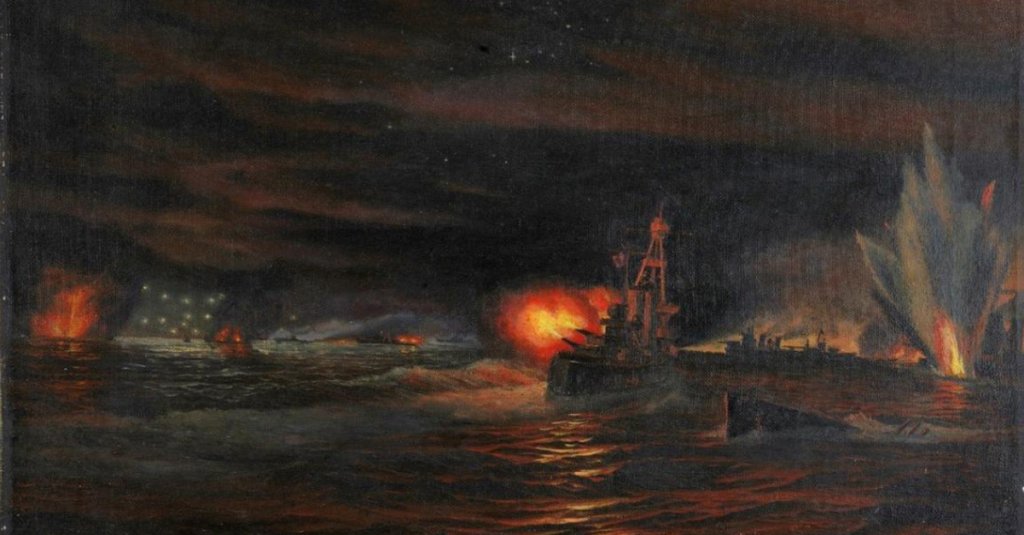
Calvin Graham faced the biggest test of his young life when he tried to enlist in the United States Navy in 1942.
The baby-faced Graham was only 12 years old at the time and did everything he could think of to make himself appear older. As a Smithsonian magazine article in 2012 explained, Graham arrived clean-shaven, wore his older brother’s clothes and a fedora, and spoke in a deep voice.
Also Read: The story of 4 brothers who served on the Juneau with the Sullivans
Graham, whose friends forged his mother’s signature on his military paperwork, could do nothing about his teeth.
The boy still had some of his baby teeth—a telltale sign of his actual age. When a dentist gazed into Graham’s mouth, he confronted the young boy. Graham stuck to his story for as long as possible, then informed the dentist he knew others who were allowed to enlist that day despite being underage.
“Finally, he said he didn’t have time to mess with me, and he let me go,” Graham said.
A Troubled Childhood
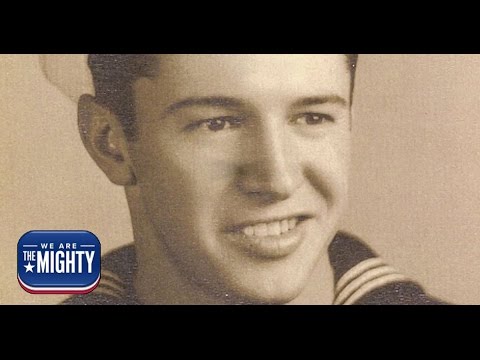
The 12-year-old who became a Navy hero in World War II
Circumventing the U.S. military’s minimum age requirements dates back to the Revolutionary War. During World War II, no enlistee was younger than Graham, according to the USO.
When the Japanese attacked Pearl Harbor on December 7, 1941, Graham was a student in Texas with a disturbing home life. He moved out of the family’s house because of an abusive stepfather, and once the U.S. entered the war, Graham desperately wanted in.
He had relatives who died in the war, he detested Adolf Hitler, and he saw a chance to escape. Graham lied to his mother that he was off to see relatives, disguising the fact he was headed to San Diego for basic training. From there, the Navy assigned the boy sailor to the USS South Dakota.
Marine Henry Buecker met Graham shortly thereafter.
“Calvin asked me: ‘Can you keep a secret? I’m 15,” Buecker told the Chicago Tribune in 1994. “After that, he took me as his best friend. I didn’t find out he was only 12 until 35 years later.”
From a young age, Graham knew how to keep a secret.
Fighting at Guadalcanal
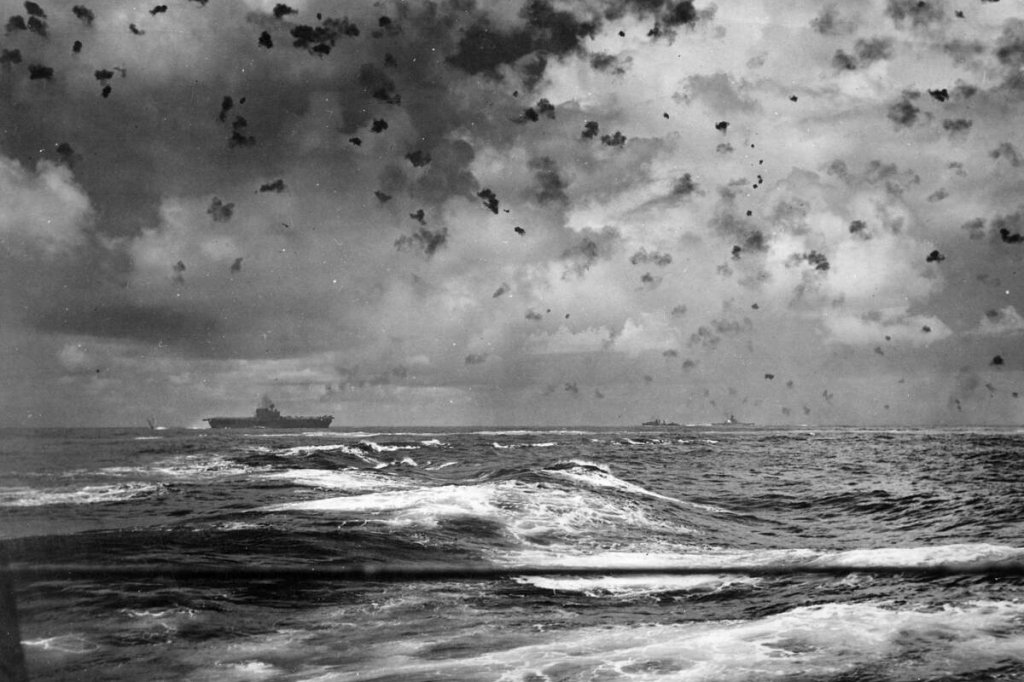
Graham was a gunner on the South Dakota.
One of the war’s most decorated warships, the South Dakota saw extensive action during the Guadalcanal Campaign. In the middle of the first major Allied offensive in the Pacific during WWII, there was nowhere for Graham to hide.
The fighting was intense, and Graham felt it. In October 1942, as Smithsonian magazine highlighted, the Japanese dropped a 500-pound bomb that obliterated the South Dakota’s main gun turret. Fifty men on board were injured, and one died.
Graham—all 5 feet, 2 inches and 125 pounds of him—was lucky that time. He was not as fortunate during the Second Naval Battle of Guadalcanal. In one terror-filled night, the Japanese tried to pound the South Dakota into submission. Graham sustained shrapnel injuries to his jaw and mouth, knocking out his front teeth, but that was not the worst of it. One blow caused him to fall through three stories of superstructure.
During that attack, 38 crew members on the South Dakota died. Sixty others sustained injuries.
“I took belts off the dead and made tourniquets for the living and gave them cigarettes and encouraged them all night,” Graham recalled, per Smithsonian magazine. “It was a long night. It aged me.”
After the South Dakota arrived in New York for repairs, Graham, who received a Bronze Star, Purple Heart, and other medals for his actions, appeared in newsreel footage. Unfortunately for the young sailor, his mother recognized him.
3 Months in the Brig
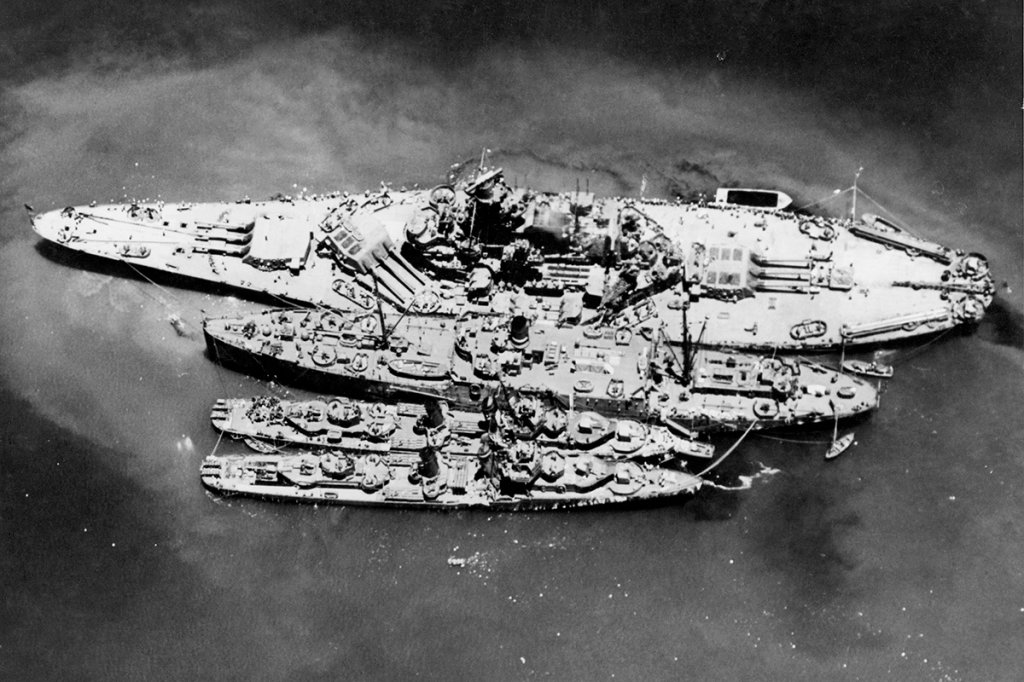
It didn’t take long for Graham’s mother to inform the Navy about how old her son really was. As a result, the preteen served three months in the brig before the Navy took away his medals and disability benefits and dishonorably discharged him.
Graham struggled readjusting to civilian life. For years, how his time in the Navy ended (and what was taken away) bothered him. Whatever his transgression, service meant a lot to Graham; in fact, he went on to serve in the Marine Corps.
Graham was closing in on his 50th birthday when his discharge was changed to honorable and he was given back his medals, all except for the Purple Heart. His disability benefits were later restored as well.
Shortly before Graham died in 1992, his nephew, Dean Lowrey, spoke with him.
“Calvin told me, ‘You know I’m not going to be here much longer. My old heart’s fixing to play out on me,’” Lowrey told the Chicago Tribune. “He talked about his medals. He’d gotten his Bronze Star and the others back, everything except the Purple Heart. He couldn’t figure why they’d held up that one. He said, ‘Maybe they’ll give me my Purple Heart after I’m gone.’”
Graham was right. His family accepted the Purple Heart on his behalf in 1994. The former sailor’s sacrifices finally were recognized in full.
Don’t Miss the Best of We Are The Mighty
• Why the Battle of Guadalcanal was a turning point in WWII
• How these Navy submariners worked to save themselves after their sub sank
• 21 facts about the First Gulf War
Featured



Loading comments…
Comments couldn’t be loaded. Please refresh the page.