
Just when the entire U.S. Army had begun to believe the war would be over by Christmas, a surprise German offensive smashed through the Ardennes. The Allied forces were completely unprepared. What followed were the death throes of Nazi Germany; one last Hail Mary attempt to destroy the Allies’ supply lines and maybe even push them back into the English Channel. Over the course of the next six weeks, 47,000 American soldiers would be wounded, another 23,000 missing, and an estimated 19,000 killed.
So it goes.
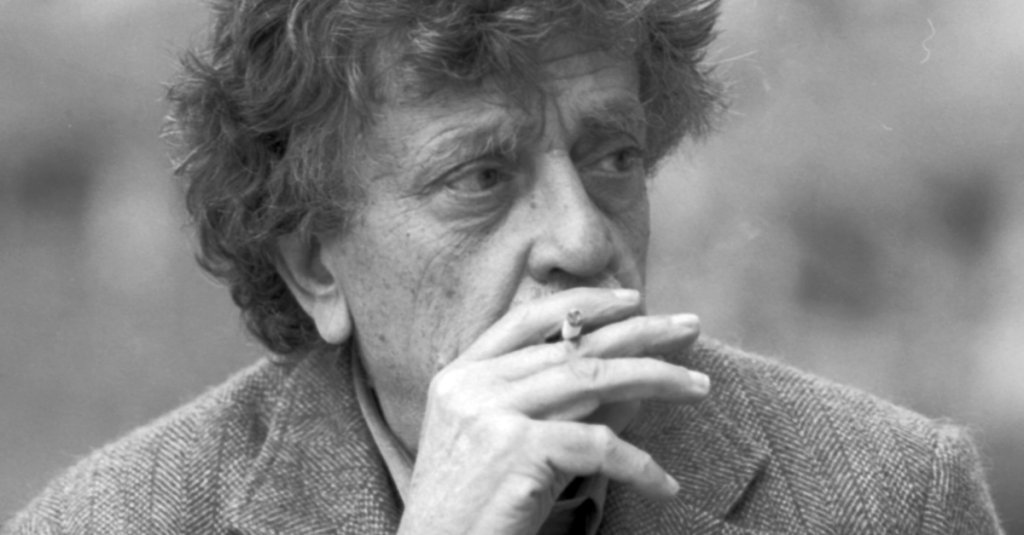
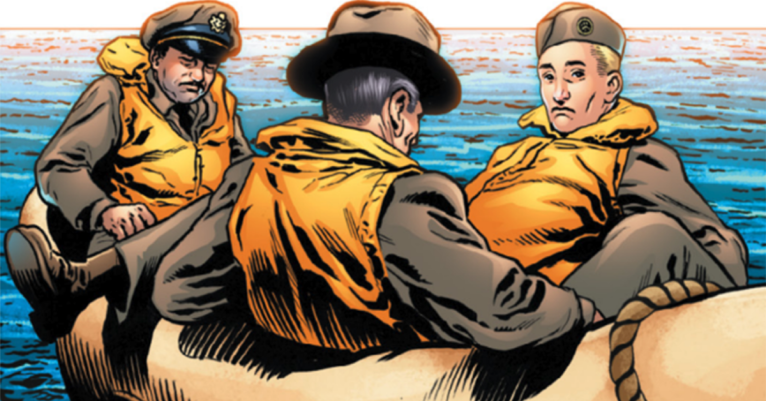
The Ardennes was a soft target for the Germans. It was filled with either fresh, green soldiers or battle-hardened veterans who were resting after weeks of relentless fighting. Among those taken prisoner by the Germans was a young intelligence scout from Indiana named Pfc. Kurt Vonnegut.
The Kurt Vonnegut Museum and Library, which champions the author’s legacy through education, events, writing workshops, and fighting book bans, wants to create an immersive experience for its visitors. It launched a Kickstarter to raise funds for “a new immersive exhibition inspired by Tralfamadore, the fictional world from Slaughterhouse Five [sic] where time exists all at once and perspective changes everything.”
If you’re unsure of what any of this means, you should read Vonnegut’s “Slaughterhouse-Five.” Not only is it one of the most banned books ever, it’s also widely considered “the ultimate PTSD novel.”
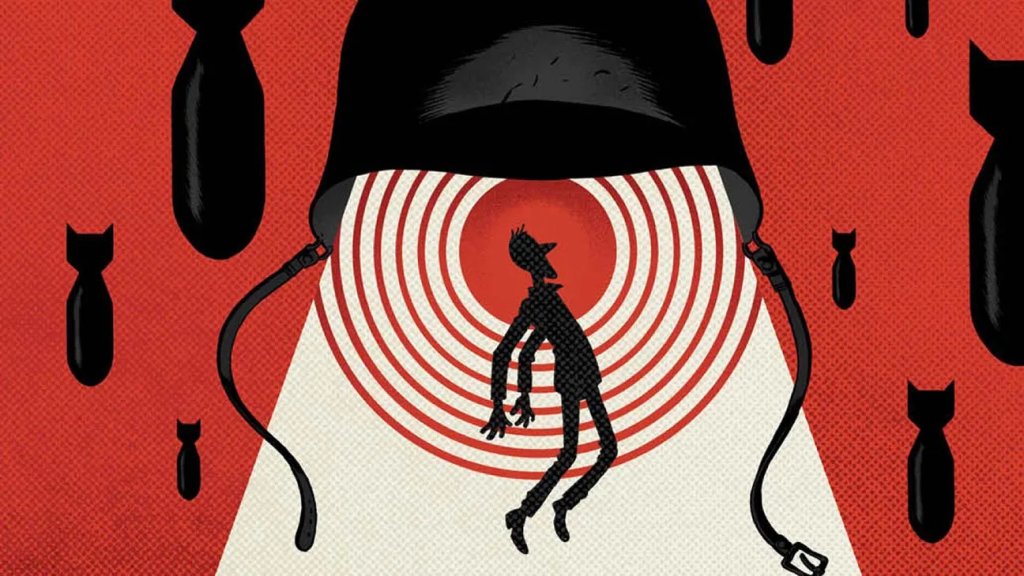
After World War II, Vonnegut found himself working in public relations for General Electric. To support his family, he began writing thoughtful science fiction novels—though critics disagreed with how “thoughtful” they were. It wasn’t until 1969 that he finally tapped into his wartime experiences. The sci-fi author whose work had long been accused of being too “pulpy” published his magnum opus, “Slaughterhouse-Five.”
One of the most crucial aspects to the novel are the alien Tralfamadorians, who kidnap protagonist Billy Pilgrim, and explain his signature condition: Billy Pilgrim has become unstuck in time.
The aliens do not live in linear time, as humans do. They see all moments—past, present, and future—simultaneously as fixed and unchanging.

As a prisoner of war, Vonnegut was put to work in a German syrup factory in Dresden. And while he suffered at the hands of his cruel Nazi overseers, it was Allied air power that truly haunted him. While being transported to from the Ardennes to Dresden, his train was strafed by Allied fighters. His formative moment, however, came in February 1945, when the Allies firebombed the city.
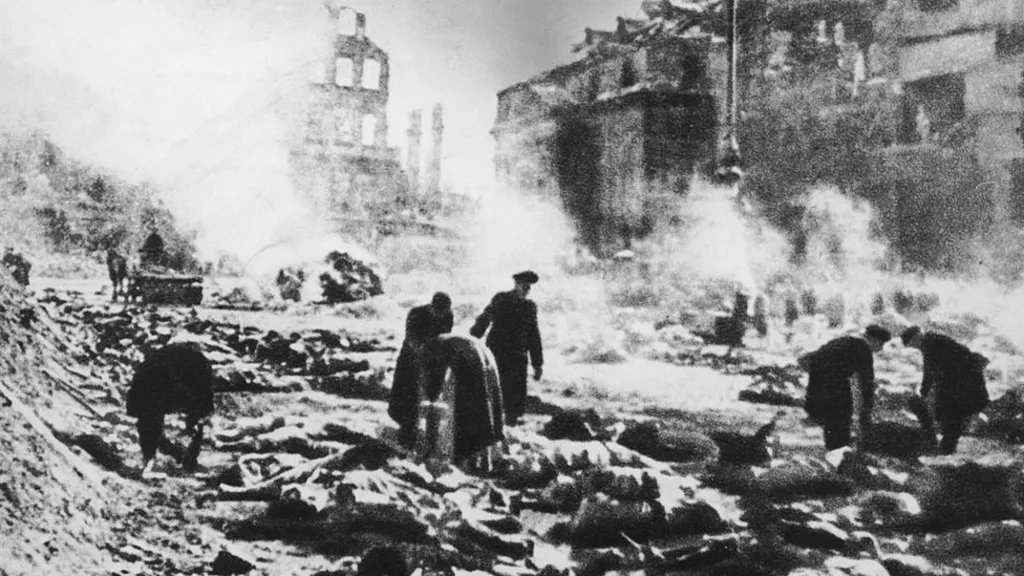
Somewhere below their billet, called Slaughterhouse-Five, Vonnegut and others sought shelter from the bombing in an underground meat locker. When they returned to the surface, they found Dresden completely destroyed. Some 25,000 people were killed in the air raid.
So it goes.
The surviving POWs were forced into body collection and burial details while the locals hurled insults and rocks at them. Dresden wouldn’t be liberated until May 1945.
Billy Pilgrim had no control over when or where he would jump through time. One moment, he found himself marching in the forest with every bit of gear he was issued and the next he would fast-forward to 1965; 41 years old and visiting his mother in a nursing home. Trauma survivors, it turns out, often detach or construct narratives to endure the unendurable. Billy Pilgrim felt helpless to deal with is experiences.
Kurt Vonnegut wrote “Slaughterhouse-Five” to try to make sense of that feeling; to seek meaning in a universe that could best be described as “absurd.” The reader is left to figure out if free will exists or if finding a deeper meaning just helps us accept the inevitable. Tralfamadorians already know the answer.
The Vonnegut Library’s coming exhibition will take a deeper look at the author’s World War II experiences, explain how Tralfamadorian philosophy relates to life on Earth, and change the way visitors experience, time, memory, and choice.
Like Vonnegut’s “Slaughterhouse-Five” before it, the Tralfamadore exhibit might be the closest anyone could come to experiencing the PTSD of a World War II veteran without having to experience wartime trauma. It might even be able to bring some visitors closer to understanding the modern-day veterans in their personal lives.
To learn more about the Kurt Vonnegut Memorial Library, its coming “Tralfamadore” exhibition, or to donate to the cause, visit the “Tralfamadore” Kickstarter page or visit the Vonnegut Library website.
Don’t Miss the Best of We Are The Mighty
• 11 behind-the-scenes war movie revelations from Charlie Sheen’s ‘The Book of Sheen’
• A book about the assassination of President Garfield is now a four-part Netflix series
• ‘Starship Troopers’ is (finally) getting a reboot—here’s what could be different


Loading comments…
Comments couldn’t be loaded. Please refresh the page.