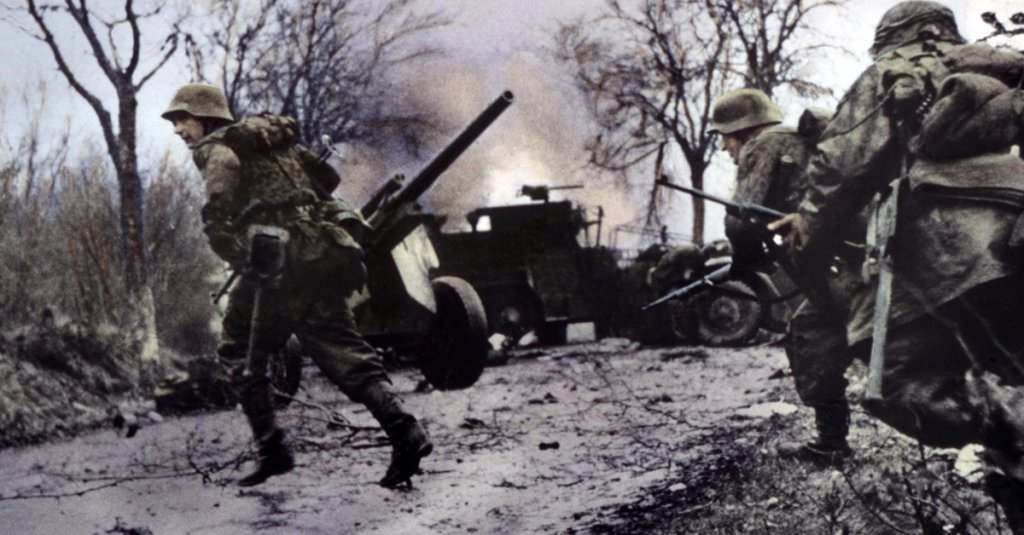
Every December, the History Channel hits the spam button on the Battle of the Bulge. You know the script by heart (because it is, objectively, awesome): McAuliffe said “Nuts,” Patton drove really fast, and the 101st Airborne froze in foxholes while waiting for the weather to clear.
But the Bulge wasn’t just a story of paratroopers and tanks. It was an unpredictable, desperate, and technologically experimental battlefield that probably looked more like sci-fi than the World War II movies you grew up on.
While the infantry was shivering in the Ardennes, the brass unlocked a classified “super-weapon” they had been terrified to use. While the panzers were prowling at night, entire valleys were lit up by “artificial moonlight.” And behind the lines, a few unlucky units were tasked with a job so grim it makes digging a foxhole as lovely as an all-expense-paid weekend in Turks and Caicos.
Here are the three stories of the Battle of the Bulge that usually get left on the cutting room floor.
1. The “Funny Fuze” That Shredded German Infantry

If you think the Atomic Bomb was the biggest secret of the war, you haven’t met the VT (Variable Time) Fuze.
For most of the war, artillery was a guessing game. You either used a “contact fuze” (which exploded when it hit the dirt, wasting most of its shrapnel in the mud) or a “time fuze” (which required your math skills to be on point). If you set the timer for 10.5 seconds and the shell arrived in 10.4, it harmlessly buried itself. If it arrived in 10.6, it exploded too high to hurt anyone.
Enter the VT Fuze, codenamed “POZIT.” This wasn’t just a detonator; it was a micro-radar set built into the nose of a 155mm shell. It emitted radio waves that bounced off the ground, telling the shell exactly when it was 20 meters high.
The Pentagon was so terrified the Germans would capture a dud and reverse-engineer it that they banned the VT Fuze from land warfare. It was “Navy only” for years.
When the Bulge popped off and the lines collapsed, the rulebook was to be tossed; survival and completing the objective at all costs were the new rules. General Lear finally authorized the release. On Dec. 18, 1944, German infantry formed up. They prepped for attack. They anticipated the typical, the usual, the same tempo of contact artillery. Instead, they walked into hell raining from above. Thousands of shells detonated at “airburst” height, which sprayed jagged steel fragments into normally safe foxholes and those unfortunate enough to be caught in the open.

General George S. Patton, a man who would slap you as soon as praise you, wrote to the War Department: “The funny fuze won the Battle of the Bulge for us. I think that when all armies get this shell, we will have to devise some new method of warfare.”
2. The “Artificial Moonlight” Battalions
Night vision didn’t exist in 1944. When the sun went down in the Ardennes, the fighting did as well, unless you were in the 357th Searchlight Battalion.
Typically, searchlights were for spotting bombers. But during the Bulge, the Allies got creative. They invented “Artificial Moonlight” (or “Movement Light”). The concept was simple but sounded insane: aim massive 800-million-candlepower searchlights at the low-hanging cloud deck and reflect the beam back down to earth.
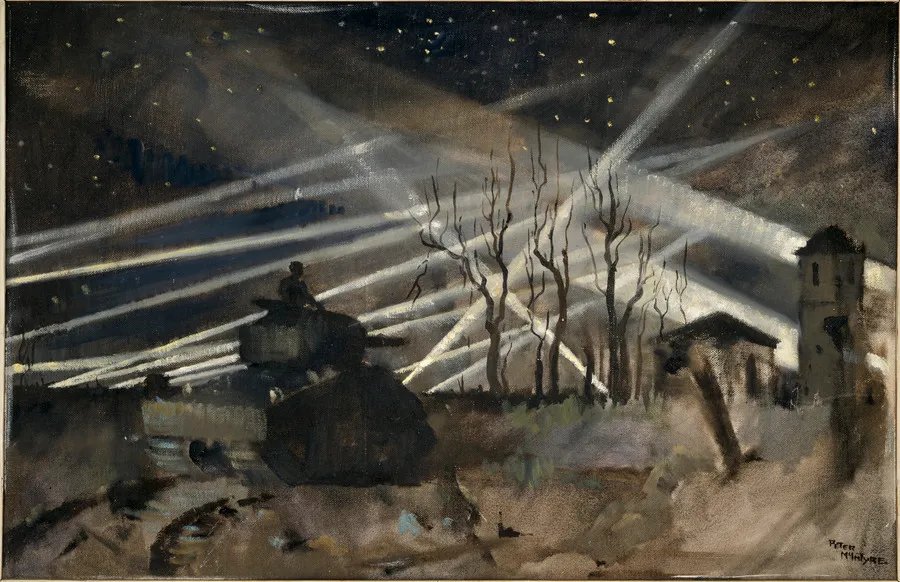
What effect did it have on the battlefield? It turned pitch-black valleys into a hazy, fever-dream nightmare. For American troops, it might as well have been light from heaven; they could spot silhouettes against the snow, repair bridges, and move convoys without headlights.
For the Germans, it was a terrible nuisance. Captured Wehrmacht officers admitted they thought it was a new secret weapon. They felt “naked” in the light, unable to move without being seen, yet unable to shoot out the source because the lights were miles behind the lines, hidden in defilade. The 357th didn’t just illuminate the battlefield; they were haunting it.
3. The Frozen Dead: The 606th QM Graves Registration
We talk about the cold in terms of frostbite and frozen canteen water. We rarely talk about, for good reason, of course, what it did to the deceased.
The 606th Quartermaster Graves Registration Company arrived in the Ardennes with a job that no amount of training could prepare them for. In the -20°F temperatures, bodies didn’t decompose; they froze solid within hours. And they didn’t freeze equally.
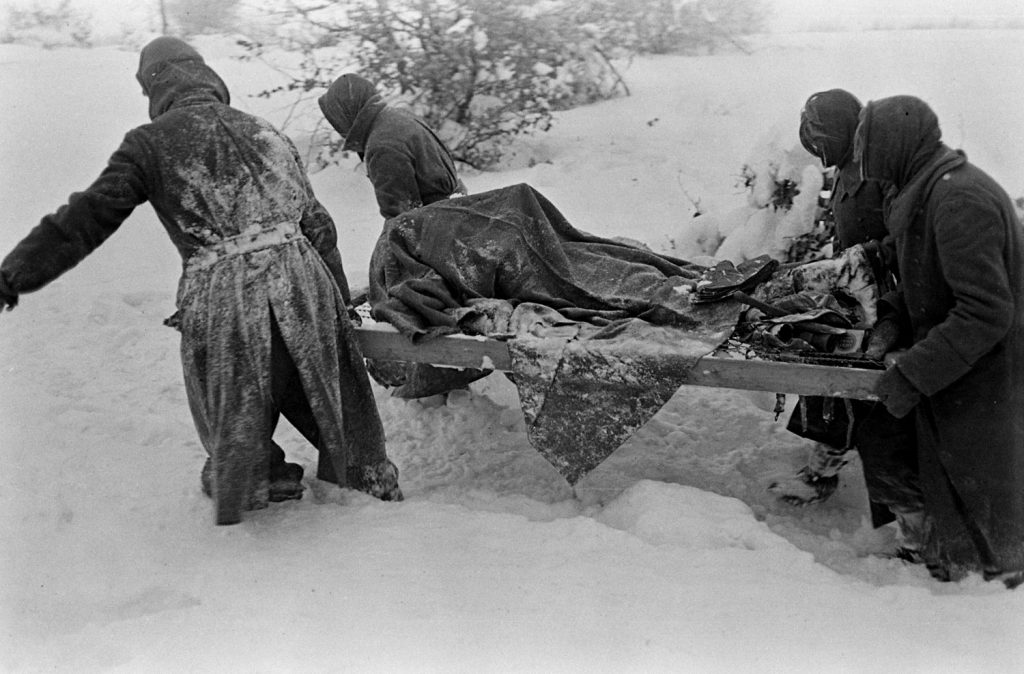
The grim reality is that soldiers died in twisted, violent ways, then froze solid in place. Some lay curled in the fetal position; some were caught with their arms outstretched, others while trying to crawl. The 606th faced a gruesome logistical problem: the bodies wouldn’t fit on the standard stretcher litters. They wouldn’t stack in the 2½-ton trucks either.
These troops had to improvise “thawing” procedures or find ways to respectfully transport men who were frozen in the shape of their final moments. This was the extra detail that broke men faster than enemy fire could.
We love the “Hollywood” version of the Bulge because it’s sanitized and clean. It’s a story of underdogs holding the line and a cowboy General riding to the rescue. It’s a movie poster maker’s dream. But if you only look at the highlight reel, you miss the reality of what actually broke the Wehrmacht in the Ardennes.
This victory wasn’t just secured by hopes, dreams, and M1 Garands; it was secured by an American war machine that decided to stop fighting fairly.
We deployed artillery shells that “thought” for themselves, turning the enemy’s own tactics against them in a way that must have felt like occult magic to the guys on the receiving end. We eliminated the one tactical advantage they had left, darkness, by literally turning it into our advantage, one we still enjoy to this day.
And when the smoke cleared, we didn’t just leave the mess for someone else. We tasked men with the soul-crushing job of cataloging the cost, freezing their own hands to ensure that every frozen soldier was treated with a dignity the battlefield rarely offers.
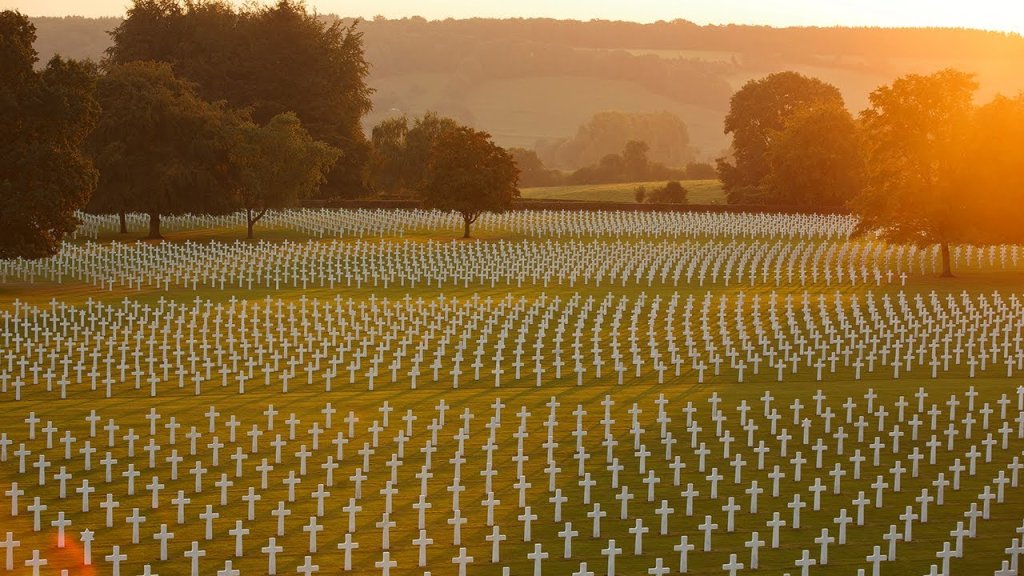
As the year draws to its end, and you hear about the “Battered Bastards of Bastogne,” give an extra minute to remember the unheralded and seldom discussed. Remember those radio operators who built the fuses that saved thousands of American lives. Remember the searchlight crews who lit the way for our boys. And never forget to toast the guys of the 606th, who bore a cross, so the rest wouldn’t have to.
Close your eyes and remember them. They are the history of the Bulge.