In April 2022, when the U.S. National Guard began pulling M113 armored personnel carriers out of storage to ship to Ukraine, the reaction was fairly consistent. Veterans, active service, and commentators alike called it “clearing out the cupboards.”
Ukrainian soldiers who had trained on Bradleys in Germany returned home to find boxy, vintage aluminum carriers waiting for them instead. Disappointment was the immediate reaction.
Also Read: 8 of the most terrifying Vietnam War booby traps
Years later, the M113 is one of the more valued vehicles in Ukraine’s arsenal. Crews who once dismissed it now refuse to give it up.
This is not an accident. It is, in fact, the same story the M113 has been telling since 1962: complain about maintaining it, write it off as too weak against anything larger than 7.62 ammo, eventually finding a way to matter again.
With more than 80,000 units built, over 50 countries operating it, and 65-plus years of continuous service, the M113 may be the most consistently used armored vehicle most people have never heard of.
Battle Uber Begins
After the Korean War, the U.S. Army desperately needed an armored personnel carrier that could keep pace with tanks, withstand small-arms fire, swim across rivers, and still fit in the cargo hold of a C-130 transport aircraft.
The steel M75 was just too heavy. The lighter M59 variant was too unreliable. In the mid-1950s, FMC Corporation partnered with Kaiser Aluminum to try something no one had done at scale: build a combat vehicle out of aircraft-grade aluminum alloy.
FMC went on to produce two prototypes: the aluminum T113 and the steel T117. Spoiler alert: the aluminum version won. Talk about ticking off most of the boxes, it was lighter, amphibious without preparation, and could be air-dropped.
The world’s shortest war lasted an incredibly brief 38 minutes
The British didn’t have to waste much ammunition during the Anglo-Zanzibar War in 1896.
Here’s what happens when the US starts a military draft
Six steps in six months are all that separate civilians from the well-founded fear of a hat.
The Space Force was fighting Iran before the first F-35 took off
It doesn’t have cool slamcam footage, but it earns its keep.
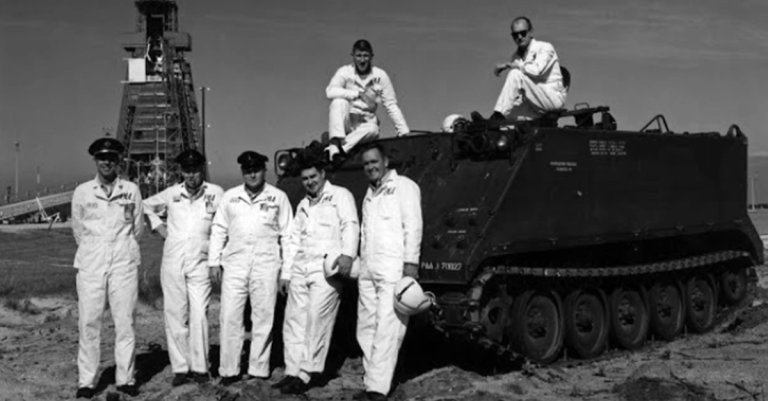
By 1960, the M113 was officially accepted into the Army. Conceptually straightforward, it could carry two crew and up to 11 infantrymen to the edge of a fight, drop them off, and pull back. A simple, inelegant, battlefield Uber, nothing more.
However, there was one serious concern from the jump. The original M113 ran on a gasoline engine. In combat, a punctured fuel cell could mean a fire. FMC Corp and the Army moved quickly to address this potential disaster.
In 1964, the M113A1 arrived with a General Motors 215-horsepower diesel engine that reduced fire risk while adding roughly 100 miles of range. Inevitably, this led to the diesel conversion becoming standard, and the gasoline models were eventually phased out.
Green Dragons in the Jungle
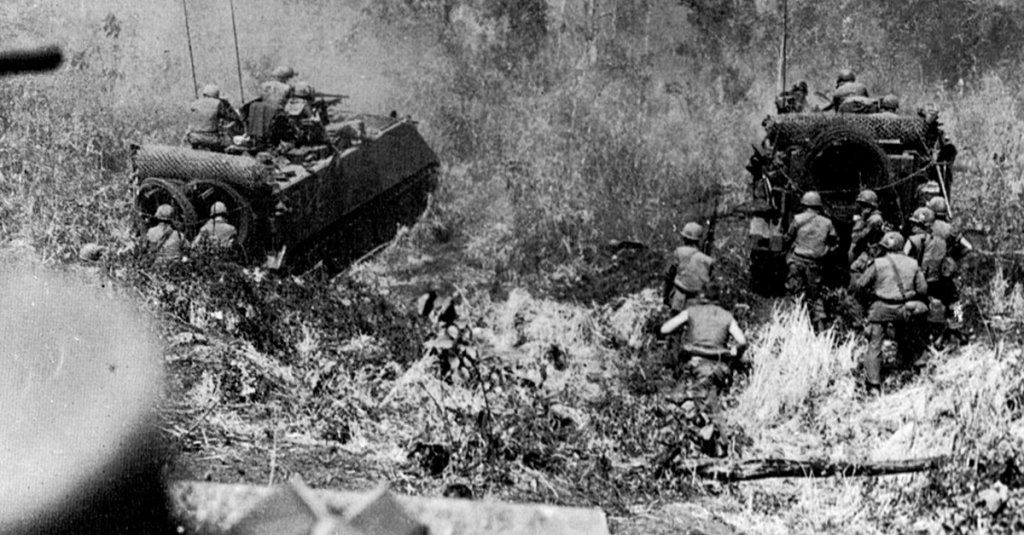
Some 32 M113s rolled into South Vietnam on March 30, 1962, assigned to two Army of the Republic of Vietnam (ARVN) mechanized rifle companies. Against lightly armed Viet Cong guerrillas, the carriers were devastating. The VC actually called them “Green Dragons,” and they caused the VC to rethink tactics quickly.
These new tactics were on display at the Battle of Ap Bac on January 2, 1963. VC forces, trained specifically in anti-helicopter and anti-M113 tactics, finally stood their ground. At least 14 M113 gunners were killed because the commander’s machine gun position left the operator fully exposed.
Ap Bac also exposed a critical vulnerability, triggering one of the M113’s defining traits: battlefield evolution by the troops who had to use them.
ARVN soldiers and their American advisors became quite adept at improvising. They welded gun shields from scrap metal. They mounted additional M60 machine guns on the flanks. Extra armor plating was bolted to the floors to protect against land mines.
The ARVN 80th Ordnance Unit formalized the shield designs, and eventually these upgrades became the standardized Armored Cavalry Assault Vehicle (ACAV), a configuration that turned a transport into an almost fighting vehicle, if you squinted your eyes really hard.
By the war’s peak, 10 U.S. mechanized infantry battalions operated in Vietnam, each roughly 900 soldiers strong and built around the M113. These vehicles served in Cambodia during the 1970 incursion and in Laos during Operation Lam Son 719 in 1971.
An estimated 1,300 M113s were lost across U.S., ARVN, and Australian forces during the conflict, to landmines alone. The vehicle was never designed for the role it filled, but the soldiers made it work.
The World’s APC
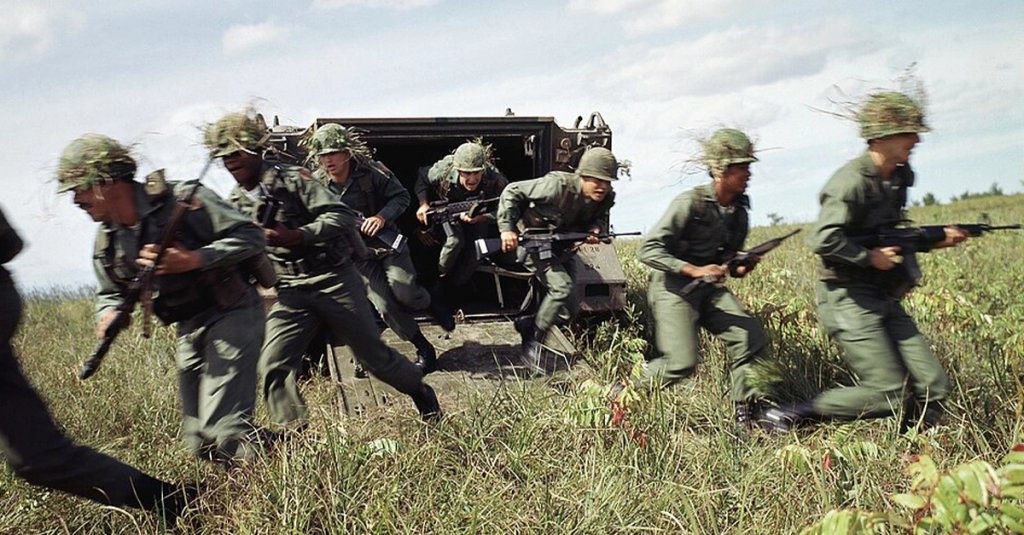
After Vietnam started to wind down, the M113 would go global. More than 50 nations adopted it, all drawn by the same defining qualities: cheap, reliable, mechanically simple, and endlessly adaptable.
Israel fielded a massive fleet, which it called the “Zelda,” deploying M113s from the 1973 Yom Kippur War through operations in Lebanon and Gaza. The Israeli Defense Forces still maintained around 6,000 as recently as 2024, though in May 2025, Israel’s Ministry of Defense announced a tender to sell 5,000 units.
This platform was so successful that it spawned more than 40 official variants: the M577 command post, M901 TOW missile launcher, M132 flamethrower, M163 Vulcan air defense system, and M548 cargo carrier, among others. Countries, of course, built their own derivatives: Turkey’s ACV-300, Pakistan’s Taiha, and Italy’s VCC-1, to name a few.
BAE Systems, which inherited the production line through a series of acquisitions, lists total production at approximately 80,500 units. Production continued until 2007, but thousands remained in U.S. active service, according to the National Security Journal.
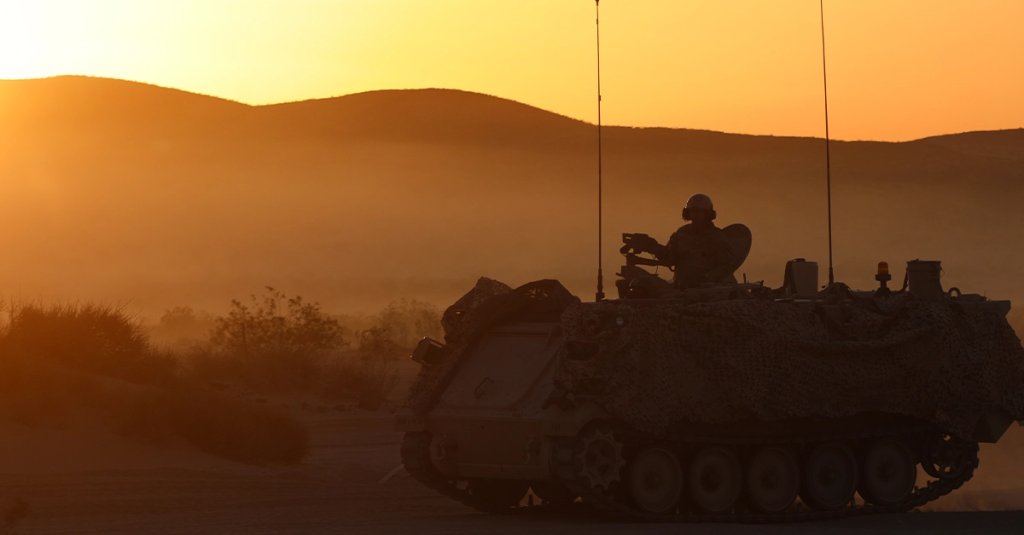
M113’s served dutifully in the 1991 Gulf War alongside Bradleys and Abrams tanks, handled support and logistics roles during the invasions of both Iraq and Afghanistan during the global war on terror, even seeing action during Panama in 1989. In each conflict, the same patterns emerged; it was not the star of the show, but it was always on stage.
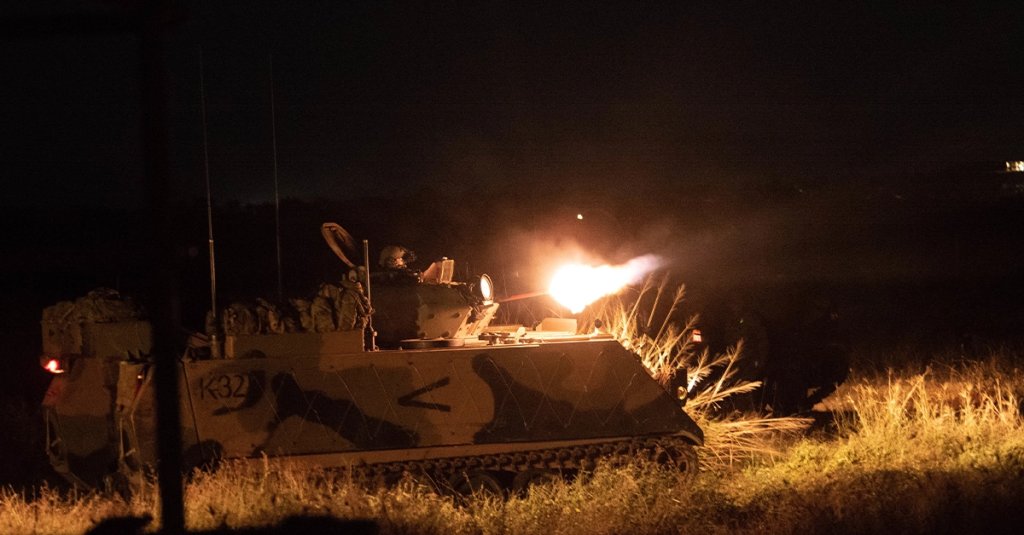
What’s Old is New Again
The U.S. committed 200 M113s to Ukraine in April 2022 as part of an $800 million security assistance package. They came from National Guard stocks and Army surplus, mostly in the A2 and A3 variants.
By January 2025, Pentagon data showed at least 900 M113 armored vehicles had been transferred to Ukrainian forces. Additional donations came from Lithuania, Denmark, Australia, the Netherlands, Germany, Spain, and Portugal.
Ukrainian forces quickly began modifying them, and the echoes of America’s wars were unmistakable. Crews added bolt-on steel screens to defeat shaped-charge RPG warheads. They mounted remote weapon stations, including the Ukrainian-made Tavria system, to allow firing from inside. Some units fitted ZU-23-2 autocannons for anti-drone defense.
Armored ambulance variants became critical for casualty evacuation under fire. The adaptation cycle that began at Ap Bac in 1963 was repeating itself six decades later, on a different continent, against a different enemy.
Vitalii Kovalchuk, a 36-year-old M113 driver at the time of his interview, told Kyiv Post that he had been operating the vehicles since the fall of 2022 and had survived multiple RPG hits. He described delivering reinforcements while completely surrounded and under heavy fire.
Another Ukrainian soldier, 23-year-old gunner Oleksii Dmytrenko, compared the M113 favorably to Soviet-era BMPs, telling reporters that while casualties in a BMP strike were almost certain, the M113 held up.
As a GWOT veteran, SPC David Miller, US Army Mortarman, put it so eloquently, “the best arguments for their continued use are that they already exist.”
For all the kudos the brave fighters who rely on them have given the APC, or lukewarm endorsements like those from Spec. Miller, Ukraine has done what it seems to do best: adapt.
Ukraine extensively uses drone transports these days, including unmanned ground vehicles (UGVs) and heavy-lift aerial drones, to deliver munitions, supplies, and evacuate wounded soldiers.
These systems, such as the Zmiy-500, operate on the front lines, delivering injured soldiers safely, then deploying again, filled with much-needed ammo. You can see how these developments could eventually mothball the 113 one day.
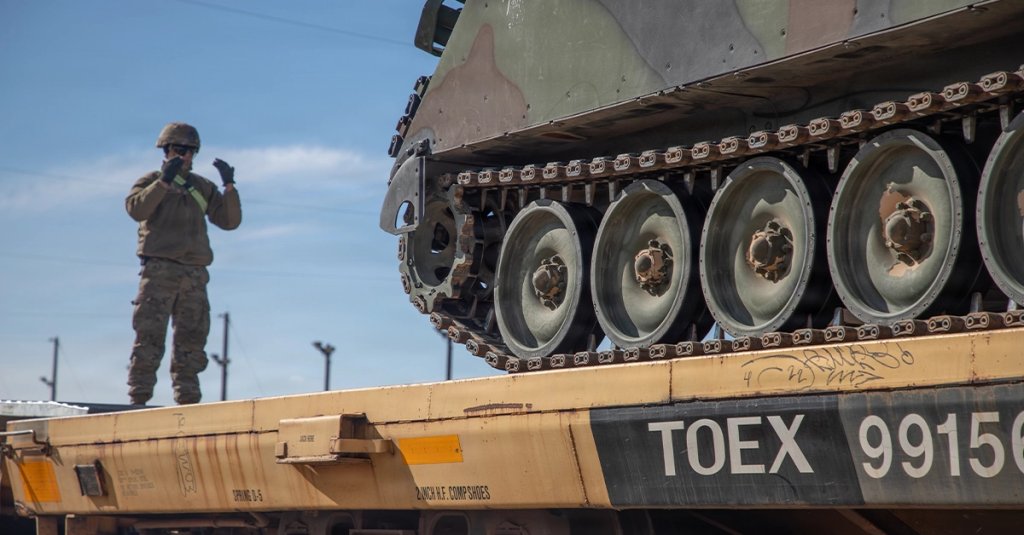
The Replacement Is Coming… Eventually
But it’s not this day.
The U.S. Army’s designated replacement is the Armored Multi-Purpose Vehicle, built by BAE Systems on a turretless Bradley chassis. The AMPV entered full-rate production in August 2023, and the program envisions thousands of vehicles across these five variants: general purpose, mortar carrier, medical evacuation, medical treatment, and mission command.
The first fully equipped brigade has already received more than 130 AMPVs, and it’s estimated to take 20 years to reach 3000 vehicles.
Which means the M113 isn’t going to be done anytime soon. It is still hauling troops, evacuating wounded, carrying mortars, and running command posts in armies around the world. The vehicle the Army designed in the 1950s as a disposable service, cheap enough to lose, simple enough to fix, light enough to fly, has outlived nearly every system built to replace it.
The question at this point is not whether the M113 is a good vehicle; it’s whether it will still be shuttling soldiers as the last stars fade from the sky.
Until the next drop, stand easy.
Don’t Miss the Best of We Are The Mighty
• Patton’s famous speech was way more vulgar than the one in the movie
• Here’s what’s actually inside the nuclear football
• The real story of Jane Fonda and the Vietnam vets who hate her